


How to Choose Landscape Fabric for Southwest Florida Plant Beds
Landscape fabric can reduce weed growth, but it won't fix poor drainage, leaking irrigation, or plants that are wrong for the site. Choosing landscape fabric Southwest Florida beds can handle starts with the plants, soil, water flow, and surface material.
Cape Coral, Fort Myers, Estero, and Bonita Springs yards face intense sun, sandy soil, heavy summer rain, humidity, salt exposure, and occasional storm runoff. A barrier that works beneath one bed may create problems in another. Use the following guide to decide when fabric makes sense and how to install it without damaging established plants.
Key Takeaways
- Choose fabric based on the bed's plants, irrigation layout, soil movement, and finished surface.
- Fabric can help beneath mulch or decorative rock, but it doesn't eliminate weeds or routine maintenance.
- Dense groundcovers and spreading plants may need open soil instead of a continuous barrier.
- Fix overspray, standing water, and washout before covering the bed.
- Leave room around trunks and stems, and avoid cutting irrigation lines during installation.
- Mulch usually needs refreshing once or twice a year in Southwest Florida, even when fabric sits underneath.
Start With the Plant Bed, Not the Fabric
A fabric label cannot tell you whether a bed needs a weed barrier. First, study how the space behaves during the hottest part of the day and during a heavy rain.
Match the material to the exposure
Full-sun beds beside driveways, west-facing walls, and concrete walkways receive reflected heat that can stress shallow roots. Shaded side yards have different needs, especially when humidity keeps the soil damp.
Canal-side and coastal properties may also face salt exposure and stronger wind. Plants such as coontie, muhly grass, beach sunflower, or seashore dropseed may suit sunny conditions, but their growth habits still matter. A clumping grass may work over fabric, while a spreading groundcover may need more open soil.
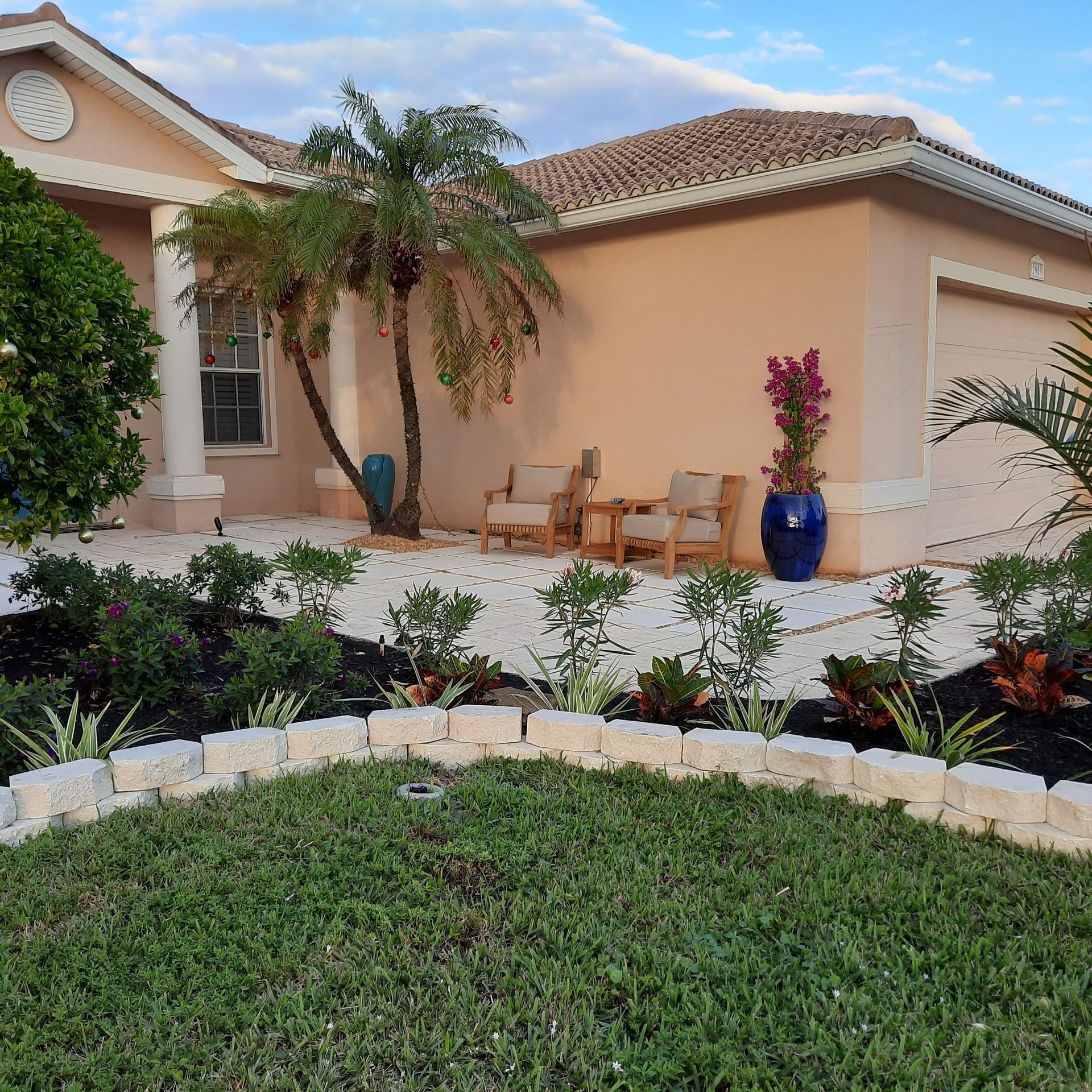
Use the right plant in the right place before thinking about weed control. This Cape Coral landscape design-build guide explains why sun, wind, salt, and plant spacing should shape the whole plan.
Consider mature size and plant movement
Small nursery plants often expand quickly once summer heat and rain arrive. Leave enough room for each plant's mature width so you don't need to cut through the fabric repeatedly.
A bed with widely spaced shrubs is easier to cover neatly. A bed filled with runners, groundcovers, or plants that reseed may become difficult to maintain when the fabric has many openings. In those areas, careful mulching and regular hand weeding may work better than a barrier.
Check Soil, Irrigation, and Drainage First
Landscape fabric works best as one part of a prepared bed. It should never hide a recurring water problem.
Test how water moves
Southwest Florida soil often drains quickly, but compacted areas and flat grades can still hold water. Walk the property after rain and look for puddles, eroded edges, exposed roots, or mulch collecting against a wall.
If water runs through a bed toward a patio or walkway, correct the grade or drainage route before adding fabric. A French drain, catch basin, or revised bed edge may be more useful than a weed barrier.
Also inspect downspouts and sprinkler patterns. Overspray can move mulch onto sidewalks, stain walls, and keep the bed surface wet. Fabric will not stop that cycle.
Plan irrigation before covering the soil
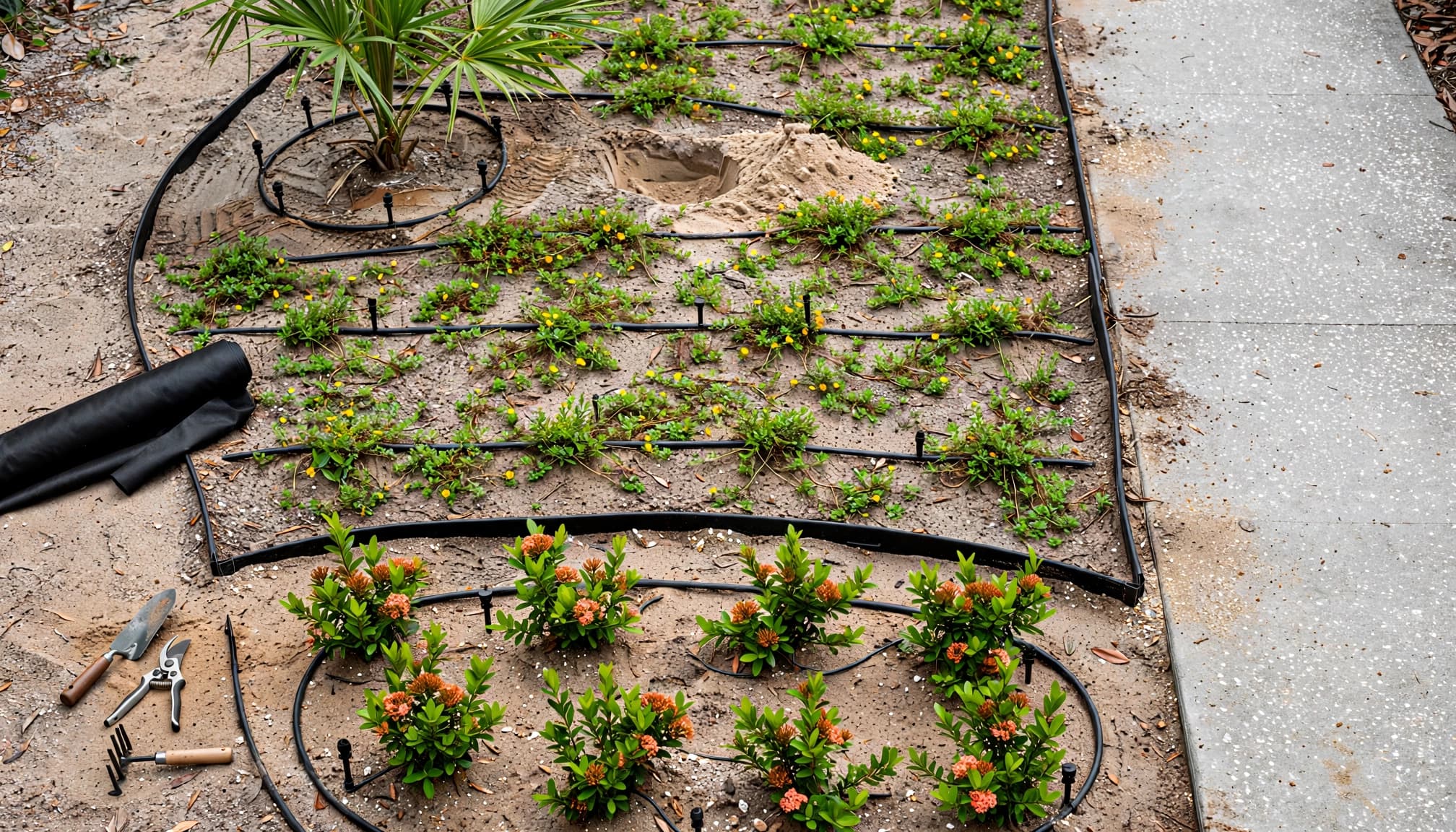
Drip lines and micro-sprayers should reach the plant root zones without forcing water across the top of the bed. Drip irrigation can keep mulch drier and reduce movement, while poorly aimed spray can wash material into paver joints.
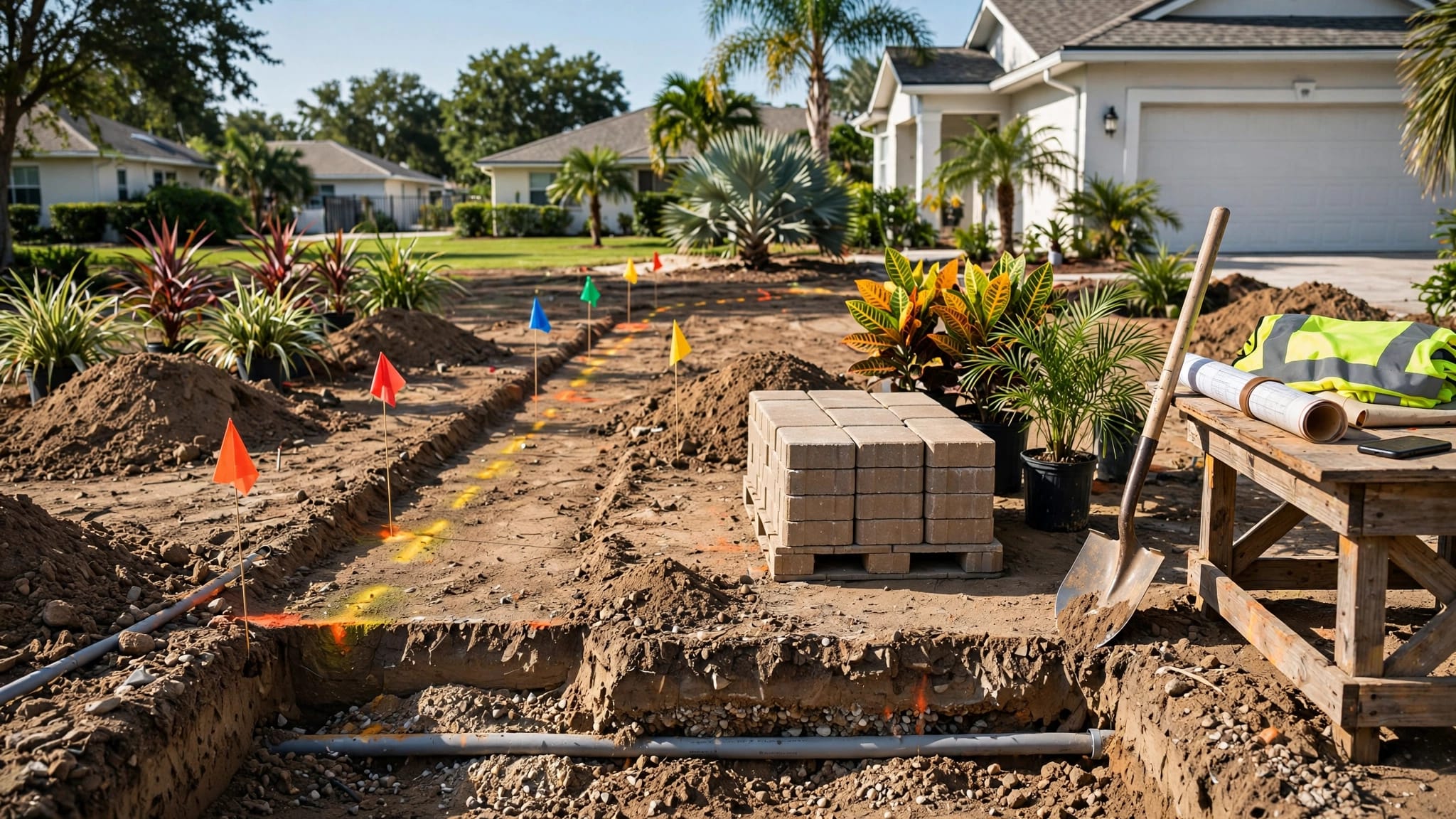
Install or repair irrigation before placing the barrier. Mark valve boxes, low-voltage wires, emitter lines, and shallow tubing first. This Southwest Florida landscaping project guide covers the importance of coordinating irrigation, mulch, stone, and bed preparation.
Match Landscape Fabric to Mulch or Rock
The surface placed above the fabric changes how the bed looks and how much maintenance it needs. Select the surface before finalizing the barrier plan.
| Bed surface | Where it can work well | Maintenance to expect |
|---|---|---|
| Mulch | Shrub beds, foundation plantings, and areas where roots benefit from a cooler surface | Refreshing, raking, and replacing material moved by rain |
| Decorative rock | Open beds with defined plants, strong edging, and good drainage | Weed removal, occasional cleaning, and careful edge control |
| Bare or planted soil | Expanding groundcovers, naturalized beds, and areas needing frequent planting changes | More hand weeding and regular soil care |
Mulch generally costs less to install and helps conserve moisture. However, heat, humidity, rain, and irrigation break it down. Many Cape Coral beds need a refresh once or twice a year, depending on the material, depth, and washout.
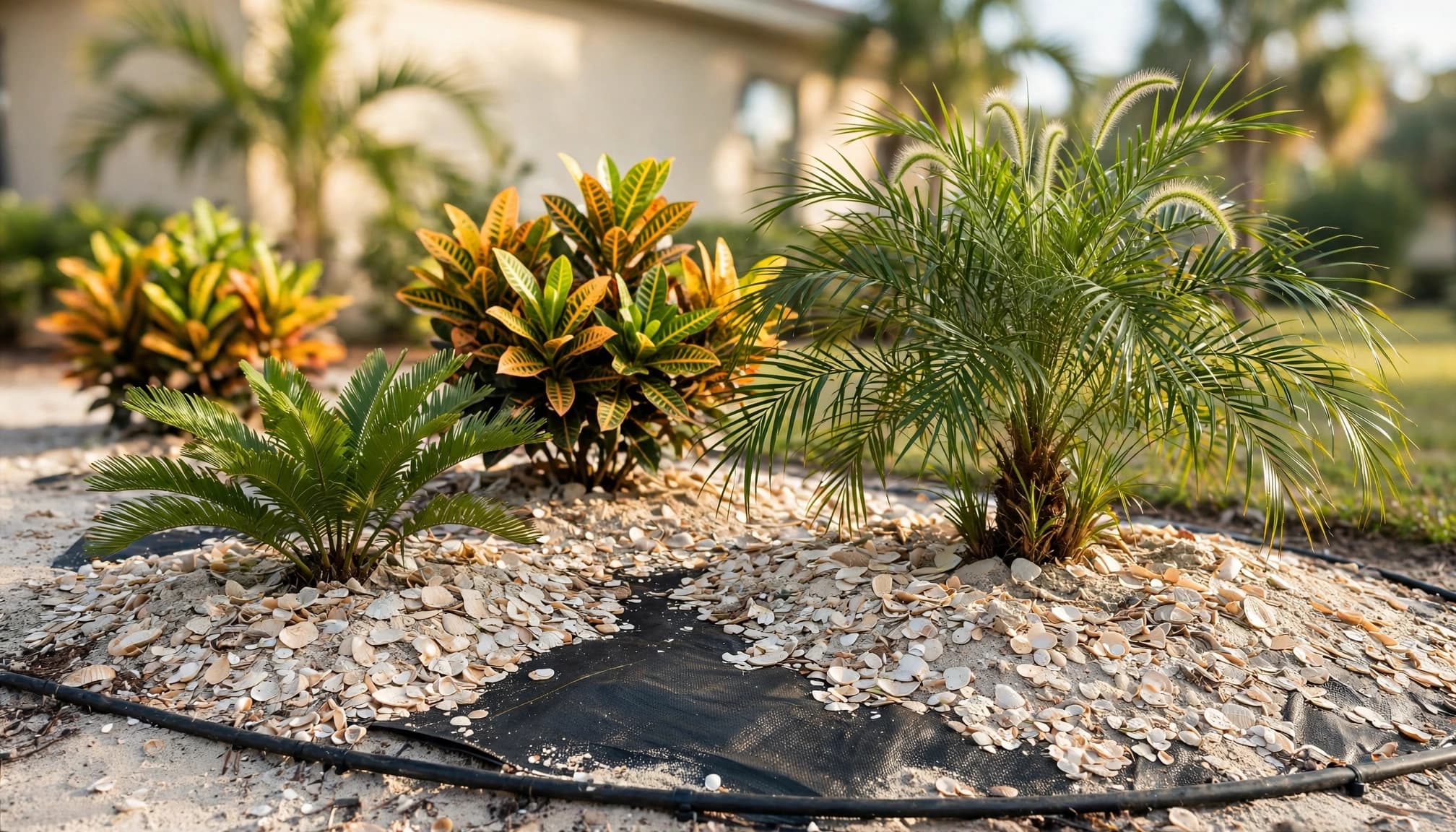
Decorative rock can last longer, but it holds heat and may expose weeds that grow through gaps. It also needs firm edging so stones don't spread into lawns, drains, or walkways. Read this comparison of rock versus mulch for Cape Coral plant beds before choosing the finish.
Questions to Ask When Choosing Fabric
Product claims can sound similar, so ask questions that relate to your actual bed. You need a material suited to the intended use, not simply the heaviest option available.
Confirm water and root-zone compatibility
Ask whether the fabric allows irrigation and rain to reach the soil evenly. The installer should also explain how the material handles sun exposure before mulch or rock covers it.
Avoid using a continuous barrier where plants need to spread naturally. Groundcovers such as beach sunflower or sunshine mimosa may fill an area better when their runners can contact soil. A fabric opening around every new stem can become more work than the weeds it was meant to control.
For ornamental grasses, keep enough open space for new shoots and avoid trapping the crown beneath the material. Do not use fabric to justify planting aggressive or invasive species. A tidy bed starts with plants that stay within their intended space.
Clarify the full installation scope
A quote should state whether bed preparation, soil amendments, fabric, staples, edging, mulch, rock, and irrigation adjustments are included. Ask who will remove existing weeds and whether the crew will haul away old material.
The lowest fabric price may not reflect the total project cost. A bed may need grading, root pruning, new edging, or sprinkler repairs before the barrier goes down. This guide to comparing landscaping quotes in Southwest Florida lists questions about fabric, edging, soil amendments, and recurring maintenance.
Install Fabric Safely Around Established Plants
Established beds require more care than empty soil. Rushing the installation can damage roots, stems, irrigation, and tree trunks.
Prepare the area in stages
Remove visible weeds and invasive runners before laying the fabric. Trim dead growth, rake away loose debris, and smooth sharp roots or rocks that could puncture the material.
Set the fabric over the prepared soil without pulling it tightly around plants. Cut individual openings rather than making one large opening that exposes soil to weeds. Keep the cut edges flat and covered by mulch or rock.
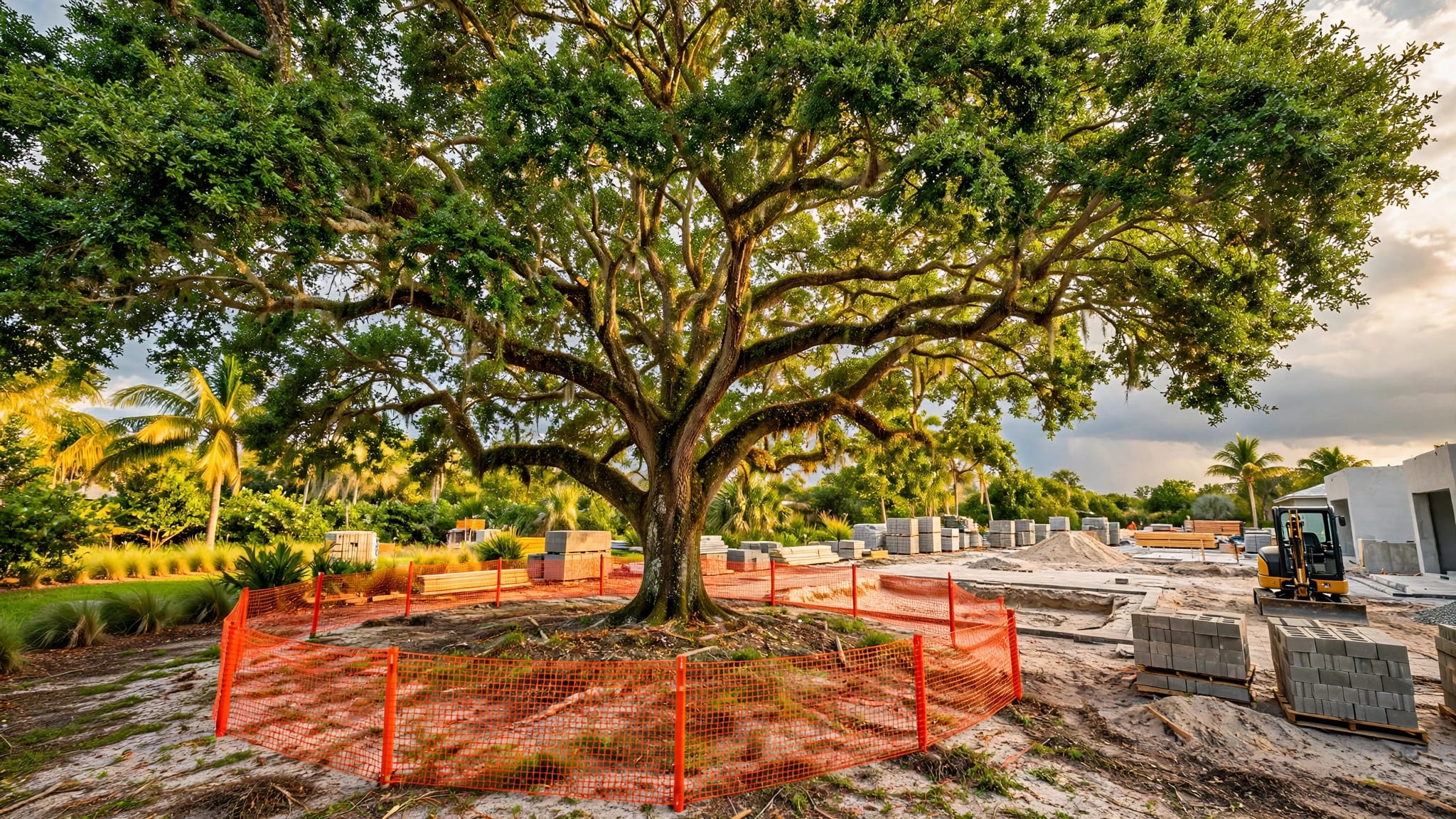
Never wrap fabric tightly against a trunk, palm base, shrub stem, or plant crown. Leave a clear ring around each plant so air can move and moisture does not stay against the bark or crown.
Protect roots and irrigation lines
Use a hand trowel near established roots and shallow irrigation tubing. Mark lines before securing the fabric, and avoid driving staples where you cannot see what lies below.
Do not bury valve boxes, drains, cleanouts, or irrigation controls beneath the barrier. They need to remain accessible for repairs. If roots are already lifting the soil, solve that issue without forcing the fabric over the raised area.
Avoid Common Landscape Fabric Mistakes
Fabric often fails because homeowners ask it to solve a problem it cannot address.
Don't cover drainage or irrigation problems
A barrier cannot correct standing water, compacted soil, leaking emitters, or sprinkler overspray. It can make inspection harder once mulch or rock covers the surface.
If mulch keeps washing away, check the slope, downspouts, and spray pattern. Drip irrigation and mulch washout solutions can help stabilize a bed more effectively than adding another layer of material.
Don't skip edging or maintenance
Fabric does not replace a defined bed edge. Without proper containment, mulch and rock can move onto concrete, pavers, and lawns. Paver borders, metal edging, or another suitable edge can keep the finished surface in place.
A concrete company may install curbing, walkways, or a patio as part of a larger yard project. Complete that work before final mulch placement so construction debris does not contaminate the bed.
Likewise, schedule paver cleaning after major soil and hardscape work, not immediately before fresh mulch is installed. Cleaning and sealing at the wrong stage can leave new material scattered across joints.
Build a Maintenance Plan Before Installation
Every fabric-covered bed still needs inspection. Check plant openings after storms, pull weeds that grow through seams, and keep mulch or rock at an appropriate depth without piling it against stems.
Inspect the bed during a sprinkler cycle. Look for wet spots, overspray on walkways, exposed fabric, displaced rock, and mulch collecting near drains. Correct small problems before a summer storm turns them into washouts.
Edging also needs attention. Soil settles, roots grow, and heavy rain can shift loose borders. A durable landscape edging plan for Cape Coral beds should account for nearby pavers, concrete, irrigation access, and future plant growth.
Fabric may reduce some weed pressure, but it does not prevent seeds from landing on top of mulch or rock. Organic debris builds a new growing layer over time. Regular removal and occasional hand weeding remain part of responsible bed care.
FAQ
Is landscape fabric necessary in every Southwest Florida bed?
No. It can suit established shrub beds with a stable layout, but it may be less useful in beds with spreading groundcovers, frequent plant changes, or naturalized planting. Mulch, spacing, and regular maintenance may provide a better result.
Should fabric go under mulch or decorative rock?
Either surface can work when the bed has proper preparation and edging. Mulch usually gives roots a cooler surface but needs periodic refreshes. Rock can last longer, yet it may increase heat and requires careful weed control and cleaning.
Can I install fabric around existing plants?
Yes, if you work slowly. Remove weeds first, cut clean openings, protect roots and irrigation lines, and keep the material away from trunks and plant crowns. Avoid pulling it tightly across uneven soil.
Will fabric stop weeds permanently?
No. Weeds can grow through seams, openings, and organic material that collects above the fabric. The barrier can reduce some weed growth, but it doesn't remove the need for inspections and maintenance.
Choose the Bed Plan Before the Barrier
The right landscape fabric Southwest Florida homeowners choose depends on the entire planting bed, not a product label alone. Start with sun, soil, mature plant size, irrigation, drainage, and the surface you want to see.
When the bed has suitable plants, controlled water, secure edging, and realistic maintenance expectations, fabric can support a cleaner finish. When those basics are missing, it only hides problems until the next storm or irrigation repair brings them back.