


Florida Plant Bed Topsoil: How Much Do You Need?
The right amount of Florida plant bed topsoil is rarely a fixed number. It depends on the plants, the existing soil, drainage, and whether the bed is raised or built directly into the ground.
In Southwest Florida, sandy soil often drains quickly but holds fewer nutrients. Adding too much soil can bury plant crowns, trap water near structures, or change how runoff moves through the yard. The best result comes from measuring the bed, improving the existing soil, and protecting the finished grade.
What "topsoil" means in a Florida plant bed
Topsoil, compost, mulch, and planting mix perform different jobs. Topsoil creates volume and a rooting zone. Compost adds organic matter and improves moisture retention. Mulch protects the surface, reduces evaporation, and slows weed growth.
Treating these materials as interchangeable leads to poor results. A 2 to 3 inch mulch layer does not count as 2 to 3 inches of topsoil. Likewise, adding compost over a bed is different from importing several inches of fill.
In-ground beds and raised beds need different plans
An in-ground bed uses the native soil as part of its growing environment. You may need to loosen, amend, or replace portions of the existing soil, but the finished bed usually remains close to the surrounding grade.
A raised bed has a defined container or border. Its soil depth depends on the bed height, the plants, drainage openings, and how much space must remain below nearby siding, doors, patios, or walkways.
Plant selection matters in both cases. Small annuals and shallow-rooted groundcovers need less soil volume than large shrubs. Palms and trees need correct root-ball placement rather than a tall mound of soil around the trunk.
Why Cape Coral sand changes the recommendation
Cape Coral and nearby Southwest Florida properties often contain sand mixed with shells, limestone, imported fill, or compacted pockets. The soil may drain well in one area and stay wet in another because of grading or a high water table.
That means a soil delivery cannot solve every bed problem. A low spot beside a downspout may need grading or drainage work instead of more topsoil. For local preparation guidance, review the Cape Coral landscape installation process, especially when a new bed is part of a larger landscaping project.
How deep should Florida plant bed topsoil be?
There is no single correct depth for every Florida plant bed. The ideal profile depends on the plant's mature size, root system, drainage conditions, and the depth of suitable soil already on the property.
For many small in-ground plantings, improving the upper soil zone is more useful than building a deep layer on top. New or renovated beds can receive 2 to 3 inches of compost mixed into the top 6 to 8 inches of existing soil. That measurement describes the amendment zone, not a universal topsoil requirement.
Use the existing soil when it drains well
If the native sand drains properly and contains no construction debris or contaminated fill, it can remain part of the root zone. Loosen compacted areas, remove large rocks and debris, and incorporate organic matter across the entire bed instead of creating a small pocket around each plant.
A pocket of rich soil inside poor surrounding soil can hold water differently. Roots may remain confined to the amended hole, especially after heavy rain or irrigation. A consistent transition across the bed usually supports better root spread.
For ongoing maintenance, an established bed may need only about 1 inch of compost as a topdressing once or twice a year. Let rainfall and soil organisms work it into the surface rather than piling it against stems.
Keep crowns, trunks, and root balls at grade
The crown is where a plant's stems meet its roots. It should stay at the proper planting level, not disappear beneath imported soil or mulch. Covering it can hold moisture against the plant and encourage decay.
Palm bases require special care. The top of the root ball should generally sit level with, or slightly above, the finished grade, depending on the palm species and nursery guidance. Never use topsoil to create a mound against a palm trunk.
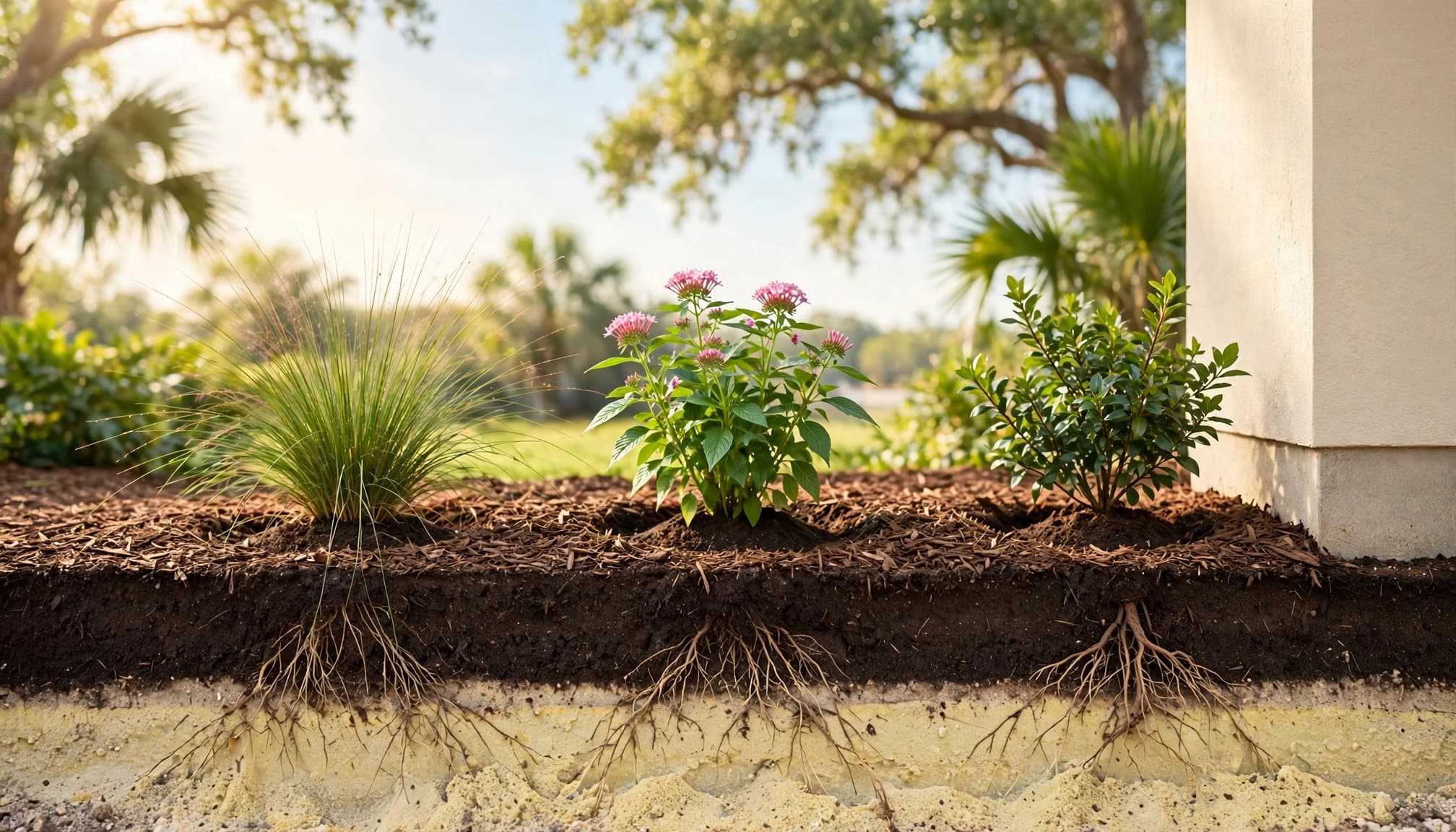
After installation, leave about 2 to 3 inches of mulch across the bed while keeping it several inches away from trunks and stems. Mulch helps protect roots from heat and reduces evaporation, but it should never become a volcano around a plant.
How much soil does a raised bed need?
Raised beds require a volume calculation, not a guess based on the bed's footprint alone. Measure the inside length and width, then measure the planned soil depth from the bottom of the bed to the finished soil surface.
Drainage also affects the usable depth. A raised structure with an open bottom can use the soil below it as part of the root zone. A sealed planter needs enough drainage capacity to prevent water from sitting around roots.
Measure the bed before ordering soil
Use this formula:
Cubic feet = length in feet x width in feet x depth in feet
Then convert cubic feet to cubic yards:
Cubic yards = cubic feet divided by 27
For a 4-foot by 8-foot raised bed filled to 18 inches:
- 4 x 8 x 1.5 = 48 cubic feet
- 48 divided by 27 = about 1.78 cubic yards
A 3-foot by 10-foot bed filled to 12 inches requires:
- 3 x 10 x 1 = 30 cubic feet
- 30 divided by 27 = about 1.11 cubic yards
These figures describe the calculated space. The final order may change because of delivery minimums, settling, uneven bottoms, or the need to leave the soil slightly below the rim.
Leave room for mulch and nearby surfaces
Do not fill a raised bed to the very top. Leave space for the planned mulch layer and for rainfall to remain inside the bed instead of washing over the edge.
The finished soil and mulch should also remain below siding, thresholds, doors, pool decks, and other vulnerable surfaces. A raised bed that looks attractive can still create moisture problems if it touches the wall of the home.
Calculate topsoil for an in-ground bed
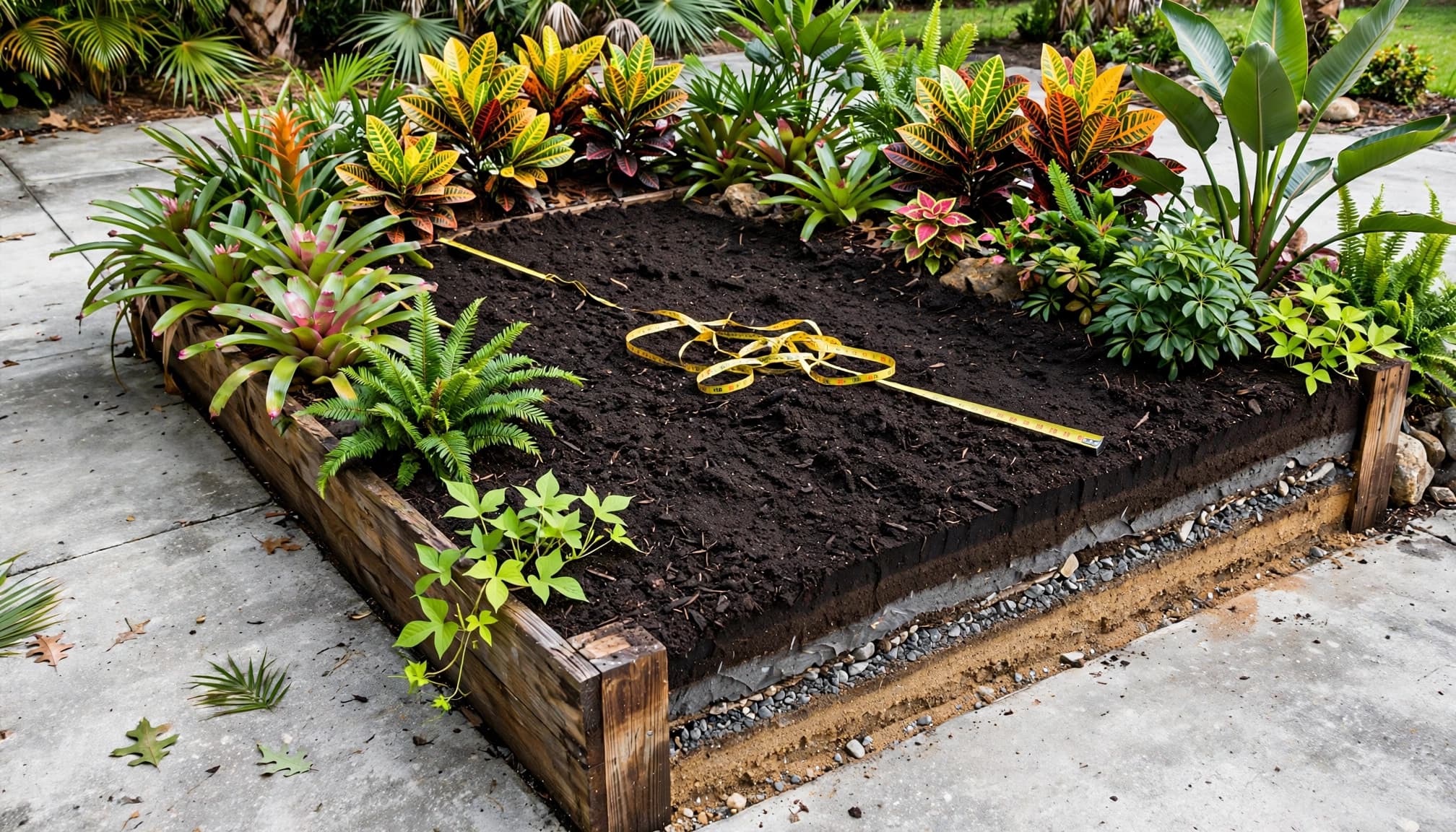
The same volume formula works for imported topsoil in an in-ground bed. The key difference is deciding how much of the bed actually needs new material.
Suppose a planting area is 10 feet wide and 12 feet long. If you plan to add a 6-inch layer across the entire area:
- 10 x 12 x 0.5 = 60 cubic feet
- 60 divided by 27 = about 2.22 cubic yards
That amount changes if the bed has an irregular shape, existing soil that can stay, or a finished depth of only 3 inches. Break a large bed into rectangles, calculate each section, and add the results.
Separate topsoil, compost, and mulch in the estimate
A practical Southwest Florida bed may include several layers or materials:
- Existing soil that has been loosened and graded
- Imported topsoil where the native soil is poor or missing
- Compost mixed into the upper soil zone
- About 2 to 3 inches of mulch on the surface
Do not add the mulch depth to the topsoil calculation. If a bed needs 6 inches of improved soil and 3 inches of mulch, the bed may need 9 inches of total finished material, but only 6 inches count as soil.
Improve sandy Florida soil without overdoing it
Sandy soil often benefits from organic matter, but large quantities of untested amendments can create new problems. The goal is steady improvement rather than a dramatic change in one installation.
The guidance on Cape Coral soil problems covers compost, salt concerns, and mulch practices for local beds.
Add compost across the bed
For new or renovated beds, spread 2 to 3 inches of compost and mix it into the top 6 to 8 inches of soil. This helps sandy soil retain moisture and gives roots a more stable growing zone.
Avoid products that promise an instant transformation. Use the material recommended for the plants and soil conditions, and follow application rates. A soil test can identify pH, nutrient, or salinity issues before you spend money on fertilizer.
If salt is accumulating, leach it deliberately. Water when the soil is slightly moist, avoid heavy rain, and run irrigation in cycles so water can soak between applications. Keep spray away from sidewalks and streets, and do not send salty runoff into canals or onto neighboring property.
Use mulch as a surface treatment
Mulch helps slow evaporation, moderate soil temperature, and reduce salt splash on leaves. Organic mulch also contributes small amounts of organic matter as it breaks down.
Keep it a few inches away from trunks and stems. Check beneath the mulch before irrigating because the surface can look dry while the root zone remains damp. Heavy rain and irrigation can move mulch, so inspect bed edges after storms. Some local beds need a refresh once or twice a year, depending on washout and material.
Protect grade, drainage, and hardscape
Topsoil should support drainage, not hide drainage problems. Before filling a bed, watch where water moves during rain. Look for standing water, washed-out soil, mulch against the foundation, or runoff flowing toward a patio.
The Cape Coral backyard renovation planning guide covers how bed elevations should work with house walls, pavers, slabs, downspouts, and irrigation.
Coordinate with concrete, pavers, and turf
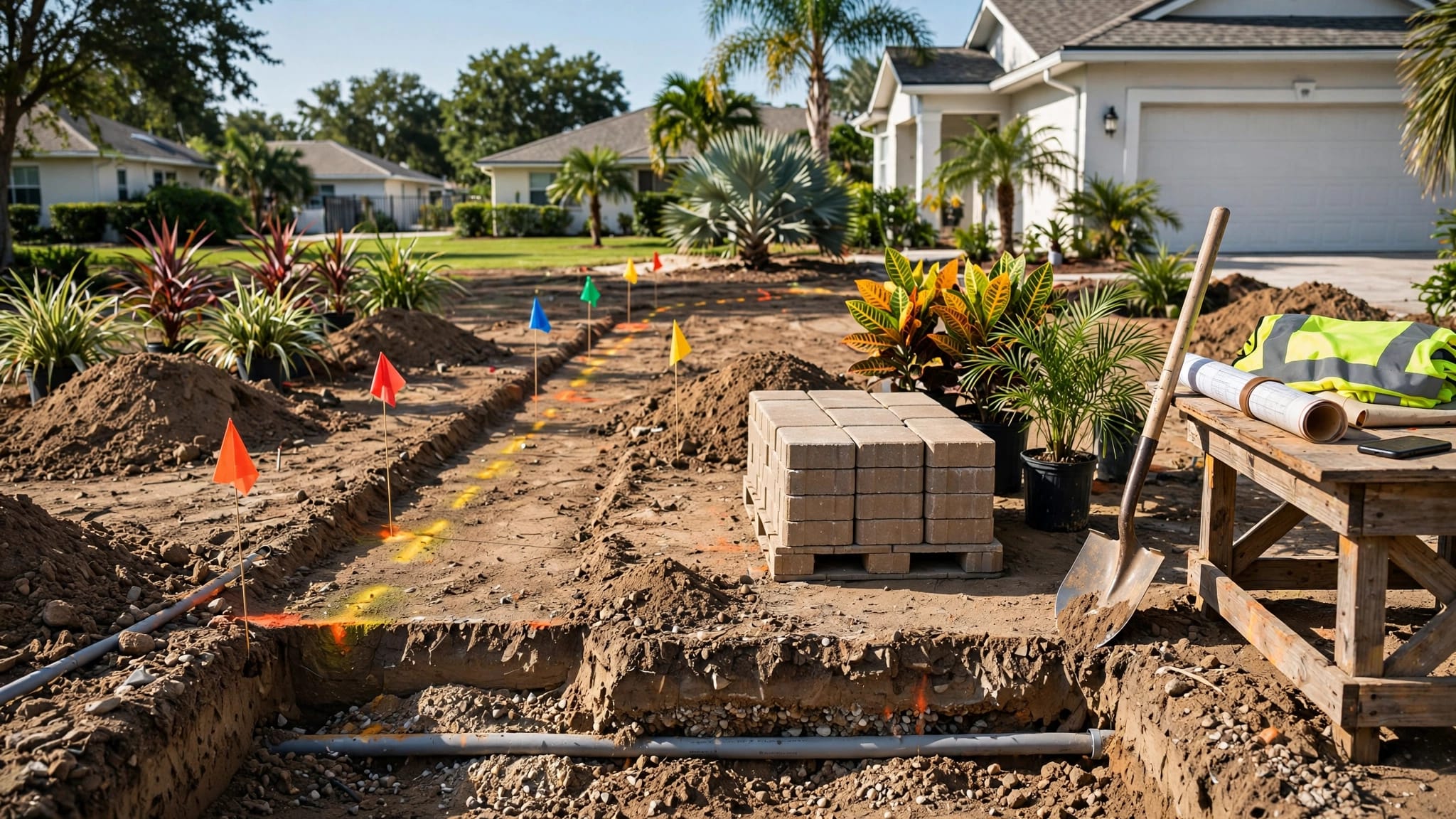
A concrete company may change elevations while installing a patio, driveway extension, walkway, or pool deck. Complete those grade changes before finalizing the planting bed. Otherwise, new topsoil may wash toward the slab or leave the bed lower than intended.
The same planning applies when a bed borders pavers or artifical turf. Keep loose soil and mulch contained with an appropriate edge. After installation, paver cleaning should avoid blasting joint sand into the bed or washing fertilizer and soil toward drains.
Install irrigation before the final surface
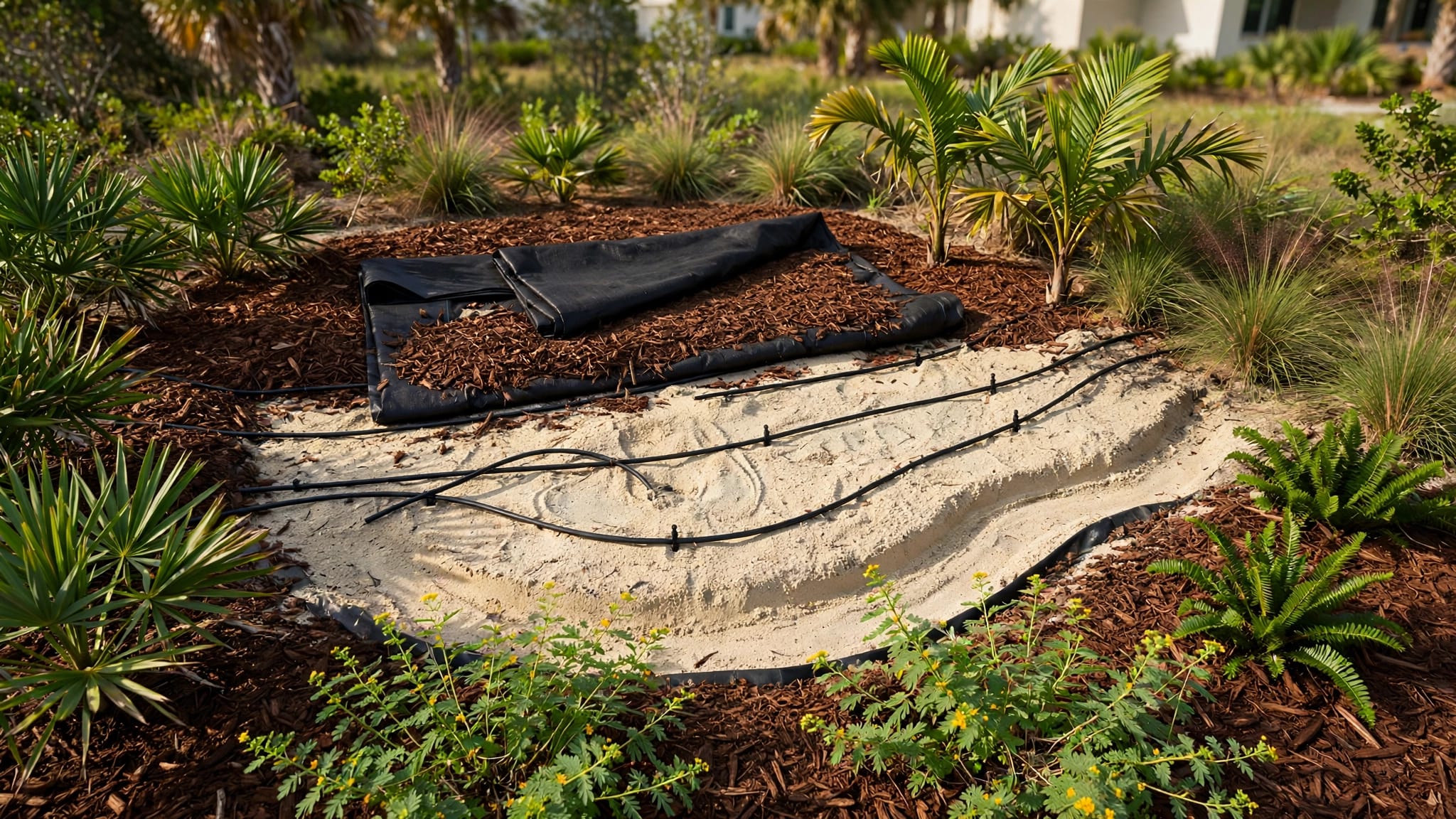
Repair or adjust irrigation before adding landscape fabric, rock, or mulch. Emitters and micro-sprayers should reach the root zones without spraying the house, walkway, or hardscape.
The guide to landscape fabric for Florida plant beds also emphasizes marking shallow irrigation lines and planning the finish materials around them. Adding soil after irrigation heads are set can bury the heads and change their spray pattern.
Key Takeaways
- The right Florida plant bed topsoil depth depends on the plants, drainage, and whether the bed is raised or in-ground.
- Compost mixed into 6 to 8 inches of existing soil is an amendment method, not a universal topsoil depth.
- Use length x width x depth to calculate cubic feet, then divide by 27 for cubic yards.
- Keep plant crowns, palm trunks, root initiation zones, siding, and thresholds above the finished soil and mulch level.
- Apply about 2 to 3 inches of mulch, but keep it away from trunks and stems.
- Fix drainage and grading problems before ordering large amounts of soil.
Florida plant bed topsoil FAQ
Can I add 3 inches of topsoil to every plant bed?
Not automatically. Three inches may work as part of a controlled bed refresh, but the correct amount depends on existing grade, plant type, drainage, and nearby structures. In many cases, compost mixed into the existing soil is more useful than a new layer spread over compacted sand.
How deep should soil be for shrubs?
Shrubs need more continuous rooting space than small groundcovers, but the exact depth depends on the species and the quality of the existing soil. Focus on a broad, well-prepared bed rather than filling only individual planting holes. Check the mature size and soil requirements before choosing the plant.
Should I raise a bed that stays wet after rain?
More soil may not solve the problem. Standing water can result from low grade, compacted fill, downspout discharge, or a high water table. Observe the water path and correct drainage before raising the bed, especially beside a home, patio, or walkway.
How much mulch should go on top?
A 2 to 3 inch layer works for many Southwest Florida beds. Keep it several inches away from plant trunks and stems, and inspect the depth after heavy rain. Mulch should protect the soil without burying crowns or changing the drainage pattern.
Get the soil level right before planting
Florida plant bed topsoil should create a healthy rooting zone while preserving the yard's original drainage and grade. Measure the space, separate soil from compost and mulch, and choose depth according to the plants rather than a standard number.
A well-prepared bed leaves crowns visible, keeps water moving away from the home, and gives roots room to establish. That careful start protects both the plants and the hardscape around them.