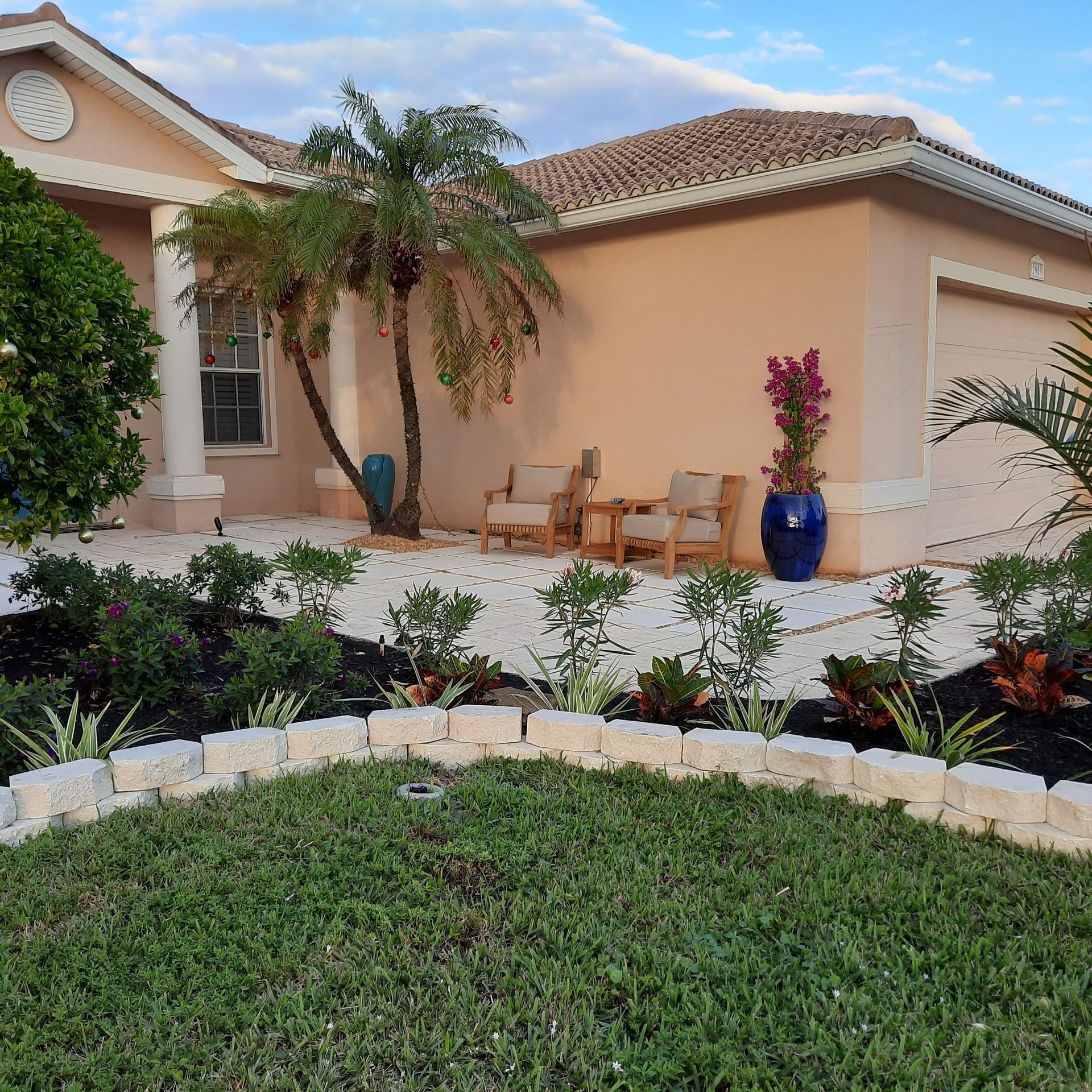



Rock vs Mulch for Cape Coral Plant Beds: What Works Best?
Rock looks neat, but it can turn a Cape Coral bed into a heat trap.
For most planted beds, rock vs mulch comes down to one thing: are you dressing a space, or supporting roots? In Southwest Florida, heat, sand, salt air, and summer rain all change the answer. Start with local conditions, then choose the material that fits them.
Cape Coral weather changes the rock vs mulch decision
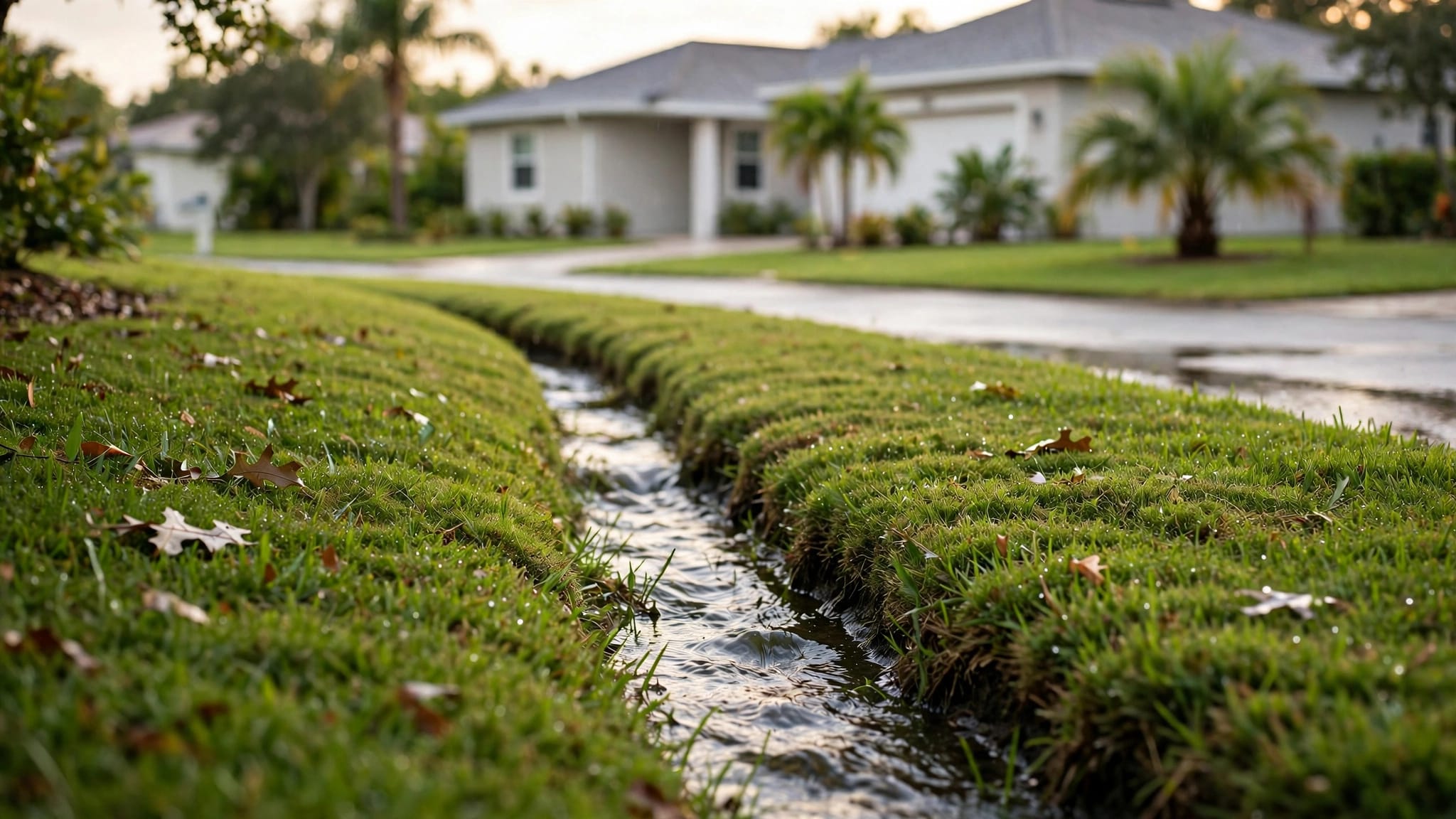
Cape Coral yards take a beating. Beds sit in strong sun, sandy soil drains fast, and afternoon storms can wash light material into the lawn. Near waterfront properties, wind and salt add more stress.
That matters because rock and mulch do different jobs. Rock stays put better and lasts longer. Mulch cools the soil, holds moisture, and breaks down into something roots can use.
This quick comparison keeps the trade-offs clear:
| Material | Usually best for | Main drawback |
|---|---|---|
| Rock | Borders, dry decorative beds, high-washout spots | Holds heat around roots |
| Mulch | Tropical plants, shrubs, mixed planting beds | Needs refreshes |
| Mixed approach | Front beds with plants plus hard edges | Takes more planning |
In other words, for Cape Coral landscaping , neither choice wins everywhere. A full-sun bed against a driveway behaves differently from a shaded side bed under palms. If you're reworking several areas at once, professional landscaping in Cape Coral can help match the bed cover to drainage, plant choice, and the look of the home.
In Cape Coral, rock is usually better for low-plant, low-care zones. Mulch is usually better where roots need help.
Where rock works well, and where it can backfire
Rock has a clean, finished look. It also handles wind and splash better than light organic mulch. That's why some Cape Coral homeowners use it near seawalls, mailboxes, or narrow side beds with sparse plants.
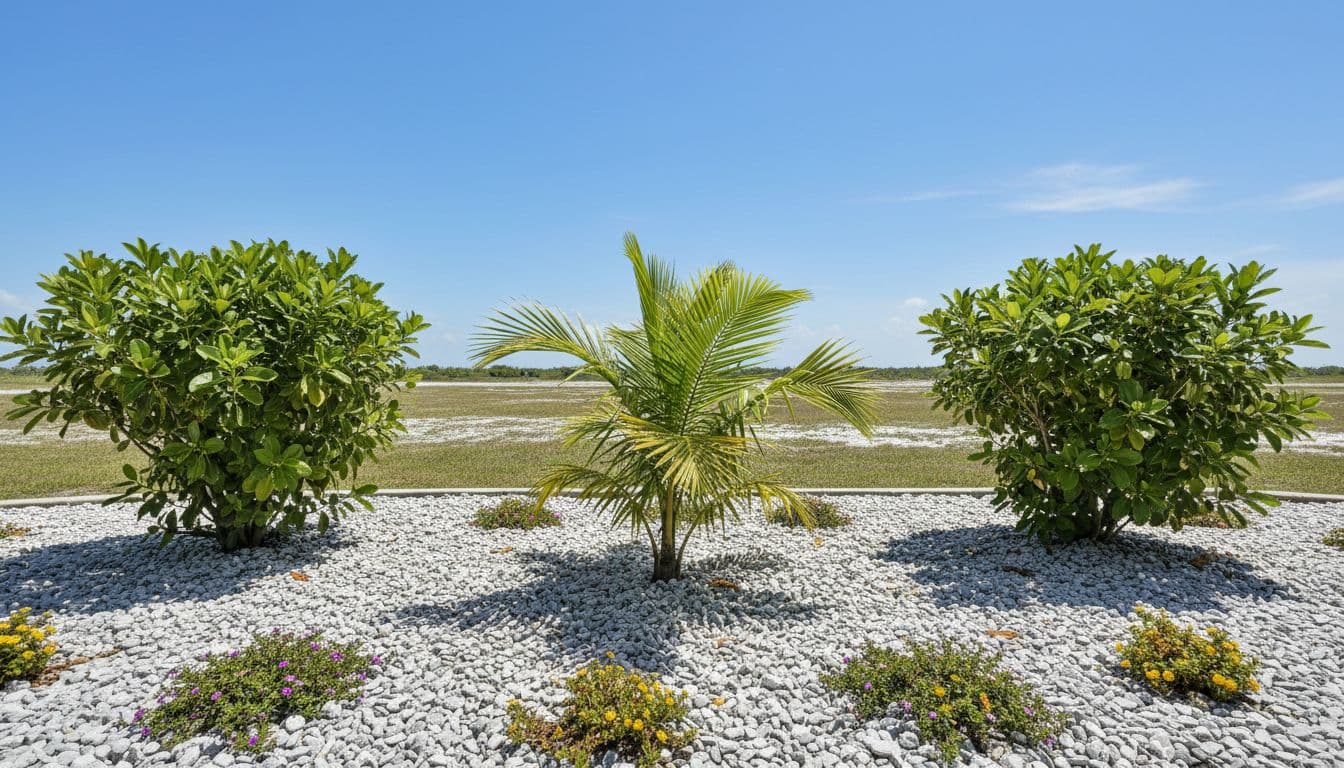
Rock can also make sense around established palms, tough shrubs, and modern home fronts where you want a sharp edge. Since it doesn't break down, the long-term upkeep is light. You may rake it and pull weeds, but you won't replace the whole bed every year.
Still, rock has a real downside in Southwest Florida. It stores heat, then throws that heat back into the soil. In a full-sun front bed, that can stress shallow roots, especially around tropical plants that already fight hot walls and reflected glare. Think of it like placing your plants next to a warm patio all day.
The upfront cost is usually higher too. Rock is heavy, labor is harder, and good installs often need fabric, edging, and cleanup.
Rock backfires most often in these spots:
- Beds packed with crotons, hibiscus, ferns, or other thirsty tropicals
- Small beds beside stucco walls or dark pavers
- Areas where you expect to change plant layouts often
Rock isn't weed-proof either. Dust and leaf litter collect between stones, and weeds show up once that thin soil layer forms.
Why mulch often wins around living plants
Mulch does something rock can't do, it helps the soil itself. That matters in Cape Coral, where sandy ground dries fast and plant roots bake in summer. A proper mulch layer slows evaporation, softens soil temperature swings, and feeds the bed as it breaks down.
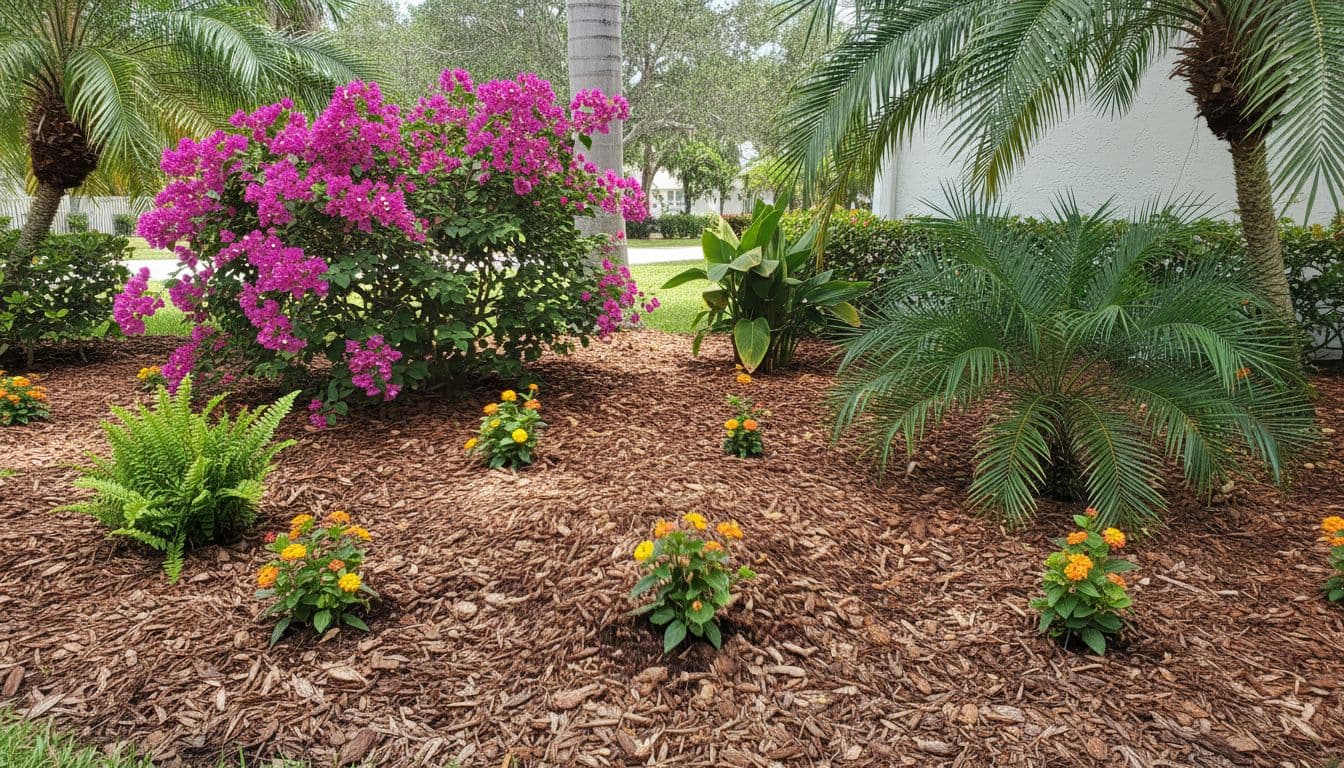
That makes mulch the better fit for most planted beds with shrubs, flowering plants, and underplantings around palms. It also pairs well with Florida-friendly planting because roots stay cooler and watering needs often drop. For homeowners comparing bark, cypress, and melaleuca, this guide to the best mulch types for Cape Coral yards is a useful next step.
Mulch also costs less upfront in many jobs. The catch is maintenance. Heat, humidity, rain, and irrigation break it down fast. Many Cape Coral beds need a refresh once or twice a year, depending on depth, type, and washout. Over time, those repeat installs can narrow the price gap with rock.
There are limits. Mulch can float in heavy rain if the bed has poor edging or bad slope. It can also stay too damp if piled against trunks or stems.
Keep mulch 2 to 3 inches deep, and pull it back from trunks and plant crowns.
For most homes, that's still a good trade. Mulch is easier to adjust, easier to plant through, and easier on roots in high-sun exposure.
How to choose the best option for your yard
A mixed plan often works best. Use mulch where plants are the star. Use rock where you need stability and low upkeep. That approach fits many Cape Coral homes, especially yards with palms in back, shrubs in front, and hot strips along the house.
If you're also updating lawn areas, some owners pair mulched beds with Cape Coral artificial turf options for a lower-care layout. If you're pricing artifical turf at the same time, keep bed materials in the same plan so drainage and edging work together.
Also think about project order. If a concrete company is adding curbing, a patio, or walkways, finish that first. The same goes for paver cleaning , because fresh mulch can blow into joints and light rock can get stained by dirty runoff.
Use this simple rule:
- Choose rock for decorative, low-plant, wind-prone, or waterfront edges
- Choose mulch for tropical beds, shrubs, mixed plantings, and most root zones
- Choose both when you want plant health in one area and low upkeep in another
The best choice isn't the one that looks nicest on day one. It's the one your plants can live with in August.
Cape Coral plant beds don't need a trendy answer. They need the right match for sun, moisture, and plant type. If your bed is built around living plants, mulch is usually the safer bet.
Walk your yard in the afternoon before you decide. Note the hottest spots, the wettest spots, and the beds you want to change later. Then pick the material that fits those conditions, not only the one that looks clean from the street.