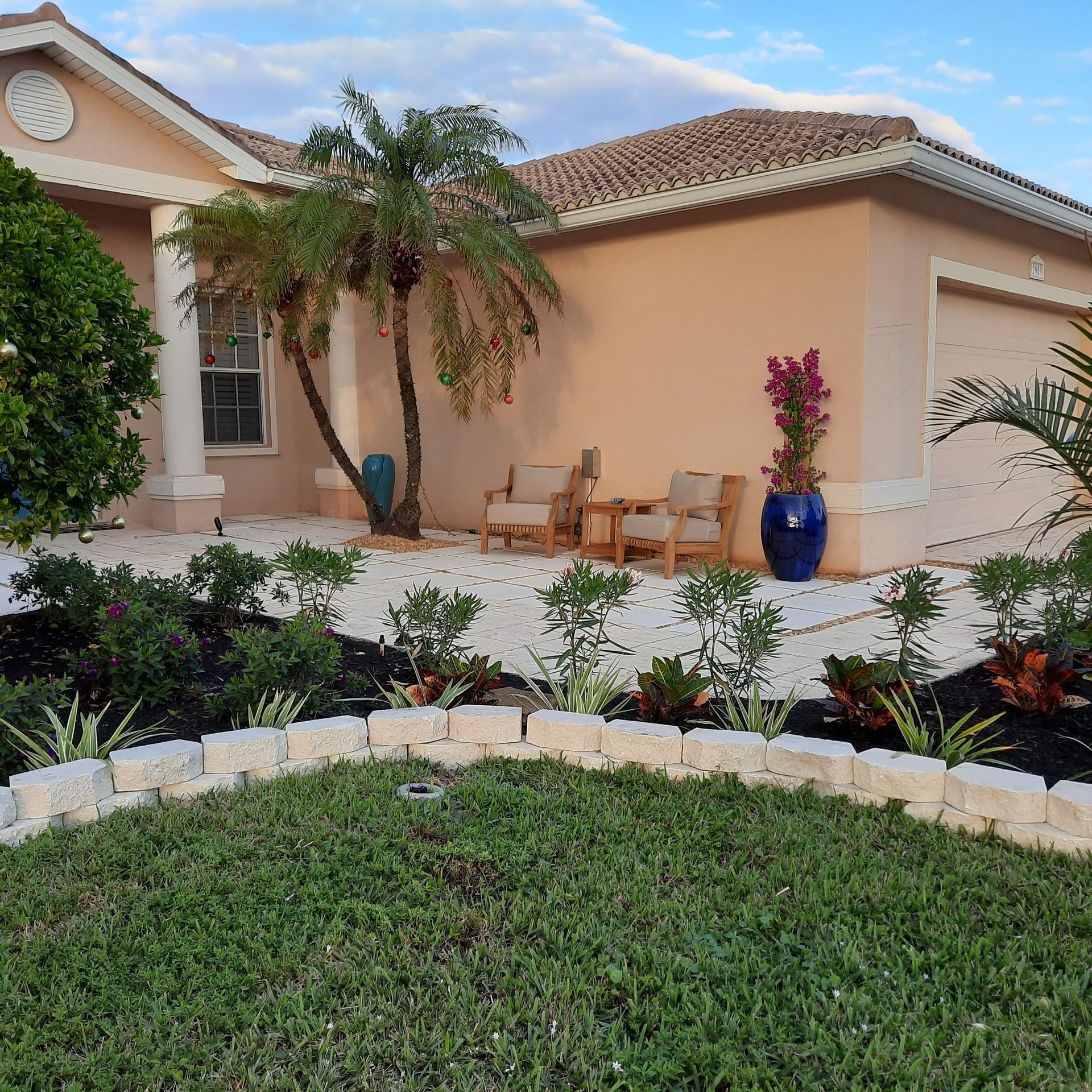



Landscape Edging for Cape Coral Plant Beds That Last
A plant bed can look finished one week and messy the next when grass, mulch, and irrigation water cross the same boundary. The right landscape edging in Cape Coral keeps those materials in place while giving your yard a sharper, more finished appearance.
Cape Coral yards also face intense sun, heavy rain, sandy soil, irrigation overspray, and salt air near canals and the Gulf. Those conditions affect which materials last and how the edging needs to be installed. Start with the local conditions, then choose an edge that supports drainage, mower access, and easy maintenance.
Key Takeaways
- Choose edging that tolerates Cape Coral's UV exposure, moisture, sandy soil, and salt air.
- Proper anchoring matters as much as the material itself, especially along curves and drainage paths.
- A flush concrete, paver, or stone edge gives mower wheels a clean running surface.
- Keep edging from blocking water flow around downspouts, irrigation lines, and low plant beds.
- Match the material to the bed's shape, nearby hardscape, budget, and maintenance needs.
Start With Cape Coral's Soil, Sun, and Rain
Cape Coral's sandy soil drains quickly in many areas, but compacted soil and low spots can still hold water after a strong storm. Irrigation runoff can also collect beside an edge if the bed sits lower than the lawn. A beautiful border won't correct poor grading, so inspect the area before installation.
Look for standing water, washed-out mulch, exposed roots, and grass growing through the proposed line. Check where downspouts discharge and where irrigation heads spray. The edging should guide materials without creating a wall that traps water around plant roots.
Sandy soil can also make lightweight edging shift over time. Plastic strips and thin metal sections need enough stakes to hold their shape. Concrete and pavers need a compacted base, especially where rainwater flows across the bed or lawn equipment passes nearby.
Sun exposure is another major concern. Dark plastic can become brittle after years of direct UV exposure, while some painted metals fade or corrode. Near salt air, aluminum, properly coated steel, concrete, and quality pavers usually offer better service than untreated steel or low-grade wood.
For a complete plan, consider Cape Coral landscaping design services before selecting the border. Bed shape, plant spacing, mulch depth, pathways, and drainage should work together rather than being planned separately.
Compare Landscape Edging Materials
Each edging material creates a different look and handles daily wear in its own way. The right choice depends on whether you want a nearly invisible boundary, a decorative border, or a firm mowing strip.
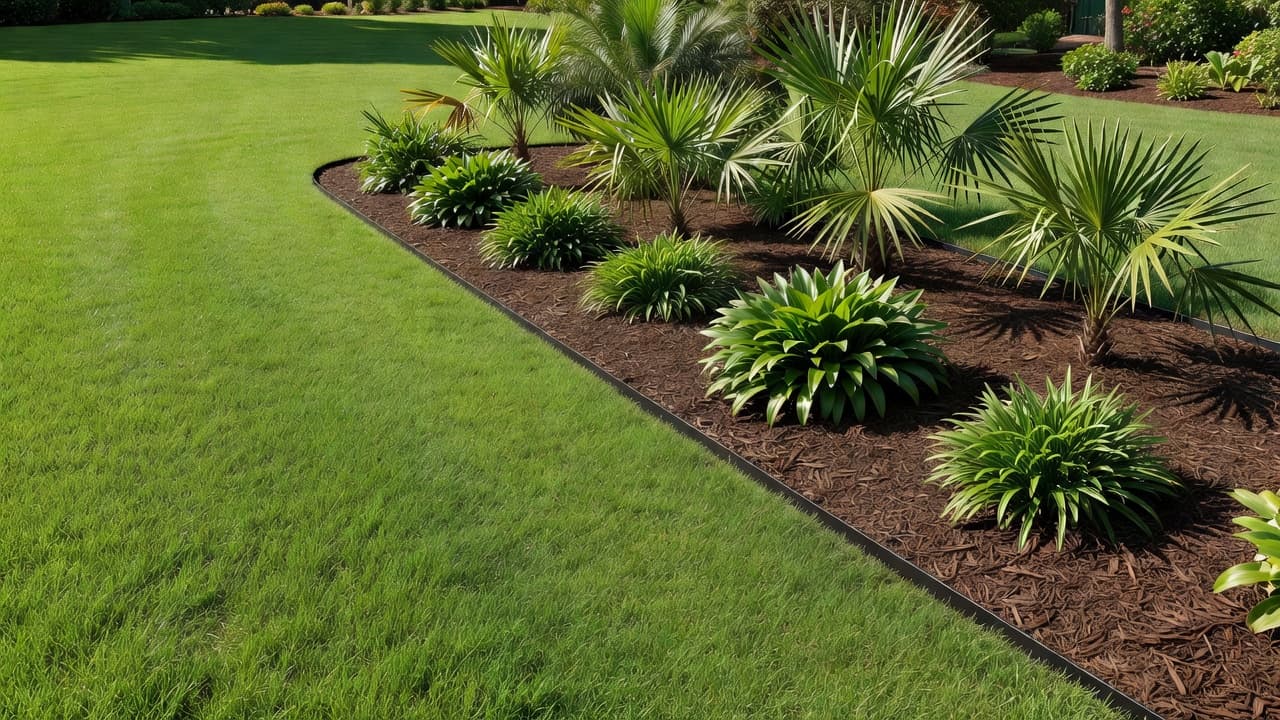
Concrete
Poured concrete creates one of the strongest permanent edges for Cape Coral plant beds. It can follow broad curves, straight lines, and geometric layouts. A narrow concrete mow strip also gives mower wheels a stable path beside the bed.
Concrete handles sun and rain well, but the installation needs a solid base and sensible joint placement. Soil movement, tree roots, and poor drainage can cause cracks. A qualified concrete company can set the grade, form the border, and create a finish that matches nearby sidewalks or patios.
This option works well around front beds, driveways, pool areas, and formal plantings. It costs more to change later, so confirm the bed shape before pouring.
Concrete pavers
Pavers create a structured border without the permanence of poured concrete. They fit well with paver walkways, patios, and driveways, especially when you want the plant bed to match existing hardscape.
A proper base prevents rocking and shifting. The installer should excavate enough soil, compact the base material, set the pavers level, and contain the outside edge. Without that support, heavy rain and foot traffic can slowly move the border.
Pavers are also practical for repairs. If one section settles, you can remove and reset individual pieces instead of replacing the entire edge.
Natural stone
Natural stone gives plant beds a softer, more organic appearance. Limestone, granite, and other dense stones can create a substantial border, while irregular pieces suit tropical or informal gardens.
Stone varies in thickness, porosity, and color. Thin pieces may move unless the base is prepared carefully. Porous stone can also show algae or mineral deposits in damp, shaded areas. Leave enough room for a mower wheel and avoid placing loose stones where they could become projectiles during mowing.
Metal edging
Aluminum and steel edging provide a clean line with little visual bulk. Aluminum resists rust and is easier to handle around curves. Coated steel has more rigidity, but scratches and cut ends can expose the metal to moisture and salt.
Metal works best when the top edge sits low and the stakes hold every curve firmly. Select a product rated for outdoor use, then protect cut ends according to the manufacturer's instructions. Thin decorative metal may look attractive but won't contain aggressive turf as well as a deeper commercial-grade profile.
Plastic and composite edging
Plastic and composite products are lightweight, affordable, and easy to shape. They work well for simple beds when the soil is stable and the border won't receive much foot traffic.
Quality varies widely. Choose UV-stabilized material with strong connectors and substantial anchoring tabs. Cheap edging can bow, lift, or become brittle in direct Florida sun. Alongside artifical turf , use a firm edge that keeps the turf backing and infill separate from nearby mulch or soil.
Brick and timber
Brick edging brings warmth to traditional or cottage-style beds. It needs a compacted base and edge restraint to prevent movement. Mortared brick can look polished, but repairs are less flexible than with dry-set pavers.
Untreated timber often has a short service life in wet, humid conditions. Pressure-treated landscape timbers last longer, yet they can still rot or shift where irrigation hits them repeatedly. Use wood only when its appearance suits the design and you accept periodic replacement.
Match the Edge to Your Yard's Maintenance Needs
A border should make routine yard care easier. Before choosing a material, decide how the lawn will be cut, where mulch will go, and whether the bed may expand later.
A flush edge is usually the easiest option for mowing. The mower wheel can ride beside the border, reducing the need for string trimming. Concrete mow strips and level pavers work especially well around large lawns.
Raised edging contains mulch more effectively, but it can catch mower decks and force you to trim by hand. Keep the top low enough for safe mowing, or leave a narrow maintenance strip between the lawn and the raised border.
Curved beds need flexible material or carefully fitted segments. Metal, plastic, and poured concrete can follow gradual curves. Large rectangular pavers and straight timber are better for formal lines unless the installer cuts and places them precisely.
Consider nearby surfaces, too. A paver border usually looks intentional beside a paver driveway. Concrete can connect a bed to a walkway. Stone works well near rock gardens, palms, and informal tropical plantings. The edge should support the home's existing materials instead of competing with them.
Plan for future access before installation. Irrigation valves, lighting wires, pool equipment, and tree roots may require service later. A removable paver edge offers more flexibility than a continuous concrete strip in those locations.
Install Edging With Firm Anchors and Open Drainage
Good installation starts with the bed outline. Mark the line with a hose or marking paint, then view it from the street, windows, and main walking areas. A curve that looks attractive from one angle may appear uneven from another.
Remove turf and roots along the line. Dig to the depth required by the selected material, while checking for irrigation pipes and electrical cables before digging. The finished edge should sit high enough to contain mulch but low enough for mowing and water movement.
Lightweight edging needs regular anchors, especially at corners and curves. Install stakes through the manufacturer's anchor points and keep connectors tight. Many products need stakes at roughly 12 to 24-inch intervals, but the product instructions should control the spacing. Add extra anchors where sandy soil, slopes, or runoff could push against the edge.
Pavers and stone need a compacted base. Set each piece firmly, check the line with a level, and fill gaps so pieces cannot rock. Concrete needs forms, reinforcement or joints where appropriate, and a grade that directs water away from structures.
Keep drainage paths open. Don't place a raised border directly across a swale or in front of a downspout outlet. If water must cross the bed, use a deliberate low point, drainage channel, or open transition rather than forcing runoff around the entire planting area.
A strong edge holds its position because the ground beneath it is prepared, not because the border is simply pushed into the soil.
Maintain the Border Through Florida Weather
Maintenance depends on the material, but every edge benefits from regular inspection after heavy rain. Look for lifted sections, washed-out base material, exposed anchors, and mulch collecting against the lawn.
Trim plants before stems and roots hide the border. Keep irrigation heads aimed at the bed rather than the edging and pavement. Excess spray can stain concrete, encourage algae, and wash soil into joints.
Paver borders may need occasional joint-sand replacement or resetting. Schedule paver cleaning when algae, dirt, or irrigation stains build up, and use pressure carefully around joints. Concrete can be rinsed and repaired when small cracks appear. Metal needs inspection for rust, peeling coatings, or sharp exposed ends.
Mulch should stay below the top of the border. If it spills onto the lawn, the mower can scatter it across the yard. Stone beds need occasional raking to restore an even surface, while artificial turf transitions need brushing and debris removal near the edge.
A quick seasonal check catches small problems before they become a full reset. After the wet season, inspect low areas and drainage points. During the hottest months, check plastic and exposed connectors for warping or brittleness.
Key Questions to Ask Before Installation
Before choosing landscape edging for Cape Coral beds, answer these practical questions:
- Will the border sit beside grass, pavers, concrete, artificial turf, or a pool deck?
- Should mower wheels run directly against it?
- Could the edge interrupt stormwater or irrigation drainage?
- Will sandy soil, roots, or foot traffic place pressure on the material?
- Do you want a permanent installation or access for future changes?
- Can the material tolerate direct sun, standing moisture, and nearby salt air?
Bring those answers into the design conversation. A low-profile concrete strip may suit a front lawn, while anchored aluminum may work better around a curved side-yard bed. A paver edge can connect a planting area to an existing walkway without making the entire yard look formal.
Conclusion
The right border does more than separate grass from mulch. It controls mower access, protects the bed's shape, supports clean drainage, and helps materials withstand Cape Coral's sun, rain, sandy soil, and salt air.
Choose the material after checking the yard's grade and maintenance needs. Then give the edge a firm base, proper anchors, and enough clearance for water and equipment. With those details in place, landscape edging can keep plant beds neat and low-maintenance for years.