


Why Gardenia Leaves Turn Yellow in Southwest Florida
Yellow gardenia leaves are a reason to examine the soil, irrigation, and foliage before reaching for a treatment. In Southwest Florida, alkaline soil and changing moisture conditions can make the answer less obvious than it first appears.
A gardenia with pale new growth needs a different investigation than one sitting in a soggy bed. Start with the pattern of yellowing , then look at what has changed around the plant.
Key Takeaways
- Yellow leaves with green veins can point toward limited iron availability, especially in alkaline soil.
- Check moisture below the mulch before adjusting irrigation. A rain shower may wet the surface without soaking the root ball.
- Look for insects and recent cold exposure as part of your inspection.
- Soil testing and a review of drainage can help you choose a treatment instead of guessing.
Read the Leaf Pattern Before Treating
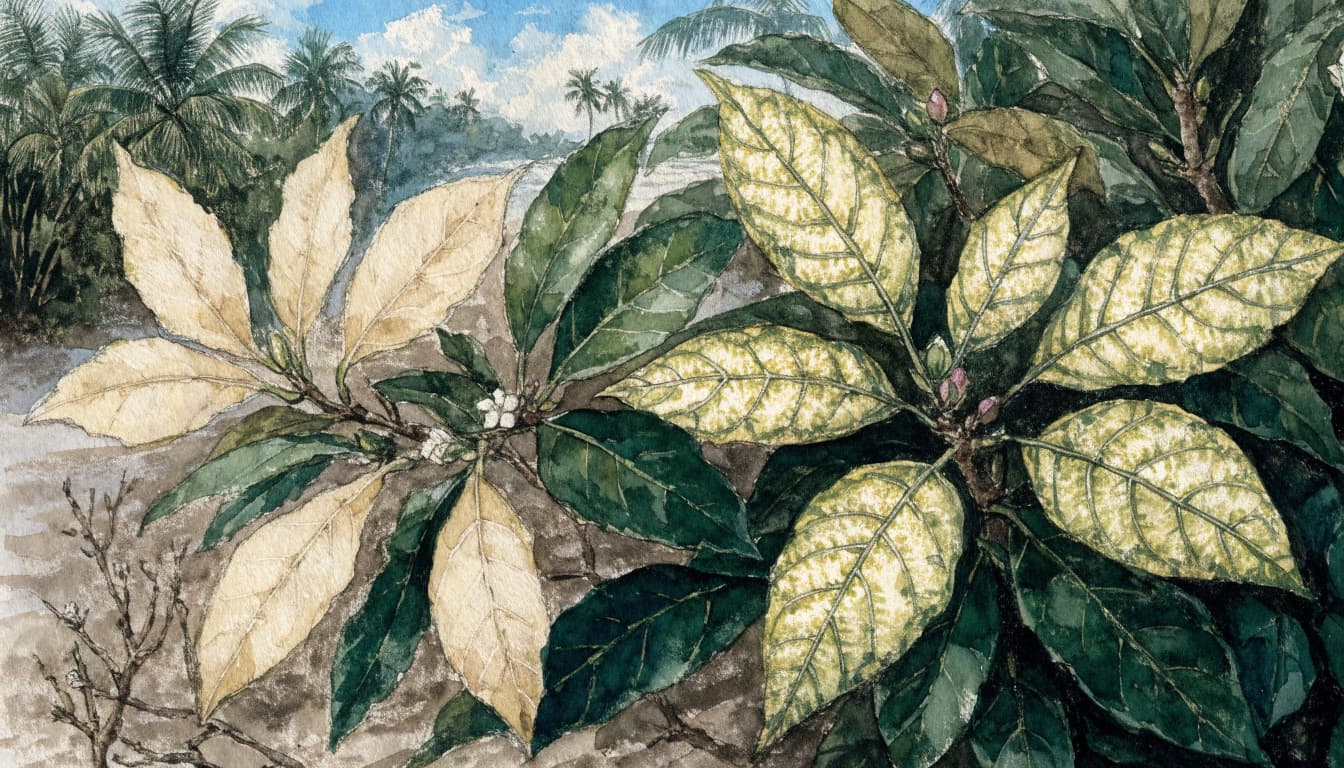
Look at the whole shrub before removing discolored leaves. Note where yellowing appears, whether the veins remain green, and whether the plant is producing new growth.
Use these observations to decide what to examine next.
| What you notice | What to investigate |
|---|---|
| New leaves are yellow with green veins | Soil pH and iron availability |
| Pale color appears across much of the shrub | Soil conditions and nutrient availability |
| The soil stays wet after rain or irrigation | Drainage and irrigation coverage |
| Leaves or stems have visible insects | The type and extent of the infestation |
| Foliage changed after a cold spell | Exposure and signs of cold injury |
A leaf pattern is a clue, not a complete diagnosis. For example, yellow tissue between green veins is associated with iron chlorosis, but high pH and poor nutrient availability need a closer look before you choose a product.
Compare the gardenia with nearby plants, too. If several shrubs in the same bed show changes, examine shared conditions such as irrigation coverage or soil. If only one plant looks affected, inspect its root zone and foliage on their own.
Check for Alkaline Soil and Iron Chlorosis
Gardenias prefer acidic soil, but Southwest Florida properties can have alkaline soil or calcareous fill. Calcareous material contains calcium carbonate, which can keep soil pH high and make some nutrients less available to plants.
Why Green Veins Matter
Iron chlorosis describes yellowing that occurs when leaves don't have enough usable iron. New growth may turn yellow while the veins stay green. In high-pH soil, iron can be present but less available for uptake.
Manganese availability can also be affected by high pH, so leaf color alone doesn't identify the missing nutrient. Our guide to Cape Coral soil problems covers other clues, including pale growth and salt-related leaf damage.
Test Before Adding Amendments
A soil test gives you a better starting point than repeated applications of iron or fertilizer. Collect soil from the affected planting area and follow the testing lab's sampling instructions. Keep samples from noticeably different parts of the yard separate.
If the results indicate an issue, choose a product labeled for the intended use and follow its directions. A micronutrient treatment may address an identified shortage, but it doesn't automatically correct the conditions affecting availability.
Also consider the planting site's history. Shell fill, construction materials, and soil near concrete can differ from soil elsewhere in the yard. A test from the gardenia bed is more useful than one taken from a distant lawn.
Manage Water and Drainage During Rainy Weather
Southwest Florida's rainy season can bring heavy downpours, while sandy beds can still dry quickly between storms. The goal is to keep the gardenia's root zone evenly moist without leaving it saturated.
Look Below the Surface
Push aside the mulch and use a finger or hand trowel to feel the soil a couple of inches down. If it's still damp, wait before watering again. If the root zone is dry, water slowly enough for moisture to soak into the root ball and nearby soil.
Check after rain as well as after irrigation. A short shower can leave the surface damp while the soil below remains dry. A newly planted shrub also needs closer attention because its roots are still concentrated in the original root ball.
Find Out Where Water Collects
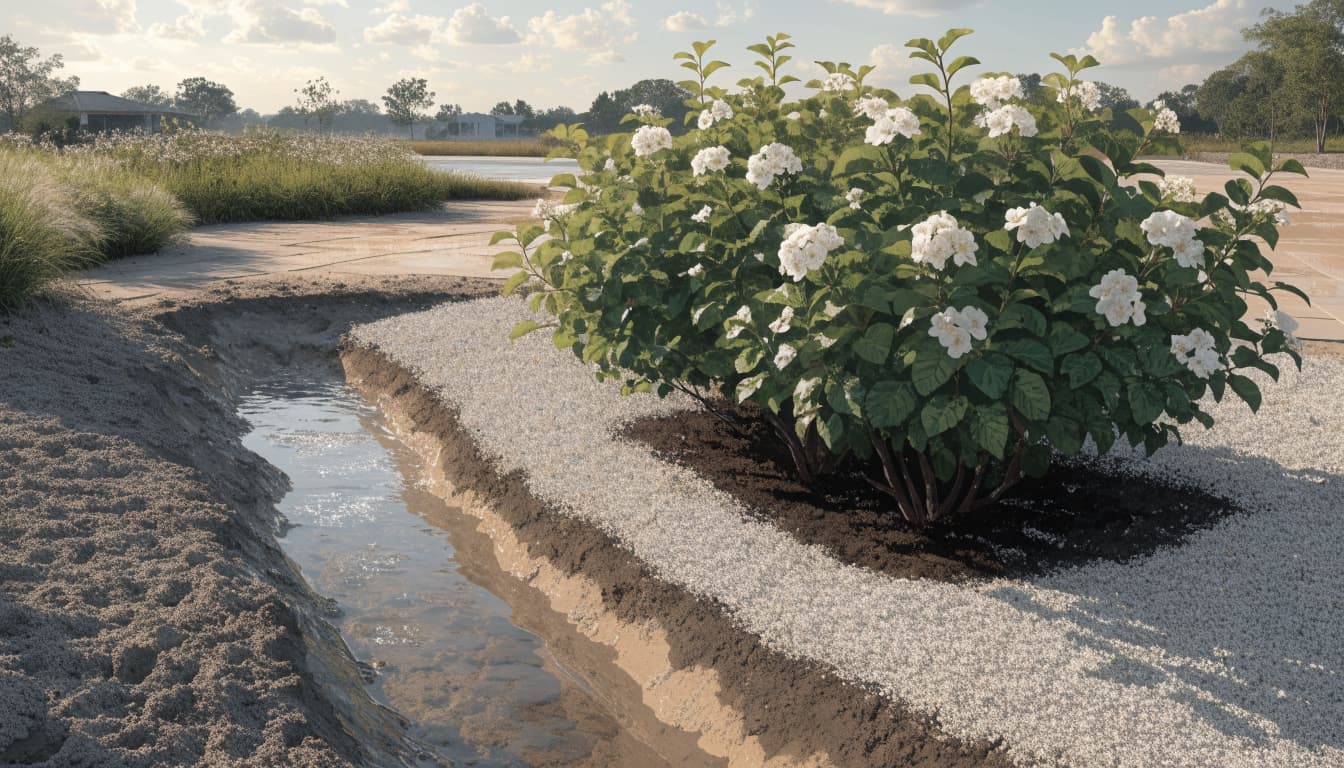
Watch the bed after a substantial rain. Downspouts, compacted fill, and low areas can hold water around a planting. Meanwhile, a bed beside a hot driveway may dry faster than a shaded bed nearby.
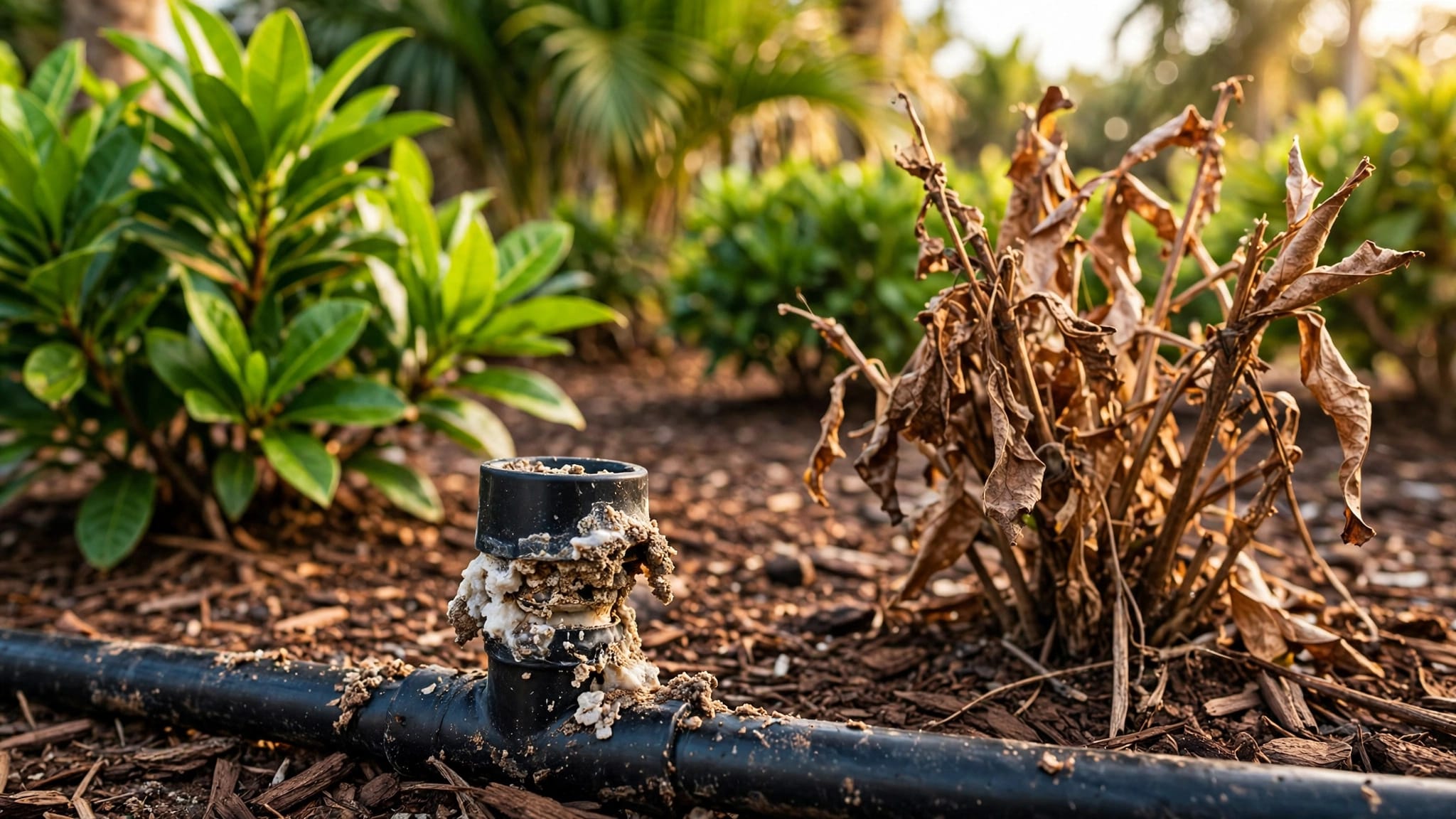
Adjust the irrigation controller for rainfall, and look for heads that spray the same area more than intended. Drip tubing can direct water toward a shrub's root zone, although it still needs a suitable schedule and maintenance. Our comparison of drip irrigation and spray heads can help you choose a setup for the bed.
If water remains in a low spot after rain, address the drainage pattern before adding more plants. A raised planting area or a change in grading may be appropriate, depending on where the water can safely go.
Consider Nutrients Without Overfeeding
Southwest Florida's sandy soil often holds fewer nutrients than heavier soil. Rain and excessive irrigation can also move nutrients past the root zone, so a pale shrub deserves a look at both soil and watering conditions.
That doesn't mean every yellow gardenia needs a fertilizer application. Adding more of a nutrient won't solve a situation where soil conditions limit its availability. Heavy feeding can also send unused nutrients beyond the bed.
Use the soil test and the plant's symptoms to guide your next step. If fertilizer is appropriate, select a product labeled for the plant and follow the package directions. Local fertilizer restrictions can affect when certain products may be applied.
Organic mulch can help moderate moisture around the roots. Keep it several inches away from the main stems so moisture doesn't stay against the plant's crown. As mulch breaks down, refresh it without piling a thick layer over the root zone.
Inspect for Pests and Cold Exposure
A soil test won't show everything happening above ground. Examine the leaves and stems, and consider whether weather changed shortly before the foliage declined.
Look Closely at Leaves and Stems
Turn over a few leaves and inspect the undersides. Also look along stems for insects, sticky residue, or dark sooty growth. Scale insects can appear as small bumps attached to plant tissue, while other pests may be easier to see when leaves move.
Identify the pest before choosing a treatment. A spray selected without an identification may miss the problem or affect beneficial insects. If treatment is needed, use a product labeled for the pest and the plant, and follow all label directions.
Remove fallen debris around the shrub so you can see new changes more easily. Avoid heavy pruning while you're still assessing the plant.
Account for Cold Spells
Cold weather can slow growth in tender shrubs and injure exposed foliage. Look for damage after an unusually cold night, especially in an open bed where wind reaches the plant.
During a forecast cold event, frost cloth can provide temporary protection. Support the cover so it reaches toward the ground, and remove it when temperatures rise. Keep the root zone appropriately moist, but don't soak the soil in response to cold weather.
Wait to judge the full extent of damaged growth before making major pruning cuts. New growth gives you a better view of which branches remain active.
Look at the Whole Planting Site
Yellow gardenia leaves may prompt you to inspect the shrub, but the surrounding layout matters too. A bed beside a patio can experience reflected heat, while one beneath a downspout may receive more water than the rest of the yard.
Leave room around the plant for air circulation and maintenance. Group shrubs with similar water needs on the same irrigation zone where practical. When redesigning a difficult bed, compare gardenia's needs with other plants suited to Southwest Florida.
Hardscape changes deserve the same attention. If a concrete company is working near an established gardenia, discuss the grade and drainage path before work begins. Protect the root area from unnecessary disturbance, and avoid directing runoff toward the stem.
Sprinkler placement matters around pavers and artificial turf, too. Overspray can carry soil onto pavers and add to paver cleaning, while runoff may collect at the edge of a turf installation. Adjusting coverage can help keep water in the planting bed where it's needed.
Frequently Asked Questions
Should I remove yellow gardenia leaves?
You can remove loose or fully discolored leaves during routine cleanup. However, leave enough foliage in place while you investigate. The location and pattern of the yellowing can help you assess the plant.
Will iron fertilizer fix yellow leaves?
Iron may help when a shortage of available iron is part of the problem. First, consider the leaf pattern and test the soil. If high pH affects availability, repeated fertilizer applications alone may not address the underlying condition.
Should I water a yellowing gardenia more often?
Check the soil before changing the schedule. If it's dry below the surface, water the root zone slowly. If it's damp, wait and examine the bed's drainage and irrigation coverage.
Can a gardenia stay near a concrete patio?
A gardenia can grow near a patio when its planting space meets its needs. Pay attention to soil conditions, reflected heat, and where runoff collects. The bed should provide room for roots and access for watering and maintenance.
Give Your Gardenia a Better Starting Point
Yellow foliage is useful information when you pair it with a close look at the soil and site. Start with the leaf pattern, check moisture below the surface, and use a soil test to guide nutrient decisions.
At Outdoor Life Pros, we help homeowners with landscaping and irrigation projects in Cape Coral, Fort Myers, Estero, and Bonita Springs. A well-planned bed gives your gardenia a better place to grow and makes its care easier to manage.