


Why Mulch Washes Away in Cape Coral Yards and How to Stop It
Mulch that looks perfect on install day can disappear after one hard storm. In Cape Coral, that happens fast because rain falls hard, soil drains fast, and water always looks for the lowest path.
If your beds keep looking thin, the issue is usually more than the mulch itself. Mulch washing away is often a drainage, edging, or irrigation problem that shows up in the yard first.
The fix starts with the water, then moves to the bed shape and the materials you choose.
Why mulch slides out of Cape Coral beds
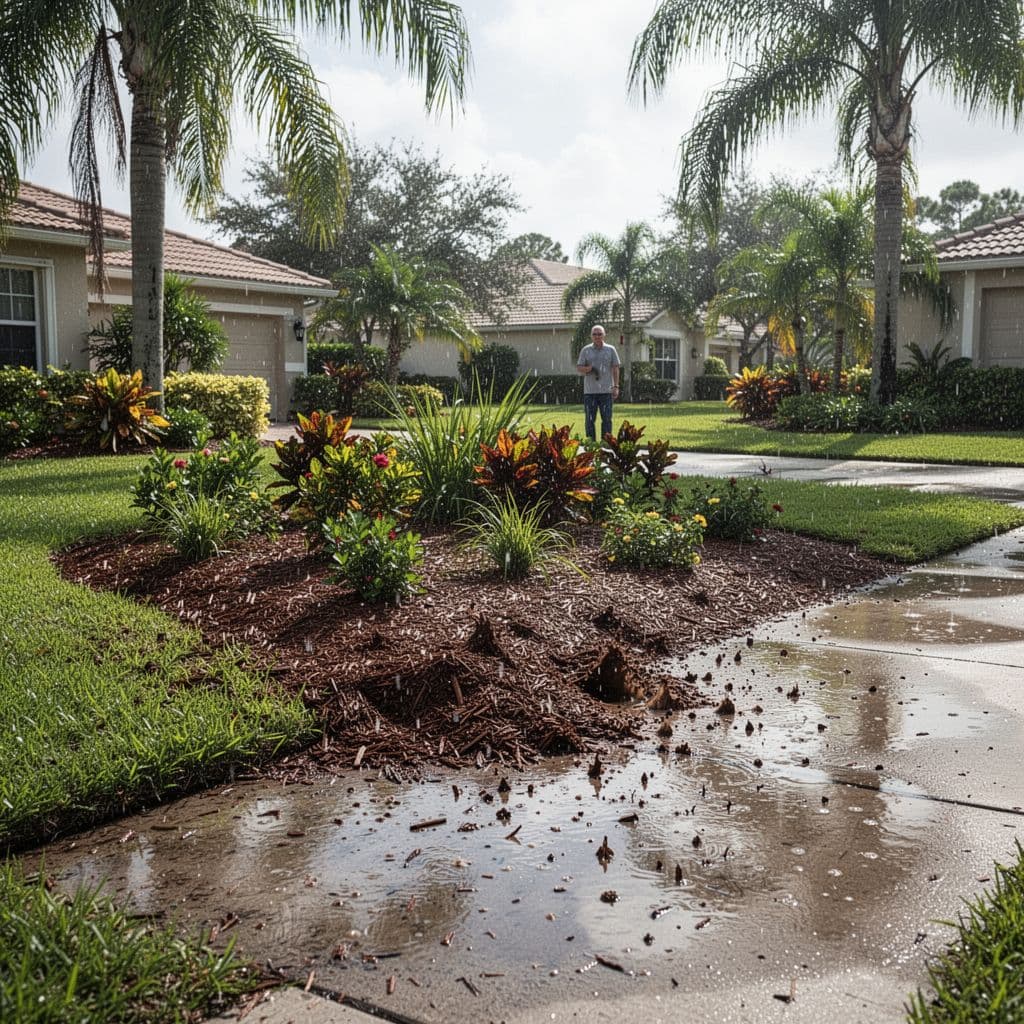
Cape Coral gets strong summer downpours, and they do not soak in gently. A short burst can send water across a bed like a small stream. Mulch is light, so it floats, shifts, and piles up at the low edge. If your beds sit next to a sidewalk, driveway, or patio, runoff has a clear exit path.
Wind adds another layer. A dry, fluffy top layer can blow out of open beds before rain even starts. Then the next storm catches that loose surface and carries it farther. On a breezy afternoon, you can lose mulch without seeing any standing water at all.
The type of mulch matters too. Fine shredded mulch breaks apart faster and moves more easily. Fresh mulch is often lighter than old mulch that has settled and bonded a bit. If the layer is too thin, it exposes soil. If it is too thick, it can slide like a loose blanket. Either way, the bed loses shape and the edges start to look ragged.
A lot of homeowners blame the mulch bag, but the real problem is usually the yard itself. Once water finds a path, it keeps using it.
Stormwater, slope, and runoff usually start it
Water follows gravity, not your planting plan. If the bed slopes toward a sidewalk or driveway, the first heavy rain will carry mulch with it. Even a slight dip can create a channel. Once water cuts that path, each storm uses it again.
Downspouts can be a bigger problem than people expect. A single roof runoff point can dump a surprising amount of water into one corner of the yard. If that outlet lands near a bed, the mulch takes the hit. A simple extension or drain line can make a big difference. For yards where the runoff keeps returning, managing side yard runoff is often the real fix, not a thicker mulch layer.
Driveway edges matter too. If the concrete or paver edge slopes toward the bed, stormwater pushes mulch outward and leaves a bare strip behind. That is one reason some homeowners keep replacing mulch every few months. The material is not failing. The water path is.
If you see puddles, erosion, or soil washouts after rain, start there. In many cases, solving driveway drainage issues is cheaper than adding more mulch over and over. Good drainage protects the bed and the hard surface beside it.
If the same corner washes out after every storm, adding more mulch only hides the real problem.
Landscaping choices that keep mulch put
Good landscaping starts with bed shape. Wide, gently curved beds hold mulch better than narrow strips with sharp corners. Corners catch water and turn into spill points. A bed that fades into a lawn or planted edge also slows runoff before it leaves the area.
The mulch itself should match the site. In Cape Coral, coarse bark nuggets or larger mulch pieces often stay in place better than fine shredded material. They interlock more and do not float as easily. A depth of about 2 to 3 inches usually works better than a heavy mound. Too little leaves soil exposed. Too much gives water a loose top layer to grab.
A few planting choices help too. Groundcover, low shrubs, and clumping grasses act like anchors. They break the force of rain and block wind across open soil. If the bed sits beside a patio or walkway, a line of plants at the edge can do more than another bag of mulch.
Some homeowners also swap out tiny problem strips. In narrow side yards, artifical turf can be a cleaner option where mulch never stays put. It can make sense near hose bibs, gates, and tight walkways where water and foot traffic keep disturbing the bed.
You can think of this as the difference between loose material and a bed with structure. Structure wins after summer rain.
Edging, concrete, and paver details that stop repeat washouts
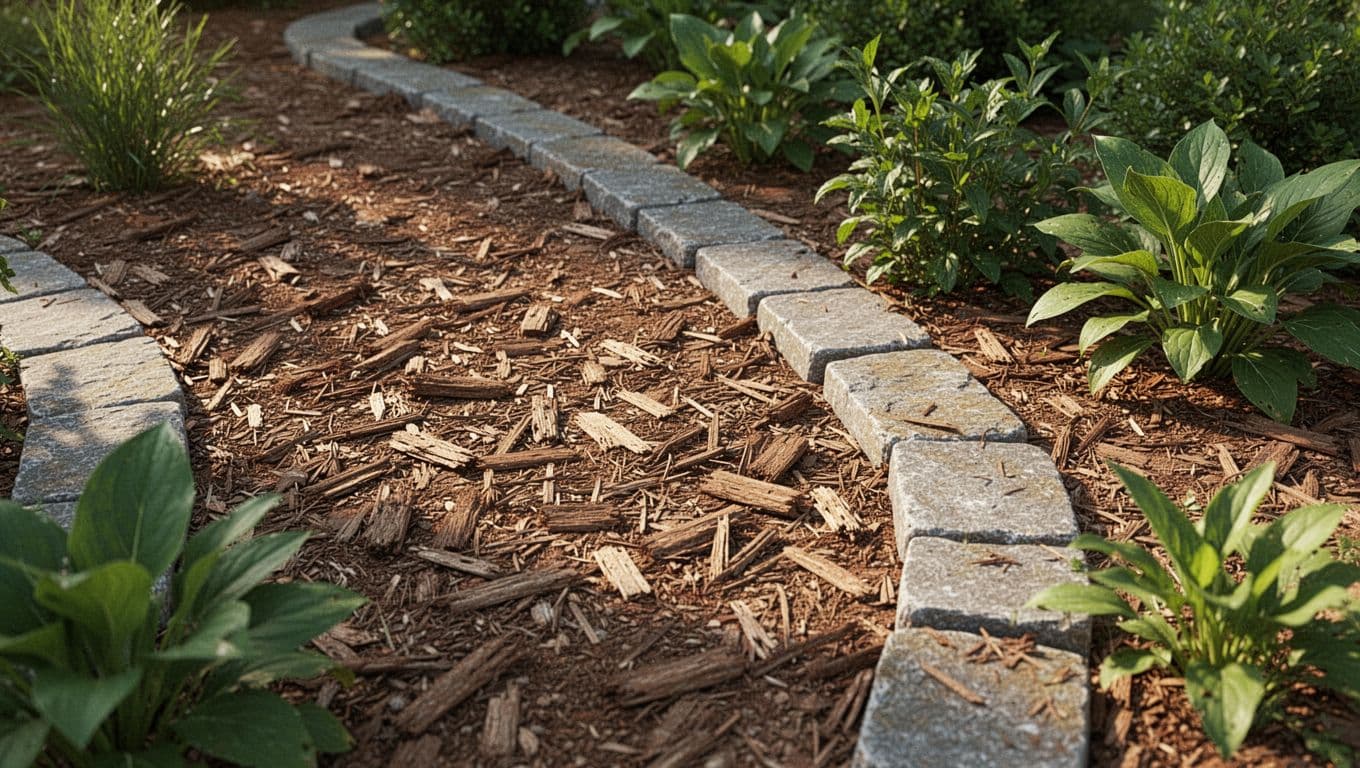
Edging gives mulch a physical stop. Metal edging, stone edging, and stacked paver borders all help, as long as they sit above the soil line. When the edge is buried too deep, water skips right over it. When it is too low, mulch still escapes. A clean edge should guide water and hold material without looking bulky.
Hardscape changes can help even more. If a bed borders a patio or driveway, a small curb or raised border may be the right move. A concrete company can correct a low slab edge, pour a narrow border, or fix a pitch that keeps sending water back into the bed. That kind of repair matters when the same spot keeps washing out after every storm.
Paver borders need care too. Sand can settle out of the joints, and the edge can sink a little over time. After storms, paver cleaning helps remove silt and debris that collect along the border. It also shows you where water is flowing. If the joint sand keeps disappearing, the surface may need more than a rinse. It may need re-sanding and a look at the base.
For homeowners comparing hardscape options, comparing paver and concrete patios can help with long-term maintenance planning. The best choice is often the one that works with your drainage, not against it.
Irrigation habits that protect the bed
Irrigation is another common reason mulch looks scattered. A sprinkler head that throws water across the bed can send light mulch drifting a little at a time. After a few cycles, the bed edge looks ragged. A broken head or misty spray pattern makes it worse.
Cape Coral yards often run irrigation more than they should because the grass or palms need it. That extra water does not stay where you want it. It softens the bed surface, loosens the top layer, and gives runoff a clear path. Drip lines help in planted beds because they put water near the roots and keep the mulch drier on top. That means less movement and less mess.
It helps to walk the yard during a sprinkler cycle. Look for overspray on sidewalks, mulch beds, and the base of walls. If the spray hits the bed edge, adjust the heads before the next storm does the rest. Also watch for low spots near gates or fence lines, because those places collect water and collect mulch too.
When a bed keeps failing, the issue is rarely one thing. Usually it is a mix of light mulch, weak edging, bad slope, and too much water in the wrong place. Fix two or three of those, and the bed starts holding together.
Conclusion
Mulch washes away in Cape Coral because water, slope, and irrigation work against it. The best fix is rarely more mulch. It is better drainage, firmer edging, and beds shaped to slow runoff.
When the bed design fits the yard, the mulch stays where it belongs. That means less cleanup, fewer replacement bags, and a yard that still looks finished after the next summer storm.