


Sprinkler Head Types for Florida Lawns: A Practical Guide
Florida lawns can look healthy after a rainy week, then develop dry spots, puddles, and brown edges when irrigation runs. Choosing the right sprinkler head types helps you use water more evenly while protecting sidewalks, driveways, and nearby planting beds.
The right setup depends on lawn size, soil, wind, water pressure, grass variety, and zone layout. No single head works best for every Florida property, so start by understanding how each option distributes water.
What to Check Before Comparing Sprinkler Head Types
Sprinklers work as part of a system, not as separate products. A head with excellent coverage can still waste water if the zone has weak pressure, poor spacing, or the wrong nozzle.
Sprinkler head type versus nozzle type
A sprinkler head is the body that rises from the ground or sits above it. A pop-up spray body, gear rotor, and impact sprinkler are all head types.
A nozzle controls how water leaves the head. Fixed spray, rotary, strip, and adjustable nozzles can change the pattern, radius, and application rate. For example, a rotary nozzle may sit on a standard pop-up spray body. The body is the head, while the rotary component is the nozzle.
This distinction matters when replacing parts. Installing a new nozzle won't solve a damaged body, clogged filter, leaking seal, or low-pressure problem.
Match the equipment to the property
A small rectangular lawn may work well with fixed sprays or rotary nozzles. A large open yard usually needs gear rotors because they throw water farther and use fewer heads.
Florida's sandy soil drains quickly, but compacted areas and slopes can still produce runoff. Strong coastal winds can also move fine spray onto a driveway or sidewalk. Grass type matters as well. St. Augustine, Bahia, Zoysia, and other warm-season turf varieties can have different watering needs.
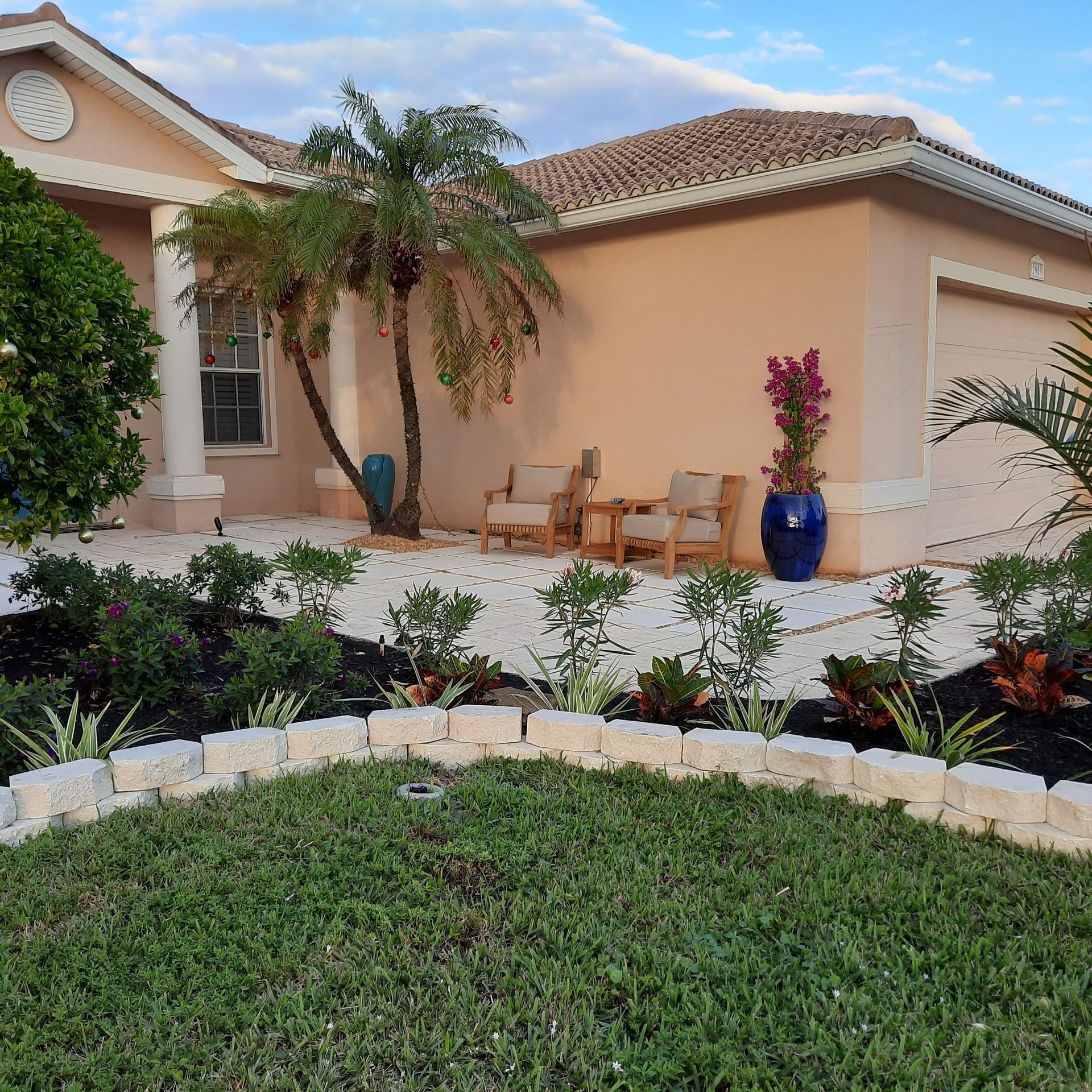
When irrigation is part of a larger landscaping project, plan the underground lines before installing pavers, concrete, or new planting beds. Coordinating irrigation and hardscape work can prevent unnecessary trenching later.
Common Sprinkler Head Types for Florida Lawns
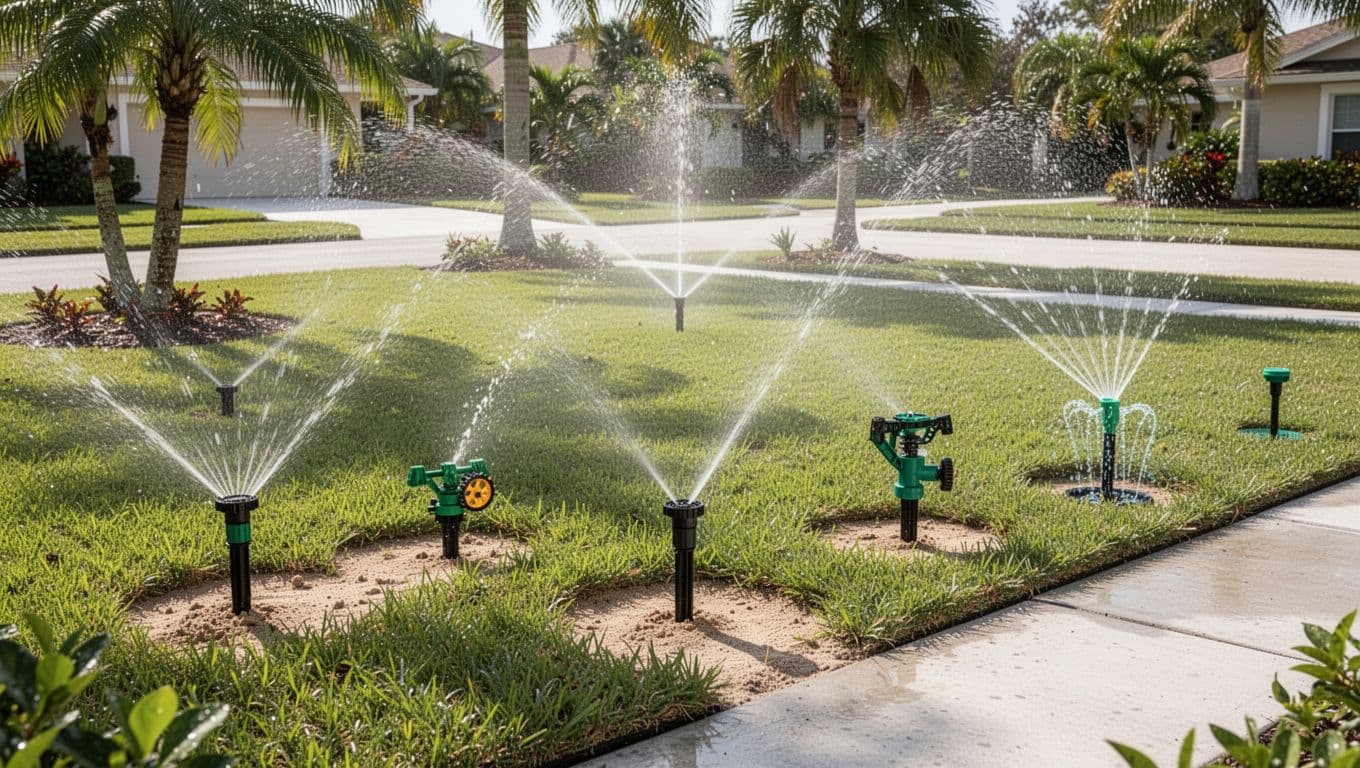
The main options for turf are fixed spray heads, rotary nozzles, and gear-driven rotors. Each one has a different throw distance and precipitation rate.
Fixed spray heads
Fixed spray heads pop up and deliver a fan-shaped pattern over a set arc, such as 90, 180, or 360 degrees. They work well in narrow spaces, small lawns, and areas with many corners.
Their short radius makes spacing important. Spray heads usually need head-to-head coverage, which means water from one head should reach the next head. Placing them too far apart creates dry strips between the sprays.
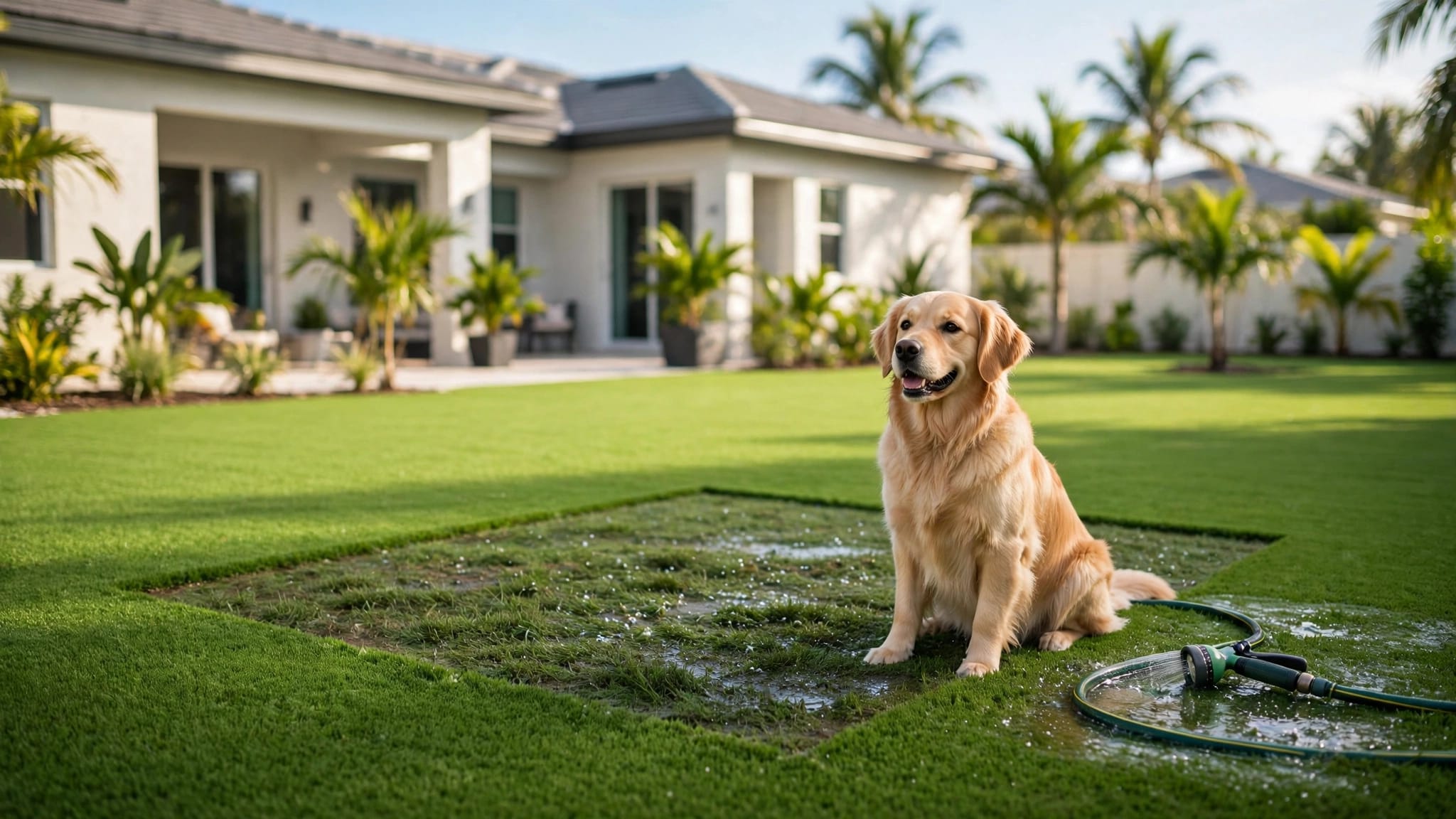
Fixed sprays apply water quickly. That can be useful for compact areas, but sandy slopes or compacted soil may not absorb the water fast enough. Use shorter run times, cycle-and-soak scheduling, or a different nozzle when puddling occurs.
Rotary nozzles
Rotary nozzles send several narrow streams that rotate across the lawn. They usually apply water more slowly than standard spray nozzles, which can reduce runoff on sloped or compacted ground.
These nozzles fit many pop-up spray bodies, but they still require adequate operating pressure. Their streams can look gentle while traveling farther than a traditional spray, so adjust the arc carefully around fences, pools, sidewalks, and driveways.
Rotary nozzles suit medium-sized turf areas and zones that need a slower application rate. Don't mix them with standard spray nozzles in the same zone unless the system designer has matched the output.
Gear-driven rotors
Gear rotors are designed for larger areas. They rotate a stream over a longer radius, often covering distances that would require many spray heads.
Rotors need enough flow and pressure to operate correctly. If a rotor turns slowly, fails to pop up, or produces a weak stream, the problem may involve pressure, a clogged filter, a damaged seal, or too many heads on one zone.
They work best in broad, open lawn sections. Small, irregular spaces often lose water when rotors spray across hardscape or planted beds.
When Impact Sprinklers, Bubblers, or Drip Systems Fit
Some yards need equipment beyond standard turf heads. The correct choice depends on whether you're watering grass, shrubs, trees, or a narrow planting strip.
Impact sprinklers for open areas
Impact sprinklers rotate when a water stream moves a spring-loaded arm. They can cover broad areas and tolerate some outdoor abuse, which is why they remain common in large yards and agricultural settings.
They can be noisy and may throw water farther than a residential lawn needs. Wind can distort their spray, and exposed impact heads may interfere with mowing or foot traffic. Use them only when the coverage pattern fits the property and the head won't spray neighboring areas.
Bubblers and drip for beds
Bubblers release water near the base of a tree or shrub. They work well for individual plants, tree rings, and areas where broad spray would wet a wall or walkway.
Drip irrigation is different from a sprinkler head. It delivers water through emitters or tubing at a slow rate. Drip often fits plant beds because it keeps water near the roots and reduces evaporation from exposed soil.
For a bed beside hot pavers or concrete, compare the watering needs of the plants before choosing equipment. Drip irrigation versus spray heads can help clarify which approach fits a Cape Coral planting area.
Matched Precipitation and Proper Spacing
Uniform coverage matters more than the number of heads in the ground. A zone with too many different nozzle outputs can leave one area soaked while another remains dry.
Use matched precipitation rates
Matched precipitation means heads in the same zone apply water at roughly the same rate, even when they use different arcs. A quarter-circle nozzle should not apply four times as much water as a full-circle nozzle in the same time period.
Manufacturers offer matched-precipitation nozzles for common spray patterns. They help each section of the zone receive a more consistent amount of water.
The same principle applies when mixing head families. Standard sprays, rotary nozzles, and gear rotors usually have different application rates. Keep them in separate zones unless their performance specifications match.
Space heads for overlapping coverage
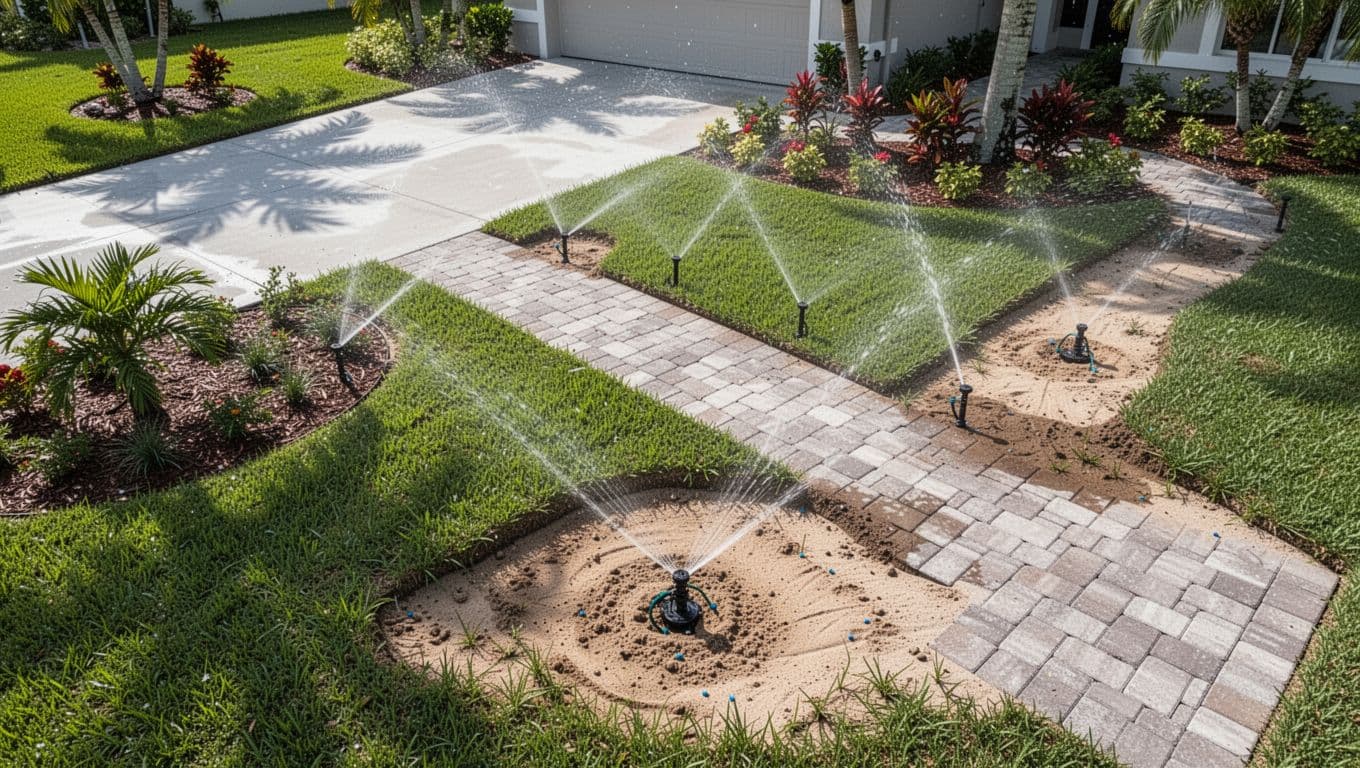
Place heads so each one supports the next. A head placed in the center of a large area may produce a wet circle near itself and a dry outer edge. Several properly spaced heads create more even coverage.
Corners usually need quarter-circle patterns. Along straight edges, half-circle heads can water toward the lawn while limiting spray behind the boundary. Full-circle heads belong in open interior areas.
Use a catch-cup test to measure what the lawn receives rather than relying on appearance. The sprinkler coverage catch-cup test can reveal dry spots and overwatered sections after changing nozzles or moving heads.
Pressure and Zone Layout Affect Performance
A sprinkler's listed radius assumes a certain operating pressure. Static pressure, measured when the system is off, doesn't tell you how the zone performs while several heads run.
Check pressure while the zone operates
Low pressure can cause short coverage, weak streams, incomplete rotor rotation, and heads that fail to rise fully. High pressure can create misting, uneven distribution, and excess evaporation.
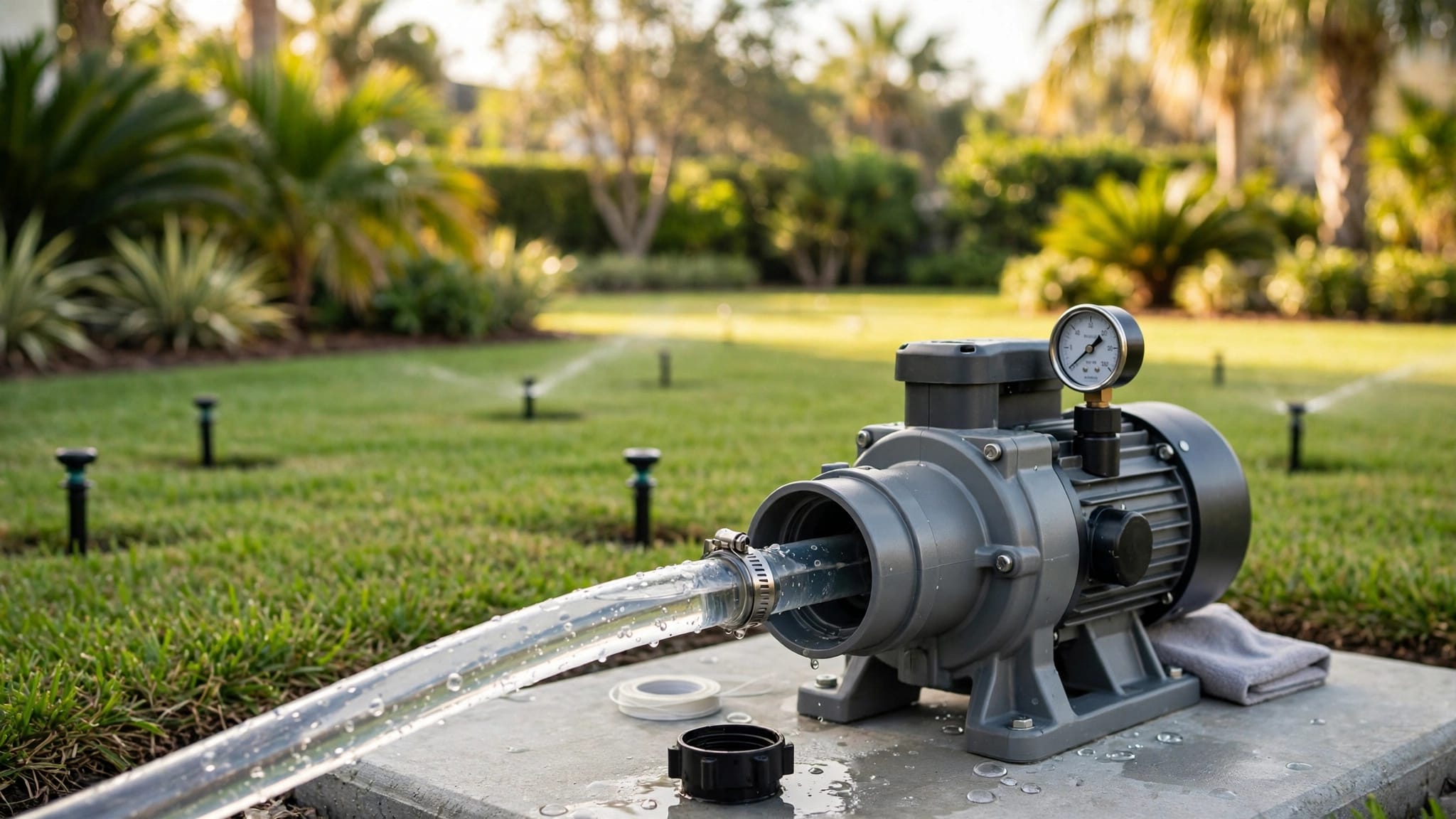
A pressure regulator may help when pressure is too high. Low pressure may require fewer heads per zone, a larger supply line, valve repair, filter cleaning, or a pump assessment.
If only one zone performs poorly, inspect its valve, wiring, filter, and nearby pipe. Troubleshooting a low-pressure irrigation zone is different from correcting low pressure across the entire property.
Group plants and turf by water needs
Keep turf heads separate from shrub beds when possible. Grass areas need broad, even coverage, while many shrubs need slower watering near their root zones.
A well-organized zone also avoids mixing short-radius sprays with long-throw rotors. Grouping similar equipment makes run times easier to set and simplifies future repairs.
Prevent Runoff and Overspray on Hardscape
Water that lands on concrete, pavers, walls, or fences doesn't help the lawn. It can also stain surfaces, encourage algae growth, wash mulch away, and waste water.
Adjust run times and spray arcs
Cycle-and-soak scheduling divides one long watering period into shorter cycles with rest time between them. This gives sandy soil and compacted areas more time to absorb water.
Inspect the system while it runs. Replace clogged or broken nozzles, correct tilted heads, and adjust arc settings so spray stays inside the lawn. A rain sensor can stop unnecessary irrigation after heavy storms, but it still needs testing and maintenance.
Plan around concrete, pavers, and turf changes
Tell a concrete company where irrigation lines and heads are located before patio, walkway, or driveway work begins. A new edge can block a head's pattern, while grading can bury or expose a line.
Schedule irrigation adjustments before or during hardscape construction, not after fresh concrete or pavers are finished. Paver cleaning and pressure washing can also damage poorly protected heads or uncover components near the surface.
Natural grass may need a complete zone redesign after installing what some searches call "artifical turf." The turf surface doesn't need irrigation, but surrounding palms, beds, and shrubs still do. Removing part of a lawn can also leave excess heads that spray onto hardscape.
How to Choose the Right Head for Your Lawn
Start with the area being watered, then consider the system's pressure and flow.
- Small lawns with tight corners often suit fixed spray heads with matched-precipitation nozzles.
- Medium lawns with mild slopes may benefit from rotary nozzles because they apply water more slowly.
- Large, open turf areas usually fit gear rotors when the zone has enough pressure and flow.
- Wind-exposed yards need larger droplets and carefully adjusted arcs, rather than fine mist that drifts.
- Narrow strips beside driveways may need strip-pattern nozzles or drip irrigation for nearby beds.
- Trees and individual shrubs often need bubblers or dedicated drip emitters.
Installation cost depends on trenching, pipe condition, the number of zones, controller upgrades, head count, and surface restoration. Florida irrigation installation costs can vary widely, especially when a project includes new sod, pavers, or concrete.
Also check local watering requirements before programming the controller. Rules can vary by city, county, and water utility, and schedules may change with drought conditions or seasonal restrictions. Verify the current requirements with your local utility or water management authority.
Conclusion
The best sprinkler head types for a Florida lawn depend on coverage area, soil, wind, pressure, turf, and the layout of each irrigation zone. Fixed sprays suit small spaces, rotary nozzles slow the application rate, and gear rotors cover larger open lawns. Bubblers and drip systems often work better for beds and individual plants.
Proper spacing, matched precipitation, pressure testing, and careful arc adjustment matter as much as the head itself. When water stays on the intended lawn area instead of running across a driveway, the system works more efficiently and the yard stays healthier with less waste.