


Florida Lawn Crabgrass: Identification and Control
Crabgrass control in Florida starts with identifying the unwanted plant, protecting your turf, and treating the conditions that leave bare soil exposed. A spray alone won't repair a thin lawn or correct a sprinkler problem.
Southwest Florida's warm weather and mix of lawn grasses make timing and product choice important. Start by looking closely at the affected area before choosing a treatment.
Start With the Weed and the Turf
A patch of unfamiliar grass doesn't automatically call for a whole-lawn treatment. First, note where it appears, how much of the yard it covers, and whether the surrounding turf is healthy.
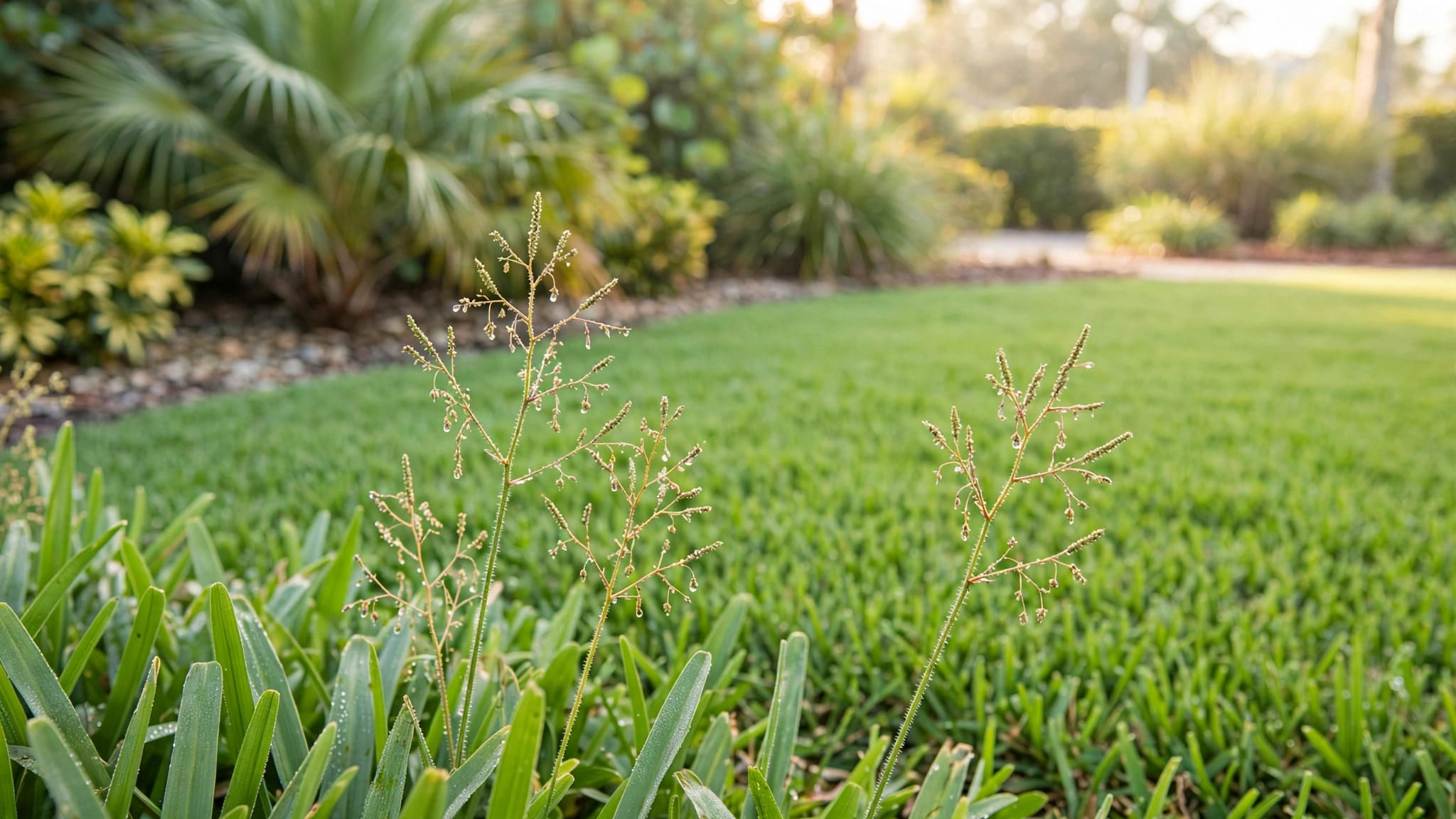
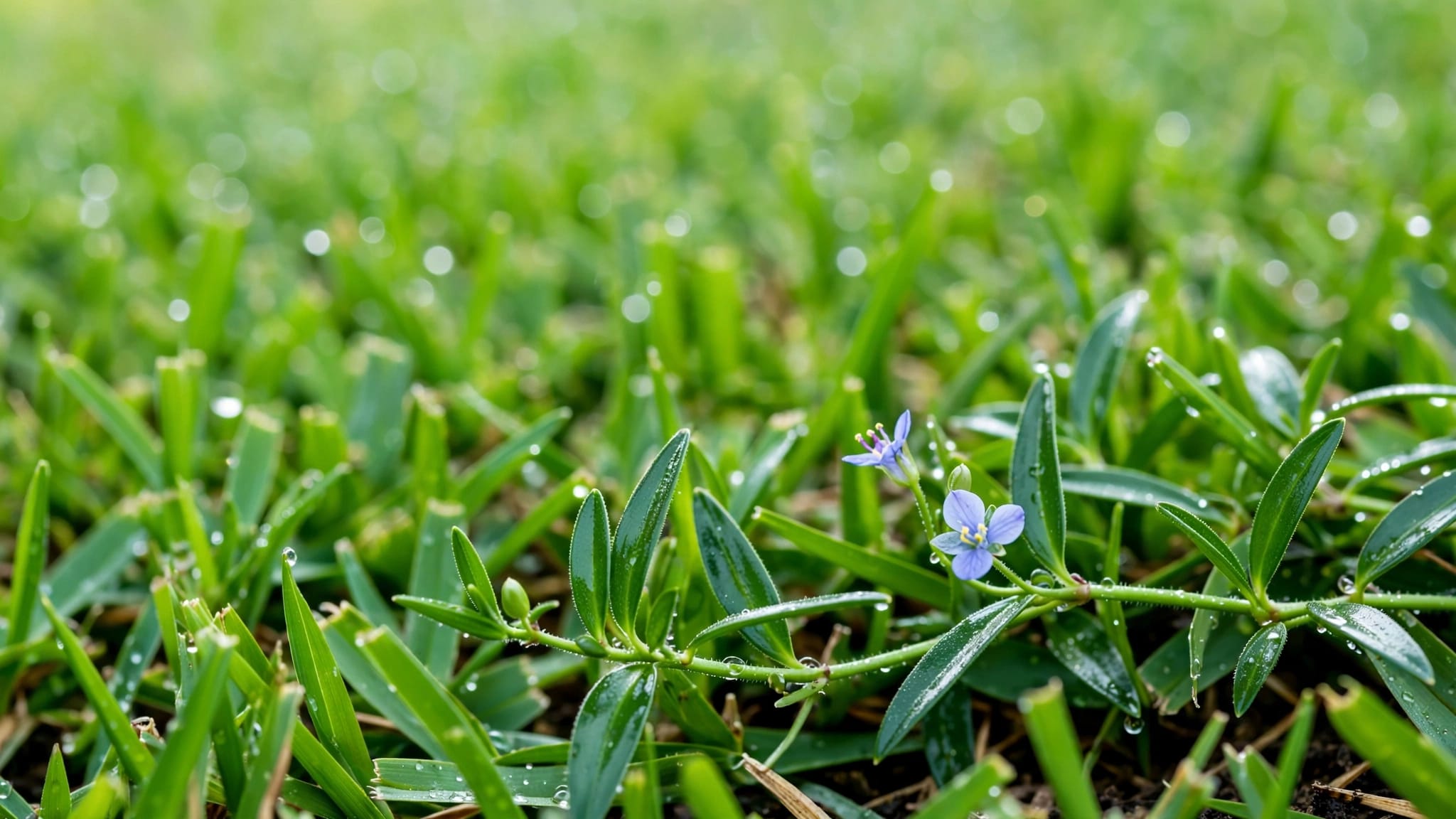
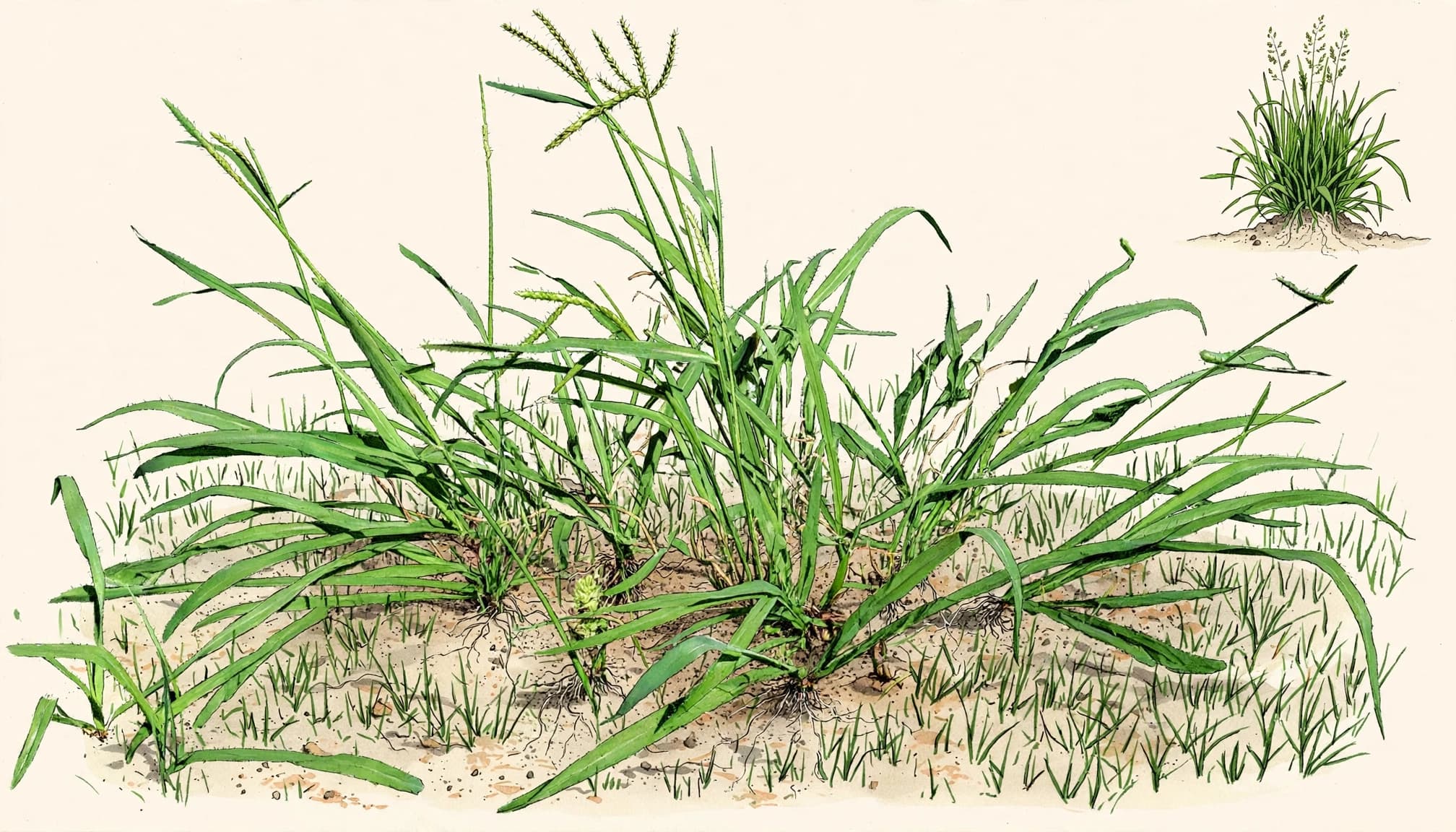
Look at the plant's leaves, stems, and any seedheads. Take a clear photo of the entire patch and another close to the soil. These details give a lawn professional or county extension office more to work with than a distant photo of a green patch.
Map the affected areas
Mark patches near driveways, sidewalks, planting beds, and sprinkler heads. Also look for exposed soil, mower damage, or areas that receive heavy foot traffic.
A map helps you decide whether a small-area treatment is practical. It can also reveal a pattern: weeds concentrated beside a driveway may call for a different lawn repair than weeds spread across a thin yard.
Identify your lawn grass
The desired turf matters as much as the unwanted plant. A product suitable for one Florida grass may damage another, and mixed lawns need extra care.
Common Southwest Florida lawns include St. Augustinegrass, zoysiagrass, bahiagrass, and bermudagrass. If you're unsure what you have, take a sample or clear photos to a local lawn professional before choosing a herbicide.
Plan Pre-Emergent Treatments Around Conditions
Pre-emergent herbicides target susceptible weeds as their seeds germinate. They work near the soil surface and don't remove mature weeds already growing in the lawn.
For general spring weed prevention, UF/IFAS uses February 1 as a South Florida planning marker. It's a starting point rather than a fixed appointment. Warm weather, shade, irrigation, and soil conditions can vary between properties, even within Cape Coral or Fort Myers.
Account for the length of coverage
Many pre-emergent products provide roughly six to 12 weeks of control. Some labels allow a later application to extend coverage, while others set different intervals or annual limits.
Follow the product's directions for timing and rate. Applying more than the label permits won't give you a safer or more reliable result. For more general seasonal guidance, see our Southwest Florida pre-emergent timing guide.
Treat fall weeds on their own schedule
Fall prevention addresses a different seasonal group of weeds, including winter annuals. In Southwest Florida, late October into November is a useful period to monitor conditions for that purpose.
A fall application isn't a substitute for a spring lawn plan. Choose the target weed first, then select a product and application window that fit that target and your turf.
Choose a Pre-Emergent Product for Your Lawn
The active ingredient is only one part of a product decision. The full label determines where the formulation can be used, which turf types it allows, and how it must be applied.
Ingredients used in Florida pre-emergent lawn programs include prodiamine, dithiopyr, pendimethalin, bensulide, and benefin. Formulas vary, so a familiar ingredient doesn't make every product suitable for every yard.
Before applying a product, read its directions for the application rate, protective equipment, watering, and re-entry. Pay attention to restrictions around planting beds, trees, and water. Some products need irrigation after application, while others have different directions.
New sod and recently repaired areas deserve particular care. Pre-emergent products can interfere with seed germination and may affect developing sod roots. Don't apply one to a new lawn unless its label permits that use.
Keep the original container for storage, and keep children and pets out of treated areas for the period stated on the label. Never dispose of leftover material in a storm drain, canal, or pond.
Deal With Visible Weeds Without Damaging Grass
Once unwanted plants are visible, a pre-emergent application won't make those established plants disappear. Small patches and larger infestations may call for different approaches.
Remove isolated plants by hand
Hand removal can be practical when only a few unwanted plants are present. Work when the soil is moist, loosen the soil around each plant, and lift out as much of it as you can.
Avoid tearing up a large area of healthy turf in the process. If removal leaves bare spots, plan to repair them rather than leaving open soil for another weed problem.
Select a treatment for the identified weed
For a larger patch, a post-emergent product may be an option. Choose one whose label lists both the identified weed and your lawn grass. A container labeled for lawns doesn't automatically make it safe for St. Augustinegrass, zoysia, Bahia, and Bermuda alike.
Treat only as the label directs, and avoid applying herbicides to turf already stressed by drought, heat, disease, or recent installation. Where weeds are limited to a small area, spot treatment may reduce the amount of product needed.
If the weed or turf is difficult to identify, ask a lawn professional for help before spraying. A licensed applicator is also a good choice when you're uncomfortable handling pesticides.
Match Lawn Care to Your Florida Grass
Dense, healthy turf leaves less exposed soil for weeds. Getting there depends on selecting grass suited to the site's light, traffic, and water conditions.
St. Augustinegrass is common in Southwest Florida homes and can work in full sun or filtered shade. Standard cultivars such as Floratam and BitterBlue commonly perform well when mowed around 3.5 to 4 inches, although the right setting depends on the site and cultivar.
Bahiagrass is often used in sunny, lower-maintenance areas. Zoysiagrass can form a dense lawn but has different mowing and maintenance needs. Bermudagrass also needs care suited to its growth habit rather than a schedule copied from a St. Augustine yard.
If you're replacing a substantial section, compare St. Augustine, zoysia, and Bahia sod before deciding. The grass that fits a sunny front yard may struggle in a shaded side yard.
Mixed turf can complicate herbicide selection. If two grasses grow together, a treatment must be suitable for each grass you want to keep.
Mow and Water to Support Thicker Turf
Lawn care won't remove every weed, but it can help desirable grass fill gaps. Start with the mower and irrigation system before adding more products.
Set the mower for your grass
Use a sharp blade and mow at the height recommended for your turf. Avoid removing more than one-third of the leaf blade in a single cut.
Scalping exposes soil and stresses the grass. If the lawn has grown too tall, bring it back toward its recommended height over multiple mowings instead of cutting it short all at once.
Leave light, dry clippings on the lawn. Remove thick clumps that block sunlight, especially where grass is already thin.
Adjust irrigation for rain and coverage
Water deeply enough to moisten the root zone when the lawn needs it. Frequent shallow cycles can encourage shallow roots, while saturated soil can weaken turf.
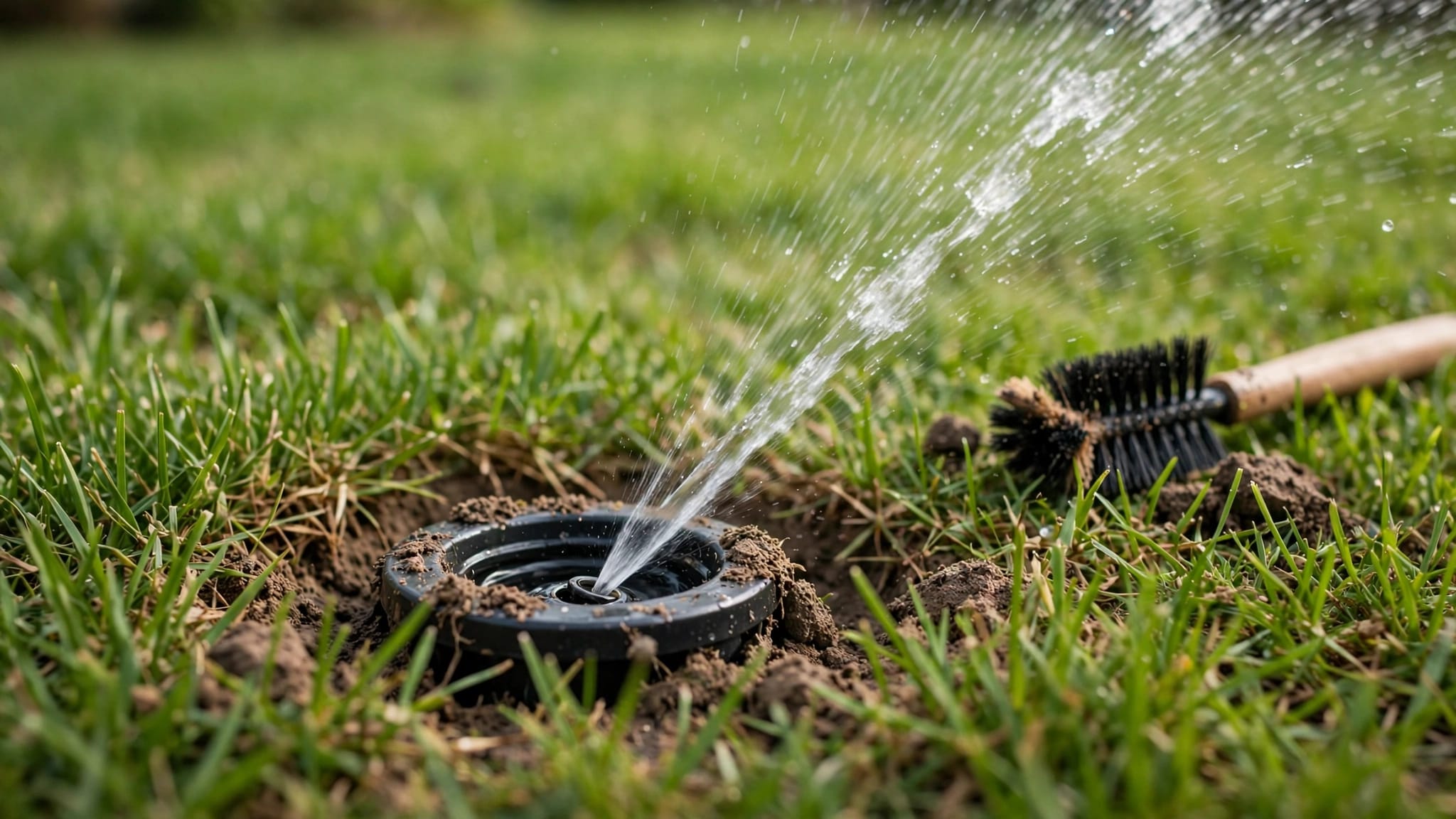
Check the soil before watering and reduce irrigation after substantial rain. Broken heads, leaks, and uneven coverage can leave one part of a yard dry while another stays wet. Our guide to irrigation zones and installation costs explains factors that affect a system's layout.
Follow local watering rules, and avoid running sprinklers onto sidewalks or into the street.
Repair Thin Spots After Addressing the Cause
A thin patch needs more than a fresh layer of sod if the original problem remains. Look for shade, traffic, drainage trouble, or missed sprinkler coverage before replacing the grass.
Where living grass remains, reduce traffic and give it time to recover with suitable mowing and irrigation. St. Augustinegrass may fill an opening if healthy runners remain, while a badly damaged area may need plugs or sod.
For larger repairs, choose a grass suited to the space and prepare the soil before installation. Keep new sod watered as it establishes, then gradually adjust to a schedule suited to the established lawn. Avoid mowing until the sod has rooted well enough that it doesn't lift easily.
A narrow, heavily used side yard may be a poor fit for natural grass. Artificial turf is another option for some small spaces, though it still needs a properly prepared base and drainage.
Coordinate Lawn Repairs With Hardscape Work
Outdoor projects can change how water and foot traffic move across a property. A new patio or walkway may alter sprinkler coverage or leave narrow strips of turf that are difficult to maintain.
If a settled walkway or patio sends water toward the lawn, a concrete contractor can assess the surface alongside the landscaping plan. Correcting the slope or drainage issue can make a lawn repair more effective.
Sequence the work carefully. If you're installing sod near pavers, heavy cleaning can splash sand and debris onto the new edges. Let the sod root and the seams stabilize before scheduling paver cleaning.
At Outdoor Life Pros, we work with homeowners on sod, irrigation repair, and other outdoor improvements in Southwest Florida. Coordinating those projects can help protect a repaired lawn.
Keep a Simple Seasonal Lawn Routine
Walk the yard during active growth and note any new thin areas. Pay attention to edges, high-traffic spots, and places where irrigation coverage changes.
Keep a record of the grass type, products applied, and treatment dates. That information makes it easier to follow label intervals and avoid repeating an application too soon.
Fertilize according to the lawn's needs and applicable local rules. Extra fertilizer won't fix compaction, a broken sprinkler, or a lawn growing in the wrong amount of shade.
Build a Lawn That Can Recover
Florida crabgrass control begins with a clear identification and a plan suited to the grass you want to keep. Prevention and treatment work best when you also address the reason an area became thin.
Keep the mower at the right height, correct irrigation problems, and repair bare spots with suitable turf. A healthy, well-matched lawn gives weeds less open ground.