


Sprinkler Coverage Test: A Catch-Cup Guide
A sprinkler coverage test can reveal why one part of your lawn turns brown while another stays soggy. The difference often comes from blocked nozzles, poor head spacing, low pressure, or wind, not from a lack of watering time.
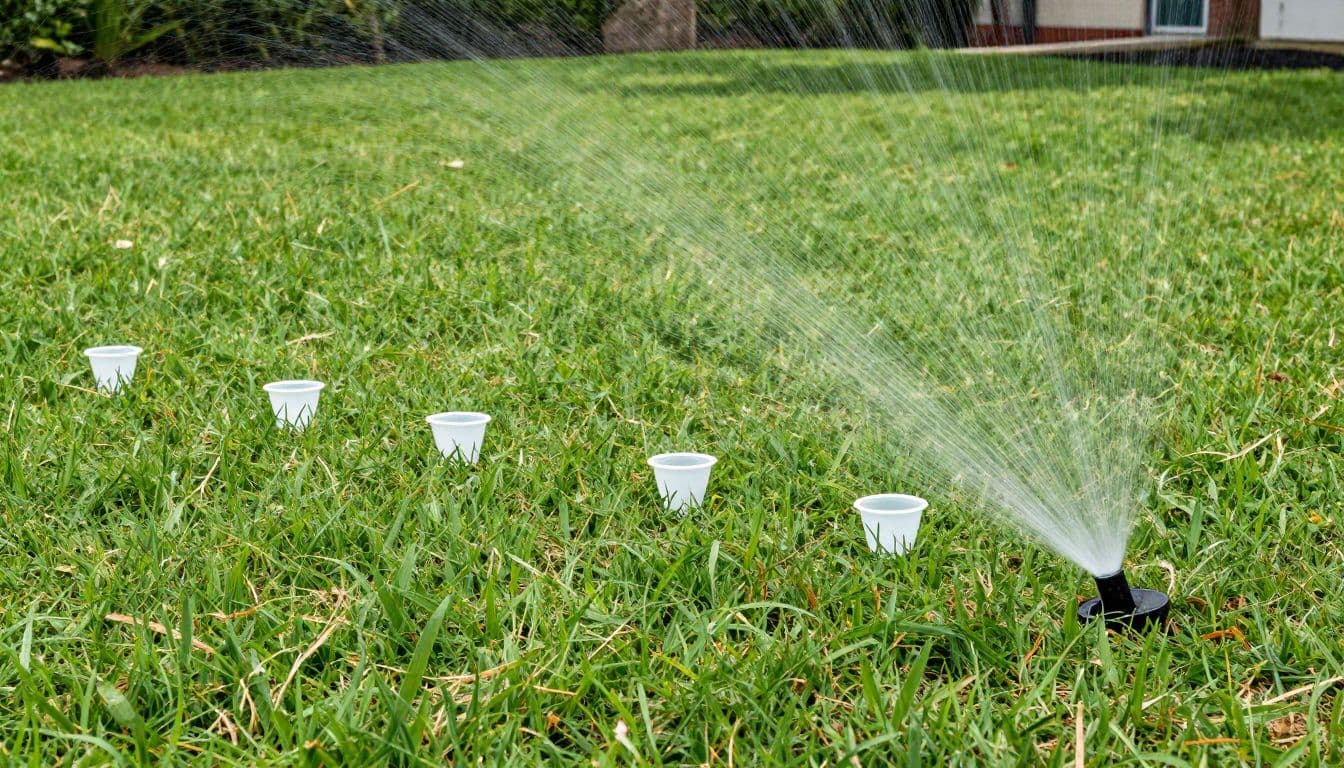
Catch cups make the problem visible. You place identical containers across one irrigation zone, run the sprinklers, measure the water, and compare the results. Before changing your watering schedule, start by setting up the test correctly.
What a Catch-Cup Test Tells You
A catch-cup test measures how evenly a sprinkler zone distributes water. It doesn't tell you whether your lawn needs water every day, how much rain has fallen, or how often your controller should run.
The test answers a narrower question: Does water reach the whole area at a similar depth?
If most cups collect close to the same amount, the zone has reasonably even coverage. If one cup holds twice as much as another, the system has a distribution problem. Increasing the run time won't fix that imbalance. It will add more water to the areas that already receive too much.
Coverage problems often appear after planting beds, pavers, walls, or other features change the yard. A head that once watered an open lawn may now spray into a hedge or onto concrete. Outdoor Life Pros' guide to the landscaping and irrigation sequence shows why sprinkler placement should be reviewed during outdoor renovations.
Prepare the Zone Before Measuring
Test one zone at a time. Mixing spray heads, rotors, drip lines, or different controller programs makes the results difficult to interpret.
Choose a calm, dry period. Wind can carry spray away from the cups, while rain changes the amount collected. Early morning often provides better conditions than a breezy afternoon, but the exact time matters less than steady weather.
Gather these items:
- At least eight identical, straight-sided catch cups or shallow cans.
- A ruler marked in inches or millimeters.
- Flags, small stakes, or other markers for cup locations.
- Paper or a phone for recording readings.
- A calculator.
Use cups with the same shape and size. Place them on the soil or grass surface, not on stands or uneven clumps. If a cup tilts, its reading won't represent the water depth accurately.
Inspect the zone before starting. Clear grass from buried heads, remove visible debris, and check whether each nozzle sprays. Don't adjust anything during the test. You need to measure the system as it currently operates.
How to Run a Sprinkler Coverage Test With Catch Cups
Follow these steps for each zone.
- Identify the zone boundaries. Turn on the controller manually and watch which heads operate. Note the area covered, including narrow strips, corners, and planting beds. Turn the zone off before placing the cups.
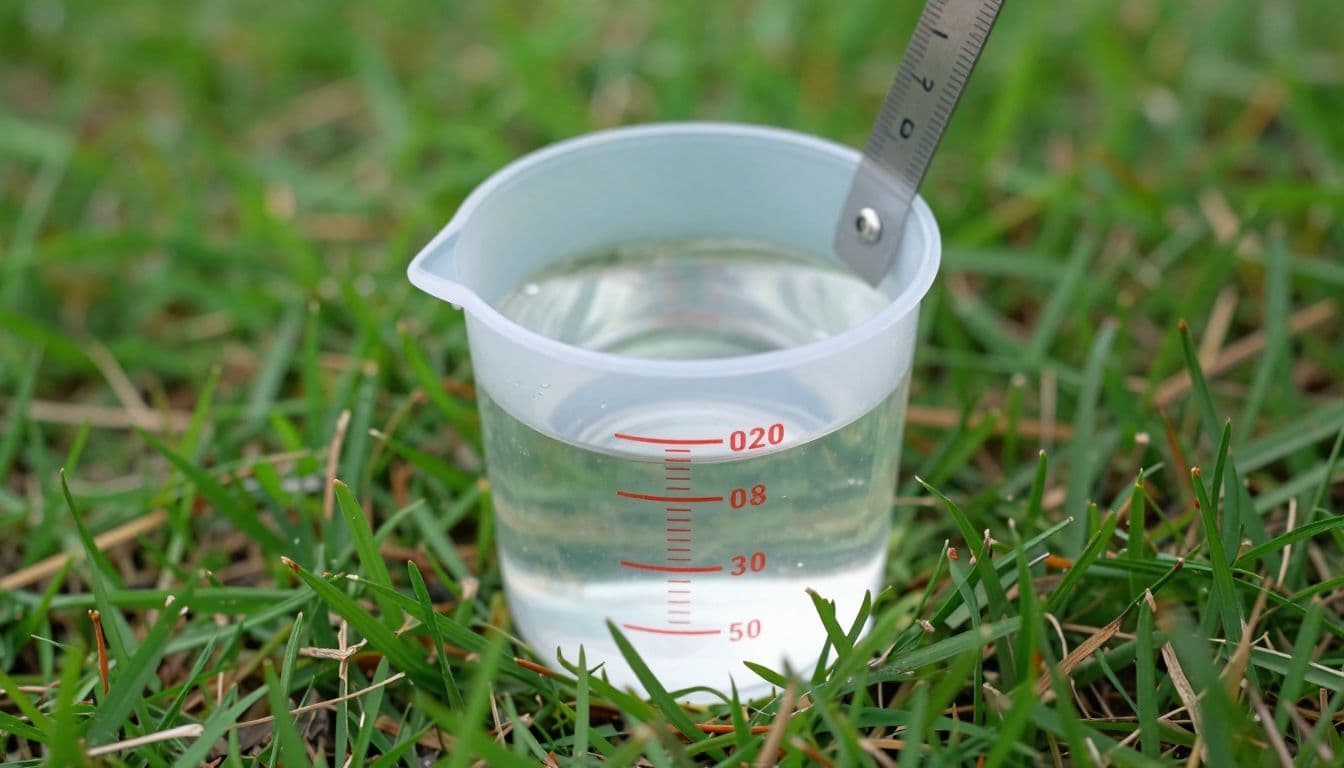
- Set out the cups in a grid. Spread them across the entire zone. Include the center, corners, edges, and any place that looks dry or unusually wet. Keep the spacing fairly even. Eight cups work for a small, simple area, while larger or irregular zones need more.
- Keep cups in the target watering area. Don't place a cup beneath a shrub if that area is not part of the turf zone. Likewise, don't include a patio or walkway in the readings. The cups should measure the surface you want the sprinklers to water.
- Check that every cup is level. Press each container gently into the grass or soil if needed. Leave the opening clear of blades that could divert water. Mark each position so you can return the cup to the same spot during a retest.
- Run the zone for a measured period. A 15 or 20 minute test usually provides enough water to measure. Record the exact run time. Use the normal spray pattern, and don't run several zones at once.
- Measure each cup separately. Turn the zone off, then measure the water depth in every container. Read the ruler at eye level and record the result in the same unit. If you measure in inches, use inches for every cup.
- Repeat questionable tests. If a gust moves the spray, a cup gets knocked over, or a pet crosses the area, reset that cup and repeat the test. One bad reading can distort the average.
A cup near a sprinkler head may collect more water than one at the edge. That difference is useful information, so don't remove high or low readings unless something clearly interfered with the test.
Calculate the Average and Coverage Uniformity
Write down each reading before doing any adjustments. A simple table keeps the results organized and gives you a record for future comparisons.
| Cup | Location | Depth collected |
|---|---|---|
| 1 | Front left edge | 0.42 in |
| 2 | Front center | 0.48 in |
| 3 | Front right edge | 0.51 in |
| 4 | Middle left | 0.55 in |
| 5 | Middle right | 0.39 in |
| 6 | Back left | 0.46 in |
| 7 | Back center | 0.50 in |
| 8 | Back right edge | 0.57 in |
Add all the readings, then divide by the number of cups. In this example, the total is 3.88 inches.
Average depth = 3.88 / 8 = 0.485 inches
To estimate distribution uniformity, find the lowest quarter of the readings. With eight cups, use the two lowest measurements. Those are 0.39 and 0.42 inches.
Low-quarter average = (0.39 + 0.42) / 2 = 0.405 inches
Now divide the low-quarter average by the overall average and multiply by 100.
Uniformity = (0.405 / 0.485) x 100 = 83.5%
A higher percentage means the zone applies water more evenly. A result in the 80s is easier to schedule than a zone with a large difference between its wettest and driest cups. However, there isn't one universal cutoff for every sprinkler type, soil, slope, or planting arrangement.
The calculation is most useful when you compare it with later tests. If a nozzle replacement changes the result from 83.5% to a lower number, the adjustment may have created a new problem.
Find the Cause of Uneven Coverage
Look for a pattern rather than focusing on one cup. Several low readings along one edge can point to poor head spacing, an incorrect spray arc, or a blocked perimeter head. A single low cup may indicate a clogged nozzle, a tilted head, or an object blocking the spray.
High readings around the sprinkler heads can occur when spray heads are too close together or when pressure causes an irregular pattern. Water collecting outside the intended area may also indicate a misaligned head.
Check these common issues:
- Grass, mulch, or soil may be covering the head.
- A nozzle may be clogged or damaged.
- A spray arc may point toward a walkway, wall, or driveway.
- A tilted head may spray high on one side and low on the other.
- Low pressure may keep heads from reaching their designed distance.
- Wind may push fine spray away from the target area.
- Different nozzle types may operate together when they need separate zones.
Fix one issue at a time, then repeat the sprinkler coverage test. If you replace several parts at once, you won't know which change improved or weakened the pattern.
Plant beds need different watering methods than open turf. If a zone serves both areas, compare the setup with this guide to drip irrigation versus spray heads before changing the controller.
Coverage Uniformity Is Different From Watering Time
Uniformity describes where the water goes . Runtime describes how long the system operates . These measurements work together, but they aren't interchangeable.
The catch-cup readings can also help you estimate the zone's application rate. In the example, the zone applied an average of 0.485 inches during a 20 minute test.
First convert 20 minutes to hours:
20 / 60 = 0.333 hours
Then calculate the application rate:
0.485 / 0.333 = 1.46 inches per hour
If you wanted to apply 0.5 inches under the same conditions, the estimated runtime would be:
0.5 / 1.46 x 60 = about 21 minutes
That calculation estimates runtime for a target depth. It doesn't create a complete watering schedule. Your schedule also depends on rainfall, plant type, soil, shade, temperature, and local watering rules.
If the soil accepts water slowly, divide a long run into shorter cycles with rest periods. This can reduce runoff, but it doesn't correct uneven spray. Always improve the distribution pattern before adding minutes to the controller.
Know When to Retest
Run another test after replacing nozzles, moving sprinkler heads, correcting pressure, changing spray arcs, or repairing a valve. New sod and major planting changes also justify a fresh measurement because the watering area may have changed.
Test again after grading or hardscape work. Before a concrete company pours a new patio, sprinkler lines and heads near the work area may need relocation. Paver cleaning or sealing can also reveal a buried or damaged head that should be corrected before irrigation settings change.
Artificial turf doesn't need sprinkler coverage across its surface, but nearby plants still need proper irrigation. A zone that once watered natural grass may need redesign after artificial turf installation.
Keep your table from each test. Comparing the numbers over time can show whether coverage improves after repairs or declines as heads clog and plants grow.
Conclusion
A catch-cup test turns uneven sprinkler spray into measurable information. Place identical cups across one zone, run it for a known period, record every depth, and calculate both the average and low-quarter uniformity.
Use the results to correct clogged nozzles, poor spacing, tilted heads, and pressure problems. Only after coverage is reasonably even should you use the average depth to estimate watering time. The driest cup often tells you more about the health of the zone than the wettest one.