


Drip Irrigation vs Spray Heads for Cape Coral Beds
Choosing between drip irrigation and spray heads is not a small detail in Cape Coral. Water has to fight heat, sandy soil, wind, and schedule changes, so every drop matters.
Homeowners searching for drip irrigation Cape Coral options usually want healthy plant beds without soggy mulch or runoff onto walks. The right answer depends on the bed shape, the plants, and the rest of the yard.
A strong landscaping plan treats beds differently from turf. That is where the real comparison starts.
Why Cape Coral plant beds need different watering
Cape Coral plant beds live in a tough spot. The sun is strong, the soil drains fast, and many beds sit close to hot concrete, pavers, or driveways. That mix can dry a bed out faster than most homeowners expect.
Sandy soil has one big advantage, it drains well after summer rain. It also has one big drawback, it does not hold moisture for long. Roots near the surface can go from damp to dry in a day or two, especially during long hot stretches.
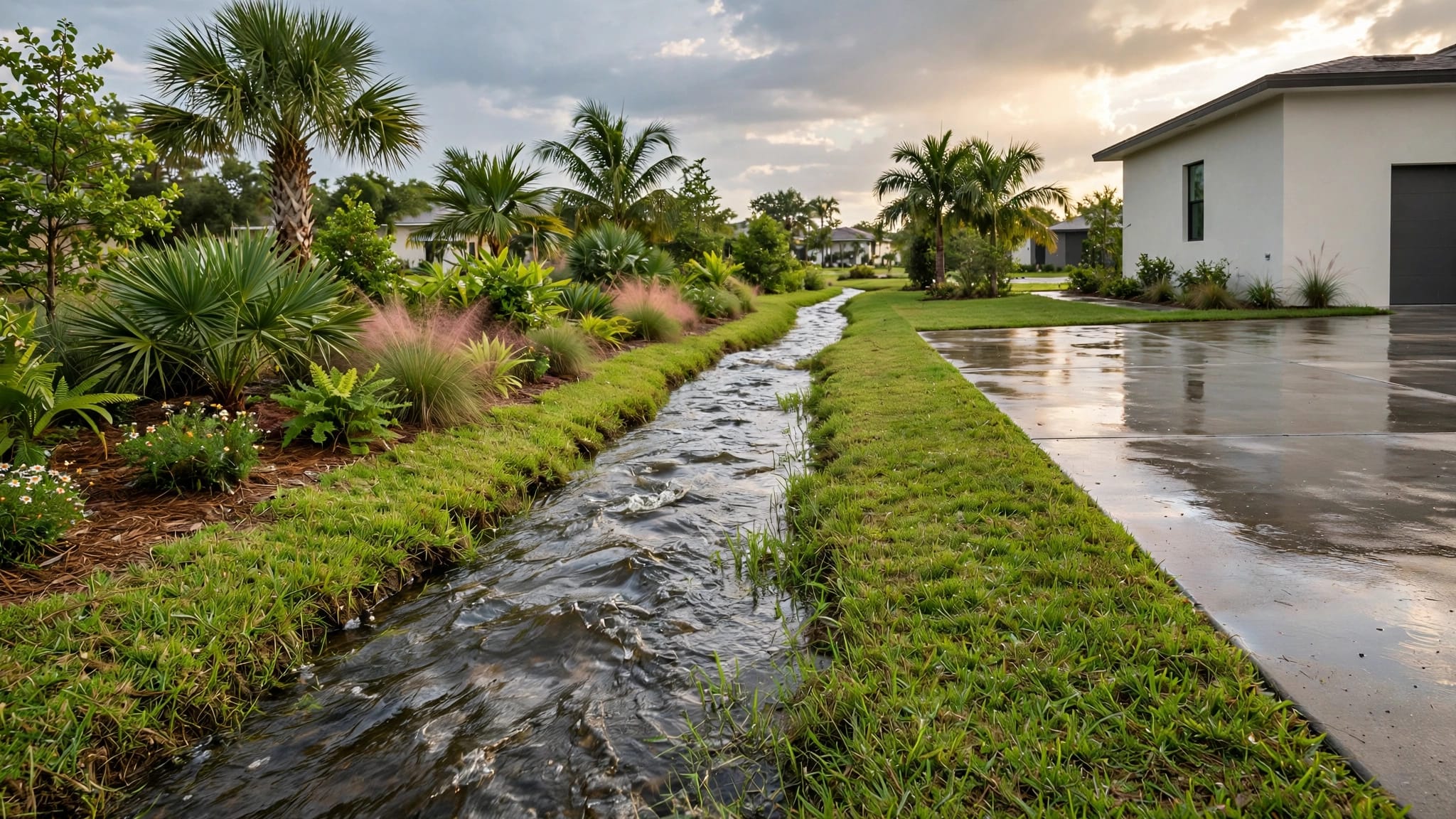
Wind adds another problem. A spray pattern that looks fine on a calm morning can drift off target by afternoon. Water ends up on sidewalks, windows, fences, and mulch instead of on the roots where it belongs.
Humidity changes the game too. Warm, damp leaves can stay wet for hours after watering. That can encourage fungus on dense ornamentals. In Cape Coral, that matters around common plantings like hibiscus, ixora, croton, dwarf yaupon holly, areca palm, and bougainvillea.
Watering rules matter as well. When restrictions tighten, a system that wastes less water gives you more room to stay on schedule. That is one reason many homeowners prefer a setup that sends water straight to the plant zone instead of spraying the whole area.
A bed near a west-facing wall, a pool deck, or a driveway edge often needs a different approach than an open bed in the middle of the yard. The right system should match that difference.
Drip irrigation vs spray heads at a glance
A side-by-side look makes the trade-offs easier to see.
| Factor | Drip irrigation | Spray heads |
|---|---|---|
| Water placement | Root zone only | Broad surface coverage |
| Wind and drift | Very low | Higher in breezy weather |
| Leaf wetting | Minimal | Frequent |
| Weed pressure | Lower around mulch edges | Higher across wet surfaces |
| Best use | Shrubs, palms, groundcovers | Open beds, mixed coverage |
| Maintenance | Filters, flushes, emitter checks | Nozzle cleanup, head alignment |
| Water use | Usually lower | Usually higher |
For most Cape Coral homes, the cleanest split is drip in plant beds and spray on turf. That said, not every yard fits a perfect rule. Large island beds, irregular corners, and mixed planting areas can still call for a spray zone.
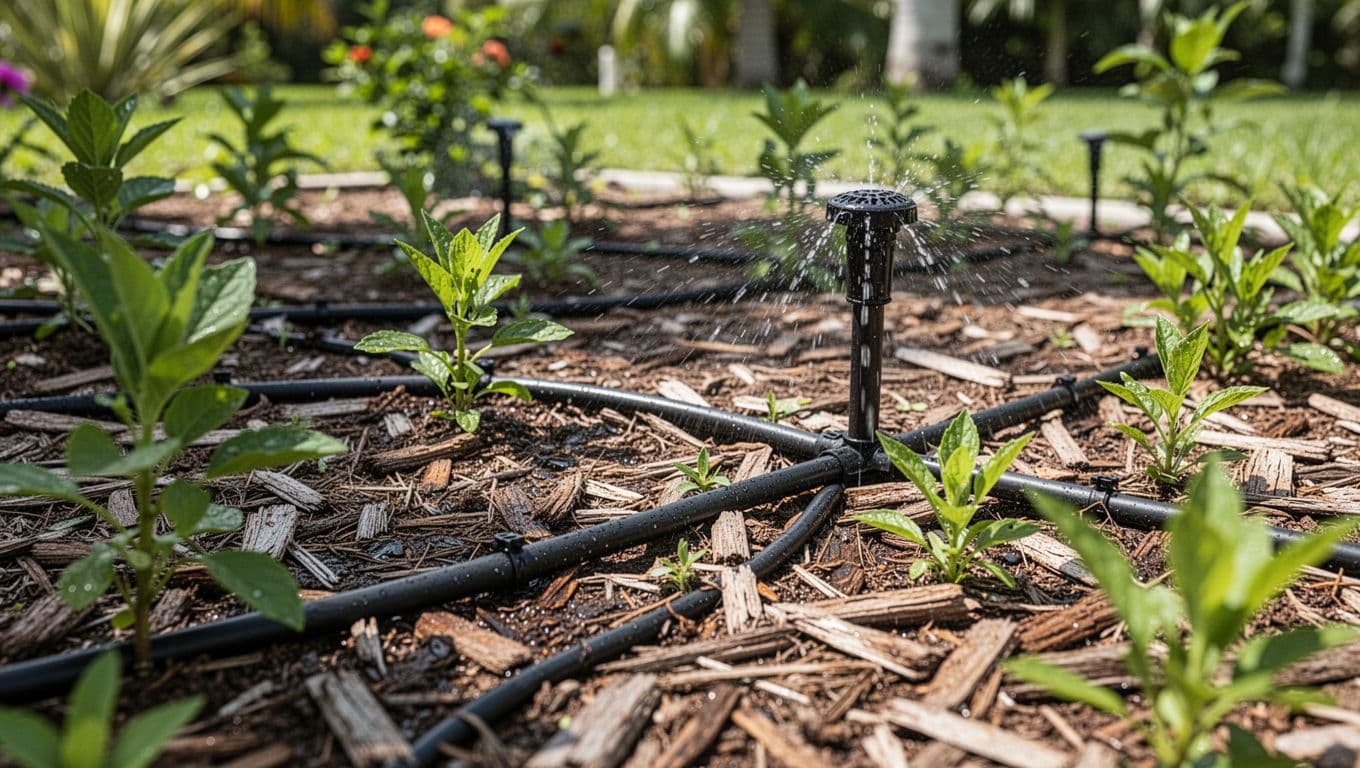
The real question is where you want the water to land. If the roots need the water and the leaves do not, drip usually makes more sense. If the bed is wide, open, and hard to divide into small zones, spray can still be the simpler fit.
How drip and spray behave in real plant beds
Drip irrigation works like a focused drink of water. It puts moisture near the root zone, so the plant gets what it needs without wetting the whole bed. That helps in Cape Coral, where heat can pull moisture out of mulch fast.
It also works well for new shrubs and palms. Fresh plantings need steady moisture, not a blast that soaks the whole surface. Drip supports that rhythm and makes it easier to water deeply without drowning the bed.
Spray heads act more like a light rain. They can cover a wider strip, which is useful in broad beds or long runs with evenly spaced plants. They also make sense when the bed layout is simple and the irrigation lines can stay neat.
The downside shows up fast on windy afternoons. Spray drift wastes water and can wet hard surfaces that do not need it. Over time, that can mean more cleanup and more uneven watering.
Weed pressure is another difference. When spray wets every open patch of mulch, weed seeds get the same moisture as the plants. Drip keeps more of the surface dry, so weeds have less help getting started.
Disease matters too. Dense ornamentals already hold moisture in their leaves. Add frequent spray, and the chance of leaf spots or mildew can rise. Drip does not remove disease risk, but it cuts one common trigger.
If the bed needs every square foot watered, spray can help. If only the roots need water, drip usually makes more sense.
Summer storms also play a part. Rain can dump plenty of water in one burst, then leave a dry stretch right behind it. Drip makes it easier to refill the root zone in measured steps instead of soaking the entire bed again.
Installation, upkeep, and cost choices
The upfront cost is only part of the story. Drip systems often need pressure regulation, filters, emitters, and flush valves. That makes the install a little more detailed, but the layout is easy to hide under mulch.
Spray systems are familiar and simple to understand. Still, a crooked head, a clogged nozzle, or a poor arc can waste water fast. A few small issues can turn into a dry patch or a soggy walkway.
Maintenance is different too. Drip needs occasional checks for clogged emitters, kinked tubing, and damage from landscape work. Spray heads need cleaning, height checks, and seasonal adjustments so the pattern still matches the bed.
If your old system keeps leaking or zones are stuck, Cape Coral sprinkler system repair pricing helps you compare repair costs before you decide between fix and replacement.
Cost also depends on the whole property, not just the bed. Many Southwest Florida yards mix plant beds with pavers, a concrete company project, artifical turf, and mulch areas, so irrigation has to leave room for future changes. The same yard might also need paver cleaning later, so heads and tubing should not block access.
That is where good planning pays off. A drip layout may cost more in parts at the start, but it often saves water in the long run. Spray can look cheaper on paper, yet it may cost more over time if it hits hardscape, oversprays, or needs frequent readjustment.
A mixed setup is common for a reason. Beds get drip, turf gets spray, and the system stays closer to the way the yard actually works.
Conclusion
Cape Coral's heat, sand, and wind reward precision. In most plant beds, that usually gives drip the edge because it puts water near the roots and keeps leaves, sidewalks, and mulch drier.
Spray heads still have a place in open beds and mixed layouts. For many homes, the smartest setup is a blend, with drip in the beds and spray on the turf.
When your irrigation matches the soil, the sun, and the plants, your landscaping works harder with less waste. That is the kind of fit that keeps a yard healthier through the long, hot season.