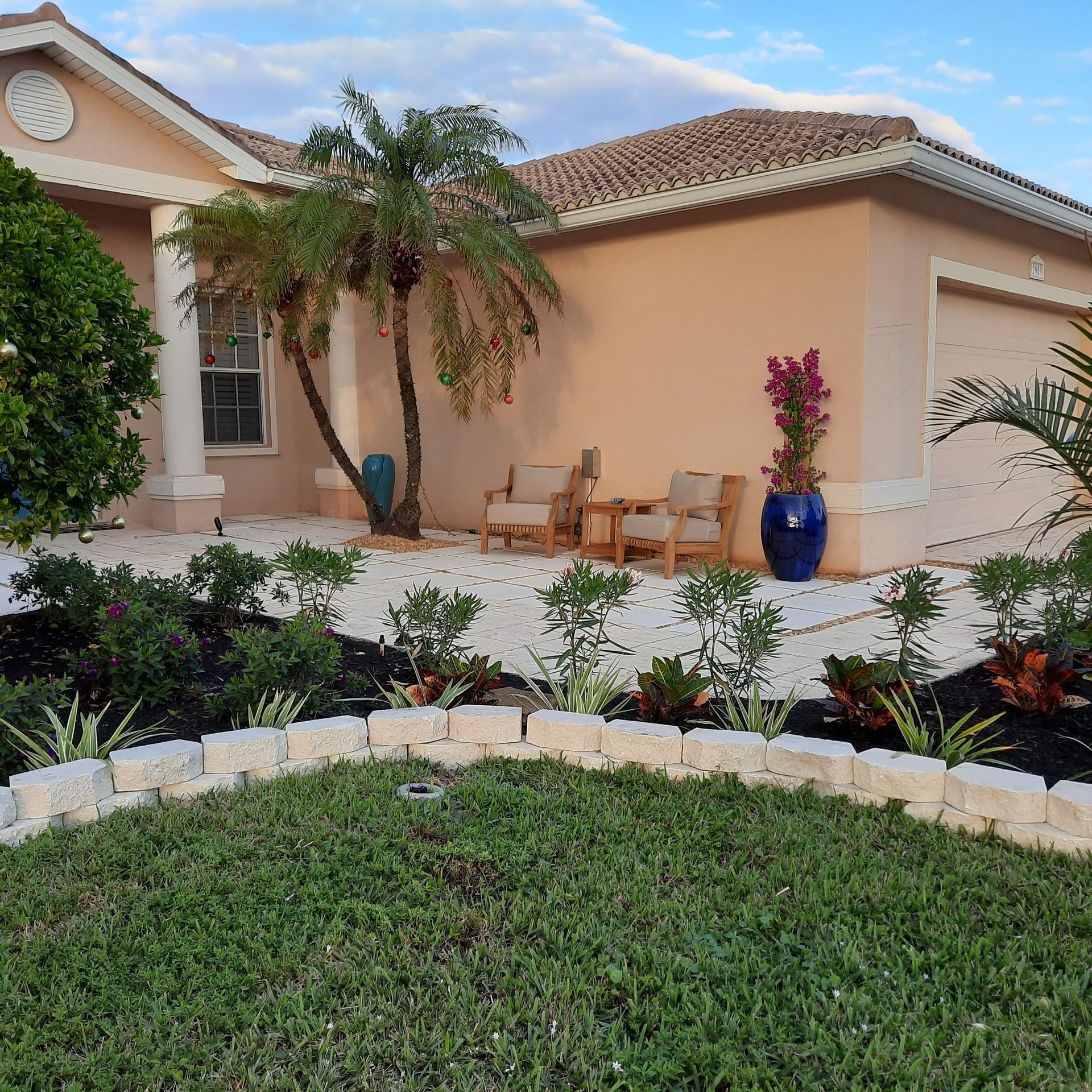



Southwest Florida Landscape Maintenance Before Snowbirds Leave
A Florida yard can change fast after you lock the door. Summer heat, daily rain, insects, and tropical growth can turn a tidy property into a costly cleanup before you return.
Reliable Southwest Florida landscape maintenance protects your home's curb appeal while you are away. A clear plan also reduces the risk of dead turf, leaking irrigation, clogged drains, and storm debris around Fort Myers, Cape Coral, Estero, or Bonita Springs homes.
Start preparing several weeks before departure, then leave your local service team clear instructions.
Why Southwest Florida landscape maintenance needs a seasonal plan
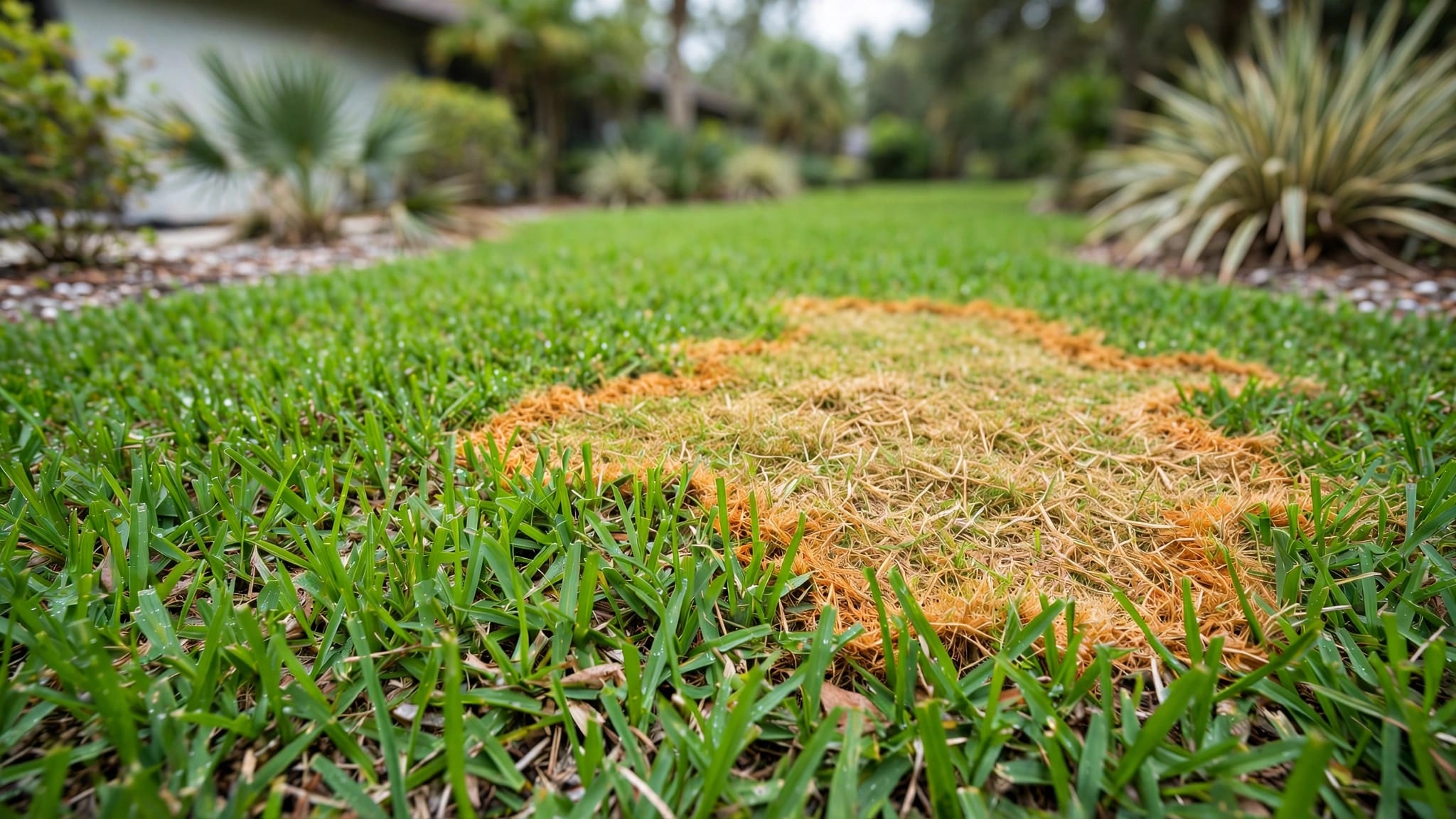
A northern lawn may pause during a long winter. Southwest Florida plants rarely do. Warm temperatures and humidity keep many lawns, palms, vines, weeds, and pests active through much of the year.
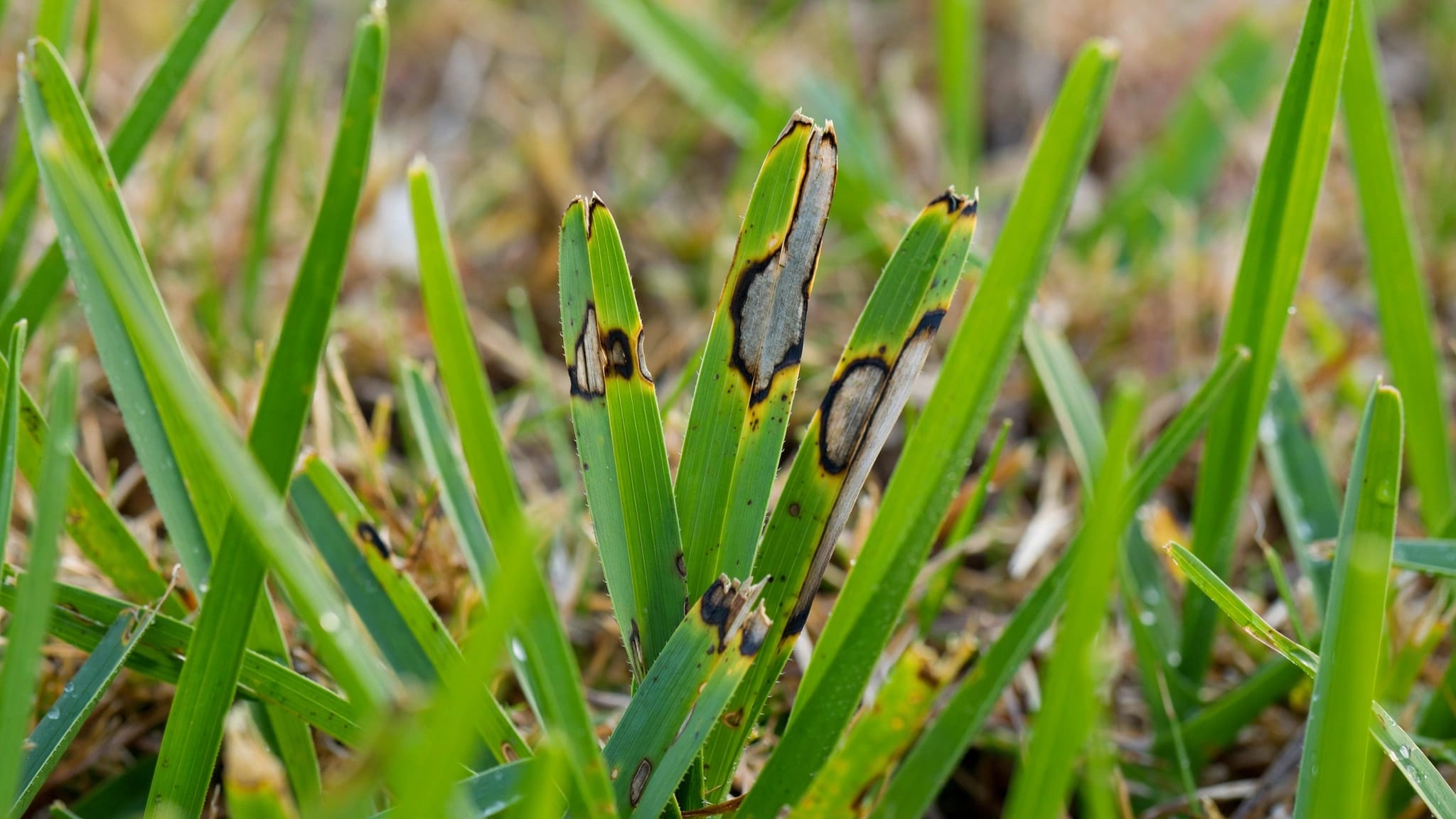
The rainy season adds another issue. Heavy showers can expose poor drainage, wash mulch from beds, and encourage fungus in turf. A sprinkler schedule that worked in dry season can become wasteful when afternoon rain arrives.
Heat and humidity speed up growth
St. Augustine grass can grow rapidly when rain and heat arrive together. Without routine mowing, it can shade itself, become uneven, and develop weed pressure along thin areas.
Tropical ornamentals also need attention. Areca palms, hibiscus, bougainvillea, ixora, and podocarpus can quickly block walkways, hide windows, or press against screens. Regular trimming keeps plants clear of the house and allows air to move through the beds.
An unattended yard still needs a local set of eyes
Irrigation heads get knocked out of position. Valves can stick. Palm fronds fall without warning. Small problems stay small when someone visits the property on a dependable schedule.
A maintenance plan should include mowing, edging, bed care, irrigation checks, debris removal, and a quick visual inspection. Confirm how often the crew visits during rainy months, not only during the drier season.
A lawn that looks overwatered can still have thirsty plants nearby if one irrigation zone has a leak or blocked head.
Build a departure timeline for your yard
Last-minute mowing is not enough. Spread the work over a few weeks so you can see whether repairs or plant replacements are needed before your travel date.
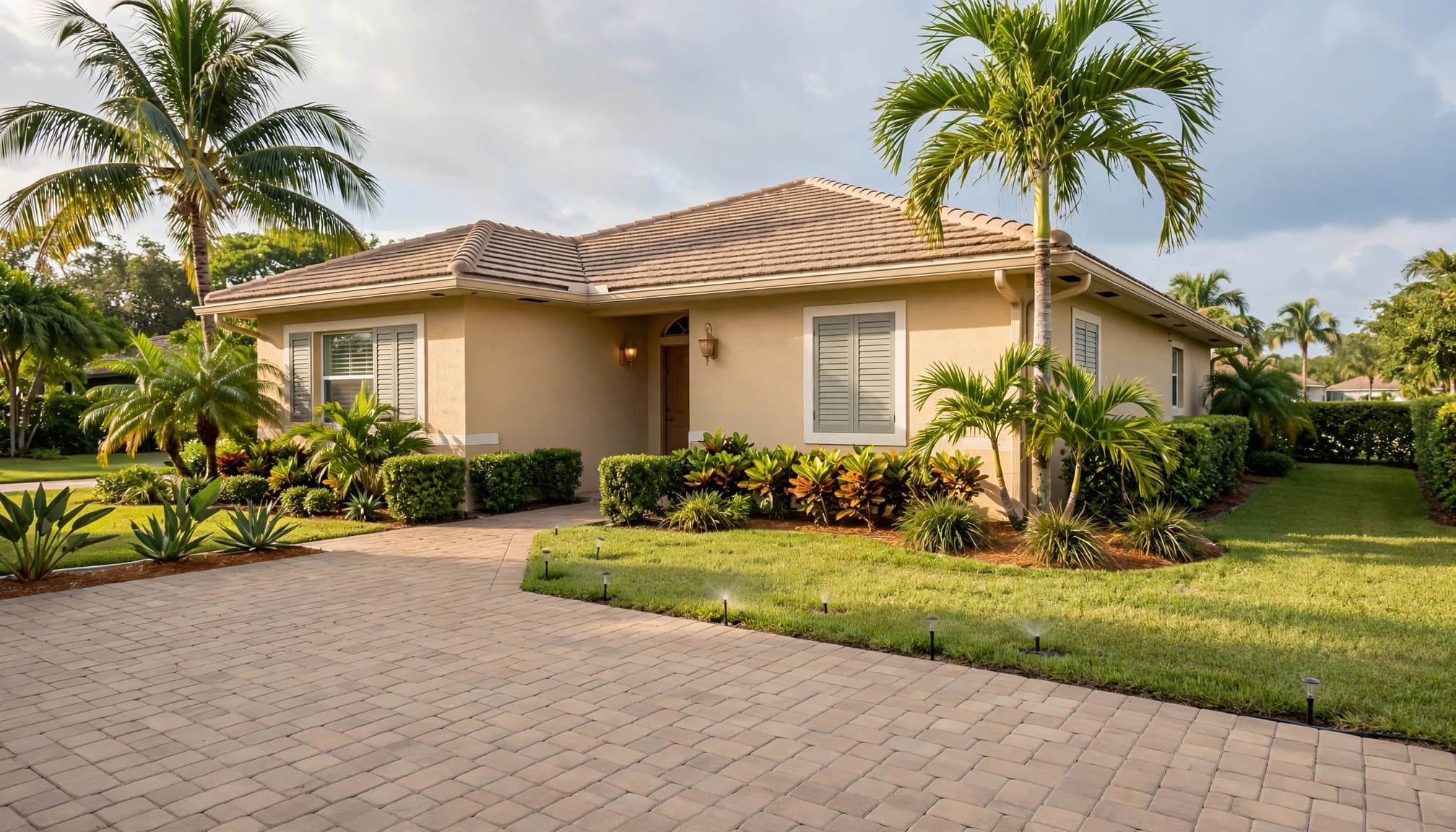
Two to four weeks before leaving
Walk the property after a rainstorm. Look for standing water near the foundation, swales, downspouts, pool deck, driveway, and lanai. Also check for mulch that has washed into grass or drains.
Schedule pruning before your departure, especially for dead palm fronds, low branches, and shrubs contacting the structure. Avoid severe pruning of palms or flowering shrubs unless their condition requires it. Heavy cuts can leave plants stressed during hot weather.
At this point, request an estimate for any needed Southwest Florida landscape maintenance costs. Get the service scope in writing, including visit frequency and who contacts you if the crew finds a problem.
Seven days before departure
Have the lawn mowed at the proper height for its grass type. Cutting too short before leaving is tempting, but it weakens turf and exposes soil to heat. Ask for fresh edging, weed control where appropriate, bed cleanup, and a light mulch touch-up.
Then inspect outdoor lighting, exposed irrigation pipes, hose bibs, and drain grates. Remove loose branches, empty pots that can blow over, and yard items that may trap water.
In the final 48 hours
Run every irrigation zone while you are home. Watch each area long enough to spot a broken head, a geyser, runoff, or water spraying a wall or paved surface.
Take dated photos of the front yard, backyard, planting beds, irrigation controller, pavers, and concrete. Those photos make it easier to identify a new issue if your property manager or service crew reports one later.
Check irrigation and local watering rules
Water is the most important part of a vacant property's care plan, yet too much water can do more harm than too little. Saturated roots, fungus, runoff, and utility waste can follow a poorly programmed controller.
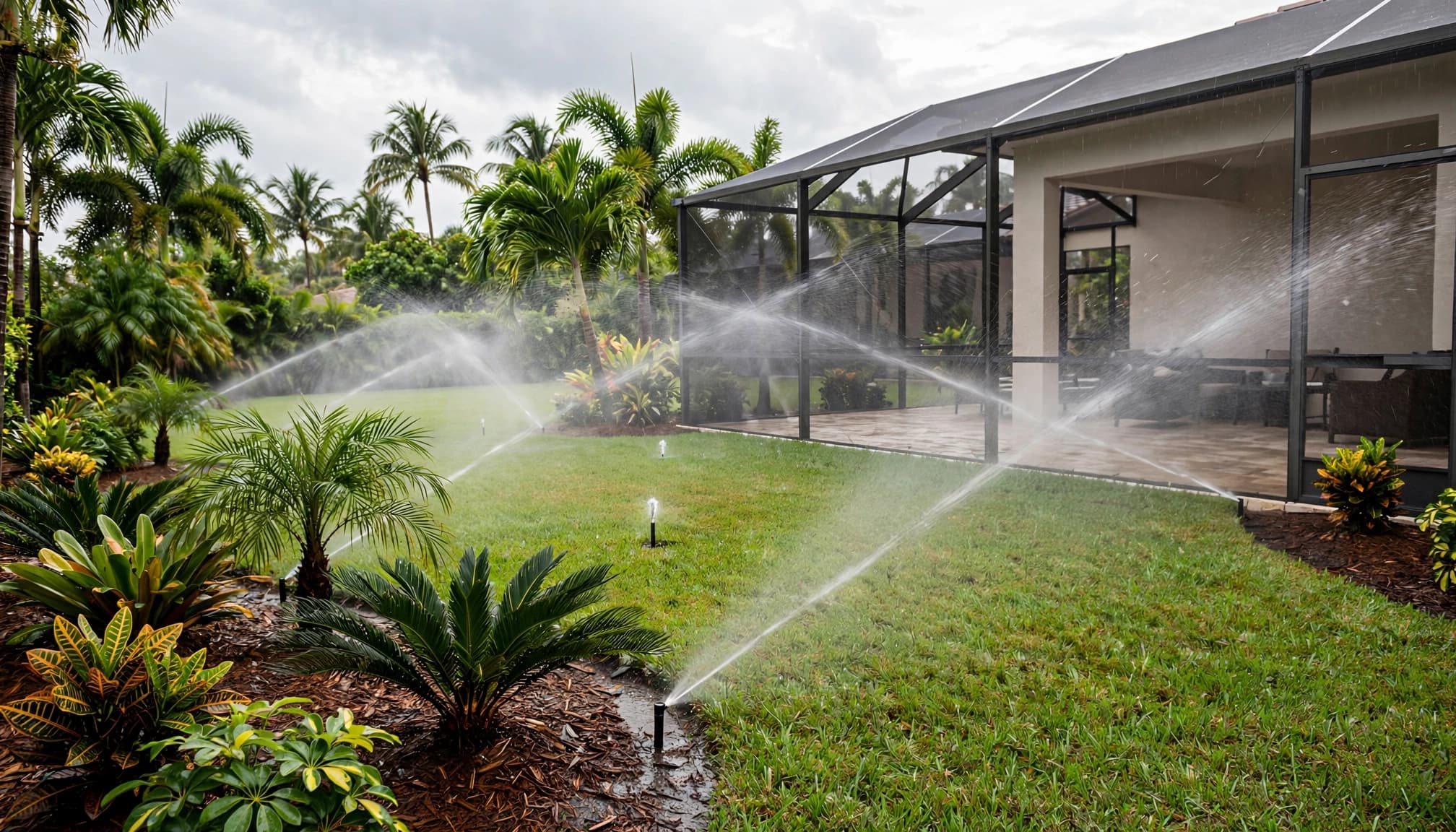
Test zones instead of trusting the timer
Turn on each zone manually and inspect the full coverage area. Pop-up heads should clear the turf. Rotors should not spray sidewalks, windows, lanais, or paver joints. Drip lines need water at the root zone, not puddles on top of mulch.
Replace damaged heads, correct tilted risers, and repair visible leaks before travel. A rain sensor should stop watering during rainfall, but test it rather than assuming it works.
If your system has a smart controller, confirm its seasonal adjustment settings and remote-access connection. Keep the installer or irrigation technician's number with your property records.
Follow local restrictions, even when you are away
Watering rules vary by community, water management district, address, and time of year. Check current county, city, HOA, and water utility requirements before changing the program. Restrictions can change during dry conditions or emergency periods.
Set plant zones separately from turf when possible. Newly installed sod, shrubs, and palms often need different care than established material. For bigger upgrades, review coordinating irrigation and hardscaping before adding sod, pavers, or drainage work.
Protect lawns, palms, and tropical planting beds
Good landscaping before a long absence looks neat, but it also supports healthy roots. The goal is steady care, not a dramatic trim or heavy fertilizer application right before you leave.
Leave grass at a healthy mowing height
Ask your service provider to follow the recommended mowing height for your turf type. St. Augustine usually performs poorly when scalped. Bahia grass may tolerate different conditions, so the crew should identify what is growing before setting the mower.
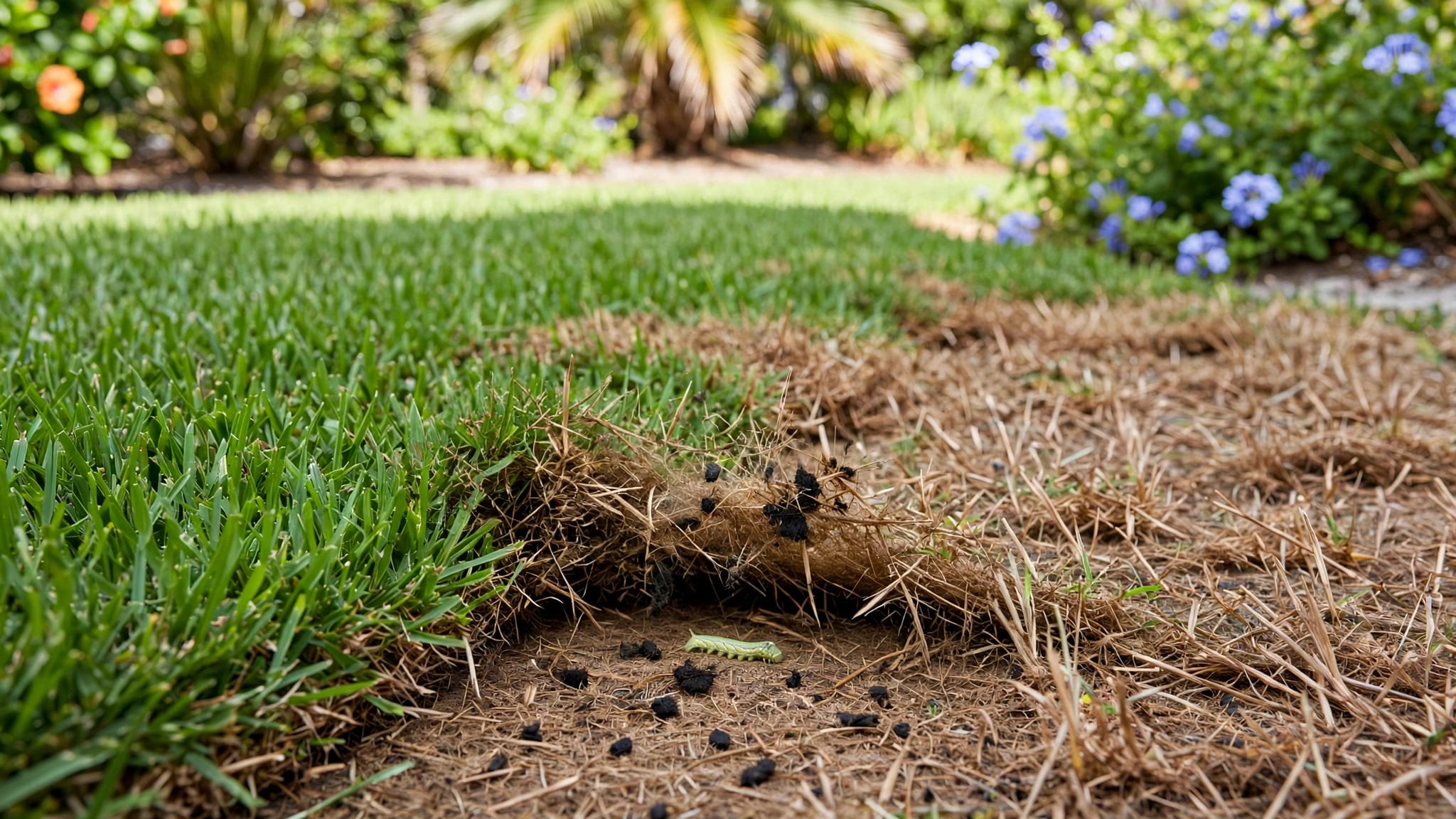
Avoid applying high-nitrogen fertilizer immediately before a long summer absence. Fast growth can invite disease and create more mowing pressure. If lawn color or density is poor, have a local professional diagnose irrigation, pests, soil, or shade before adding products.
Artificial grass reduces mowing, though it still needs leaf removal, occasional rinsing, edge weed control, and brushing. Some homeowners search for "artifical turf," but the correct product is artificial turf. It needs a solid, well-drained base rather than a cover-up for a drainage problem.
Mulch, palms, and shrubs need sensible care
Keep mulch a few inches away from plant stems and tree trunks. Mulch piled against a palm or shrub holds moisture where it does not belong and can attract insects. A consistent layer also helps beds hold moisture between service visits.
Remove brown palm fronds that pose a falling risk, but do not over-prune healthy green fronds. Palms use those fronds to produce energy. A qualified crew can spot nutrient issues, crown problems, and fronds that need removal without stripping the tree.
Prepare hardscapes and drainage for summer storms
Rainwater carries soil, leaves, and mulch toward the lowest point. Before you travel, give every hard surface a close inspection. Your driveway, walkway, patio, pool deck, and drainage areas should move water away from the home.
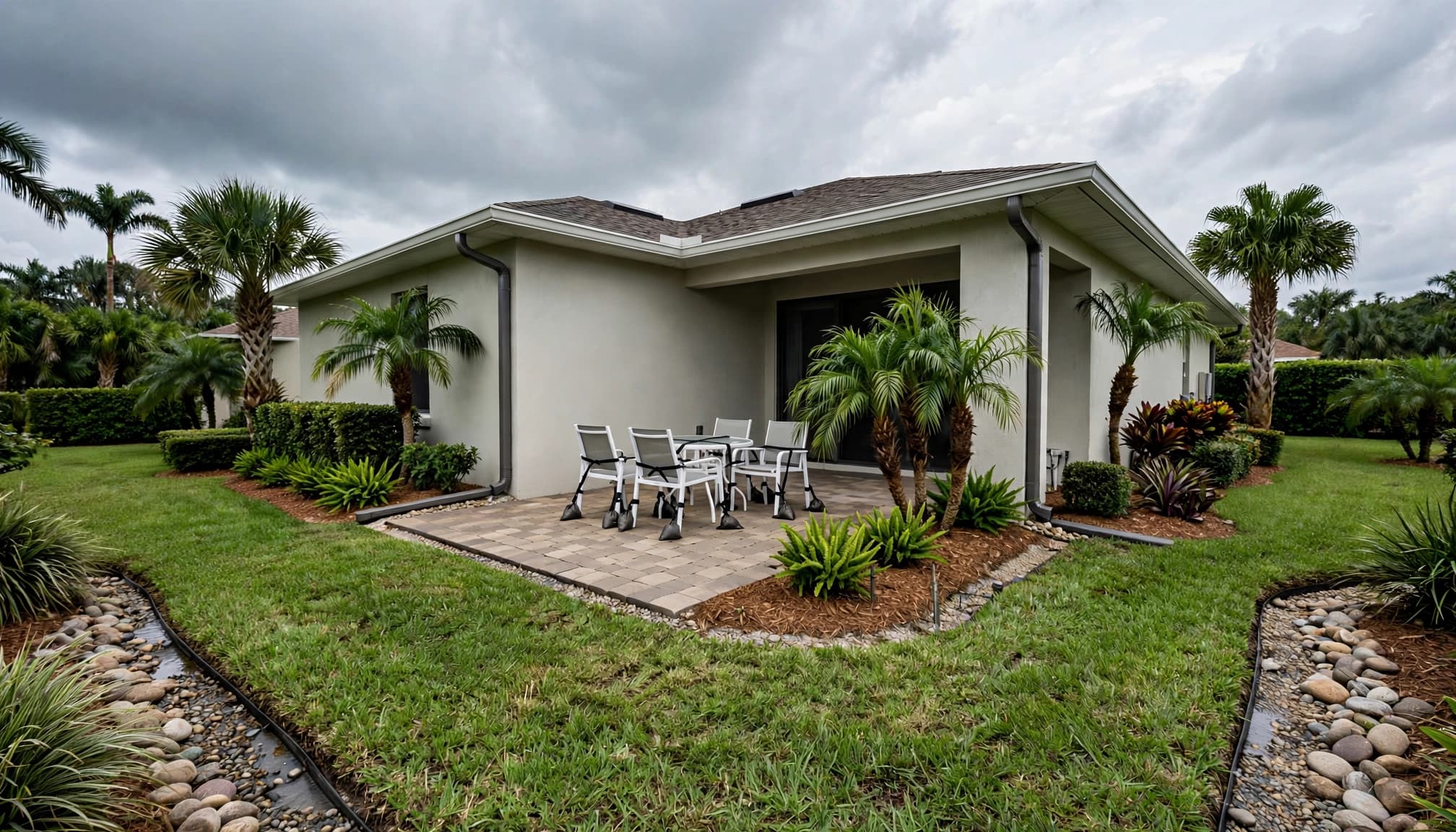
Clean surfaces before stains set in
Sweep leaves and seed pods from pavers, especially under palms and along screened enclosures. Organic debris holds moisture and can lead to algae staining. Schedule paver cleaning before a long absence if the surface already looks dark, slick, or spotted.
Check paver joints for missing sand, settling edges, and rocking units. Inspect concrete for new cracks, settlement, or water pooling along the slab. A qualified concrete company should evaluate major cracks or displaced sections before seasonal storms worsen the problem.
For a broader inspection list, use this Southwest Florida rainy season yard checklist when reviewing drainage and hardscape concerns.
Reduce wind and debris hazards
Store lightweight furniture, planters, umbrellas, yard art, and loose hoses before leaving. Trim dead wood from trees and remove branches resting on the roof, screen cage, fence, or power lines.
Keep gutters, downspout exits, catch basins, and swales open. Never place bags of mulch, pots, or decorative stone where they block a drainage path. If water regularly stands near the home, arrange for a drainage assessment before the next heavy-rain cycle.
Set up a reliable maintenance agreement
A clear service agreement removes guesswork. Your maintenance provider needs access instructions, contact details, and authority to handle small issues before they spread.
Give your crew a practical property file
Leave gate codes, irrigation controller information, HOA rules, preferred contact methods, and emergency contacts. Include details about pets, pool service, alarm systems, and areas that need special care.
Ask the crew to send photos after major storms or whenever they find irrigation damage, fallen fronds, pest activity, standing water, or plant decline. A quick report lets you approve repairs without relying on secondhand descriptions.
Know when a repair needs a specialist
Routine mowing crews can handle regular upkeep. However, call qualified local professionals for electrical lighting problems, large palm work, major irrigation leaks, drainage changes, pest treatment, concrete repair, or unstable pavers.
Get clear quotes when a repair overlaps several trades. A proposal for a patio, walkway, or drainage improvement should explain base work, water flow, materials, and cleanup. Use a landscaping quote comparison guide to review what is included before approving the work remotely.
A Yard That Is Ready When You Return
A cared-for Florida property can handle a snowbird's absence without becoming a surprise project. Regular visits, correct irrigation, moderate pruning, clear drainage, and storm preparation protect the work you have already put into your home.
The strongest plan is consistent maintenance , not one oversized cleanup before departure. Leave with local watering rules confirmed, a trusted professional scheduled, and a property file that makes fast decisions easier.