


Southwest Florida Yard Maintenance Calendar by Month
A beautiful Southwest Florida yard can decline fast when its care schedule ignores heat, rain, salt, and sandy soil. Southwest Florida yard maintenance works best when you respond to the season in front of you, rather than following a northern lawn-care routine.
Homeowners in Naples, Fort Myers, Cape Coral, Sarasota, Estero, and Bonita Springs face year-round growth, then sudden drought stress, downpours, and hurricane threats. A month-by-month plan keeps turf, planting beds, irrigation, pavers, and concrete in better shape without wasting water or sending nutrients into nearby canals.
Why Southwest Florida Yard Maintenance Needs a Local Schedule
Southwest Florida has two broad yard-care seasons. The dry season usually runs from fall into spring, while the rainy season typically lasts from about May 15 through October 15. Temperatures stay warm enough for many plants to grow all year, but growth rates change sharply.
Sandy soils drain quickly and hold fewer nutrients than heavier soils. That means overwatering and heavy fertilizer applications can move water and nutrients beyond plant roots before plants can use them.
Salt adds another concern near the coast, canals, and barrier islands. Wind-driven salt spray can scorch foliage, while storm surge may damage turf and ornamentals for months.
Good local landscaping starts with plants, turf, drainage, and materials suited to these conditions. A calendar then helps you care for each part at the right time.
January and February: Clean Up and Plan Before Spring Growth
Winter is mild, but cold fronts can still bring dry winds and occasional chilly nights. Growth slows, so this is a useful window for inspection and repair.
January: Reset the Yard After the Holidays
Remove fallen palm fronds, branches, and holiday decor before they trap moisture or block drainage. Rake leaves out of planting beds, but leave a light layer where it won't smother groundcover.
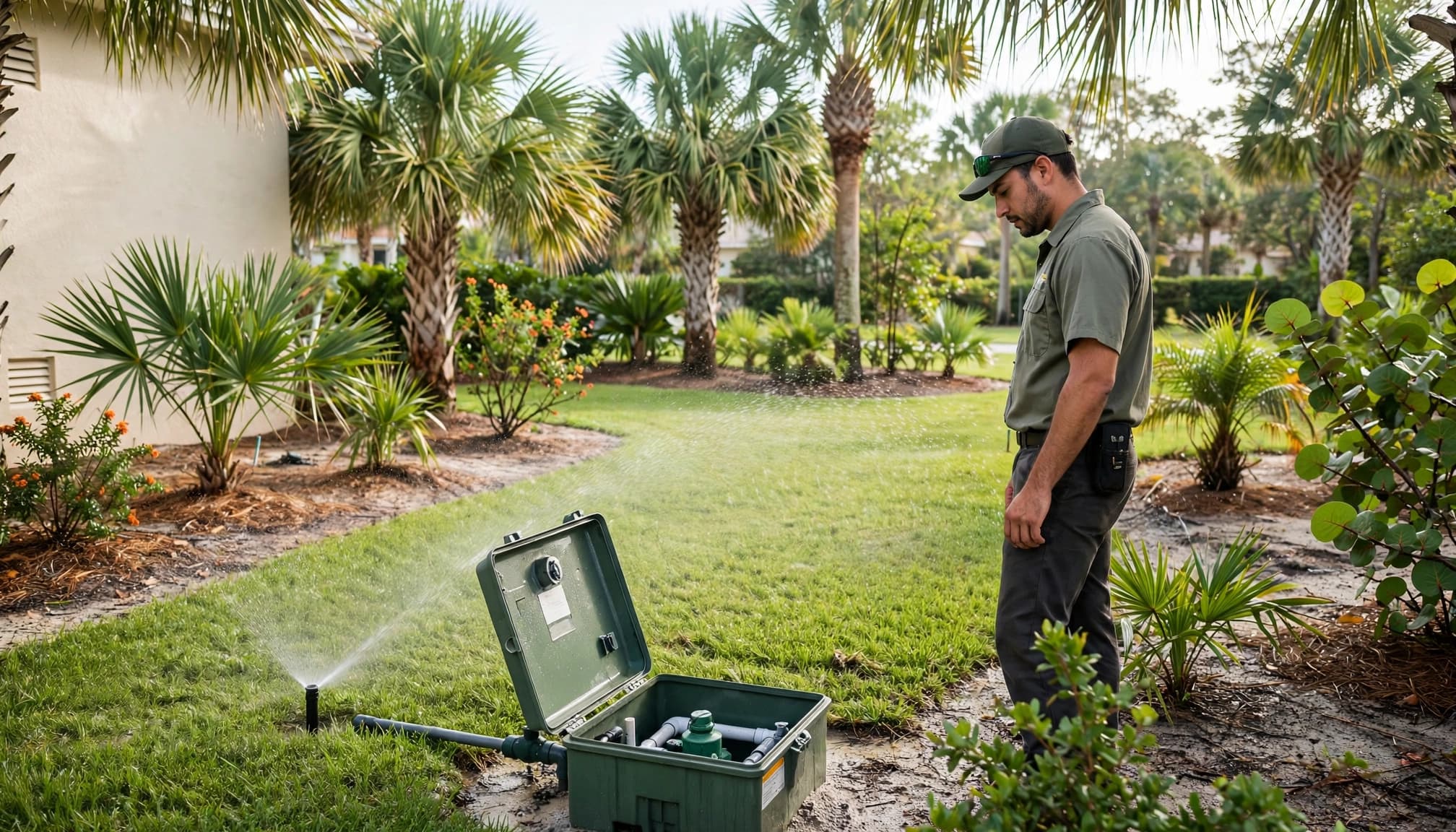
Check irrigation heads for breaks, clogged nozzles, and spray that hits driveways or sidewalks. Run each zone briefly during daylight so you can see gaps and overspray.
Prune dead or damaged branches from shrubs. However, avoid hard pruning tropical plants unless frost damage makes it necessary. Fresh cuts can leave tender growth exposed if another cold snap arrives.
February: Prepare Beds and Outdoor Surfaces
Refresh mulch where it has thinned to less than two or three inches. Keep mulch several inches away from trunks and stems, since piled mulch holds moisture against bark and invites rot.
This month also suits a close inspection of paver joints, retaining edges, and drainage around patios. Professional paver cleaning and sealing can remove slippery organic buildup before spring rains return.
If cracking, settlement, or spalling appears on a driveway or patio, contact a reputable concrete company before the damage expands. Small drainage problems often become larger slab and walkway repairs after a wet summer.
March and April: Support Spring Growth Without Overfeeding
Longer days bring faster turf growth and new flushes on palms, shrubs, and flowering plants. Start gradually, because a sudden rush of fertilizer and water can create weak growth and pest problems.
March: Tune Up Mowing and Irrigation
Sharpen mower blades before regular mowing begins. Dull blades tear grass instead of cutting it cleanly, which leaves brown tips and can make turf more susceptible to disease.
Set the mower for your grass type. St. Augustinegrass, zoysiagrass, bermudagrass, and bahiagrass all have different ideal heights. Never remove more than one-third of the leaf blade at a time.
Inspect rain sensors, irrigation timers, valves, and drip lines. Rain sensors should pause irrigation when rainfall has already supplied enough water.
A lawn that receives frequent shallow irrigation develops shallow roots. Watering deeply only when grass shows stress encourages stronger rooting and reduces waste.
April: Refresh Planting Beds Carefully
April is a good time to replace worn annuals, install heat-tolerant shrubs, and add Florida-friendly plants. Choose salt-tolerant options for exposed coastal properties, including sites near Fort Myers Beach or waterfront Cape Coral.
Use a soil test before adding fertilizer. Many sandy yards need nutrients, but guessing leads to runoff and uneven growth. Follow local fertilizer rules and product directions, particularly near ponds, canals, and storm drains.
Check palms for nutrient deficiency symptoms, such as yellowing older fronds or frizzled new growth. Palm nutrition needs a Florida-specific approach, not a generic lawn fertilizer.
May and June: Prepare for Rainy Season Growth
By May, heat and humidity climb. Afternoon storms may arrive often, and lawns can begin growing faster than many homeowners expect.
May: Clear Drainage Paths Before Heavy Rain
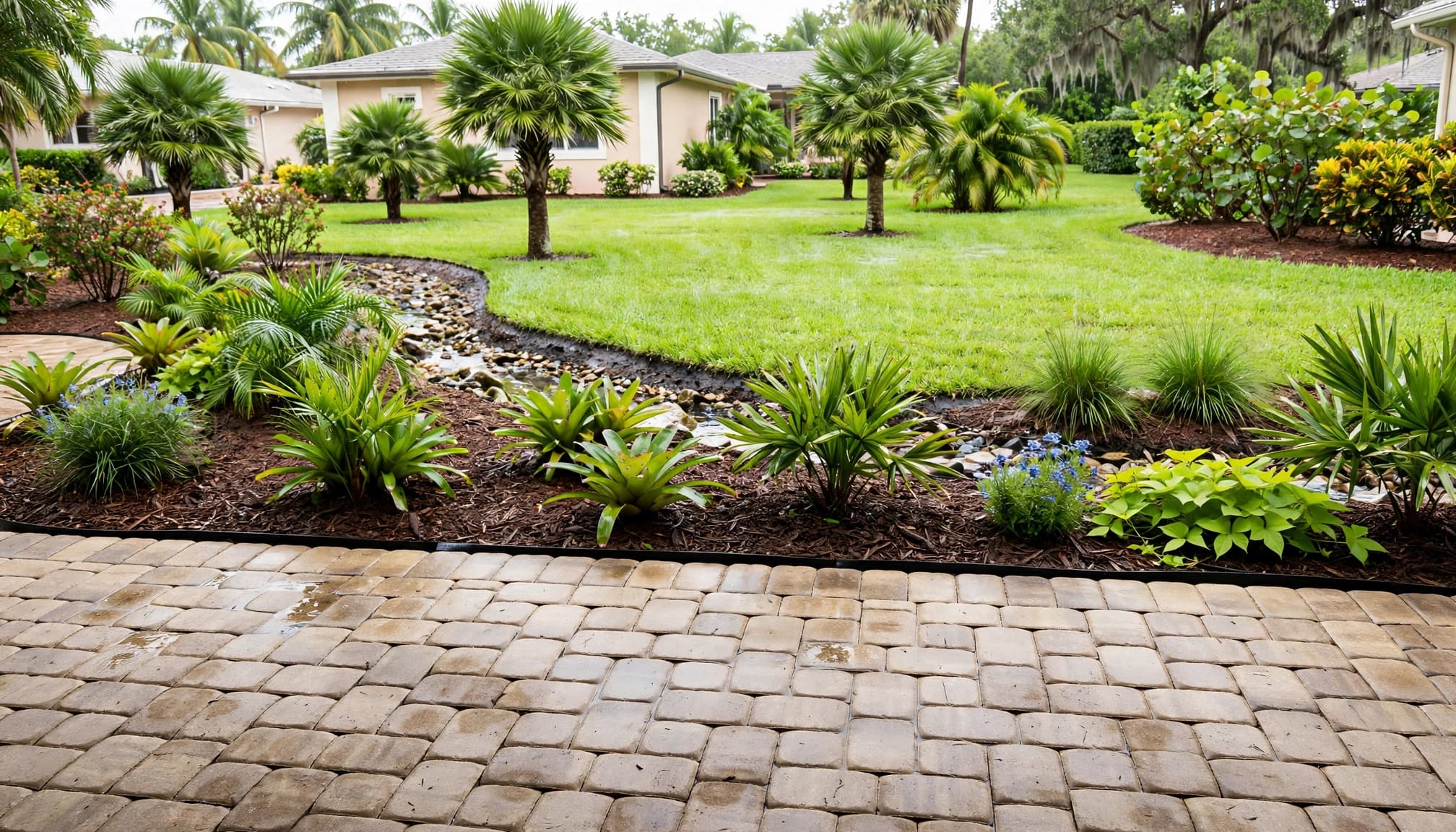
Walk the property after a hard rain. Look for standing water beside foundations, pooling on pavers, washouts in mulch beds, and erosion at downspout outlets.
Clear leaves from swales, catch basins, gutter outlets, and drain grates. Water should move away from the house without carving channels through soil.
Mow more often as growth speeds up, but avoid cutting wet grass. Saturated turf can rut under mower wheels, and clippings may clump across the lawn.
June: Reduce Watering When Rain Takes Over
Rainy-season irrigation should respond to actual rainfall. Turn off or reduce scheduled cycles when storms provide enough water. A timer that runs after every downpour wastes water and raises disease risk.
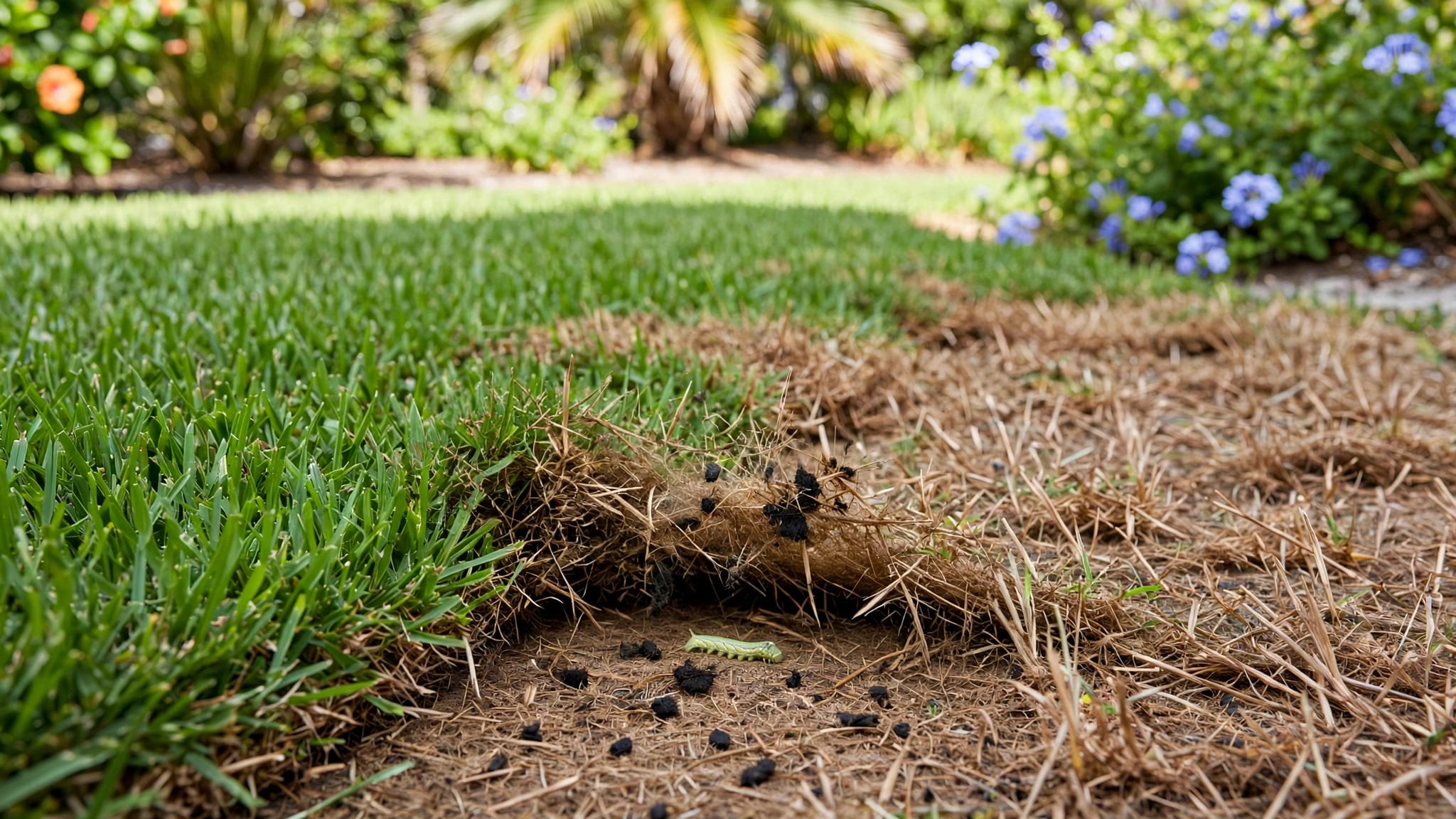
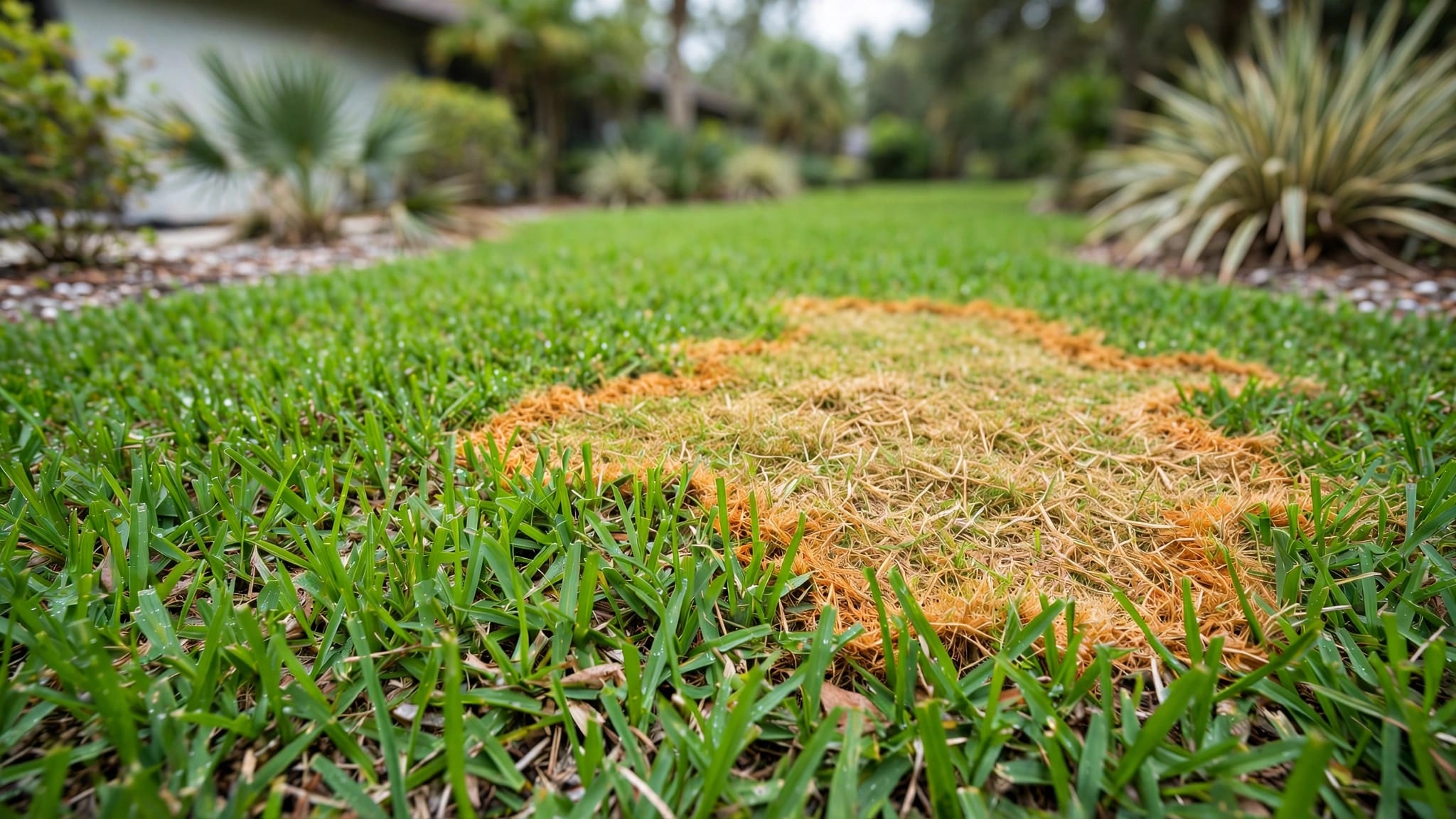
Florida lawns often show fungal symptoms during hot, wet weather. Watch for irregular brown patches, leaf spotting, thinning areas, or yellow turf that doesn't improve after irrigation adjustments.
Avoid applying fertilizer or pesticides when heavy rain is expected. Products can wash into waterways before they do their job.
July and August: Manage Heat, Humidity, and Fast Growth
Summer is hard on yards because heat, humidity, insects, and frequent rain often arrive together. The goal is steady care, not aggressive correction.
July: Mow High and Watch for Insects
Raise mowing height slightly during extreme heat, within the recommended range for your turf type. Taller blades shade the soil and help grass retain moisture.
Check stressed St. Augustinegrass for chinch bugs, especially where grass turns yellow near pavement or sunny areas. Pull back the turf edge and look for small insects in the thatch before treating anything.
Keep mower blades sharp and leave short grass clippings on the lawn. Clippings return some nutrients to the soil and don't cause thatch when mowing happens regularly.
August: Keep Beds Open and Disease-Resistant
Humidity can make dense shrubs and groundcover stay wet for too long. Remove dead leaves, thin crowded interior branches, and keep irrigation directed toward roots rather than foliage.
Inspect mulch for fungal growth and areas where it has washed against walls or tree trunks. Reposition it instead of adding more material over a wet, compacted layer.
If you have artificial turf , brush away leaves and rinse pet areas as needed. Check seams, edges, infill levels, and drainage after storms. Organic debris left on synthetic grass can hold moisture and encourage odors.
September and October: Storm Readiness and Fall Yard Recovery
September remains part of hurricane season and often brings heavy rain. October may begin drier, but tropical systems can still affect the Gulf Coast.
September: Focus on Safety, Drainage, and Irrigation
September Southwest Florida yard maintenance should center on storm preparation. Secure lightweight pots, furniture, grills, trellises, and decor before a tropical storm watch. These items can become projectiles and damage plants, irrigation equipment, windows, or pavers.
Prune broken, rubbing, or clearly hazardous limbs, but don't heavily reshape trees before a storm. Severe pruning can weaken a canopy and leave plants exposed to wind.
After a storm, clear branches before mowing. Then inspect irrigation heads, exposed wires, downed fences, washed-out mulch, and damaged paver edges. Hold fertilizer until conditions settle and the soil drains.
October: Adjust for the Shift Toward Dry Weather
As daily rain becomes less dependable, review irrigation settings again. Grass may need less water than expected as temperatures ease, yet dry wind can stress shallow-rooted plants.
The Southwest Florida Water Management District's Modified Phase III water shortage order remains in effect through October 1, 2026, across its covered area. It limits lawn and landscape watering to one day per week, including properties with private wells.
Assigned days follow the final digit of the street address, with 0 or 1 watering Monday through 8 or 9 watering Friday. Local rules can be stricter, so check your city or county schedule before setting a timer.
November and December: Repair, Refresh, and Protect
Cooler, drier weather makes late fall a practical time for upgrades. The lawn usually grows more slowly, while outdoor living areas get more use.
November: Repair Hardscapes and Renew Curb Appeal
Inspect walkways, driveways, pool decks, and patios for loose pavers, uneven joints, cracks, and drainage issues. Fixing movement early helps prevent trip hazards and avoids larger repairs later.
This is also a strong season for new sod in suitable conditions, bed borders, stone, low-voltage lighting, and outdoor seating areas. Plantings establish more comfortably when summer's worst heat has passed.
Use slow, targeted irrigation for new plants. Hand watering and microirrigation can support shrubs and beds without soaking the entire yard.
December: Protect Plants During Cold Fronts
Watch forecasts when cold fronts move into Southwest Florida. Bring tender container plants close to the home, group pots together, and cover vulnerable tropical plants only when temperatures warrant it.
Avoid pruning cold-damaged foliage immediately. Brown leaves can provide limited insulation for living tissue beneath. Wait until warm weather returns and new growth reveals what survived.
Keep the yard clear through the holidays. Leaf buildup around drainage areas, lighting fixtures, and pool equipment creates needless maintenance work later.
Watering and Fertilizer Rules That Prevent Runoff
A fixed irrigation program rarely works all year. Turf should receive water when it shows signs of moisture stress, such as folded leaf blades, bluish-gray color, or footprints that remain visible.
Water the Root Zone, Not the Pavement
For established zoysiagrass, University of Florida guidance uses about one-half to three-fourths of an inch per irrigation when the lawn needs water. Your soil, turf type, sprinkler output, and local restrictions determine the right run time.
Place small straight-sided cans across a zone to measure output. If water runs down the curb before the soil absorbs it, shorten the cycle and use cycle-and-soak timing where allowed.
Microirrigation and hand watering for non-lawn plants can be allowed on different days than lawn irrigation, though time restrictions still apply. Follow the current local rule.
Feed Only When Conditions Support Growth
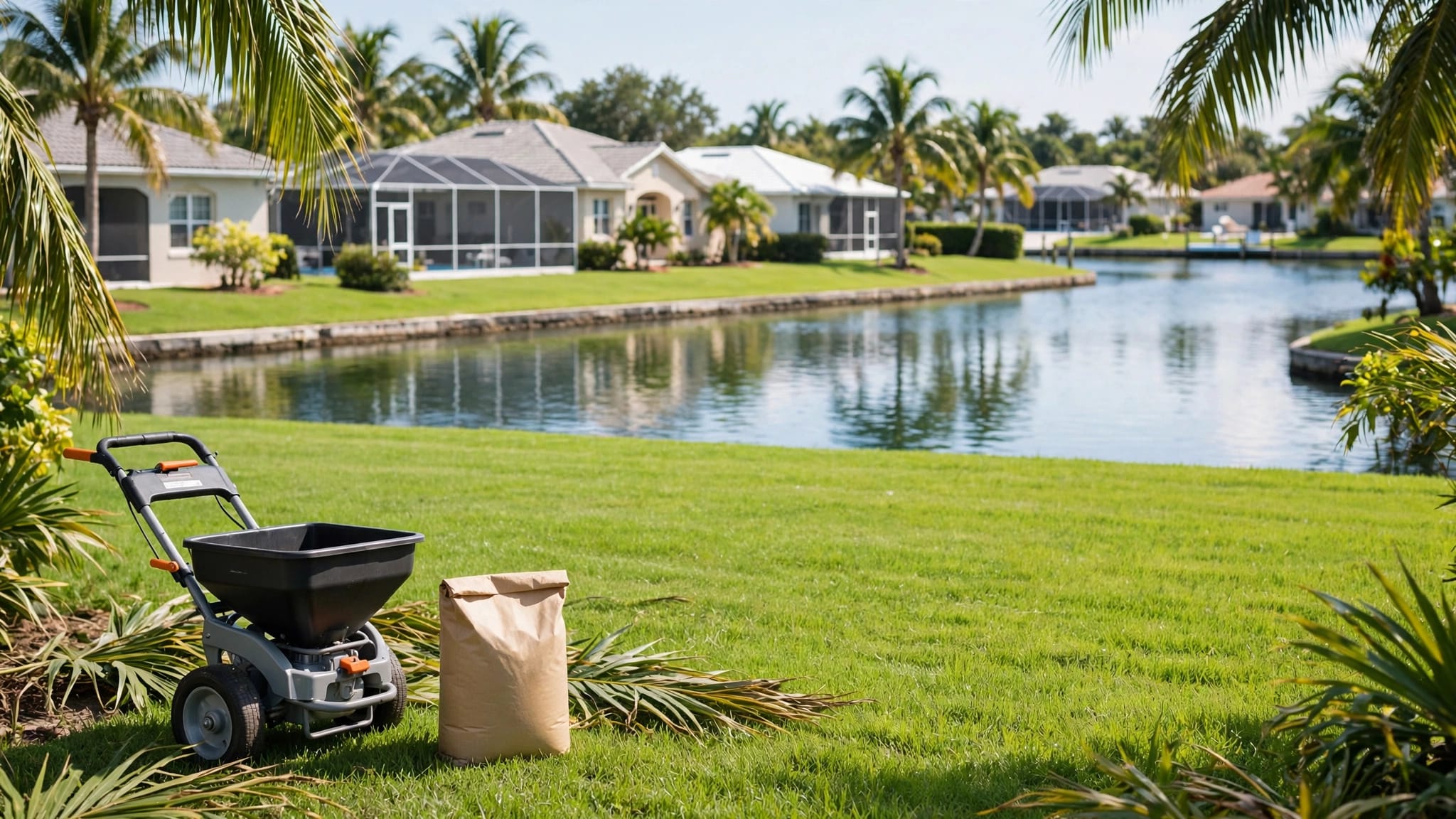
Choose slow-release products appropriate for Florida turf and ornamentals. Apply nutrients based on a soil test, grass species, and local fertilizer ordinance.
Keep fertilizer off driveways, pavers, sidewalks, and streets. Sweep stray granules back into the lawn or bed, never rinse them toward a drain.
Do not fertilize before a major rain event or after flood conditions. Southwest Florida's sandy soil can lose nutrients quickly, while runoff can carry them toward canals and coastal water.
Keep Pavers, Concrete, and Edges Safe Year-Round
A yard calendar should include hard surfaces, because patios, pool decks, curbs, and walkways take a beating from moisture, sun, and settling soil. Regular checks are cheaper than waiting for a visibly failed surface.
Sweep pavers before wet leaves stain them or settle into joints. Remove algae before it becomes slick, especially on shaded pool decks and north-facing walkways. Use cleaners suited to the surface, then rinse carefully so dirty water doesn't flow into canals or storm drains.
Check paver joint sand after summer storms. Missing joint material allows movement and weed growth, while damaged edging can let an entire section spread apart.
Concrete needs attention too. Small cracks, low spots, and drainage puddles often worsen during rainy months. A sound base and correct slope matter more than a quick surface patch.
Build a Yard That Handles Every Month Better
Monthly care works best when the property has the right foundation. Proper grading, drainage routes, irrigation coverage, hardscape installation, and plant spacing reduce the number of problems that need fixing later.
Choose plants that match the exact exposure. A sheltered Estero backyard can support different material than a salt-prone waterfront property in Cape Coral. Palms and shrubs also need enough room to mature without crowding roofs, walls, or each other.
When replacing tired turf, decide whether living grass fits the site's sun, traffic, irrigation limits, and maintenance level. Artificial grass can reduce mowing, but it still needs cleaning, drainage, and heat-aware placement.
A well-built yard doesn't eliminate seasonal work. It makes each month's work more predictable and less expensive.
A Practical Year-Round Yard Plan
The best Southwest Florida yard maintenance routine follows the weather instead of the calendar alone. Mow conservatively during fast summer growth, reduce irrigation after rainfall, protect drainage before storms, and use the drier months for repairs and upgrades.
Small checks each month prevent the familiar problems of Florida properties: dying turf from overwatering, washed-out beds, slippery pavers, salt-burned plants, and damaged irrigation. Give water, fertilizer, pruning, and repairs the timing they need, and your yard will stay attractive through every season.