


Florida rainy season checklist for Southwest Florida homeowners
A Southwest Florida yard can change quickly when heat, humidity, and several inches of rain arrive within hours. A low spot that looked harmless in May may become a muddy pool by July.
This Florida rainy season checklist helps homeowners in Fort Myers, Cape Coral, Estero, and Bonita Springs prepare lawns, plants, drainage, pavers, and outdoor electrical features before severe weather creates expensive problems. Proactive disaster preparedness ensures your property is ready for the peak of hurricane season, protecting your landscaping before storms create expensive problems. Start with water flow, then inspect the features that water and wind can damage.
Key Takeaways
- Clear gutters, downspouts, drains, and irrigation components before heavy rain begins.
- Prioritize complete hurricane preparedness by stockpiling clean drinking water and having an emergency supply kit ready for any extended power outage.
- Walk the yard after storms to find ponding, erosion, soil settlement, and overflowing discharge points.
- Keep people away from standing water near outlets, pool equipment, lights, and other electrical systems.
- Prune weak branches before tropical weather, but leave damaged or leaning trees to qualified professionals.
- Complete drainage work before installing new sod, plants, pavers, concrete, or artificial grass.
- Review your family evacuation plan alongside your property maintenance steps to stay safe all season.
Florida rainy season checklist: prepare before the first heavy storms
Southwest Florida's rainy season usually brings frequent afternoon storms, saturated soil, strong wind, and fast runoff. A short inspection before the wet months, which overlaps closely with essential hurricane preparedness as we approach hurricane season, can protect your home and reduce emergency repairs.
Walk the property and check every place where water enters, collects, or leaves. Remove leaves and palm debris from gutters, roof valleys, downspout openings, drain grates, and catch basins. Confirm that downspouts discharge away from the foundation, slab, garage, and neighboring properties. Do not redirect water toward a sidewalk or another home's yard.
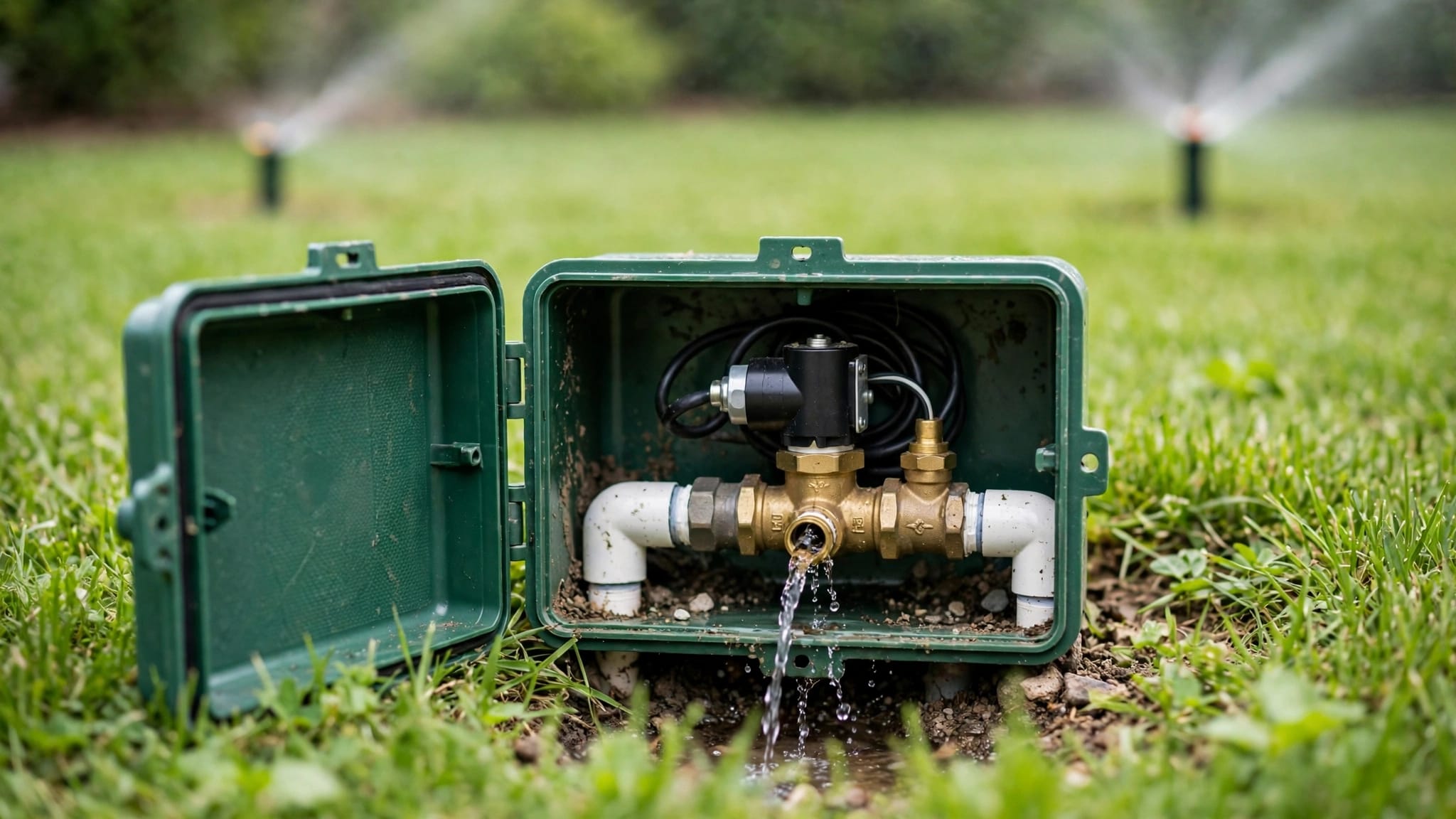
Inspect irrigation heads and valves for leaks. Rain sensors should stop irrigation during wet weather, while broken heads can create extra puddles and wash soil away. Adjust the schedule for the rainy season instead of allowing irrigation to run as if the yard were still in the dry season.
Your pre-storm list should also include these tasks:
- Rake loose mulch, pine needles, and small branches away from drains and door thresholds.
- Check that pool decks, patios, and walkways drain without sending water toward the house.
- Look for soil gaps around downspouts, utility trenches, fences, and new plantings.
- Secure lightweight pots, decorations, umbrellas, and furniture before tropical weather, and test your hurricane shutters.
- Check local weather alerts, and keep flashlights and extra batteries ready as part of your family emergency supply kit.
- Test outdoor lighting timers and inspect visible wires for damage, without touching exposed conductors.
- Photograph existing cracks, settled areas, and tree conditions before a major storm.
Fix drainage problems before they damage the yard
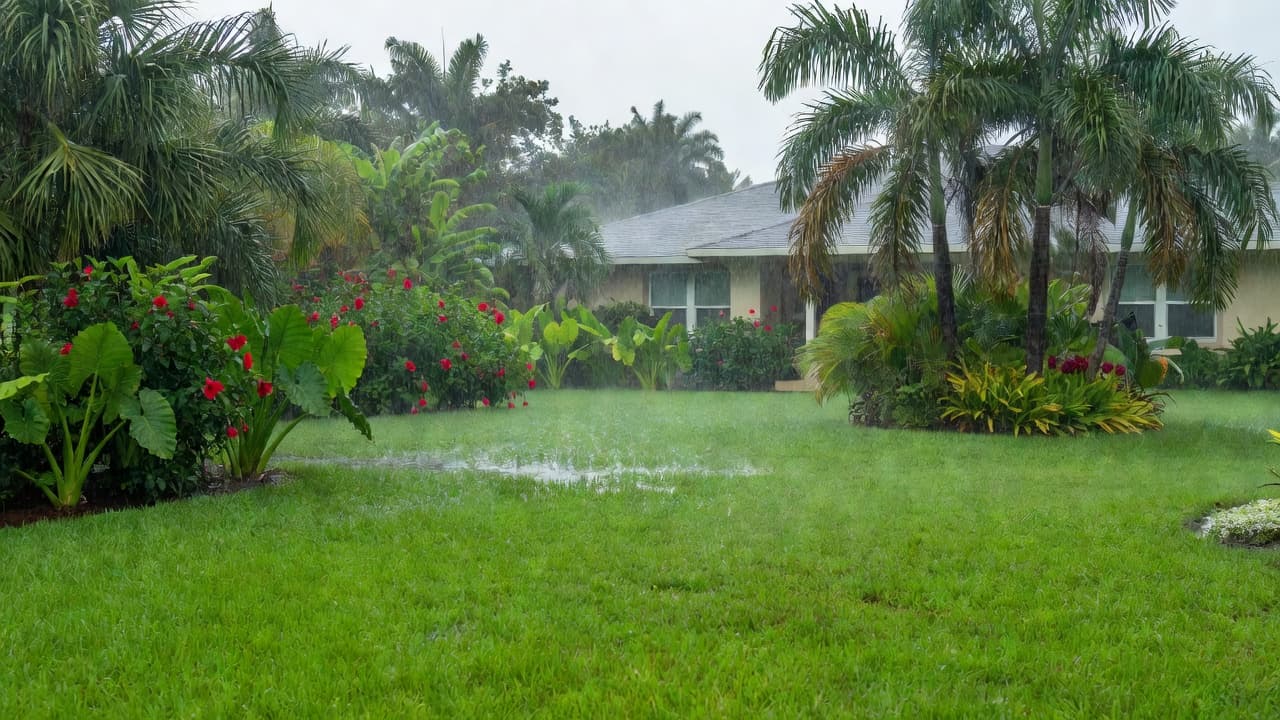
Standing water is more than a cosmetic issue. It can kill turf, weaken plant roots, stain hard surfaces, attract insects, and keep soil against the foundation. Sandy soil often drains quickly, but compacted fill, poor grading, blocked outlets, and high groundwater can still cause recurring ponding.
Walk the yard during or soon after a storm. Mark areas where water remains after nearby surfaces begin drying. Watch for runoff flowing toward the home, garage, pool deck, or outdoor kitchen. Pay attention to water that follows a trench because poorly compacted backfill can settle and create a new low spot. Managing property drainage effectively is a core element of household disaster preparedness, especially when severe weather brings intense downpours that test your property lines.
A small puddle may respond to regrading or a corrected downspout outlet. Recurring water needs a closer review. Depending on the site, a solution may involve a catch basin, solid drainage pipe, a French drain, a swale, or another approved discharge method. A dry well isn't suitable for every property, especially where groundwater or soil conditions limit infiltration.
Homeowners comparing catch basins versus French drains should focus on the source of the water. Surface runoff usually needs collection and a clear outlet. Saturated ground may require subsurface drainage and careful grading. When a tropical cyclone approaches or coastal areas face a potential storm surge, clear and unimpeded drainage paths help prevent catastrophic pooling near your living spaces.
Never pump or pipe stormwater onto a neighbor's property, across a public sidewalk, or toward a road without checking local requirements. For deep ponding, water near the slab, sinkholes, collapsed trenches, or drainage that affects several properties, contact a qualified local drainage professional.
Protect plants, turf, mulch, and hardscapes
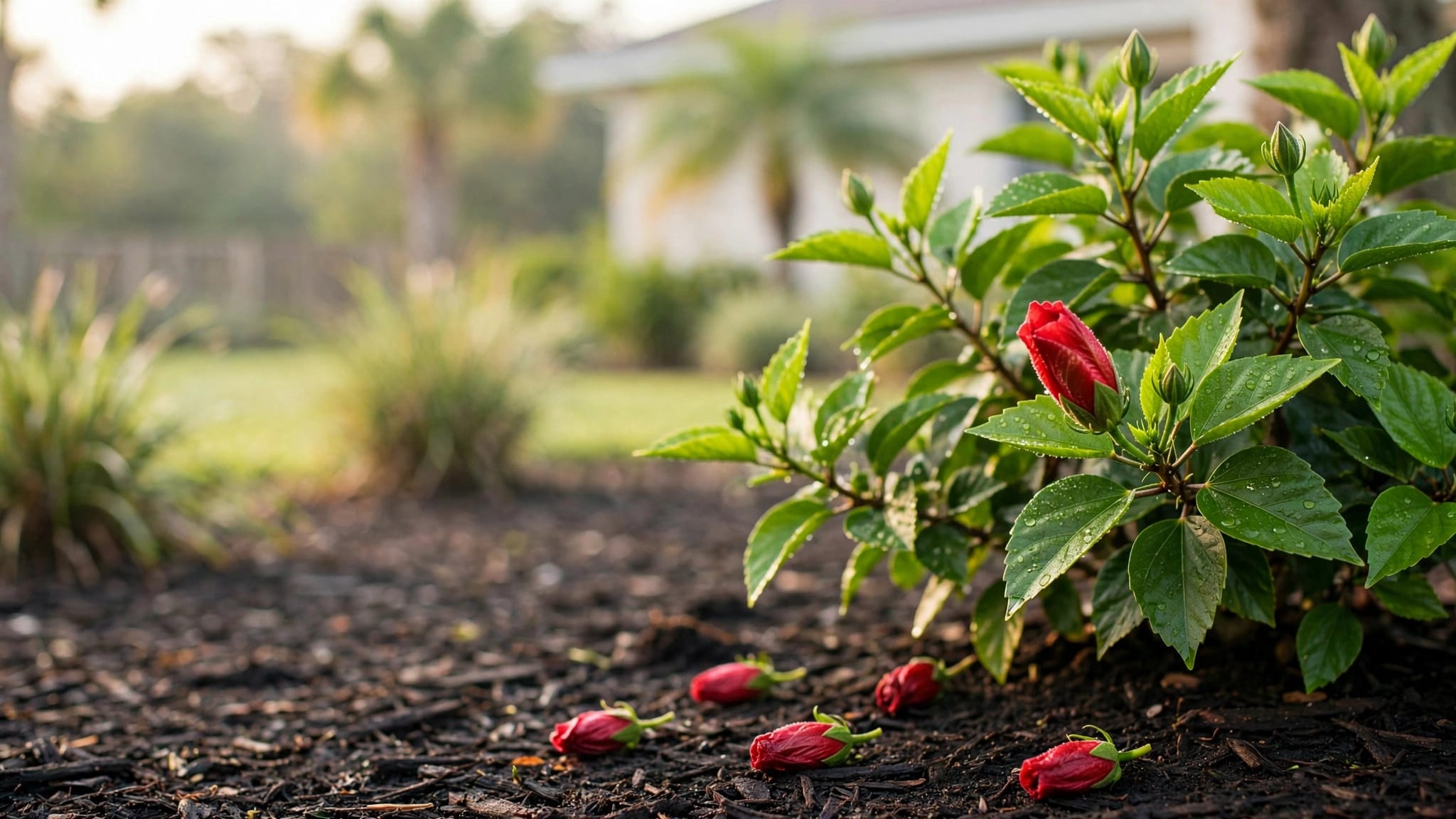
Rainy-season yard care starts with the right balance. Plants need water, but repeated saturation can suffocate roots, spread fungal problems, and wash nutrients from sandy soil. Inspect beds for exposed roots, leaning plants, and soil that has moved away from foundation plantings.
Replace washed-out mulch after the soil settles. Keep mulch several inches away from walls, tree trunks, irrigation boxes, and plant stems. Excess mulch holds moisture against surfaces and can hide erosion around small trees or shrubs.
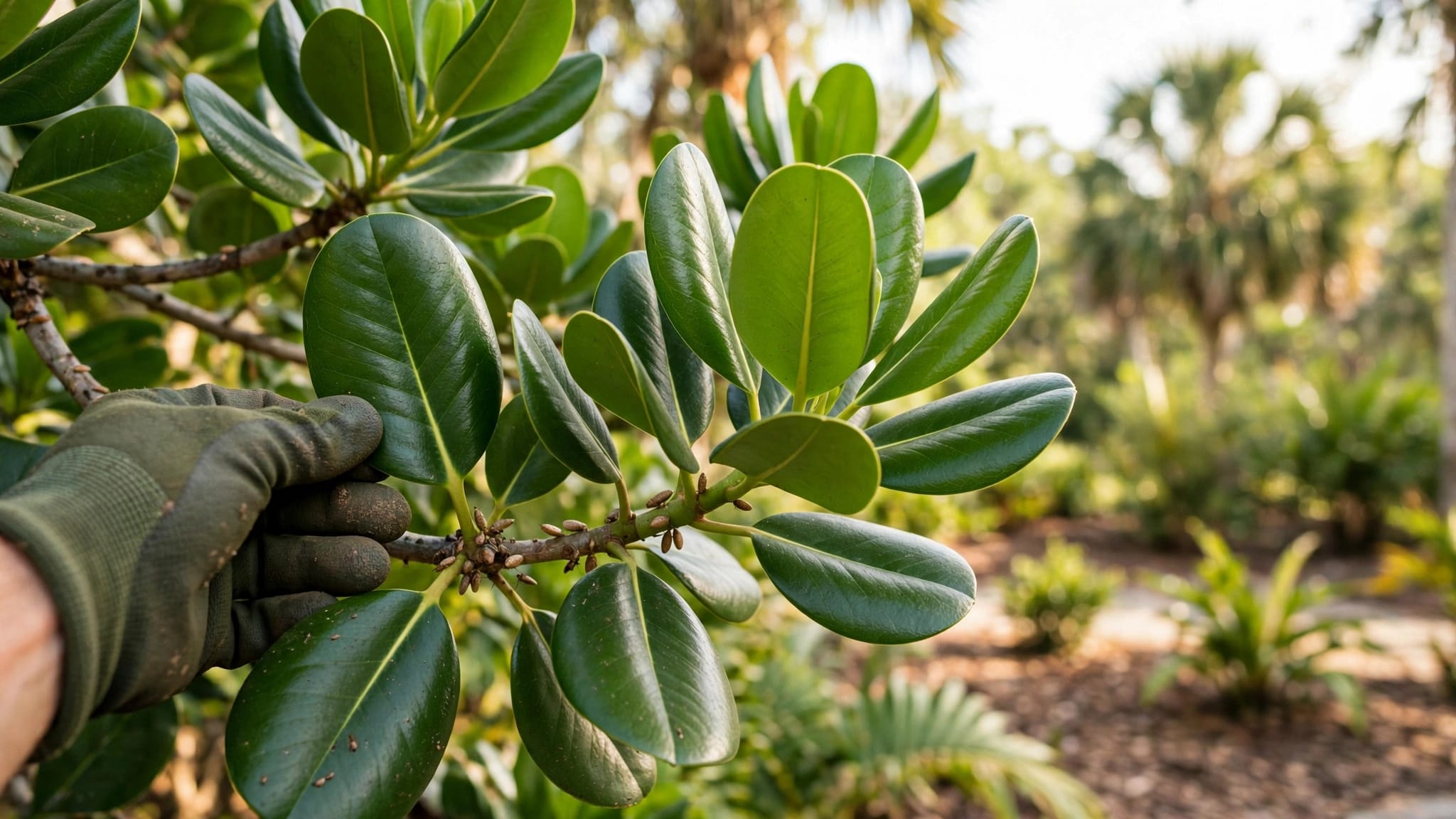
Tropical plants may grow quickly during warm, wet weather, so inspect them every few weeks. High wind speed during a passing tropical cyclone can easily damage untrimmed foliage and weak branches. Remove dead leaves and weak growth with clean tools, especially as you prepare for severe weather. Avoid aggressive pruning immediately before a storm because fresh cuts can stress plants, and heavy thinning can leave some trees more exposed to wind. A certified arborist should evaluate large trees, palms with serious damage, hanging limbs, or branches near a home or power line.
Turf also needs regular attention. Mow at the correct height for the grass type, and avoid mowing saturated soil. Heavy equipment or repeated foot traffic can compact wet areas and leave ruts. If grass keeps failing in one location, correct the drainage or shade problem before replacing the sod. Proper turf care before peak hurricane season helps your lawn withstand heavy rains.
Hardscapes deserve a separate inspection. Look for pavers that rock, joints that have washed out, cracked concrete, and edges that have settled near drains. A concrete company can assess major slab cracks, displaced sections, or drainage-related settlement. For routine upkeep, sweep debris from pavers and schedule paver cleaning before dirt, algae, and organic stains become harder to remove.
Some homeowners choose artifical turf for areas that stay difficult to mow, but it still needs proper base preparation and drainage. Water must have a path beneath and around the installation, especially in a yard that already ponds during the heaviest storms of hurricane season.
Check outdoor structures and utilities safely
Storm preparation also includes patios, fences, outdoor kitchens, retaining edges, sheds, and pool areas. Tighten loose hardware and inspect posts for movement. A leaning fence may indicate soil erosion, not only a hardware problem.
Check pool screens and enclosure posts for visible damage. Do not climb onto a roof to inspect shingles, flashing, or gutters during wet weather. Look from the ground for missing materials, sagging gutters, and water stains, then contact a qualified roofing professional for repairs.
Electricity and standing water are a dangerous combination, especially during a widespread power outage. Keep away from flooded areas that contain landscape lighting, extension cords, outlets, pumps, pool equipment, or irrigation controls. Never wade through water to retrieve a cord or reset equipment. If water reaches electrical components, stay clear and call a licensed electrician or the appropriate utility provider.
Follow local storm instructions before a tropical storm or hurricane. Bring in loose items, shut off equipment only when it is safe, and avoid using generators indoors, inside garages, or near windows. Keep fuel containers away from heat sources and living areas. Comprehensive hurricane preparedness also means assembling an emergency supply kit that includes working flashlights, extra batteries, a portable charger, a battery-powered radio, and a fire extinguisher.
After a storm, wait until conditions are safe before walking the property, particularly if a prolonged power outage has disrupted your daily routine. Wear sturdy shoes and use gloves when clearing debris, keeping dependable flashlights and extra batteries on hand if you need to inspect dark areas. Treat every downed wire as energized, even if the neighborhood has lost power. Children and pets should stay away from floodwater because it may contain sharp debris, chemicals, or sewage.
Inspect the yard after every major storm
A post-storm walk can reveal problems before they grow. Start at the roof drainage points and follow water's path across the property. Check whether gutters overflowed, downspouts shifted, or drain grates became covered with leaves and sand after high wind speed events.
Look for fresh washouts around plants, fences, pavers, slabs, and utility lines, especially if tropical systems or a local storm surge affected the area. Small depressions can become larger after each storm. Fill minor settled areas only after identifying the source of the water, since adding soil without correcting the flow may bury drainage outlets or move the problem elsewhere.
Inspect trees from a safe distance. Do not stand beneath hanging branches or approach a tree that leans toward the home. A qualified arborist should handle split trunks, large broken limbs, uprooted trees, and branches near electrical lines. If a severe storm brings a prolonged power outage, use extreme caution around downed utility lines while checking your yard.
Check outdoor surfaces after the area dries. Remove leaves from pavers and concrete, but don't pressure-wash loose pavers or damaged surfaces until they have been evaluated. Algae can make walkways slippery, so restrict access until cleaning is complete.
For Cape Coral properties with repeated ponding, a monthly rainy-season inspection can help identify new low spots and blocked outlets. If your neighborhood is located near a coastal evacuation zone, staying vigilant during hurricane season is critical for early damage detection. Homeowners considering larger improvements during hurricane season should review this backyard renovation project order, since drainage and grading should come before new hardscapes or planting beds.
Know when to call a local professional
Some yard maintenance is safe for homeowners, but significant water, tree, roofing, and electrical issues require trained help. Contact a qualified local professional when water reaches the slab, drainage affects a neighbor, a tree has fallen, a large limb hangs overhead, or a roof leak appears.
Professional help also makes sense when a yard needs regrading, a new drainage system, concrete repair, paver replacement, irrigation changes, or a complete landscaping update. Fixing the water path first prevents new materials from settling, staining, or failing soon after installation.
Keep photos and notes after each major storm. Record where water collects, how long it remains, and whether the problem changes after cleaning a drain or moving a downspout. That information gives a contractor a clearer starting point.
Prepare for severe weather by gathering your most important documents and sealing them securely inside a waterproof container. Make sure you also pack extra prescription medications, a well-stocked first-aid kit, and a dependable manual can opener for daily needs.
Store a multi-day supply of non-perishable food alongside your emergency food rations so your household stays nourished during prolonged power outages. Include essential sanitation items, specialized pet supplies, and modest cash reserves to help you execute your family evacuation plan smoothly.
Frequently Asked Questions
When does the rainy season typically start in Southwest Florida?
The rainy season in Southwest Florida usually begins in late May or early June and lasts through October. During this period, frequent afternoon thunderstorms bring heavy rainfall, high humidity, and occasional tropical systems.
How can I tell if my yard has a serious drainage problem?
A minor puddle after a heavy downpour is normal, but water that stays pooled for more than 24 to 48 hours indicates poor drainage. Other warning signs include erosion around the foundation, water flowing toward your garage or slab, and turf that consistently dies off in the same spot.
Is it safe to use outdoor electrical equipment during a heavy rainstorm?
No, electricity and standing water create a dangerous combination. You should always stay away from flooded areas containing landscape lighting, extension cords, pool pumps, and irrigation controls until the water recedes and the equipment is inspected by a professional.
Final Thoughts
A reliable rainy-season routine protects more than the appearance of your yard. Clean drainage, stable soil, maintained plants, secure outdoor features, and careful storm inspections can prevent small issues from becoming structural or safety problems.
As you navigate the broader challenges of hurricane season, effective disaster preparedness requires looking beyond the landscape to secure your entire household. Proper hurricane preparedness involves using your Florida rainy season checklist alongside essential household readiness steps. Make sure your home is fully equipped with an emergency supply kit that includes at least a gallon of drinking water per person per day, a generous supply of non-perishable food, working flashlights, extra batteries, and a reliable first-aid kit.
Keep your essential prescription medications, physical copies of important documents stored in a waterproof container, and a well-rehearsed evacuation plan ready for any unexpected severe weather or tropical cyclone threat. Knowing your specific evacuation zone, monitoring local alerts for a potential storm surge, and preparing for a prolonged power outage will help you stay safe.
Enhance your readiness with a portable charger, a battery-powered radio, a manual can opener, essential sanitation items, and adequate pet supplies. Secure your property with durable hurricane shutters, keep a battery-powered radio and cash reserves on hand, and bring in a qualified local professional when water keeps collecting or damage reaches trees, roofing, concrete, or electrical systems before making repairs.