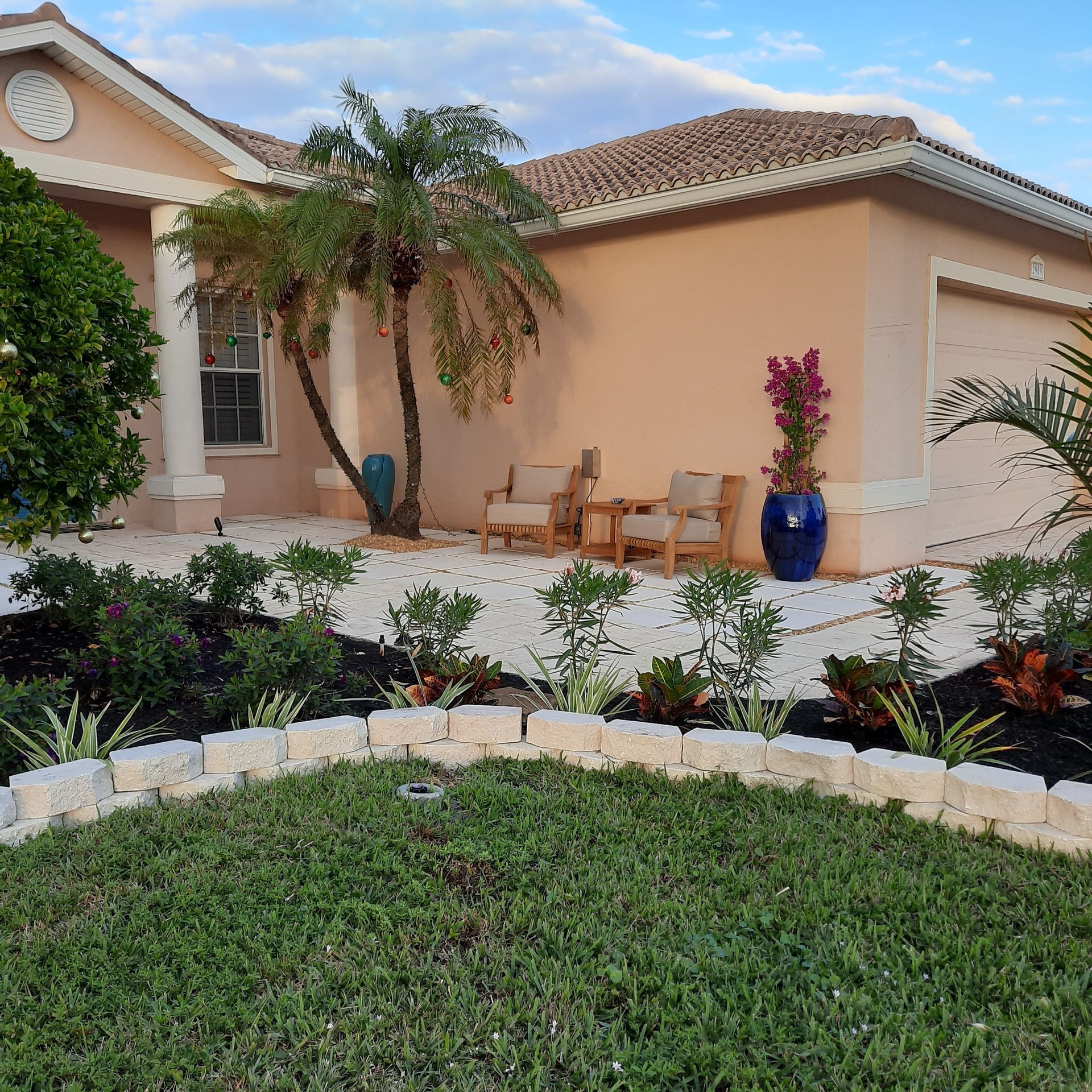



Gray Leaf Spot in St. Augustine Grass: Signs and Care
Gray leaf spot can leave St. Augustine grass spotted, thin, and brown, but damaged turf alone doesn't confirm the disease. Look closely at individual blades, the shape of affected areas, soil moisture, and recent lawn care before choosing a treatment.
Extra water or fertilizer can make the wrong problem harder to solve. A careful inspection is the best first step, especially in Southwest Florida, where drought stress, insects, drainage problems, and disease can cause similar symptoms.
How to recognize gray leaf spot in St. Augustine grass
Look closely at the blades
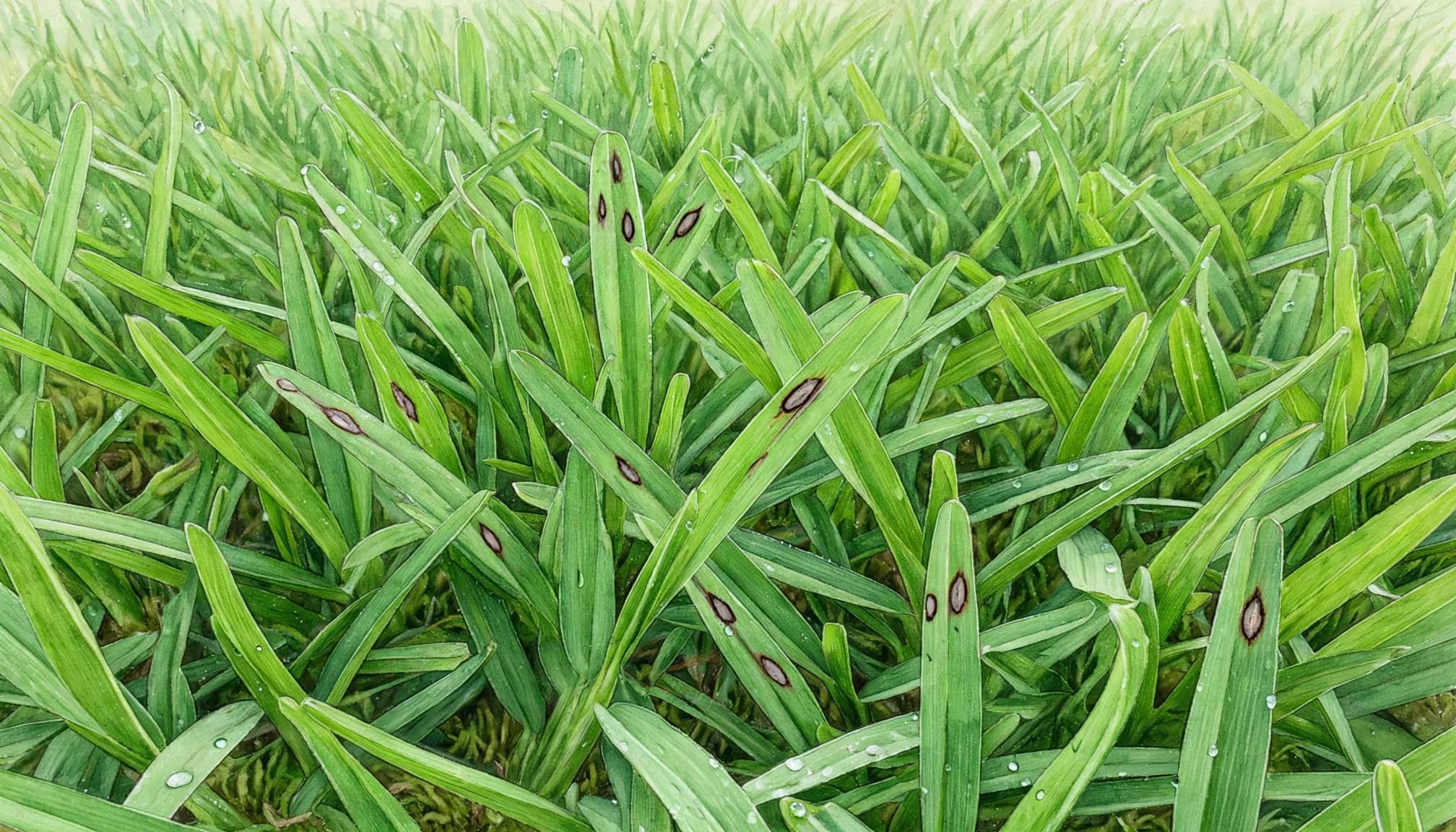
Gray leaf spot often shows up as small lesions on individual grass blades. They may appear gray or tan, sometimes with darker coloring around the marks. As affected leaves weaken, the lawn may look yellowed or thin.
Check several blades from both healthy and damaged areas. A single discolored leaf can result from mowing or other injury, so look for repeated marks across multiple blades. Photos can help you track whether symptoms are spreading, but they can't confirm the cause on their own.
Watch how the damage develops
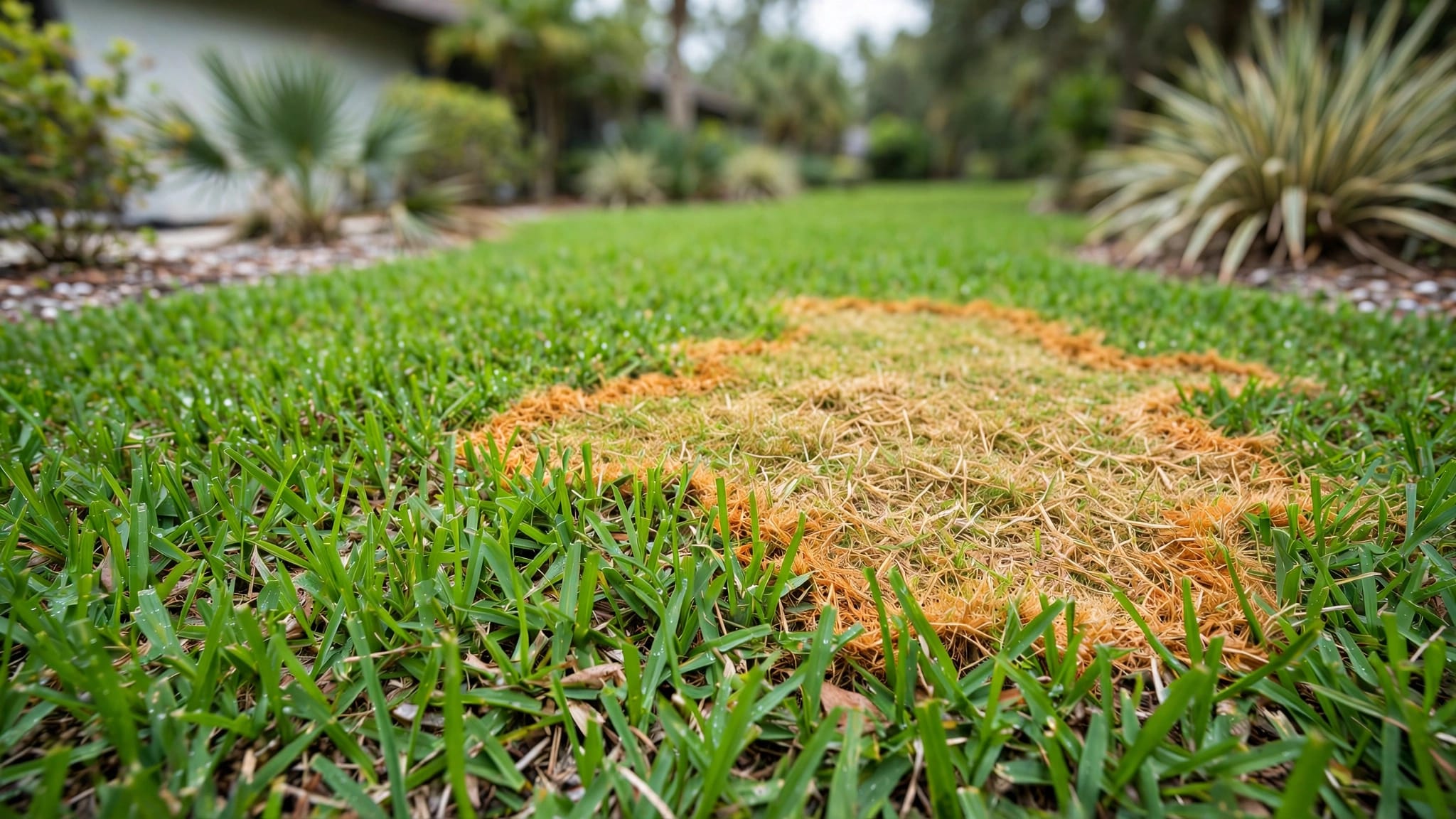
Gray leaf spot symptoms tend to be visible on the blades, while other lawn problems may create broader patches of yellow or brown turf. Note whether the damage appears as small marks across leaves or as larger areas that expand through the lawn.
A spreading patch deserves attention, but it doesn't identify the disease by itself. In St. Augustine grass, different problems can overlap, and more than one issue may affect the same yard.
Separate disease from common lawn lookalikes
Check for drought stress first
Drought stress often affects a broad, fairly even area, especially when a sprinkler zone misses part of the lawn. Grass may look dull, folded, or gray-green before turning brown. Narrow dry strips can form beside a fence, under a tree, or near a wall where sprinkler spray doesn't reach.
Test the soil several inches below the surface in both damaged and healthy turf. Dry, resistant soil supports a drought-stress explanation. Moist soil alongside declining grass points toward other possibilities. Read more about drought and fungal disease symptoms in St. Augustine grass.
Consider insects and other damage
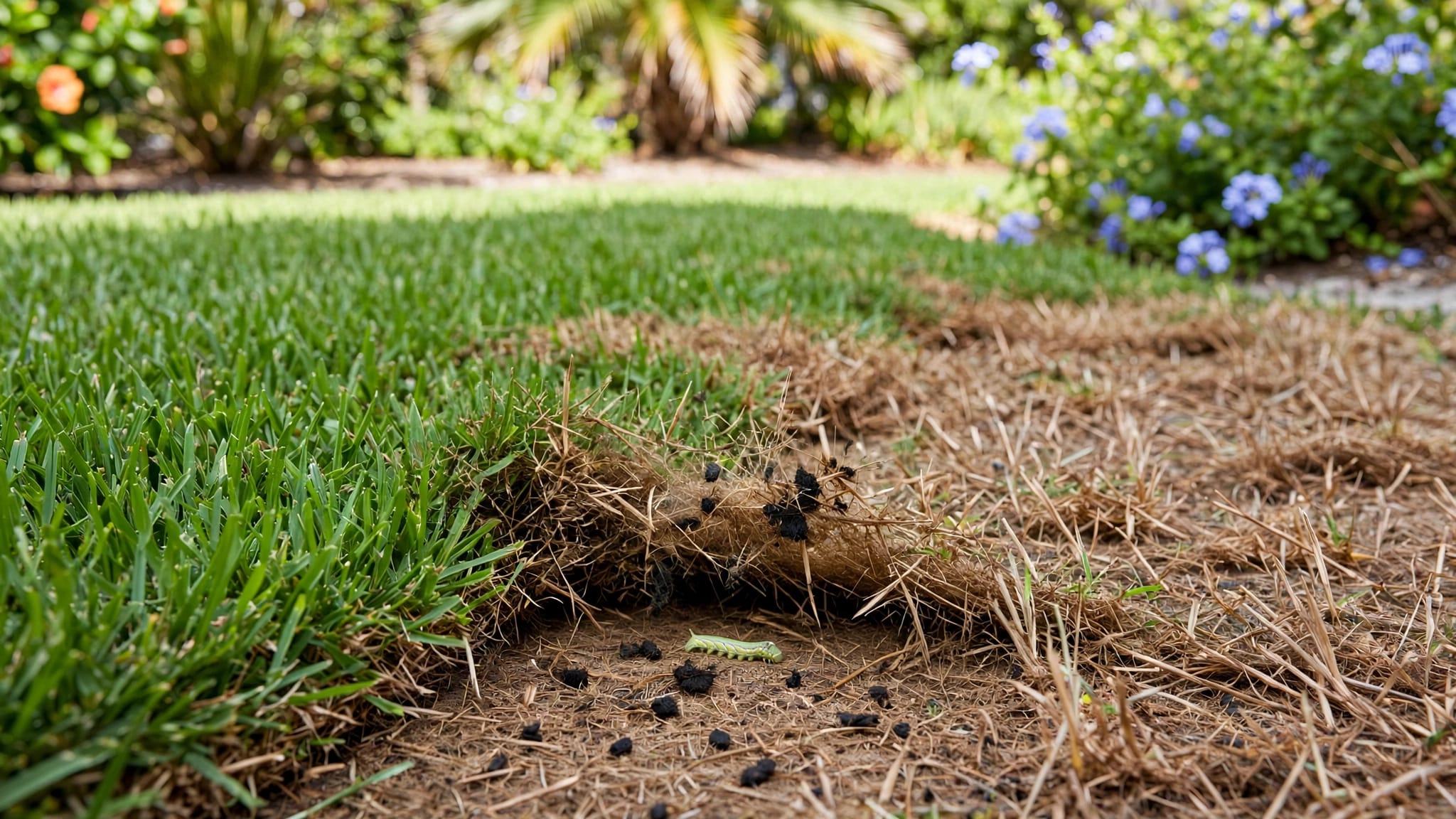
Chinch bug injury can start in scattered patches or along hot, sunny lawn edges. The soil may still feel damp while grass declines. That pattern differs from the larger, more even areas often caused by a missed sprinkler zone, though visual clues aren't definitive.
Compaction, poor drainage, herbicide injury, and mower damage can also affect St. Augustine grass. For instance, grass can struggle where heavy foot traffic compresses the soil. If insects seem possible, compare the symptoms with these signs of chinch bugs in St. Augustine grass.
Inspect the lawn before treating it
Compare damaged and healthy turf
Start with a small inspection at the edge of a damaged area. Check the blades for repeated spots, then feel the soil beneath them. Compare those findings with a nearby section of healthy grass.
Look for an uneven sprinkler pattern, compacted soil, standing water, and changes in mowing or chemical use. Also inspect the boundary between healthy and weak turf for insects or a clear line that may point to missed irrigation. These clues help narrow the possibilities, but no single symptom proves gray leaf spot.
Track the changes over time
Take a photo from the same spot every few days. Record whether patches expand, whether new leaf marks appear, and whether the soil stays dry or saturated. This simple record can help distinguish a persistent problem from temporary stress.
If the lawn keeps declining despite appropriate watering, or you can't distinguish disease from insects or root damage, arrange an assessment with a qualified lawn professional. Avoid applying a pesticide or fungicide simply because the turf has turned brown.
Treat gray leaf spot carefully
Match the treatment to the diagnosis
Treatment starts with identifying the cause. If gray leaf spot is confirmed, follow recommendations for that disease and for St. Augustine grass. Product labels matter: a pesticide must be approved for the intended use and grass type, and you must follow its directions for application, protective equipment, watering, and re-entry.
There's no benefit to treating old brown blades as if a chemical will make them green again. A treatment decision should focus on stopping active damage and protecting the living turf. If you're unsure what you're seeing or don't feel comfortable handling pesticides, hire a licensed applicator.
Don't compensate with fertilizer or extra water
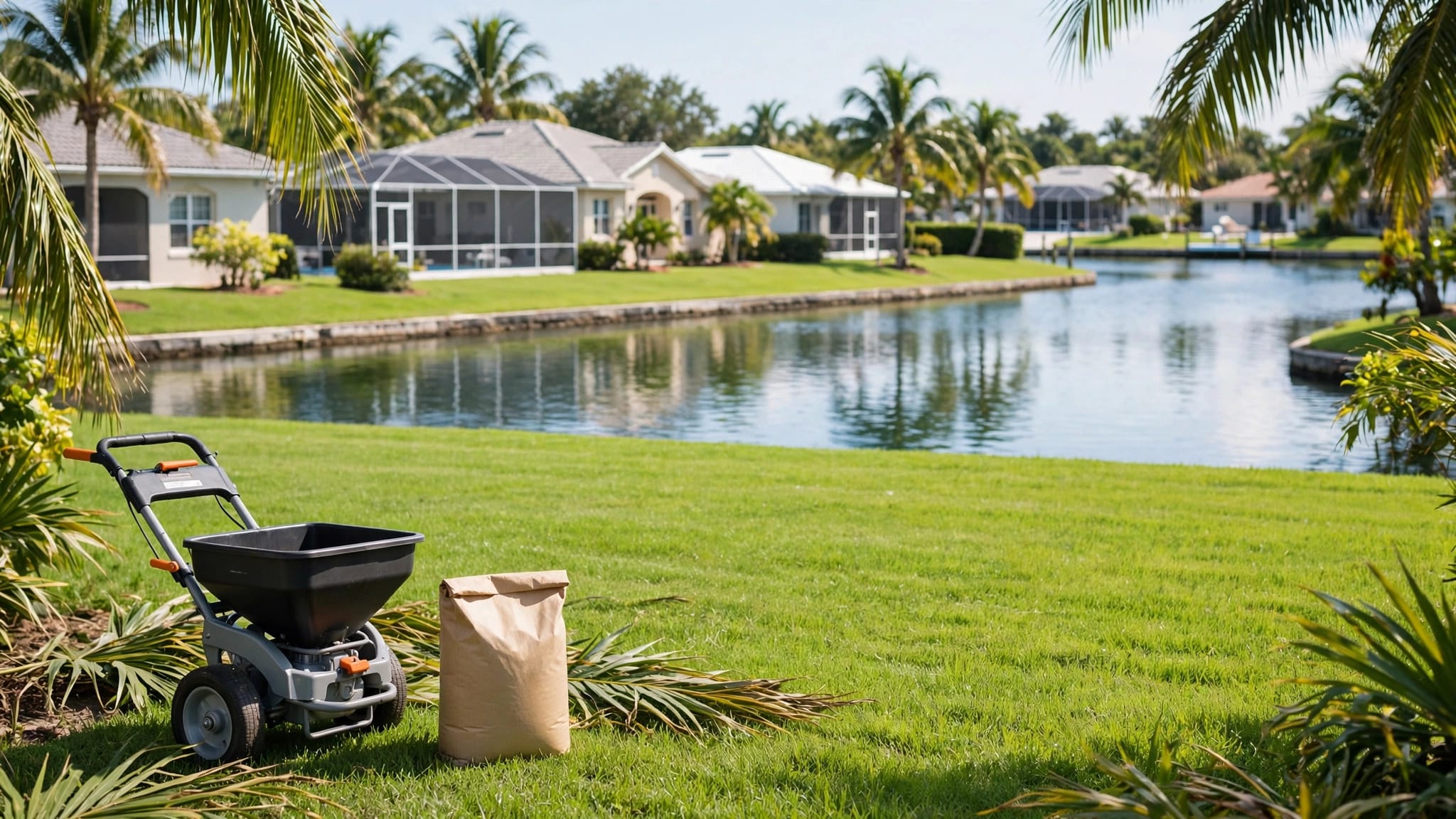
Fertilizer won't correct a disease, insect problem, compacted soil, or broken irrigation system. Applying more can add stress when the actual cause remains unresolved. Likewise, running sprinklers longer won't fix insect feeding or improve drainage.
Keep the lawn consistently moist without leaving it saturated. Before changing the timer, check soil moisture and sprinkler coverage. If you find a leak, stuck zone, or broken head, irrigation repair for leaks, valves, and stuck zones may address the underlying watering issue.
Help stressed St. Augustine grass recover
Water and mow without adding stress
Water according to the lawn's needs, rainfall, soil, and local watering rules. When turf shows drought stress, water deeply enough to moisten the active root zone, then allow the surface to dry rather than running short cycles every day. Avoid keeping soil constantly wet, which can weaken roots and increase disease pressure.
Mow with a sharp blade and avoid cutting wilted or saturated grass. Keep foot traffic, pet wear, and sharp mower turns away from damaged patches where possible. If the lawn is weak, hold off on aggressive raking or other disruptive work until it can tolerate the stress.
Give living runners time to fill in
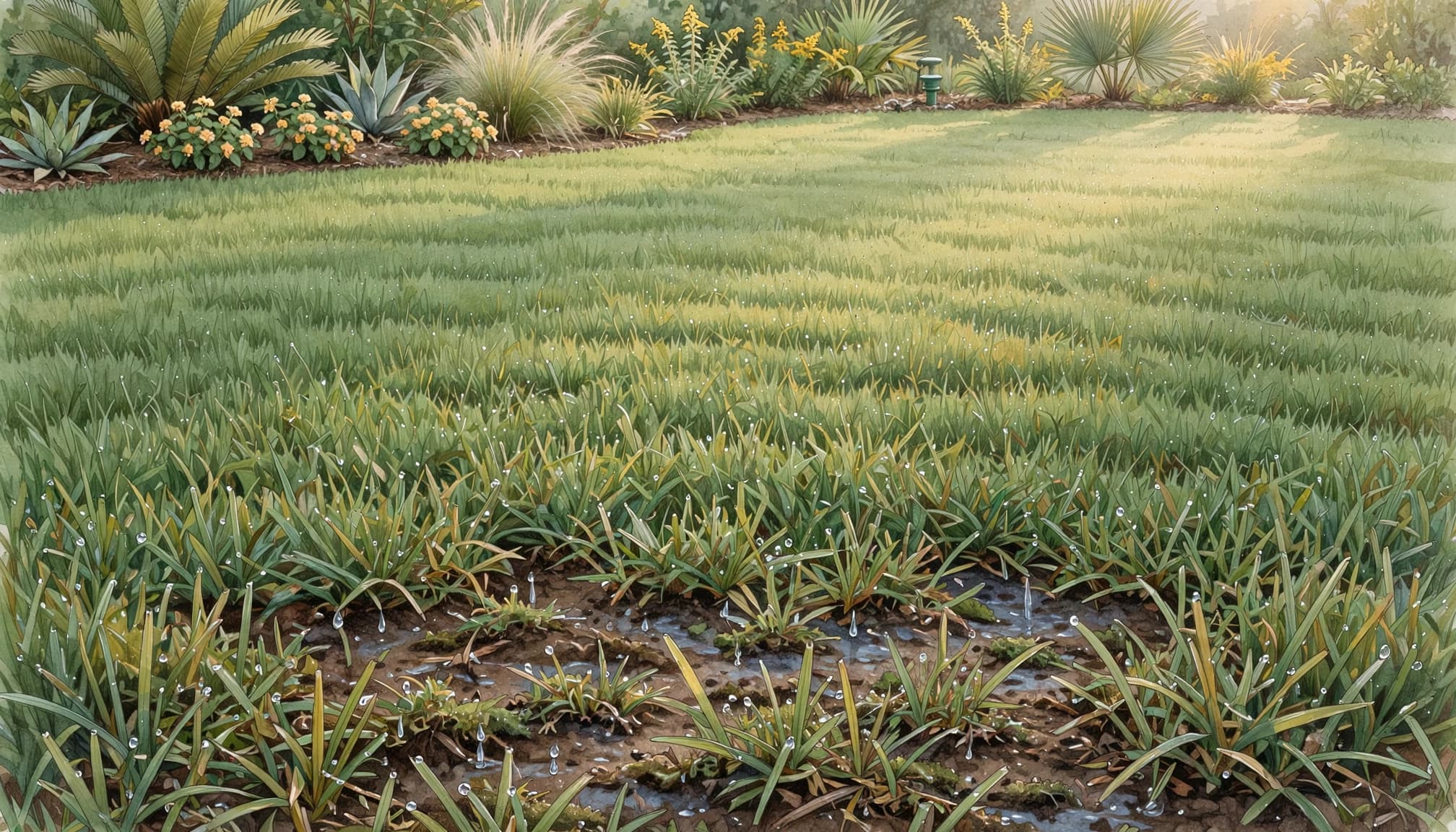
Recovery depends on whether the grass crowns and runners remain alive. Some damaged blades won't regain their color, even after the original problem is addressed. Watch for healthy new growth instead of expecting old leaves to repair themselves.
If large areas remain thin, consider whether the site suits natural grass. Shade, drainage, foot traffic, and irrigation all affect the result. Sod or artificial turf may suit some spaces better, but each option requires appropriate site preparation and drainage.
Reduce the chance of repeat lawn stress
Keep sprinkler coverage even across the yard, including corners and narrow strips beside buildings. Check for broken or blocked heads after landscape work, and adjust watering when rainfall or seasonal conditions change. When a section stays wet or drains poorly, address the drainage issue rather than repeatedly shortening or extending irrigation.
Mow at a suitable height for St. Augustine grass, and don't remove too much leaf tissue at once. Avoid routine fertilizer applications when the lawn's needs are unclear. Excess fertilizer, frequent watering, poor drainage, and compacted soil can all make turf less healthy.
Regular observation helps you catch a change early. Look for fresh blade lesions, expanding patches, standing water, and missed sprinkler areas as part of ordinary landscaping maintenance.
Coordinate lawn care with nearby hardscape work
Lawn symptoms can begin around patios, walkways, and driveways, where heat, foot traffic, and sprinkler coverage differ from the rest of the yard. If a concrete company is repairing a walkway or patio, keep heavy equipment off weak turf when possible and check that the work hasn't buried or damaged sprinkler heads.
During paver cleaning, prevent runoff or cleaning products from reaching the grass. Overspray and chemical exposure can injure blades and create symptoms that resemble disease. A coordinated plan for landscaping and hardscape work can also limit soil compaction and protect irrigation.
In Fort Myers, Cape Coral, Estero, and Bonita Springs, Outdoor Life Pros handles irrigation repair, sod, and artificial grass projects. If a lawn repeatedly struggles in a particular area, those services may help address a site problem rather than treating symptoms alone.
Key takeaways
- Gray leaf spot can cause small lesions on St. Augustine grass blades, but brown turf alone isn't a diagnosis.
- Compare affected and healthy grass, and test soil moisture several inches below the surface.
- Drought, chinch bugs, compaction, drainage, herbicide injury, and mowing can produce similar damage.
- Avoid extra water, fertilizer, or pesticide unless the cause supports that response.
- Protect stressed turf while you monitor for healthy new growth.
Frequently asked questions
Can gray leaf spot spread across a St. Augustine lawn?
Symptoms can appear in more than one area, but expanding brown patches don't confirm gray leaf spot. Look for small marks on individual blades and assess soil moisture, irrigation coverage, and other possible causes. A qualified assessment can help when the pattern remains unclear.
Should I water more when St. Augustine grass turns brown?
Only if the soil is dry and the grass shows drought stress. Check several inches below the surface and compare the damaged area with healthy turf. If the soil is moist, extra irrigation may leave the real cause untouched and keep the lawn too wet.
Will fungicide make brown grass turn green again?
No treatment can restore color to blades that have already died. If a disease is confirmed, the right treatment may help protect healthy turf, but follow the product label and use a licensed applicator if you're unsure how to proceed.
Protect the lawn by finding the cause
Small blade lesions can be an important clue, but they're only part of the diagnosis. Check the soil, compare the damage pattern, and rule out irrigation, insect, and maintenance problems before treating.
With the cause identified, you can focus on the right fix and give healthy St. Augustine grass room to recover.