


Sod Webworm Damage in Cape Coral Lawns: Signs and Treatment
When sod webworms feed on a Cape Coral lawn, small pale marks can turn into thin, brown patches. The larvae hide in the thatch, so the damage may be easier to spot than the pest.
Because chinch bugs, lawn disease, irrigation problems, and other pests can cause similar symptoms, confirm the cause before treating . A careful inspection helps you choose a response that protects your grass, nearby plants, pets, and Southwest Florida waterways.
Key Takeaways
- Sod webworm caterpillars chew grass blades, often leaving pale "window" marks, ragged edges, and dark droppings.
- Moths flying from the lawn are a clue, not proof of an active infestation.
- Inspect the thatch for live larvae and fresh feeding before using a pesticide.
- Spot-treat only when needed, and follow the product label and applicable regulations.
- Proper mowing, irrigation, and fertilizer use help turf recover and reduce excess thatch.
What Sod Webworm Damage Looks Like
Tropical sod webworms, Herpetogramma phaeopteralis , are moth larvae that feed on warm-season grasses. UF/IFAS lists St. Augustinegrass, bermudagrass, zoysiagrass, bahiagrass, centipedegrass, seashore paspalum, and carpetgrass among their hosts.
Look for fresh feeding, not just brown grass
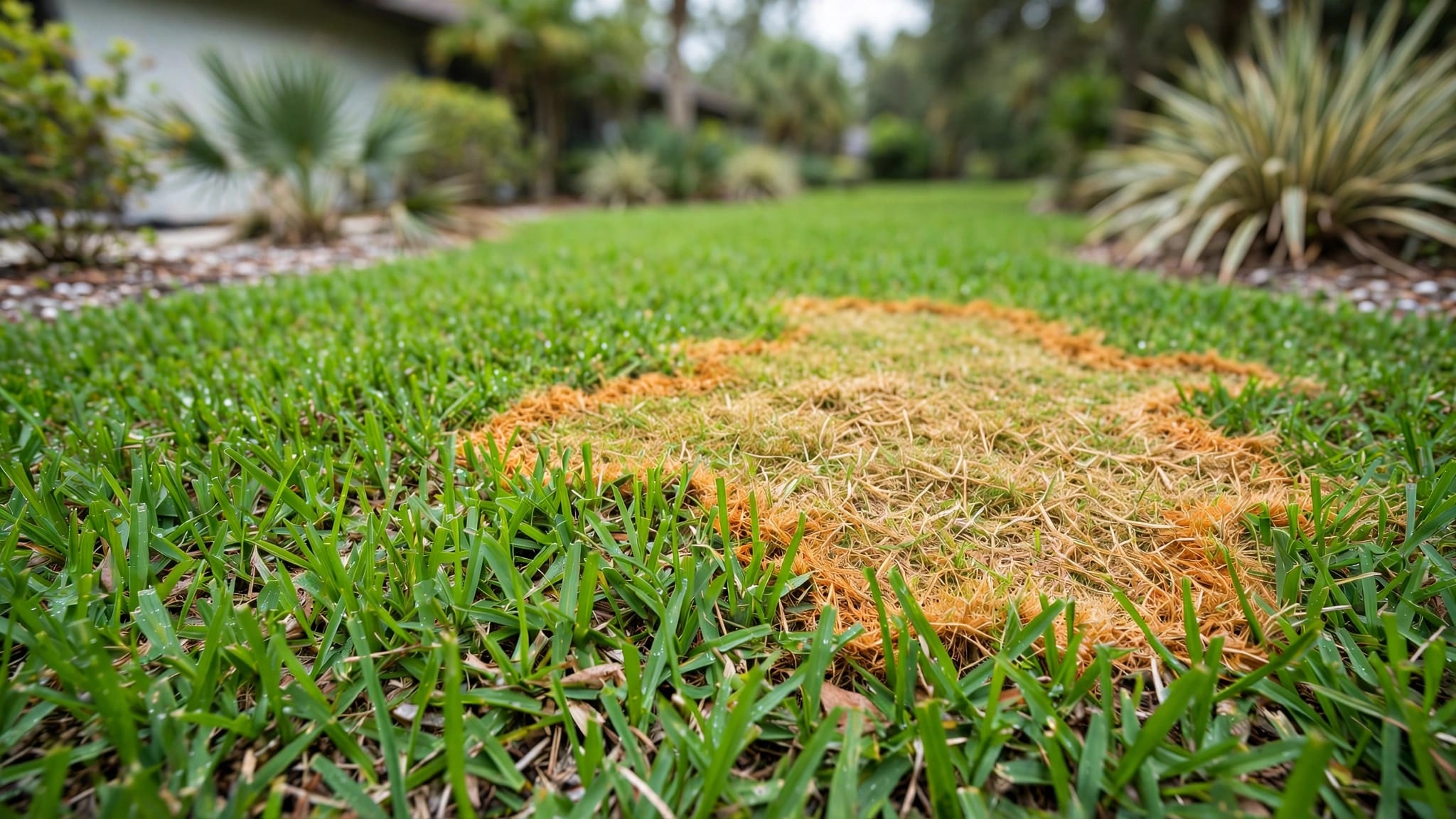
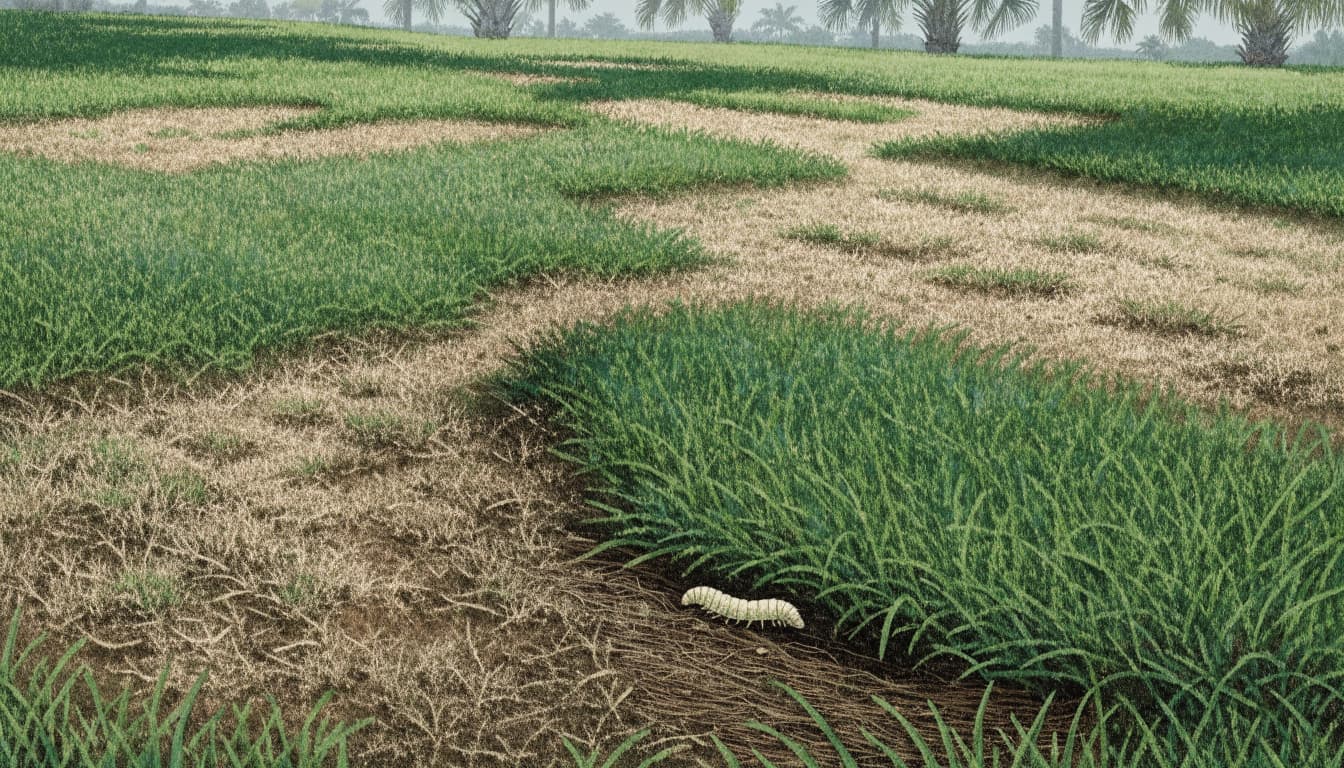
Early feeding can leave pale, nearly transparent patches on blades, sometimes called windowing. As larvae chew more tissue, blades look ragged or closely cropped. Dark, pepper-like droppings may collect near the grass base.
Over time, the lawn can thin and develop irregular straw-colored or brown areas. The caterpillars usually feed at night and hide in thatch during the day, so you may not see them during a quick walk across the yard.
Separate webworm damage from look-alikes
A moth that rises from the lawn when you brush the grass may suggest sod webworm activity, but it doesn't prove larvae are damaging turf. Brown patches alone are also inconclusive. Chinch bugs, grubs, drought, fungus, drainage problems, and uneven irrigation can create similar symptoms.
Check whether the affected turf is dry, soft, or discolored in a pattern linked to sprinklers or recent weather. Our guide to lawn fungus and drought stress in Cape Coral can help you compare other common causes.
How to Confirm Sod Webworms Before Treatment
A close inspection is more useful than guessing from the color of the grass. Look for evidence of live larvae and recent feeding in both damaged turf and the transition between damaged and healthy areas.
Check blades, thatch, and the patch edge
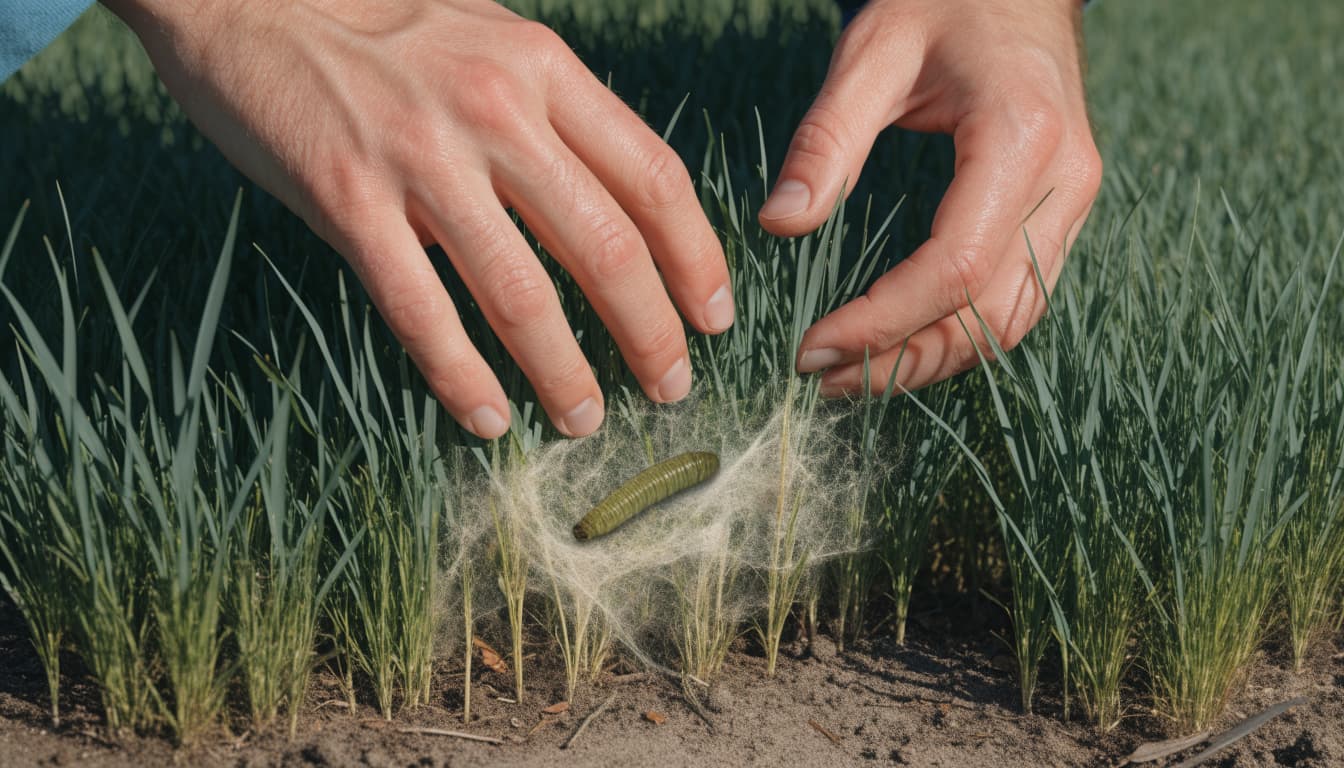
Part the grass and inspect down to the thatch. Look for small caterpillars, fresh chewing, silk-lined hiding spots, and dark frass. Mature larvae can reach roughly three-quarters to one inch long, but smaller larvae may be harder to spot.
Check several locations, not just the brownest patch. Active larvae and fresh feeding near the patch edge matter more than old damage in the center. A photo or collected sample can help a lawn professional or Lee County Extension identify a pest when the signs are unclear.
Use a soap flush as an inspection aid
A soap flush can encourage larvae to come to the surface, making them easier to see. Use a method recommended for the pest and turf you have, and test a small area rather than applying soapy water broadly.
The sighting of moths alone doesn't call for treatment. If you find no live larvae or fresh feeding, pause and investigate watering, disease, or other pests before applying a product.
Treatment Options After Confirming Sod Webworms
Treatment works best when larvae are small and actively feeding. However, the right product and timing depend on the pest, grass type, site, and current label directions.
Spot-treat confirmed infestations
Use only a pesticide whose current label includes the target pest and residential turf application. Follow all label directions for the allowed grass species, application rate, protective equipment, watering, weather limits, and re-entry time. A product labeled for ornamental plants or a different pest may not be appropriate for a lawn.
Treat the infested area rather than spraying the entire property by default. Don't apply extra product or repeat an application early to speed results. Damaged blades won't turn green again, so assess success by checking for live larvae and new feeding at the interval permitted by the label.
UF/IFAS discusses biological options, including Bacillus thuringiensis varieties and the beneficial nematode Steinernema carpocapsae. Commercial formulations can differ, so use them only when the label covers the pest and lawn site.
Protect people, pets, and nearby water
Keep people and pets away for the period stated on the label, and prevent spray or rinse water from entering canals, ponds, storm drains, or irrigation ditches. Cape Coral properties often have drainage routes near lawns, so avoid application when rain or runoff could carry material off site.
If you're coordinating paver cleaning or other outdoor work, keep wash water and treatment residue from flowing toward a canal or drain. When pesticide handling feels uncertain, a licensed applicator can assess the lawn and apply an appropriate labeled treatment.
Help the Lawn Recover and Reduce Repeat Problems
Stopping active feeding prevents more injury, but the grass still needs suitable care to recover. Some lawns rebound if crowns and runners remain alive; severely damaged sections may need repair.
Adjust mowing, irrigation, and fertilizer
Mow at the height recommended for your grass type, and avoid cutting stressed turf too short. Check soil moisture before watering. Sandy soil and strong sun can dry turf quickly, while frequent shallow watering or saturated soil can weaken roots and encourage other problems.
Water according to rainfall, sprinkler coverage, and the lawn's needs rather than following a fixed schedule. Keep fertilizer balanced and avoid heavy applications that push tender growth or add to thatch. Excessive watering and fertilizing can also increase thatch, where larvae shelter.
Our Cape Coral landscaping and irrigation services include irrigation repair and other outdoor improvements that can address lawn-care issues beyond insect feeding.
Repair only the sections that need it
Wait until the cause is clear before removing grass or installing new sod. If the lawn has living runners and crowns, proper care may allow it to fill in. If turf has died, patching or resodding may be more suitable than treating the same area again.
Choose replacement grass that fits the site's sun, water, and use. Our sod installation options in Cape Coral include natural sod and artificial turf. Artificial turf is a separate landscaping choice, not a necessary treatment for webworms.
When Sod Webworms Are Active in Southwest Florida
Warm-season activity can extend across much of the year in South Florida. UF/IFAS notes that adult numbers in southern Florida are often higher in fall, especially September through November, and rise again in spring.
Monitor during warm growing periods
These seasonal patterns offer context, not a Cape Coral outbreak forecast. Walk the lawn periodically during active growth, especially if you notice fresh feeding or moths near outdoor lights. Check multiple areas and note whether damage is expanding.
Early inspection is useful because small larvae are generally easier to control than larger ones. If you see a sudden change, inspect the grass and thatch before assuming the cause is webworms.
Keep lawn conditions in balance
Regular mowing and appropriate irrigation help maintain turf without creating lush, stressed growth. Avoid excess fertilizer and overwatering, which can increase thatch and add hiding places for larvae.
Also watch areas affected by outdoor changes. A concrete company's work near a driveway or patio can alter grade or runoff, while sprinkler repairs can change water coverage. These changes don't confirm webworms, but they may explain why one section of lawn is declining.
When to Call a Lawn Professional
Get help when you can't identify the pest, damage keeps spreading, or the lawn doesn't improve after a correctly labeled treatment. A qualified professional can inspect the grass type, larvae, thatch, irrigation, drainage, and signs of disease before recommending next steps.
Professional advice is especially useful when the property has children, pets, or nearby canals and drainage channels. Ask what evidence supports the diagnosis and whether the proposed treatment is labeled for your turf and site.
If the diagnosis points to another issue, pesticide use may leave the real cause untouched. A landscaping professional can also help coordinate irrigation repair, turf repair, or other yard work without treating unrelated areas.
Frequently Asked Questions
Do moths flying from the grass mean I have sod webworms?
They can indicate adult moth activity, but they don't confirm damaging larvae are present. Inspect the thatch for live caterpillars, fresh feeding, and frass before deciding on treatment.
Will damaged grass turn green after treatment?
No. Treatment can stop further feeding, but chewed blades won't recover. Watch for new feeding and check whether crowns or runners remain alive to judge whether the lawn can regrow.
Should I treat the entire lawn?
Not automatically. Confirm active larvae first, then follow the product label. Spot treatment of confirmed infestations can avoid unnecessary applications to unaffected grass.
Can overwatering cause sod webworm damage?
Overwatering doesn't prove webworms are present, but it can contribute to excess thatch and weakened turf. Check soil moisture and inspect the lawn for larvae before choosing a response.
Protect the Lawn by Diagnosing First
Sod webworm damage in Cape Coral can resemble several other lawn problems, so a brown patch isn't enough to guide treatment. Look for fresh feeding and live larvae in the thatch, then choose a targeted, label-compliant response.
Once the pest is controlled, steady mowing, sensible irrigation, and balanced fertilizing give surviving grass the best chance to recover.