


How to Identify Large Patch in St. Augustine Lawns
A yellow or brown lawn patch doesn't automatically mean your St. Augustinegrass needs more water. Large patch disease can cause expanding areas of discolored turf, but drought, insects, and other lawn problems can look similar.
The most useful clues are the shape and spread of the damage, the condition of the grass blades, and the moisture in the soil. Look at all three before changing your irrigation or treating the lawn.
What large patch looks like in St. Augustinegrass
Large patch often appears as an irregular area of yellow or tan grass that expands into surrounding turf. In some cases, the edge looks darker or orange-brown beside healthier green grass. A patch can start small, so its changing outline may be easier to notice than its initial color.
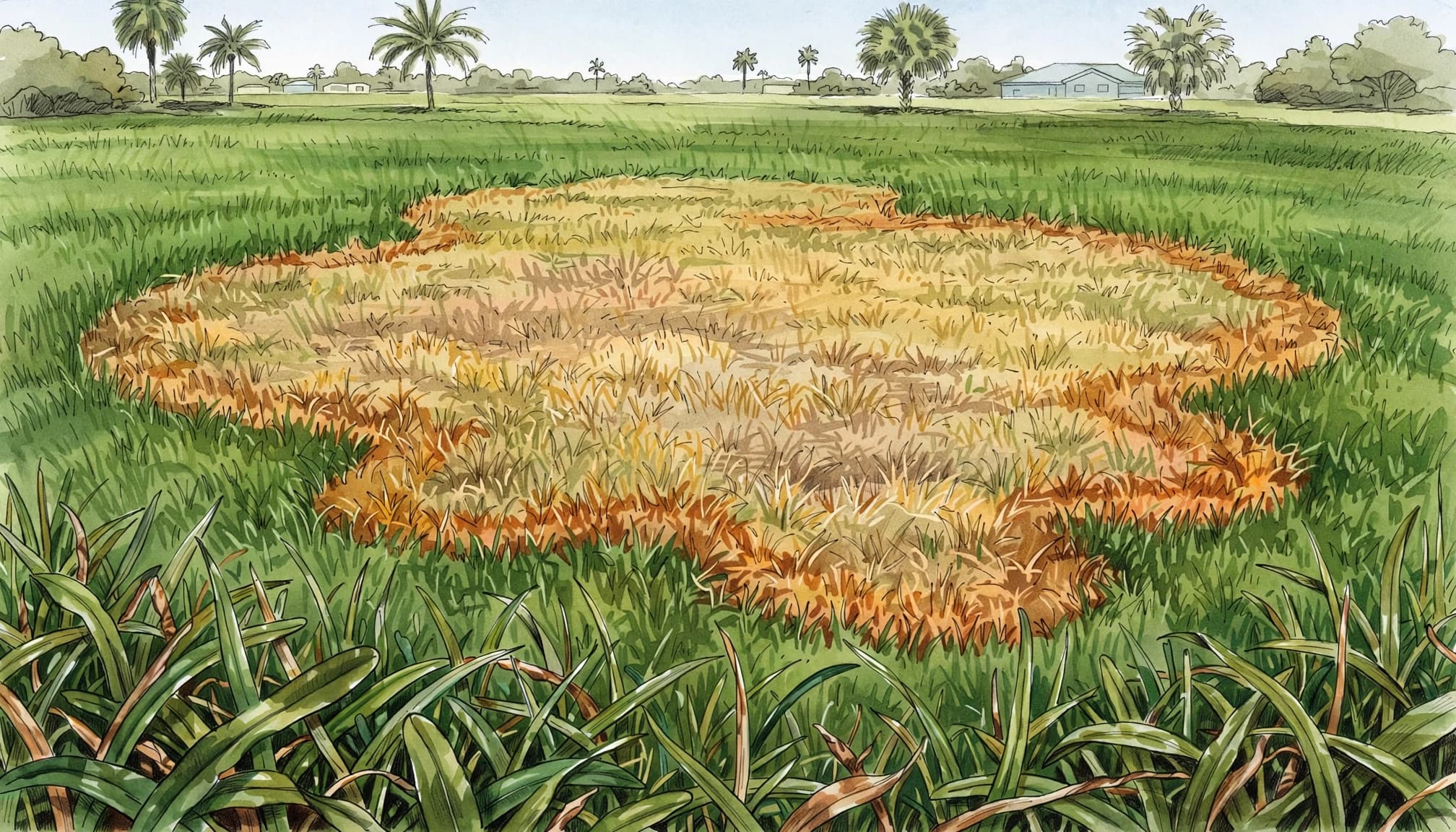
This pattern can fit large patch, especially when the damaged area grows rather than following a clear sprinkler gap. However, a photograph or color pattern alone can't confirm the cause. Other stresses can discolor St. Augustinegrass, and more than one problem can affect the same lawn.
Pay attention to whether the border changes over time. Take a photo from the same spot every few days and include some healthy grass for comparison. A slowly changing or expanding margin is useful information to share with a lawn professional, but it still isn't a diagnosis by itself.
Inspect blades, runners, and patch edges
A closer look can reveal whether the issue is limited to leaf color or involves the grass's growth near the soil. Avoid pulling up large sections. Part the turf gently at the edge of the damaged area and compare it with nearby healthy grass.
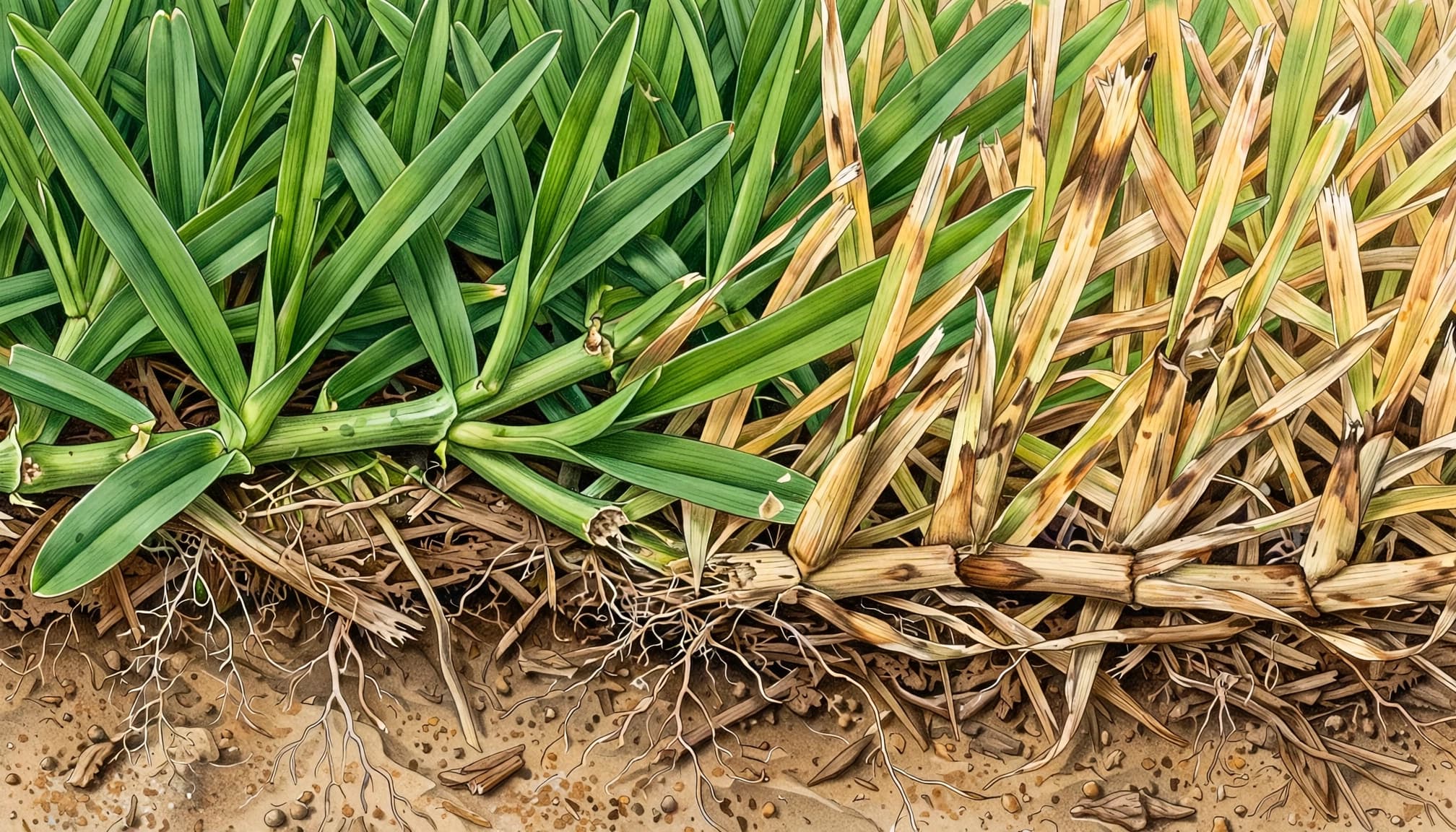
Compare the transition between healthy and damaged turf
Look for yellowing or thinning where green grass meets the affected area. Some fungal problems can also produce discolored marks on individual blades. A large area of uniform discoloration and small blade lesions are different observations, but neither confirms a specific disease without considering the rest of the lawn.
Check whether the change follows a neat line, such as the edge of a sprinkler zone, or has a less predictable outline. Record what you see rather than assuming that every brown patch is large patch disease.
Check the runners and crowns
St. Augustinegrass spreads by above-ground runners, also called stolons. Look for runners that remain green and flexible, or for small signs of new growth near the damaged area. Those are useful signs that some turf may still be alive.
If runners and crowns look brown, weak, or deteriorated, the lawn may need a closer assessment. Don't rush to remove the grass based only on the leaf color. The condition of the living growth below the canopy helps distinguish recovering turf from areas that may need repair.
Rule out drought and irrigation problems
Drought stress can affect broad areas, often in a pattern tied to sprinkler coverage. A lawn may look dull or gray-green before turning brown. Narrow dry strips can appear beside fences or beneath trees where water doesn't reach well.
Push a screwdriver or narrow trowel into the soil in both the damaged area and a healthy area. Dry soil several inches below the surface supports an irrigation problem. If the soil is moist but the grass continues to decline, adding more water may not help.
Compare the pattern with sprinkler coverage
Look for green grass near a sprinkler head and browning farther away, or damage that follows one irrigation zone. Check for blocked or poorly aimed heads and missed areas. A controller can run on schedule while still leaving part of the lawn dry.
If the problem follows a patio, driveway, or other hardscape, consider how the surface affects runoff and irrigation reach. A concrete company working on a driveway or patio may change grades or redirect water. Paver cleaning won't treat a lawn disease, but inspecting hardscape edges can help reveal where drainage or sprinkler coverage may need attention.
Don't use extra water as a diagnostic shortcut
Moist soil and spreading patches call for caution. Frequent watering can keep the surface damp and may add stress when a disease is involved. Water early in the morning when irrigation is needed, and adjust the schedule for rainfall and actual soil conditions.
For established St. Augustinegrass, UF/IFAS guidance is to water when the blades fold or wilt, turn blue-gray, or retain visible footprints. A typical irrigation event of 0.5 to 0.75 inch can wet the root zone, but the right amount depends on the site and soil. For seasonal care, see our month-by-month lawn care guide.
Compare insect damage and other lawn problems
Several problems can create brown or thinning St. Augustinegrass, so look for clues beyond color. Chinch bug damage often begins in scattered patches or along hot, sunny lawn edges. The soil can remain damp while the grass declines, which makes irrigation a poor fix for insect feeding.
Armyworms can also damage turf, often leaving ragged areas that expand as feeding continues. Look closely for live caterpillars or fresh feeding before considering pest treatment. Old brown grass shows damage that has already happened; treating it won't restore the blades.
Gray leaf spot tends to produce small lesions on individual blades rather than one broad, continuous patch. Take-all root rot and other diseases can also weaken or thin turf. Since their symptoms can overlap, use these signs to guide a closer inspection, not to make a firm diagnosis from appearance alone.
Consider weather, mowing, and lawn care
Large patch can appear after warm, wet conditions. That context makes the weather worth noting, but a rainy spell alone doesn't establish that the lawn has the disease. Write down when the damage appeared, whether it's spreading, and whether the soil stays wet between storms.
Mowing too short can add stress and leave turf less able to recover. Keep the mower at the upper end of the recommended height for the St. Augustine cultivar, and don't remove more than one-third of the blade at a time. A sharp blade also gives the grass a cleaner cut.
Avoid treating a discolored lawn with fertilizer or chemicals simply to change its appearance. The right response depends on the cause. For example, irrigation problems, insect activity, and disease require different decisions, and an unsuitable product can injure St. Augustinegrass.
Decide when to get a closer assessment
Seek help when patches keep expanding, the symptoms don't match sprinkler coverage, or you can't identify what's affecting the grass. A lawn professional can inspect both healthy and damaged turf and consider irrigation, drainage, pests, and disease rather than focusing on color alone.
If you ask for an assessment, describe when the patch began, how quickly it changed, and what you found in the soil and grass. Photos taken from the same angle can help show the pattern. When a sample is needed, include both damaged and healthy grass at the boundary, rather than only dead material.
Once the cause is clear, decide whether the grass can recover. Green, firm runners and crowns may continue growing; dead areas may need plugs or sod. If the site repeatedly struggles because of shade, foot traffic, or difficult irrigation, compare living grass with sod and artificial grass options. Artificial turf may suit some locations, but it still needs proper drainage and a prepared base. Some searches misspell it as "artifical turf"; the standard spelling is artificial turf.
Key takeaways
- Large patch can create expanding yellow or tan areas, sometimes with a darker border, but appearance alone doesn't confirm it.
- Compare the pattern with sprinkler coverage and check soil moisture several inches down.
- Inspect blades, runners, and crowns, and look for signs of insects or other damage.
- Avoid adding water or applying chemicals until you have a clearer idea of the cause.
- Get an assessment if the patch continues to spread or the symptoms remain uncertain.
Frequently asked questions
Does a brown patch mean my St. Augustine lawn needs water?
No. Check the soil first. Dry soil several inches down and a pattern that follows sprinkler coverage can point to drought stress. If the soil is moist and the area continues to worsen, extra watering may not solve the problem.
Can I identify large patch from a photo?
A photo can show the shape and color of a patch, but it can't confirm the cause. Similar symptoms can come from drought, insects, other diseases, or physical damage. Photos are most useful when they show the affected area over time and include healthy turf for comparison.
Should I replace the brown grass right away?
Wait until you understand why it declined and whether the runners or crowns are still alive. Replacing turf before correcting an irrigation, drainage, or pest problem may leave the new grass exposed to the same issue.
When should I ask for help?
Get an assessment if damage keeps expanding, the pattern doesn't fit a dry sprinkler area, or you can't tell whether the soil, insects, or disease are involved. A clear diagnosis helps match the repair to the actual problem.
Identify the cause before repairing the lawn
Large patch disease is one possible reason for discolored St. Augustinegrass, but the outline, soil moisture, blade condition, and living runners all matter. Check those clues together before changing irrigation or replacing turf.
When a lawn keeps declining, a careful assessment can prevent unnecessary treatment and help protect the grass that may still recover.