


HOA Landscaping Checklist for Southwest Florida Communities
A neglected irrigation leak or clogged drain can turn a polished community entrance into a costly repair faster than most boards expect. A practical HOA landscaping checklist gives property managers, board members, and contractors a shared standard for keeping common areas safe, attractive, and ready for Florida weather.
Southwest Florida communities face intense sun, sandy soil, summer downpours, salt exposure near the coast, and hurricane-season pressure. Regular inspections catch small issues before they affect curb appeal, drainage, or resident safety.
Use this checklist to set clear service expectations and document the condition of every shared outdoor space.
Build an HOA Landscaping Checklist Around Community Standards
An effective checklist should cover each area residents and guests see or use. That includes entrance monuments, medians, clubhouses, pool surroundings, mailbox stations, sidewalks, retention pond edges, fence lines, and vacant common parcels.
Start with a site map. Divide larger properties into zones, then assign each zone an inspection frequency. A small gated community may need five zones. A master-planned neighborhood may need 20 or more.
Set a visible standard for every common area
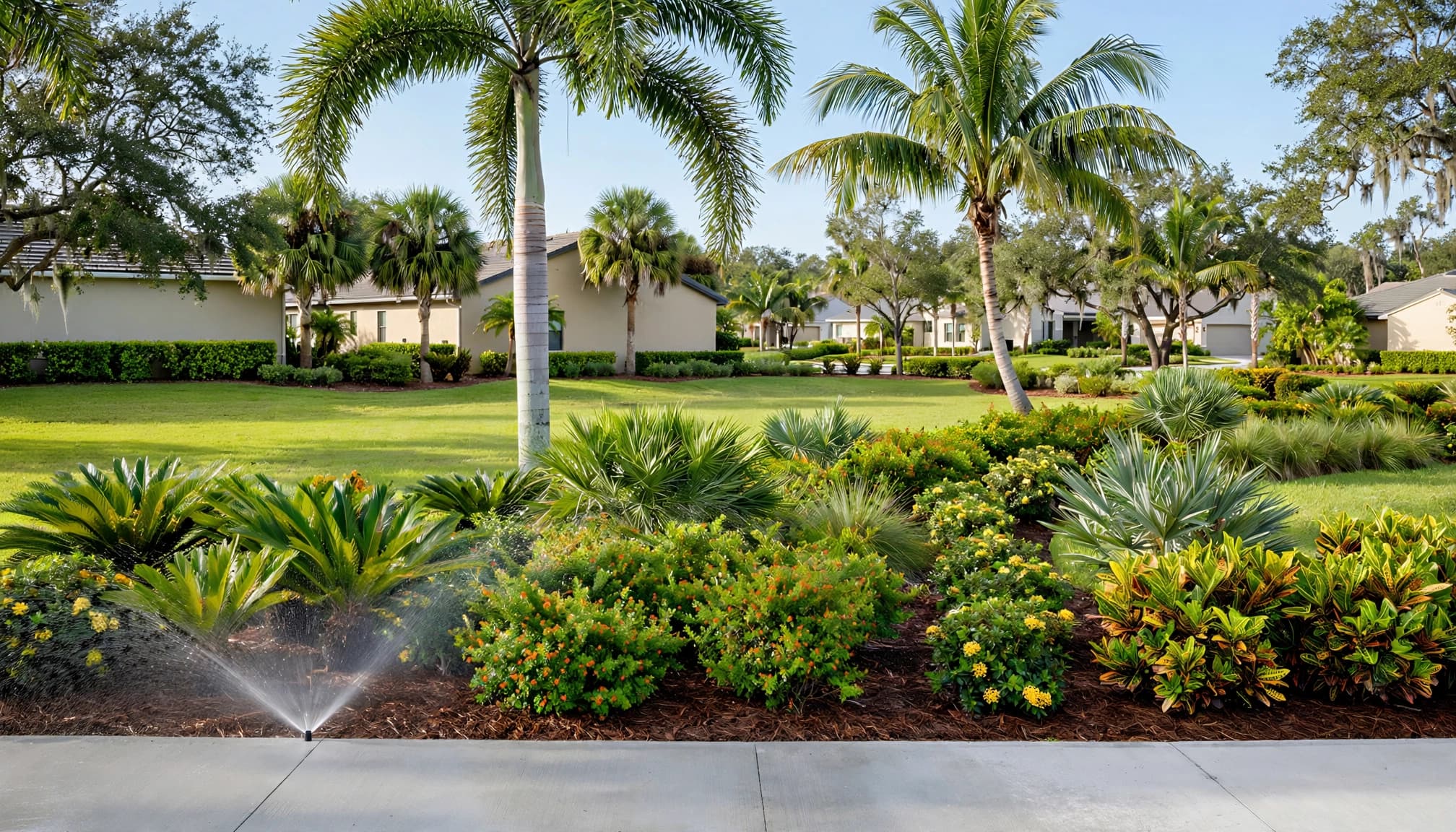
Write down what "well maintained" looks like for your community. Turf should have a consistent height and clean edges. Shrubs should not block signs, sidewalks, fire equipment, or drivers' sight lines. Mulch should cover exposed soil without piling against trunks.
Photos taken during the initial walkthrough give contractors and board members a useful reference. They also prevent disagreements when one person expects tightly shaped hedges and another prefers a softer, more natural look.
Match tasks to the right frequency
Some work belongs on every service visit, while other items need monthly or seasonal attention. Your HOA landscaping checklist should show both the task and the timing.
| Area | Routine check | Typical frequency |
|---|---|---|
| Turf and planting beds | Mowing, edging, debris removal, weeds | Weekly or biweekly |
| Irrigation | Leaks, broken heads, coverage, controller settings | Monthly |
| Palms and trees | Dead fronds, hanging limbs, clearance | Monthly, plus after storms |
| Drains and swales | Leaves, sediment, standing water | Monthly and before heavy rain |
| Pavers and concrete | Cracks, trip points, stains, settling | Quarterly |
A checklist works best when the manager records deficiencies, assigns a deadline, and confirms completion at the next walk-through.
Handle Weekly Lawn and Bed Maintenance
Weekly service is where residents form most of their opinions about the association's grounds. During the wet season, growth can become uneven in a matter of days. Missed edging or a few weed-filled beds can make even a well-designed property look uncared for.
Keep turf healthy without scalping it
Mow turf at the height suited to its grass type, and avoid removing too much leaf blade at one time. Scalped turf loses moisture quickly, exposes soil, and gives weeds room to spread. Contractors should also change mowing patterns when possible to reduce rutting and compaction.
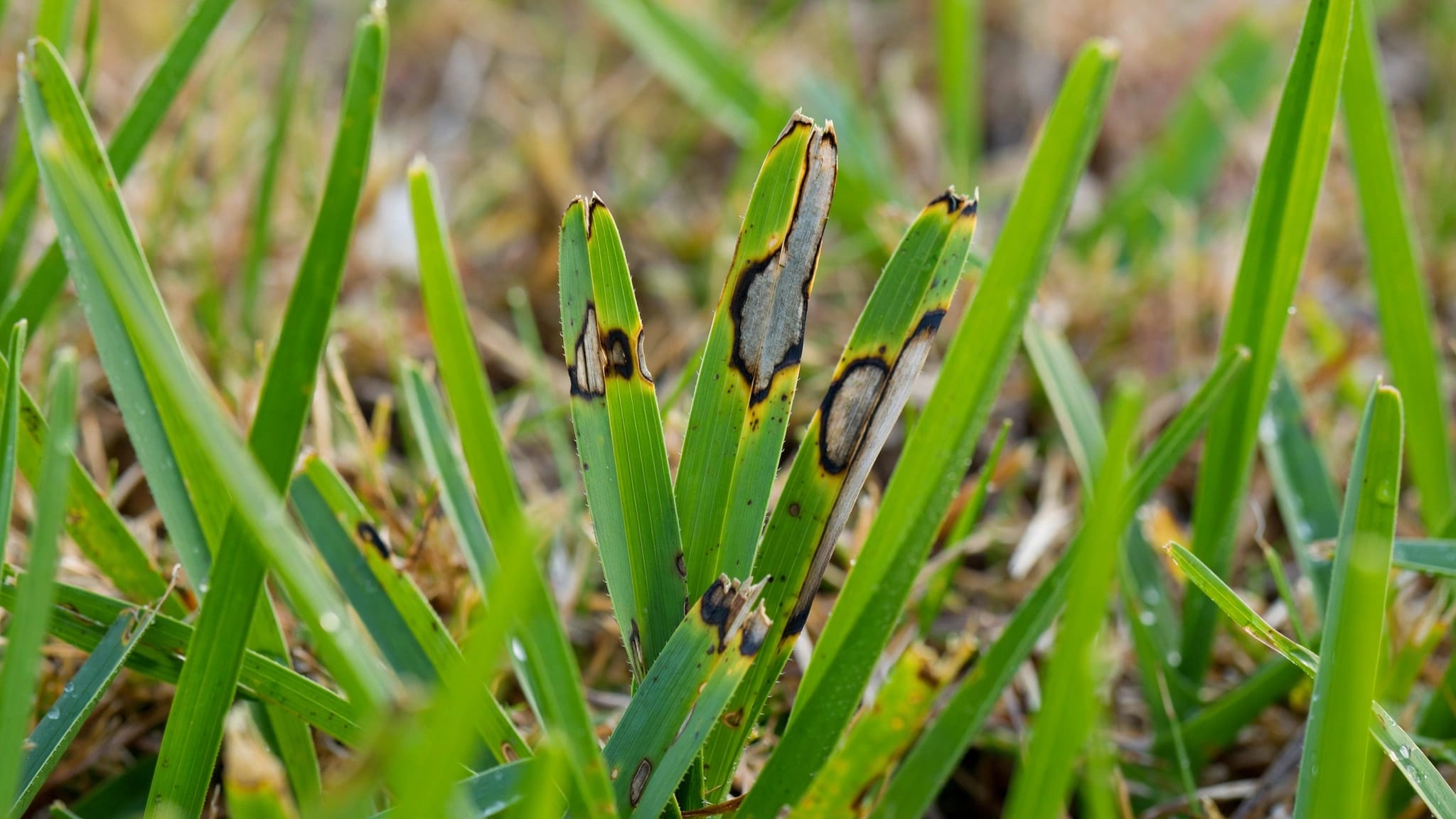
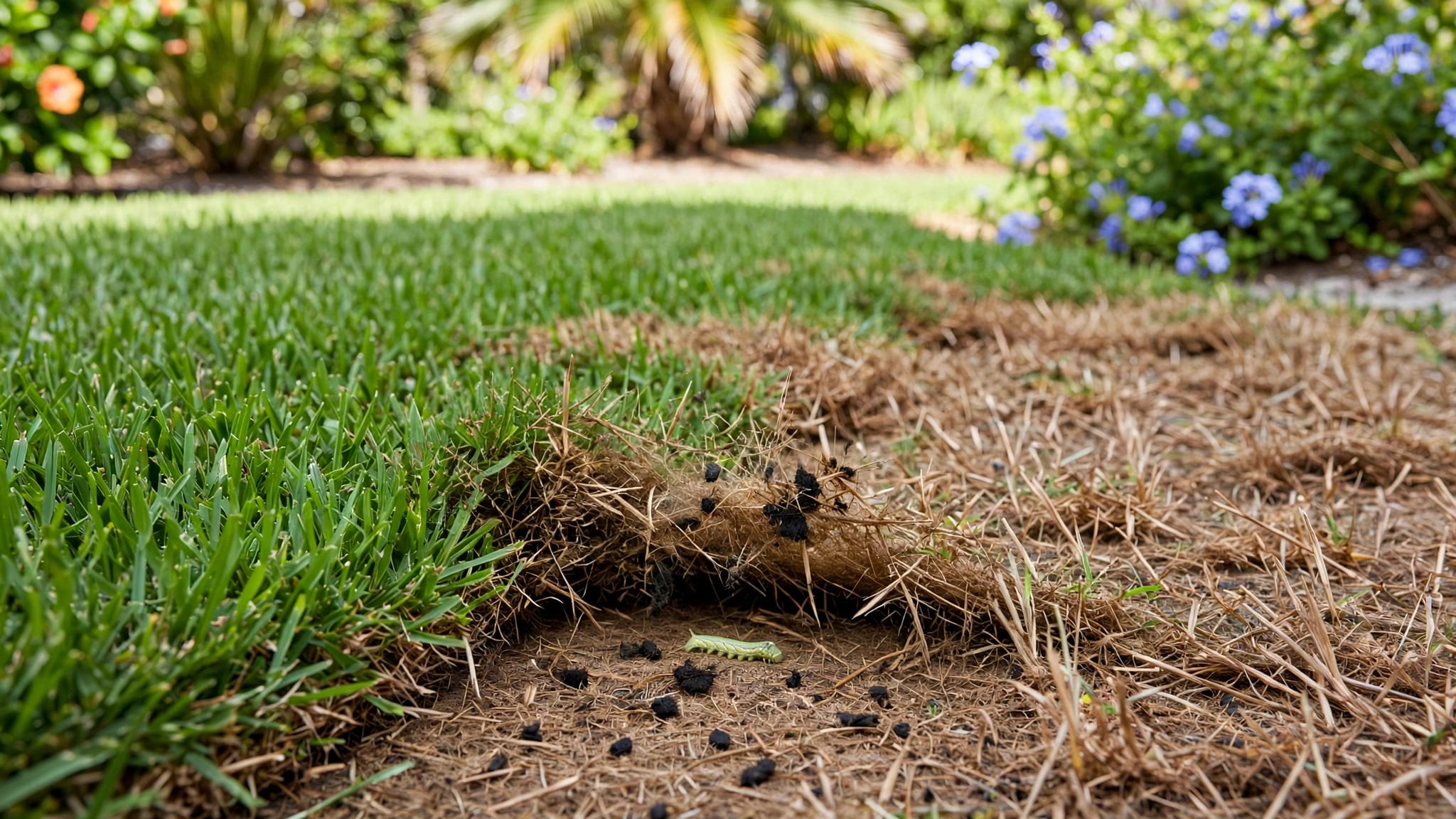
Inspect for bare spots, chinch bug damage, fungus, and irrigation-related stress. St. Augustine grass often shows trouble through patchy color or thinning areas, especially where sprinklers miss the turf.
For high-traffic spaces where natural grass repeatedly fails, boards may consider Cape Coral sod and artificial grass installation. Proper artificial turf needs a stable base and drainage plan, particularly beside pool decks, dog areas, and walkways.
Maintain beds, mulch, and plant clearance
Remove weeds before they seed. Pull invasive vines off fences and shrubs. Prune dead or damaged foliage, but don't shear every plant into the same shape. Different species respond best to different pruning methods and schedules.
Refresh mulch when bare soil becomes visible, usually once or twice a year. Keep it two to three inches deep in most beds, and leave a clear gap around tree trunks and plant crowns. Excess mulch can trap moisture against bark and hide pests.
Inspect Irrigation and Drainage Every Month
Water is often the hidden cause of declining plant material, stained walls, and failing turf. Monthly irrigation reviews are far less expensive than replacing mature palms or repairing a washed-out bed.
Run every irrigation zone in person
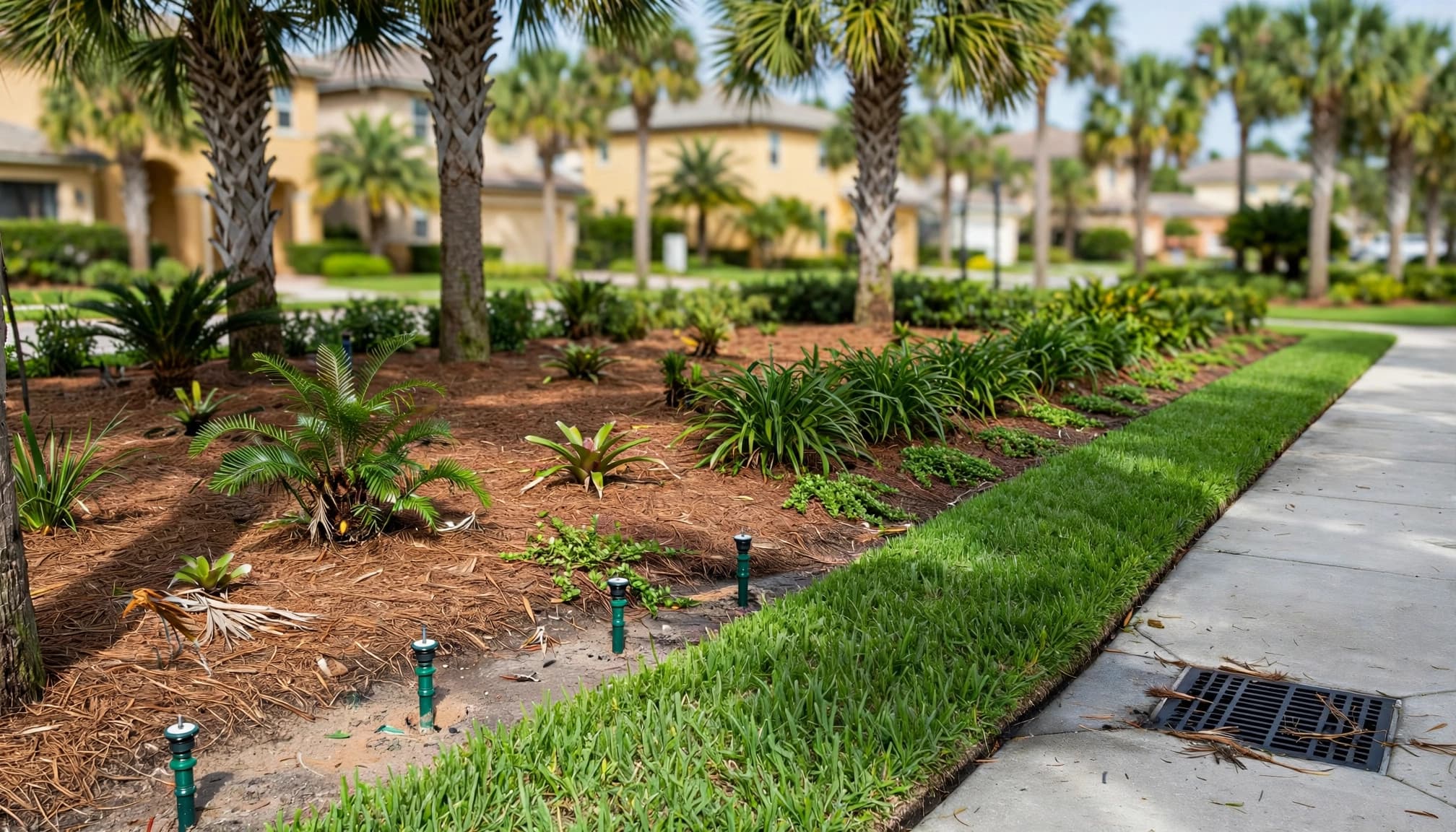
Don't rely on the controller display alone. Run each zone and watch the system operate. Look for tilted heads, clogged nozzles, broken risers, overspray on sidewalks, and water spraying against buildings or perimeter walls.
Check drip lines in beds as well. A broken drip emitter can drown one shrub while another plant a few feet away stays dry. Adjust run times as rainfall and temperatures change.
Irrigation repairs, controller upgrades, and coverage corrections should go to a qualified professional who understands local water restrictions and system design. An experienced contractor can also identify pressure problems that a quick nozzle replacement won't solve.
Keep water moving away from pavement and homes
Walk drainage swales and low spots after a heavy rain. Standing water that remains for days may point to blocked inlets, compacted soil, poor grading, or a damaged discharge area.
Clear leaves and mulch away from storm drains. Inspect pond edges for erosion and loose soil, especially near paths and benches. Document recurring drainage problems with dates and photos, then bring in a qualified drainage or site contractor before the issue reaches foundations or pavement.
A drain that looks clear during dry weather may still fail when mulch, palm debris, and runoff arrive together in a summer downpour.
Plan Maintenance Around Southwest Florida Seasons
Southwest Florida doesn't have a traditional winter, but landscaping work still changes throughout the year. A calendar avoids rushed decisions and helps boards spread costs across the budget.
Use the dry season for upgrades and repairs
From roughly November through April, communities often have fewer growth surges and more predictable work days. This is a good time to repair irrigation lines, replace failing plants, reset loose pavers, refresh stone, and complete concrete repairs.
Plant establishment still requires attention. New shrubs and trees need monitored irrigation until their roots take hold, even during cooler months. Avoid installing plants that need constant water in areas with limited irrigation coverage.
A board planning entrance improvements, paths, or common-area hardscapes can compare Southwest Florida landscape services before combining several projects under one coordinated scope.
Prepare for the summer growth cycle
Rainy-season maintenance usually needs more frequent mowing, weeding, and drain clearing. Fungus, mosquitoes, and algae also become more common where water collects.
Review fertilizer and pest-control practices with properly qualified providers. Application timing, product choice, and site conditions matter near storm drains, ponds, and conservation areas. Keep service records, product information, and invoices with the association's maintenance file.
Watch Palms, Trees, and Visibility Zones
Mature trees provide shade and a finished appearance, yet they also create risk when pruning gets delayed. Palms drop fronds, seed stalks, and boots. Oaks and other canopy trees can hide deadwood above parking spaces, sidewalks, or playgrounds.
Inspect trees before they become a hazard
During monthly walks, look for hanging limbs, cracked branches, fungal growth near the trunk base, root lifting around sidewalks, and branches rubbing roofs, lighting, or signs. Also check that drivers can see clearly at intersections and gate exits.
Use a qualified arborist or properly equipped tree professional for high pruning, hazardous limbs, large removals, or trees near power lines. Crews should never climb palms with spikes unless the palm is being removed, since spikes wound the trunk.
Prune for clearance, not harsh shaping
Ask contractors to remove dead, broken, rubbing, or obstructive branches. Avoid topping trees or stripping palms until they resemble feather dusters. Excessive pruning weakens plants and leaves residents with sparse, sun-burned common areas.
Keep branches off roofs and away from light fixtures. Maintain clear walking paths under trees, especially around clubhouse entrances, mail kiosks, and guest parking.
Separate Storm Preparation From Routine Care
Routine maintenance keeps the property neat. Storm preparation focuses on reducing debris, flooding, and safety risks before tropical weather arrives. The work has different priorities, deadlines, and documentation needs.
Complete pre-storm work early
Don't wait until a named storm is approaching. Before hurricane season, review the contractor's response plan and confirm who approves emergency work if the manager cannot be reached.
Pre-storm tasks should include:
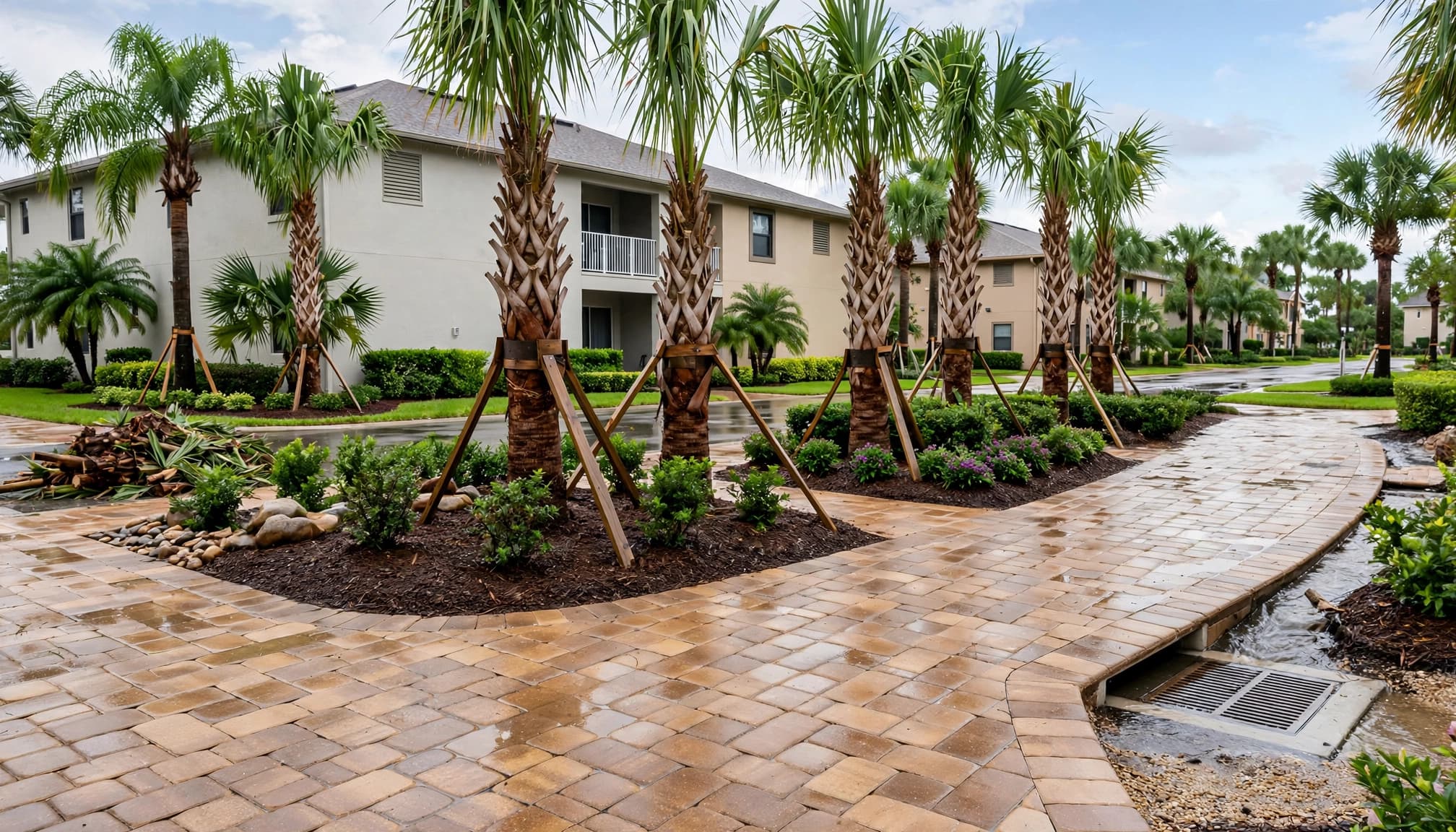
- Clear storm drains, swales, and curb inlets of leaves, mulch, and loose debris.
- Remove dead palm fronds, compromised branches, and unsecured yard items from common areas.
- Check irrigation controllers, shutoff locations, drainage pumps, and outdoor electrical equipment.
- Photograph entrances, fences, signs, trees, pavers, and amenities before severe weather.
Avoid unnecessary heavy pruning immediately before a storm. Removing healthy foliage does not make a tree hurricane-proof, and rushed cuts can create fresh wounds.
Inspect the property safely after the storm
Wait until local conditions are safe, then inspect the community in a consistent order. Start with entrances, roads, sidewalks, drainage paths, and amenity areas. Mark downed limbs, leaning trees, exposed roots, lifted pavement, washed-out beds, and damaged irrigation components.
Keep residents away from fallen electrical lines, unstable trees, and flooded areas. A licensed electrician should inspect damaged landscape lighting or electrical equipment. Tree hazards and major debris removal need trained crews with proper equipment and insurance coverage.
Check Pavers, Concrete, and Outdoor Surfaces
Hard surfaces need attention because they carry people, vehicles, and storm runoff. Loose pavers or a raised concrete edge can create a trip hazard long before it becomes an obvious repair project.
Document cracks, settling, and surface stains
Inspect sidewalks, pool paths, curbs, and entry pads each quarter. Note cracked slabs, spalling, settled edges, rocking pavers, missing joint sand, and water that ponds after rain. Mark hazards quickly and arrange repairs before a resident gets hurt.
When slabs crack, settle, or create a significant height difference, a reputable Cape Coral concrete contractor can assess whether repair, resurfacing, or replacement makes sense. Landscaping crews can report these issues, but structural concrete work belongs with a qualified concrete company.
Schedule paver cleaning with care
Paver cleaning removes algae, mildew, leaf stains, and slippery buildup around pool decks, walkways, and entry areas. However, overly aggressive pressure washing can erode joint sand or scar some surfaces.
Ask the service provider how they will protect nearby plants, drains, and painted surfaces. After cleaning, inspect for loose pavers and depleted joint material. Sealing may suit certain areas, but it should follow proper cleaning, drying, and repairs.
Keep Contractors Accountable With Clear Records
The strongest HOA landscaping checklist is only useful when someone reviews it. Property managers should walk the grounds with the contractor at least monthly, then compare completed work with open items from the previous report.
Use dated photos for plant losses, drainage concerns, irrigation repairs, and hardscape damage. Track replacement plants by species and location. This helps boards spot repeated failures, such as a shrub that keeps declining because a sprinkler zone misses the bed.
Contract scopes should state mowing frequency, edging standards, pruning limits, debris removal, irrigation responsibility, storm response rates, and approval limits for extra work. Clear expectations protect the association and give contractors a fair path to meet the standard.
A Better-Maintained Community Starts With Consistency
A dependable HOA landscaping checklist protects more than curb appeal. It helps boards catch safety issues, control repair costs, preserve drainage, and keep common areas pleasant through Florida's demanding weather.
Weekly care, monthly inspections, seasonal planning, and separate storm procedures create a maintenance rhythm residents can see. When every task is documented and assigned, the community grounds stay cared for instead of becoming a series of urgent repairs.