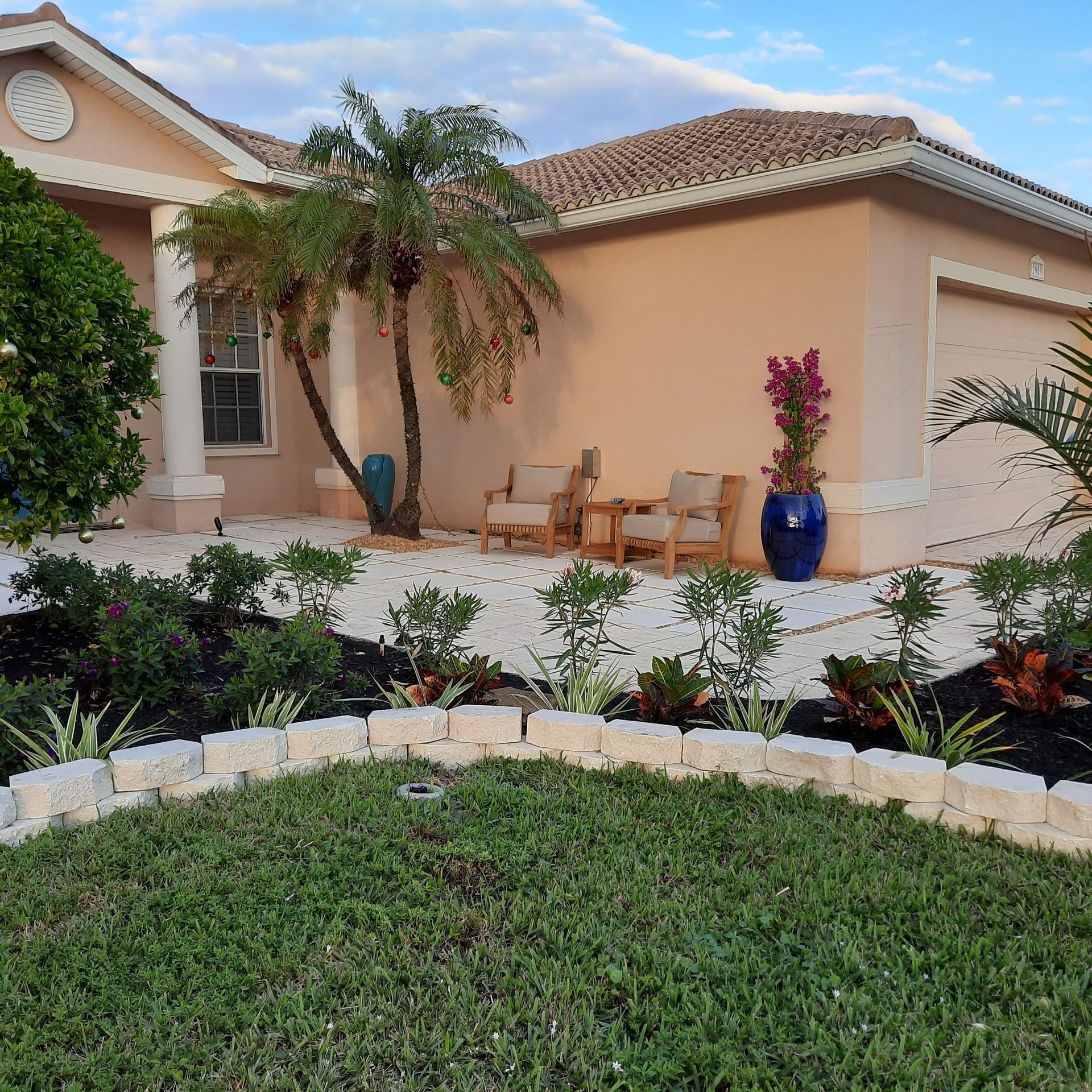



Outdoor Kitchen Countertops for Florida's Climate
A countertop that looks perfect in a showroom faces a different test on a Florida patio. Good outdoor kitchen countertops need to suit your home's exposure, cooking habits, and maintenance routine, not just its color scheme.
In Fort Myers, Cape Coral, Estero, and Bonita Springs, sunlight, summer rain, humidity, and coastal salt all influence the decision. Product-specific details matter as much as the material name.
Start with the conditions around your kitchen, then compare surfaces, installation plans, and care requirements.
Start With Your Kitchen's Florida Exposure
A covered lanai and an uncovered grill island expose countertops to different conditions. Even neighboring homes can have different maintenance needs because of shade, irrigation, and proximity to coastal water.
Sun and shade affect everyday comfort
Watch your proposed kitchen location during the hours you'll use it. Afternoon sun can make work surfaces uncomfortable to touch, while glare can make food preparation less pleasant.
A roof extension or pergola can improve comfort. However, keep grill clearances and ventilation consistent with the appliance manufacturer's instructions. A shade structure shouldn't interfere with the escape of heat and smoke.
Also consider rain driven sideways beneath a roof. Coverage reduces exposure, but it doesn't create an indoor environment.
Humidity and salt affect the surrounding assembly
The countertop belongs to a larger system of cabinets, fasteners, appliances, and supports. Salt residue and standing water accelerate corrosion on exposed metal components.
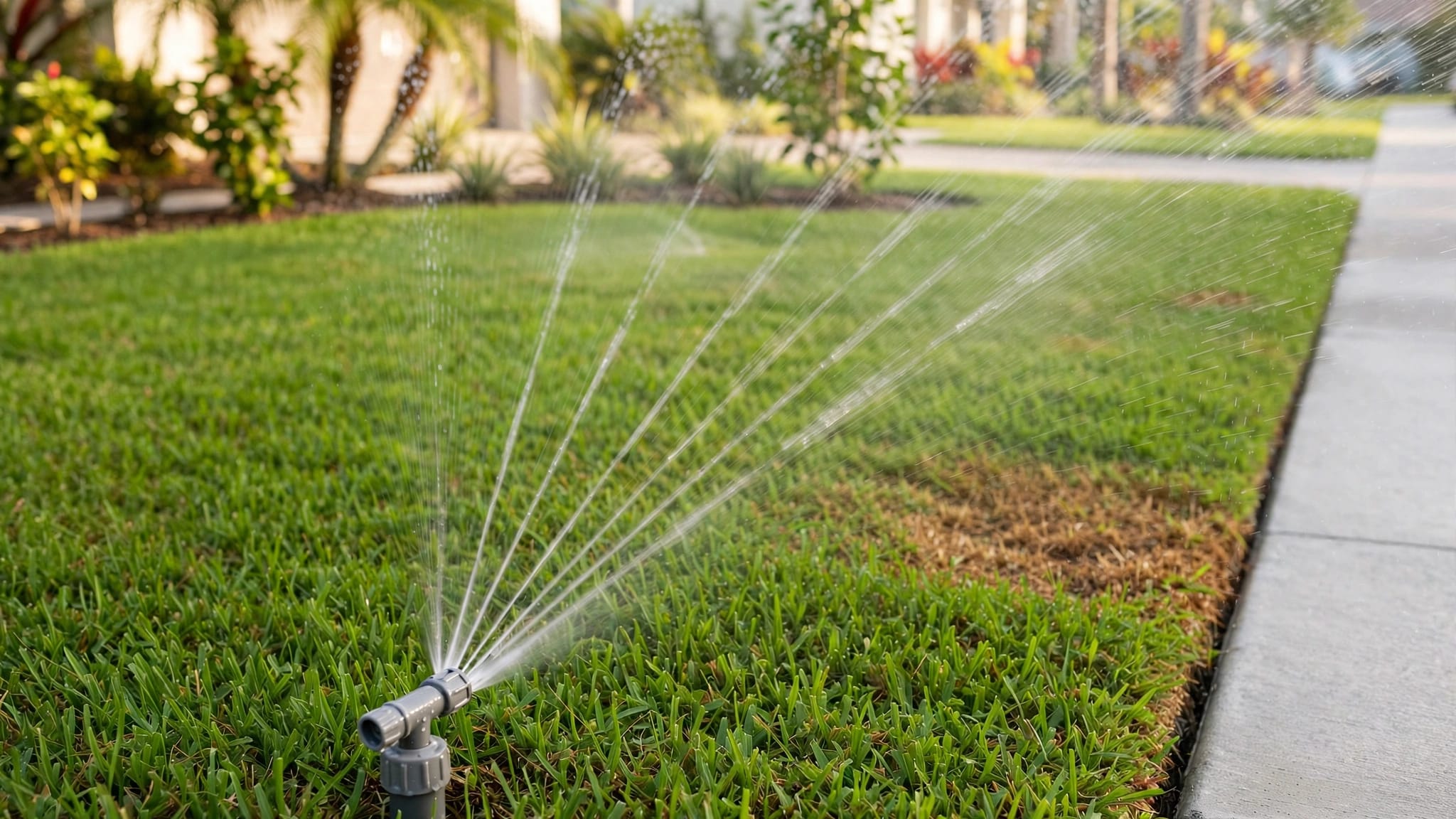
Keep sprinklers aimed away from the island, and check where pool splash reaches the kitchen. Near canals or coastal water, ask about the specified stainless grade, including whether components use 304 or 316 stainless.
For connected services and exposed components, review outdoor kitchen utility planning before finalizing the layout.
Choosing Outdoor Kitchen Countertops by Product
Natural stone, porcelain, and concrete are countertop options worth discussing with your installer. However, a material category alone doesn't establish suitability for your patio.
Compare the exact product, finish, fabrication method, and outdoor-use documentation.
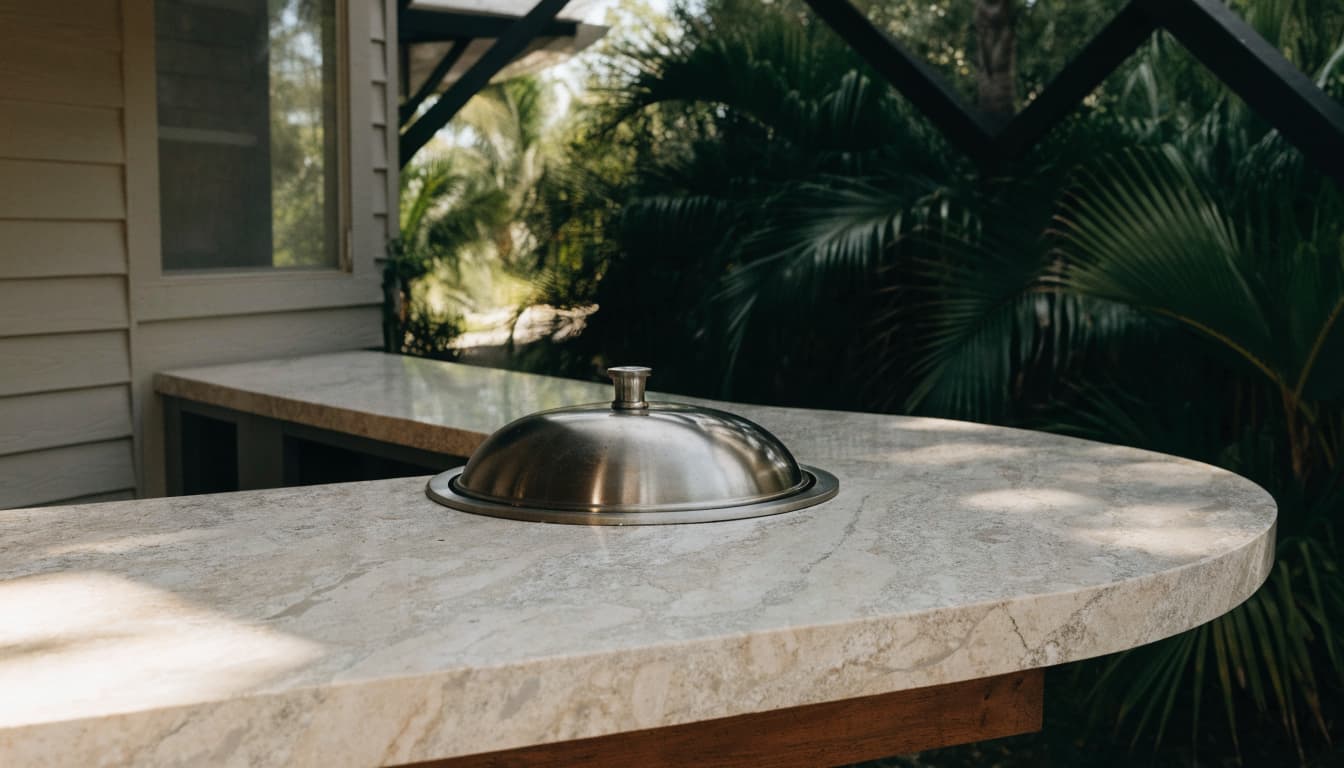
Natural stone needs a slab-specific discussion
Granite and other natural stones vary in appearance and care requirements. Review the actual slab rather than relying entirely on a small sample.
Ask whether the slab contains treatments, fillers, or repairs that affect its proposed use. Then confirm whether sealing is required and obtain care instructions for that stone and finish.
The installer should also explain seam placement and support around appliance openings. Those details belong in the project plan before fabrication starts.
Porcelain requires a complete fabrication plan
For porcelain slabs, confirm that the selected product permits the intended outdoor application. Include the surface finish and any backing or assembly components in that review.
Discuss fabrication, transportation, cutouts, and handling with the contractor. A countertop proposal should account for those tasks, rather than listing only the slab.
Also ask how visible edges and seams will look. Reviewing a finished example helps set expectations beyond the sample's pattern.
Concrete needs an agreed finish and care plan
Concrete countertops give homeowners another design option, but the finished result depends on the mix, fabrication, curing, reinforcement, and protective treatment.
Ask the fabricator to describe each part of that system. Confirm what appearance changes to expect and how repairs would be handled.
Discuss the intended use around cooking and food preparation, too. Don't assume a concrete countertop should receive the same treatment as the patio beneath it.
Match the Finish to How You Cook
Appearance matters, but consider what will land on the counter during a typical weekend. Cooking oil, barbecue sauce, citrus juice, wet serving dishes, and poolside sunscreen all create cleanup demands.
Ask for care instructions covering those common substances. The answer should address your selected surface, rather than promising that the entire material category handles everything.
Then examine the finish in outdoor light. Color, sheen, texture, and reflections can look different beneath a lanai than under showroom lighting.
Bring home an approved sample if available. Set it beside your cabinets, patio, and house finish before making the final selection.
Where sealing is required, confirm that the treatment suits both the surface and its intended use. Also ask whether it changes the appearance or requires special cleaning.
A sealer doesn't replace drainage, stable support, or prompt cleanup. Those are separate parts of a successful countertop installation.
Finally, distinguish appliance heat requirements from countertop care. Follow the grill manufacturer's installation instructions, and obtain guidance on protecting the surface during cooking.
Installation Matters as Much as the Surface
An attractive slab can't compensate for movement beneath the island or an unfinished moisture-management plan. Review the support and installation details before ordering outdoor kitchen countertops.
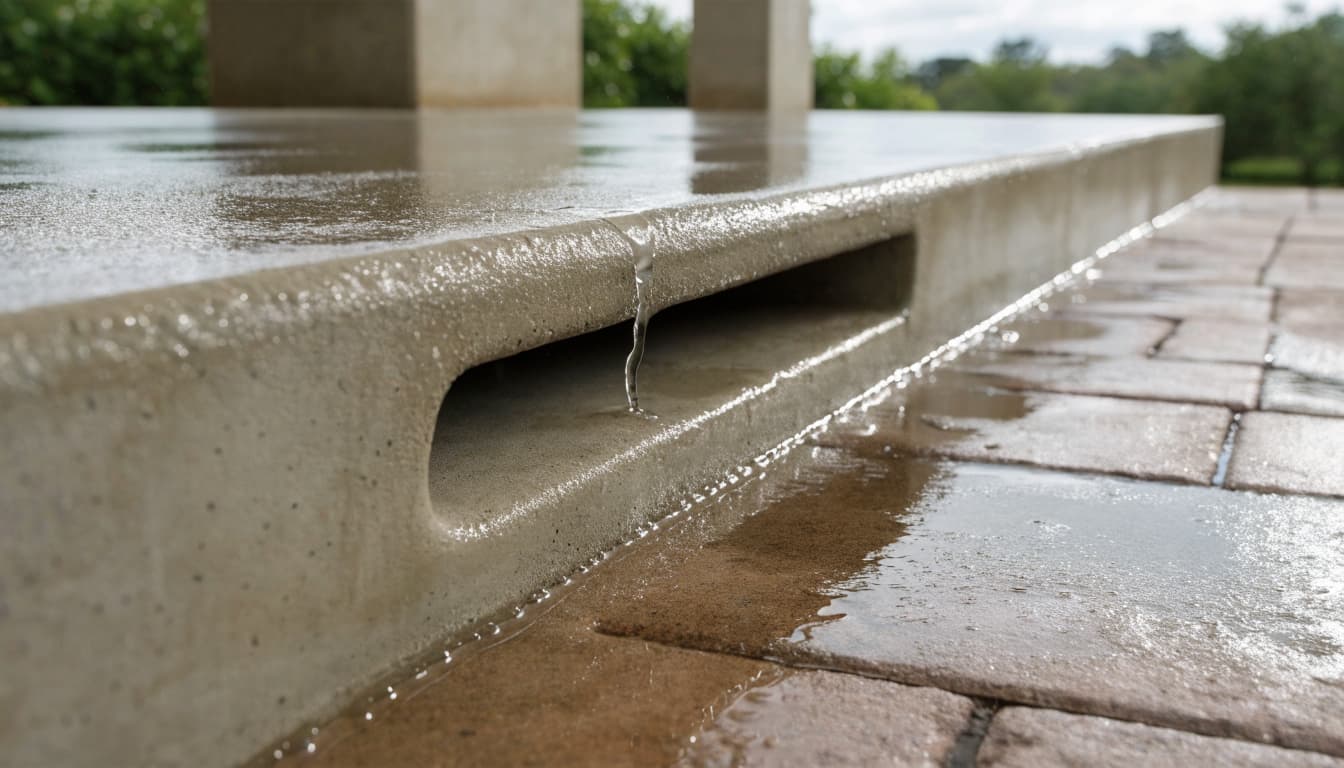
Check the foundation and countertop support
Heavy kitchen components need a suitable foundation. Have a qualified contractor assess the existing slab or patio rather than assuming its appearance proves it's adequate.
A concrete company can help evaluate slab condition and coordinate necessary repairs. Structural questions may also require an engineer, depending on the proposed build.
Meanwhile, the countertop fabricator should confirm support for the selected product, appliance openings, and seating areas. Don't transfer requirements from another material or a previous project.
Plan utility trenches before the finished patio goes down. Later excavation can add restoration work and disrupt the kitchen's base.
Resolve seams and moisture paths
Ask the installer where seams will sit and how the countertop assembly handles water. Review connections at sinks, appliances, walls, and cabinets.
The plan should explain how water exits instead of remaining trapped at a joint. Include access for future inspection and repairs wherever practical.
Avoid improvising drainage details during installation. Countertop requirements depend on the product and assembly, so patio grading rules aren't countertop specifications.
After installation, inspect the kitchen during rain. Check for persistent puddles, wet cabinet interiors, and runoff reaching electrical components. Report problems promptly rather than covering them with another finish.
Keep Patio Drainage and Landscaping Working Together
Countertop longevity depends partly on conditions beyond its edges. A kitchen surrounded by pooling water or constant irrigation spray needs a broader correction.
Grade the patio, not just the cooking area
For patio surfaces, a slope of about 1 to 2 percent away from the house is common drainage guidance. Site conditions, thresholds, and drainage outlets still determine the appropriate plan.
That figure applies to the patio, not the countertop.
Channel drains or catch basins may be appropriate where the layout creates a low point. However, they need a suitable outlet and access for maintenance.
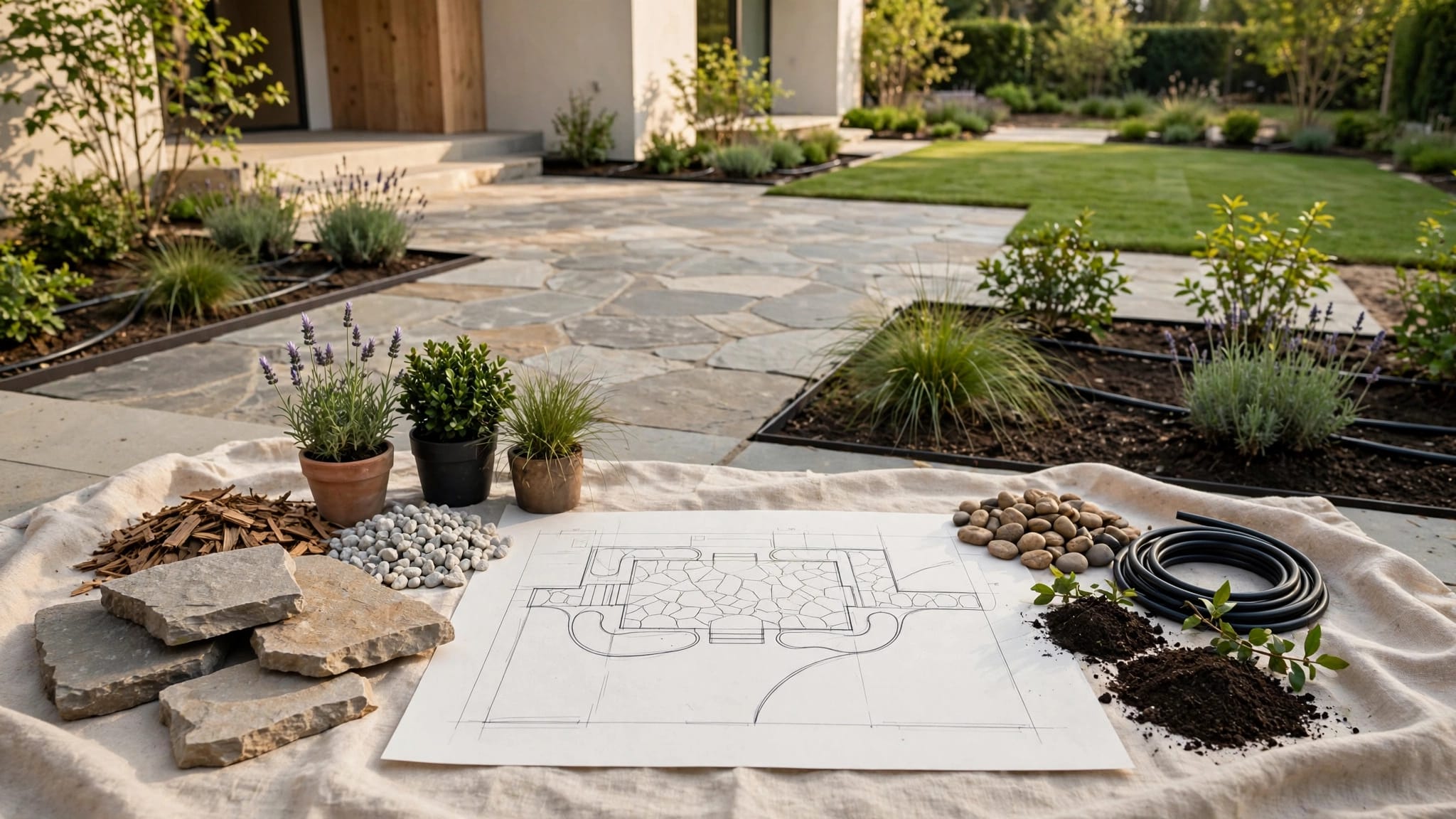
If you're choosing the surrounding surface, compare paver and concrete patio upkeep alongside the kitchen design. Address settlement and drainage before building the island.
Coordinate plants, irrigation, and adjoining surfaces
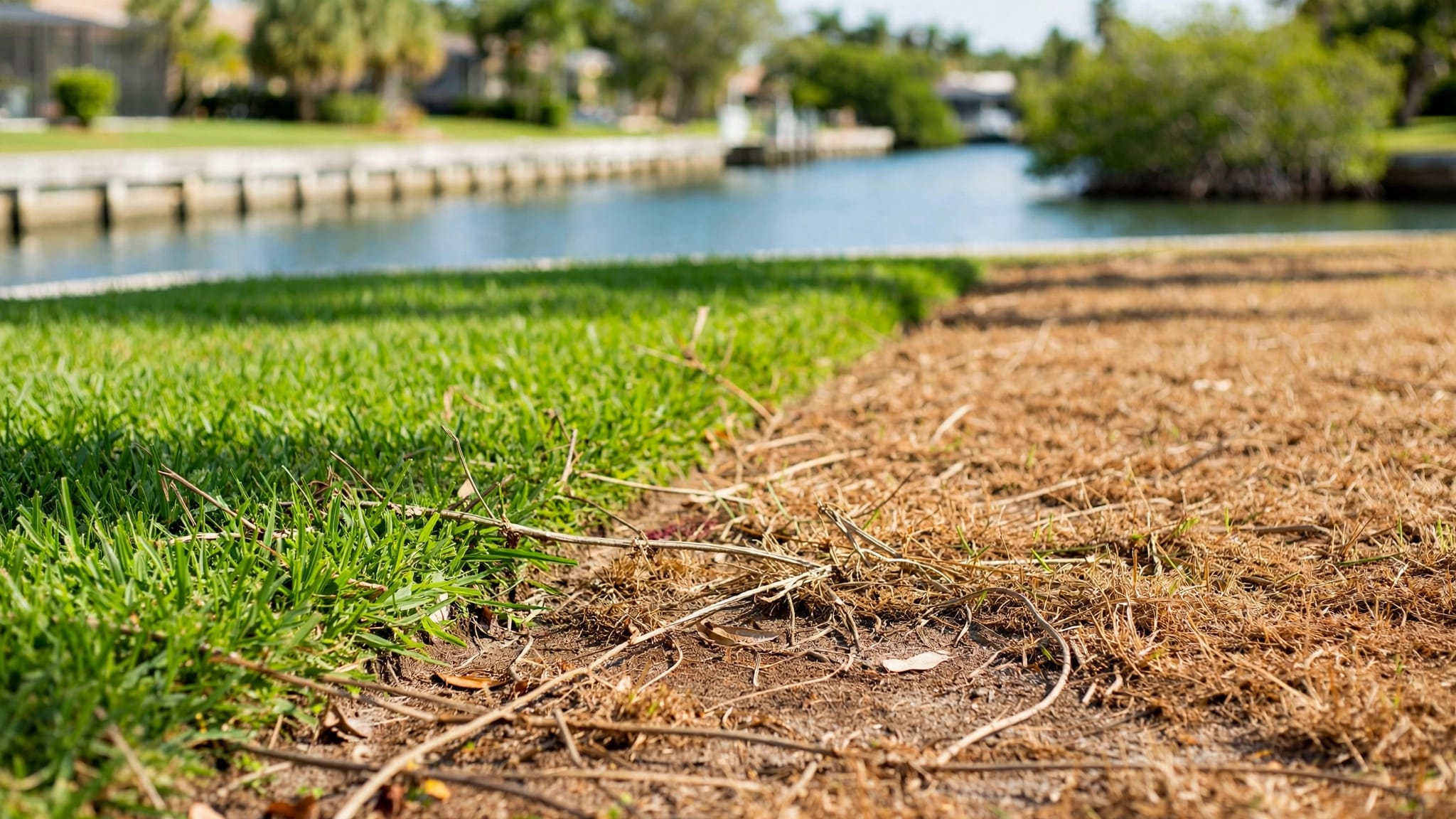
Good landscaping keeps irrigation water and loose debris away from the kitchen. Check sprinkler coverage, downspout discharge, and planting-bed grades during the site visit.
Leave room to maintain vegetation without crowding appliance ventilation or access panels. Also consider where leaves and mulch collect after storms.
If artificial turf borders the patio, complete underground utilities and major hardscape work first. Its base and edges need their own drainage plan.
Use backyard renovation project sequencing to coordinate these jobs. Correcting the yard's water movement before installing finished surfaces avoids preventable rework.
Build a Care Routine You Can Maintain
No outdoor kitchen stays clean without attention. Choose a surface whose documented care requirements fit how often you're home and how frequently you cook.
A seasonal resident should also arrange inspections during extended absences. A covered kitchen can still collect debris or develop a drainage problem between visits.
Keep routine care straightforward:
- Remove food spills promptly using the surface manufacturer's approved cleaning method.
- After heavy salt exposure, rinse exposed metal components with fresh water according to their care instructions.
- Check seams, cabinet interiors, and drainage outlets after storms.
- Schedule sealing only where the selected product requires it, following its care guidance.
Dry persistent wet spots and investigate their source. Repeated dampness could come from irrigation, a plumbing leak, or blocked drainage.
Coordinate nearby paver cleaning with kitchen maintenance. High-pressure work can scatter sand and debris onto finished surfaces, so protect the island and use methods appropriate for the pavers and joints.
Keep product information and care instructions together for future servicing.
Compare Complete Bids, Not Just Countertop Prices
A useful estimate starts with a site visit. Contractors need to see access, patio condition, drainage, and utility routes before pricing the installation accurately.
Ask each bidder to identify the countertop product and finish in writing. The proposal should also cover fabrication, delivery, cutouts, seams, support, installation, and cleanup.
Utility work deserves separate attention. Confirm trench locations, restoration responsibilities, and electrical or plumbing requirements with qualified professionals. Small-looking changes can involve substantial work beneath the patio.
For the broader project, review Cape Coral outdoor kitchen costs before comparing countertop allowances with complete kitchen bids.
Then check what the warranty covers. Material warranties, fabrication warranties, and installation warranties address different responsibilities.
Ask about outdoor exposure limitations and required maintenance. A verbal assurance won't clarify those terms later.
Finally, compare two or three detailed proposals using the same scope. A lower total may omit patio repairs, utility restoration, or fabrication details that another contractor includes.
Key Takeaways
A good countertop choice starts with your actual patio conditions and ends with a complete installation plan.
- Confirm outdoor suitability for the exact product, finish, and assembly.
- Address support, seams, patio drainage, and irrigation before construction.
- Provide shade without compromising grill clearances or ventilation.
- Follow product-specific cleaning and sealing requirements instead of a universal maintenance schedule.
The material name is only one part of the decision. Fabrication, exposure, and regular care also influence how the finished kitchen performs.
Choose a Countertop for the Whole Outdoor Kitchen
The right outdoor kitchen countertops fit your exposure, cooking routine, and willingness to maintain them. A complete installation plan matters as much as the sample you choose.
Confirm product requirements, resolve drainage and support, and compare written scopes before committing. A showroom finish becomes a practical Florida work surface when the surrounding kitchen receives the same attention.
Frequently Asked Questions
Can an outdoor countertop go beneath a covered lanai?
A covered lanai reduces direct exposure, but wind-driven rain, humidity, and salt can still reach the kitchen. Confirm that the exact countertop product and assembly permit the intended installation. Also follow appliance clearance and ventilation instructions.
How often should outdoor countertops be sealed?
There's no single schedule for every countertop. Some products require sealing, while others don't. Follow the instructions for the exact surface, finish, and treatment. Ask the installer how to assess its condition and when professional service is appropriate.
Is one countertop material always best for Florida?
No material category guarantees the right result for every Florida home. The selected product, finish, installation, and exposure determine suitability. Compare written requirements and realistic maintenance expectations before deciding between natural stone, porcelain, concrete, or another approved option.