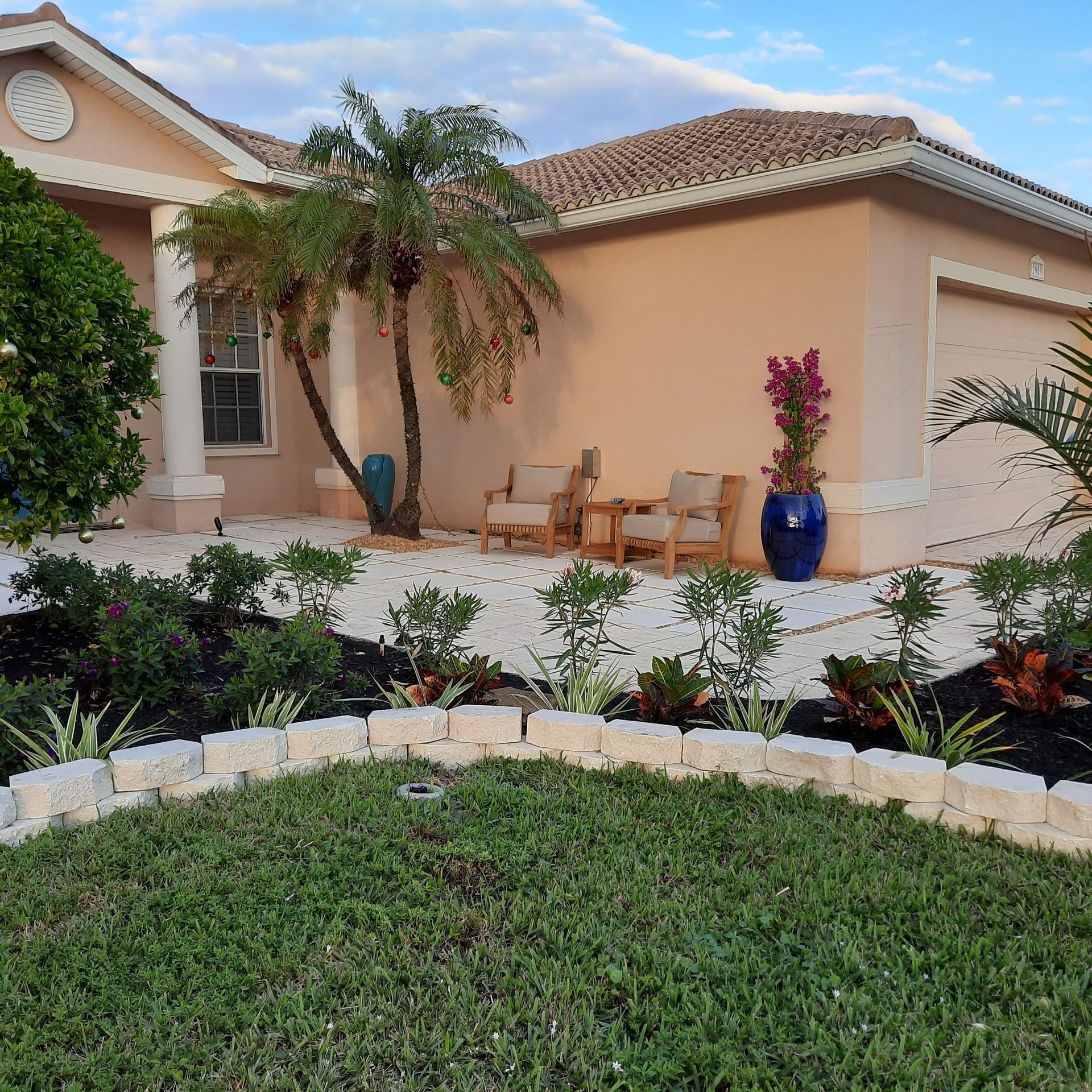



Paver Patio vs. Concrete Patio in Cape Coral: Cost, Heat, Cracks, and Upkeep
A patio in Cape Coral has to live a tough life. The sun feels relentless, summer rain hits hard and fast, and sandy, variable soils can shift more than you’d expect. So when you’re weighing paver vs concrete patio options, you’re not just picking a look, you’re picking how that surface will behave in real Florida conditions.
The good news is that both can work great here. The better news is that once you understand cost, heat, cracks, drainage, and maintenance, the choice gets a lot clearer.
Cape Coral patio costs in 2026 (and the permit piece most people miss)
In early 2026, a basic concrete patio in the Cape Coral and Fort Myers area usually lands lower than pavers up front. Typical installed pricing often falls around $6 to $12 per square foot for plain concrete , and $10 to $22 per square foot for common concrete pavers (more for premium stone, borders, or detailed patterns). If you want a stamped finish, concrete can move into the $10 to $20 per square foot range.
If you like frameworks instead of fuzzy averages, think in buckets:
| Cost bucket | What it covers | What swings it up |
|---|---|---|
| Site prep | Demo, hauling, grading | Tight access, lots of roots, old slab removal |
| Base | Gravel, sand (for pavers), compaction | Soft spots, extra depth, geotextile needs |
| Materials | Concrete mix or pavers, edge restraint | Premium pavers, borders, inlays, color |
| Labor | Forming/pouring or hand-laying pavers | Patterns (herringbone), steps, curves |
| Finish + protection | Sealer, coatings, joint sand | Salt exposure, stain resistance needs |
One more thing that affects cost is paperwork. New patios and any expansion can trigger permitting, and that’s not just red tape, it protects you when you sell.
- For a solid local starting point, see Lee County’s Residential Building Permit Guide (PDF).
- For the quick FAQ version, Lee County also has guidance on when you need a permit.
- Cape Coral is strict about property rules in general, and it helps to know what the city flags most often on its common code violations page.
If you’re comparing bids, ask each contractor how they’ll handle permit plans, setbacks, and drainage notes. A reputable concrete company or paver installer won’t dodge those questions. For local help that covers both hardscape and landscaping , start with comprehensive paver and landscaping services.
Heat, glare, and downpours: designing a patio that feels good to use
Cape Coral patios don’t just need to last, they need to be comfortable. In full sun, both concrete and pavers can get hot, but your color and finish choices make a bigger difference than most people expect.

Photo by TXTR
Paver colors and textures that stay cooler
Lighter tones usually feel better underfoot. In Southwest Florida, light gray, sand, beige, and tan tend to be the sweet spot because they reflect more sunlight without showing every footprint. Very dark pavers can look sharp, but they can feel like a skillet by mid-afternoon.
Texture matters too. A lightly textured or tumbled paver cuts glare and hides scuffs. If you want ideas on matching your home while staying practical, this guide on choosing paver color for a Florida home lays out the basics well.
Concrete finish options that fit Gulf Coast weather
Concrete doesn’t have to be a plain gray slab. For Cape Coral, the most common “it just works” option is a broom finish , because it grips better in sudden rain. Stamped concrete can look great, but it needs careful placement and sealing to keep color even and reduce surface wear.
If heat is a deal-breaker, “cool deck” style coatings are worth asking about, especially around pools. This overview of cool deck coatings for Florida heat explains why reflective coatings can help.
Drainage and base prep (where patios succeed or fail)
Florida rain doesn’t forgive flatwork. Whether you choose pavers or concrete, plan for:
- Slope: about 1 to 2 percent away from the house so water doesn’t pond.
- Base and compaction: excavate properly, build a stable crushed base, and compact in lifts (this matters in Cape Coral’s sandy soils).
- Geotextile fabric where needed: helps keep sand from migrating into the base, which reduces settling.
- Drainage hardware: channel drains or a catch basin at the low spot can save your patio during summer storms. Pavers also offer permeable styles that help water soak through instead of racing across the surface.
Cracks vs shifting: what actually happens after a few Florida summers
Here’s the straight talk most homeowners want: concrete can crack , and pavers can move . The better option is the one you’ll tolerate more, because both behaviors are normal in our climate.
Concrete patios: fewer joints, but cracks are forever (unless you patch)
Concrete is one continuous surface. That’s great for furniture and sweeping, but it also means stress has to go somewhere. In Cape Coral and Fort Myers, shifting soils, tree roots, and heat cycling can show up as cracks over time.
A good installer reduces risk with proper subgrade compaction, reinforcement choices, and well-placed control joints. Still, even well-done concrete can crack, and repairs usually look like repairs. If the slab settles, you may be looking at grinding, resurfacing, or replacement in severe cases.
Paver patios: more pieces, easier repairs
Pavers are individual units over a compacted base. If a section settles (often from poor drainage or base issues), you can pull up that area, fix the base, and relay the same pavers. That’s why many homeowners like pavers for long-term ownership.
If you’re trying to budget for the “what if” years, this local read on paver repair costs in Cape Coral helps set expectations. And if you want the build done with the right edge restraints and base details from day one, see paver installation Cape Coral.
Upkeep in salt air and heavy rain (simple schedule)
Salt air, mildew, and afternoon storms are a combo platter for grime. A realistic maintenance rhythm looks like this:
- Monthly: quick rinse, sweep leaves and sand (helps prevent slippery film).
- Every 6 to 12 months: light wash (keep pressure reasonable), check low spots, and top up joint sand if needed.
- Every 2 to 3 years (often sooner in full sun): reseal if you want stronger stain resistance and color hold.
That wash step matters. Done right, paver cleaning lifts organics before they stain, and it keeps joints from becoming a weed nursery.
If your patio borders a pet run or play zone, pairing hardscape with artifical turf can cut mud and reduce the “sand tracked into the house” problem. For that type of yard layout, artificial turf Cape Coral is a practical add-on.
Which to choose? A quick decision guide for Cape Coral homeowners
Choose pavers if you want easier spot repairs, more design flexibility, and a surface that can be re-leveled after settling.
Choose concrete if you want a lower upfront price, a clean continuous look, and simple day-to-day sweeping.
Choose light colors and a grippy finish either way, because heat and slip risk are daily realities here.
Spend money on base and drainage first , because the best surface in the world fails on a bad foundation.
Cape Coral patios should feel like an extension of your home, not a hot plate you avoid half the year. Pick the surface you’ll enjoy using, then insist on proper prep, smart drainage, and a maintenance plan that fits your schedule. That’s how a paver vs concrete patio decision turns into a patio you still like years from now.