


French Drain Maintenance for Southwest Florida Yards
An exterior French drain can move stormwater away from your home, but only if water has a clear path through it. In Southwest Florida, sand, leaf litter, mulch, high rainfall, and fast-growing roots can turn a working system into a soggy problem after one hard summer storm.
This guide focuses on an exterior French drain serving the yard. An interior French drain is a different system used inside a structure, so it isn't the focus here.
Routine inspection protects your lawn, pavers, planting beds, and soil around the slab. Check the drainage system's visible access points, then confirm its slope before assuming cleaning alone will solve recurring problems.
Start with the parts you can see, then follow the signs that point to a deeper repair, from the trench to professional service.
Key Takeaways
- Inspect every cleanout, outlet, pop-up emitter, and catch basin before Southwest Florida's rainy season and after major storms.
- Use a controlled hose test to confirm water moves toward the approved discharge point, but stop if water backs up or moves toward the foundation.
- Clear loose debris with a hose and moderate pressure; avoid chemical drain cleaners and rigid pressure-washer wands that can damage perforated or corrugated pipe.
- Protect the drainage path during landscaping, paver, turf, and concrete projects by keeping access points, outlets, and surface grades functional.
- Repeated clogs, standing water, root intrusion, collapsed pipe, or poor slope require a camera inspection and professional drainage repair.
French Drain Maintenance Starts With Access and an Outlet
A French drain uses gravel around a perforated pipe. Water enters through the gravel and pipe holes, then moves through the trench and pipe before exiting at an approved discharge point away from the house.
The pipe may connect to a solid outlet line or pop-up emitter, then end at an approved drainage area. An interior French drain may direct indoor seepage to a sump pump.
An exterior French drain serves the yard and needs an open outlet away from the foundation.
The cleanout is usually a capped vertical pipe near the beginning of the system. Some yards have several cleanouts, especially where drainage lines run along a house wall, patio, pool deck, or side yard.
Find every cleanout and discharge point
Walk the property after a normal rain, checking a downspout, catch basin, bed edges, patio corners, and low spots. Clear sediment, leaves, and mulch around each capped access point to expose hidden problems.
Then locate the outlet. A pop-up emitter often sits flush with the turf and opens under water pressure. A solid pipe outlet may end at a swale or drainage area. Never bury the discharge point beneath mulch, stone, sod, or decorative edging.
Southwest Florida's high water table means groundwater may not soak away quickly. The system needs a functional outlet, not just buried pipe.
A cleanout lets you service the pipe, but it can't correct a drain with no usable outlet, poor slope, or missing discharge route.
How to Test a French Drain in Your Yard
Test the system twice each year, once before Southwest Florida's rainy season and again after its heaviest storms. Also test it after major landscaping work, irrigation repairs, or paver installation as part of routine maintenance.
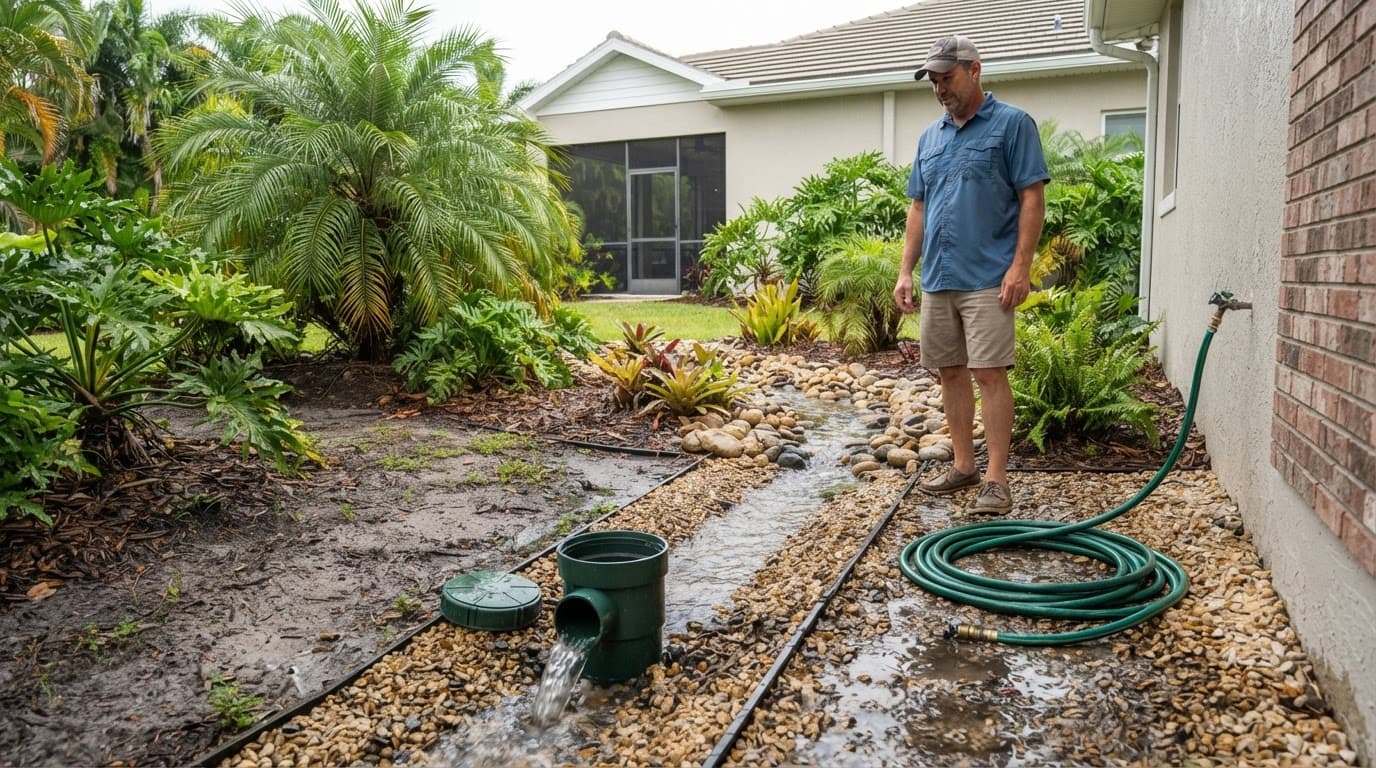
Run a controlled water-flow test
Choose a dry day so groundwater left by recent wet weather doesn't confuse the result. This test is for an exterior yard line, not an interior French drain that may rely on a pump.
Open the cleanout cap and look inside with a flashlight. You may see a short vertical pipe, but don't drop anything into it.
Use this simple testing sequence:
- Clear leaves, soil, and mulch from the outlet or pop-up emitter.
- Feed a garden hose a short distance into the cleanout, then run it at a moderate flow.
- Watch the outlet while a second person runs the hose, or pause the flow and check the pop-up emitter.
- Let the water run for several minutes, then turn it off and check whether the cleanout drains down promptly.
A steady outlet response suggests an open path. A pop-up emitter should rise and release water, then settle back down after flow stops. Backup, bubbling at the cleanout, or delayed drain-down can indicate a clog. If the cleanout remains full, that clog may be farther along the line.
Stop the test immediately if water moves toward the foundation. Don't force water into a pipe that's already full to the top, or use a drain snake in a perforated section. Consider this tool only for an accessible, sturdy solid-pipe segment. Forcing water can push muddy water back through a catch basin or toward the foundation.
Signs Your French Drain Is Clogged, Damaged, or Misrouted
A clogged French drain does not always cause standing water. Heavy storms can temporarily exceed any system's capacity. However, standing water that remains for a day or more after typical rainfall needs attention.
Watch the ground, hardscape, and outlet
Most symptoms of an exterior French drain appear above ground. Check the same areas after every major storm, especially low side yards and planting beds against the home. An interior French drain serves a different purpose and relates to basement flooding, not typical Southwest Florida yards.
| What you see | Likely cause | First action |
|---|---|---|
| Water rises in the cleanout | Sediment or root blockage downstream | Test the outlet, then flush gently |
| No water at the emitter during a hose test | Clog, crushed pipe, or buried outlet | Clear the outlet and call for inspection if flow does not return |
| One wet patch stays green or soft | Irrigation leak, broken line, or drainage failure | Turn off irrigation before diagnosing a drainage failure, then inspect the zone |
| Pavers settle or concrete cracks nearby | Erosion, poor pitch, or washed-out base | Correct the water source before surface repair |
| Water gathers against the foundation | Poor grading or undersized drainage | Arrange a site evaluation |
A recurring clog can signal pipe clogs farther downstream. A drain snake isn't automatically appropriate for perforated pipe, so use gentle testing first.
A wet patch that appears only when sprinklers run is often an irrigation issue, not a French drain problem. Review these signs of an irrigation leak before you assume the drain has failed.
Separate routine care from repair work
Routine maintenance handles loose debris and leaves at a pop-up emitter. It does not repair a flattened corrugated pipe, separated connection, failed slope, or an outlet that was never routed correctly.
If water repeatedly pools near a patio or driveway, the answer may include regrading, a catch basin, or a solid drain line. Compare catch basins versus French drains before adding more pipe to an existing problem.
Safe French Drain Cleanout Cleaning Methods
Begin French drain maintenance by wearing safety glasses, closed-toe shoes, and leather gloves before opening a cleanout. In warm, wet Florida soil, fire ants, insects, and small animals may shelter around access pipes and emitter boxes.
Start with a hose, not harsh chemicals
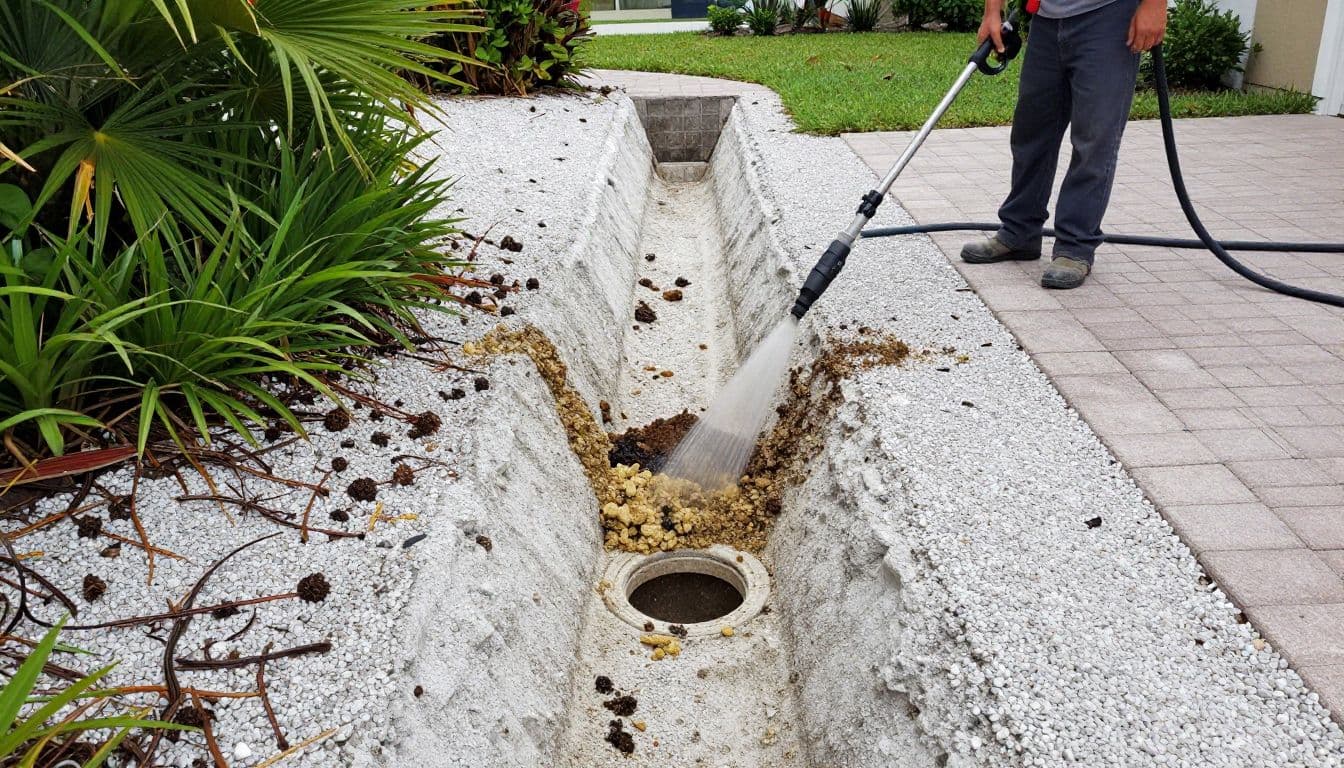
First, clear the outlet and remove visible debris from the cleanout opening. Next, use a garden hose at moderate pressure to flush loose sand, organic material, and minor sediment through the line.
A drain snake may clear a minor clog in a sturdy solid-pipe section. Use it carefully, because it can damage thin corrugated or perforated pipe. Stop if water backs up or the pipe lifts.
Don't pour chemical drain cleaners into a yard drain. Those products can damage plants, contaminate nearby soil and water, and won't resolve a root intrusion, collapsed pipe, or structural clog.
Use pressure equipment with restraint
A pressure washer should never be used with a rigid wand in a cleanout. Its rigid tip can tear thin corrugated pipe, disconnect fittings, or force debris deeper into the line.
Only a trained operator should use a pressure washer on certain solid lines, with proper drain-jetting equipment and a suitable nozzle.
For an obstruction that resists gentle flushing, a drainage contractor can use a camera to locate the trouble first. Then they may use low-pressure jetting or a mechanical cable suited to the pipe material. This is far safer than guessing underground.
Protect Pop-Up Emitters, Catch Basins, and Yard Surfaces
Pop-up emitters on a French drain work best when their lids can open freely. During routine maintenance, keep at least several inches of surrounding turf, mulch, and soil trimmed back. If an emitter stays raised after the water stops, rinse the hinge area and remove packed sand.
A catch basin needs similar care. Lift the grate, remove leaves and sediment, and rinse debris away only after confirming the outlet is open. Do not wash piles of mulch into the basin.
Keep surface projects from blocking the drainage path
Hardscape changes often create drainage trouble when crews bury cleanouts or alter the final grade. Before hiring a concrete company for a walkway or patio, mark drain lines. Have contractors locate the French drain trench, cleanouts, and solid lines before changing the grade or pouring concrete. Keep new surfaces, including gravel, from covering the system's access or drainage path.
Paver cleaning also deserves planning, so sweep loose sand and debris away from drainage inlets before washing. Keep the pressure washer spray directed away from drainage inlets, and don't blast joint sand, mulch, or soil into them. If pavers rock or their joints keep washing out, solve the water path before resealing them.
Artificial turf needs a stable, draining base. It can hide wet soil for a while, but it can't fix a failed French drain beneath it. Address drainage and slope before installing turf, sod, or new bed material.
When Roots, Collapsed Pipe, or Bad Slope Need Repair
Tree roots seek moisture and can enter damaged joints, cracks, or a perforated pipe. A drain snake may cut small roots temporarily, but it won't seal an opening where they'll return.
Know when drain maintenance has reached its limit
Call for a camera inspection when the same section clogs repeatedly, the hose test stops at the same distance, or the outlet stays dry after the cleanout and outlet are cleared. That pattern can point to a stubborn clog. The camera can show whether pipe clogs come from roots, a crushed section, standing water, or a separated fitting.
An exterior French drain may require excavation and replacement of only the damaged run. An interior French drain is repaired and tested differently because access and discharge routes vary. During repair, the contractor should restore clean gravel around the pipe, enclosed by filter fabric suited to the soil. That creates open spaces for water to enter while keeping fine sand from filling them.
New trenches need a consistent slope toward the discharge point. A common target is about 1/8 inch per foot, though site conditions and outlet elevation control the final slope. Recurring standing water, repeated failures, or threats to the home call for professional drainage service. Review French drain services in Cape Coral before repairing one visible section without checking the whole system.
A Simple Southwest Florida Maintenance Checklist
Put French drain maintenance on the same calendar as irrigation and storm preparation. Southwest Florida's rainy season can expose a small restriction quickly, especially after beds receive fresh mulch or nearby trees drop leaves.
Use this short maintenance schedule:
- In late spring, uncover cleanouts, clear outlets, check the downspout, and run a hose test before frequent storms begin. Confirm water follows the drainage system's intended slope toward the discharge point, rather than collecting near the foundation.
- After major storms, remove debris from pop-up emitters, catch basins, and swales. Check the French drain near the home for washed mulch, exposed gravel, settling pavers, and erosion.
- In fall, inspect again after leaf drop for fresh buildup and changes around the yard.
- After any excavation, irrigation repair, or new landscaping, confirm caps, outlet pipes, and surface grades remain visible and functional.
- Call a professional when a clog returns after basic cleaning and a controlled flow test, especially if water keeps returning to the same area.
For larger yard upgrades, use a drainage-first renovation plan so underground drainage work comes before concrete, turf, planting, or bed-material installation.
Frequently Asked Questions
How often should I inspect an exterior French drain?
Test the system twice each year, once before the rainy season and again after the heaviest storms. Inspect it sooner after landscaping, irrigation repairs, excavation, or paver installation.
Can I clean a French drain with a pressure washer?
Avoid using a rigid pressure-washer wand in a cleanout because it can tear corrugated pipe, disconnect fittings, or force debris farther into the line. A trained professional may use suitable drain-jetting equipment on certain solid-pipe sections.
What should I do if water backs up during a hose test?
Stop the test immediately and check whether the outlet or pop-up emitter is buried or blocked. If the cleanout remains full or water repeatedly backs up, arrange a professional inspection rather than forcing more water into the pipe.
Are chemical drain cleaners safe for a yard French drain?
No. Chemical drain cleaners can damage plants, contaminate soil and nearby water, and will not repair root intrusion, a collapsed pipe, or a structural clog.
When does a French drain need professional repair?
Call for a camera inspection when the same area clogs repeatedly, the hose test stops at the same distance, or the outlet stays dry after basic cleaning. These signs can indicate roots, a crushed section, standing water, a separated fitting, or a failed slope.
Keep Water Moving Before It Damages the Yard
Good French drain maintenance starts by confirming access, clearing the outlet, and testing water flow. Observe the yard for standing water, and ask a qualified drainage professional to assess repeated failures.
A French drain's slope is a design condition that cleaning can't repair. A stable drainage path helps protect landscaping, hardscape, turf, and the home's perimeter from water damage.