


Waterproof Irrigation Wire Splices for Florida Yards
Florida rain can expose a weak irrigation splice faster than almost anything else in the yard. A zone that runs one day and fails after a storm often has moisture at a control-wire connection.
Properly installed waterproof irrigation wire splices keep low-voltage zone wires working through wet soil, summer downpours, and routine yard maintenance. The job is manageable when you use the right connector and protect the connection from future damage.
Start with safety, then make a clean, sealed repair that you can find again later.
Why Florida irrigation wire splices fail
Irrigation control wires carry low-voltage signals from the controller to each valve solenoid. They are not household wiring, but they still need a dry, reliable connection to open the correct zone.
In Southwest Florida, sandy soil drains quickly in some areas, while compacted ground and valve boxes can hold water after heavy rain. A buried connection may also get nicked during planting, edging, or other landscaping work.
Moisture causes intermittent zone problems
Water can reach exposed copper through a loose cap, a cracked connector, or tape that has separated underground. Corrosion then raises resistance in the wire, which may prevent a valve from opening.
Common signs include:
- One zone will not run, while the others work normally.
- The zone works after dry weather but fails after rain.
- The controller displays a fault or missing-zone message.
- A valve clicks but sprinklers never activate.
A failed splice is not always the cause. A damaged solenoid, cut wire, controller issue, or valve problem can create similar symptoms.
Electrical tape may help organize a wire bundle, but it is not a waterproof burial seal.
Keep low-voltage work separate from line-voltage wiring
Work only on the low-voltage irrigation control wires between the controller and valve. Turn off the irrigation controller and disconnect its power before opening a valve box or handling wires.
Stop and call a qualified professional if you find damaged line-voltage wiring, uncertain wire identification, a flooded electrical box, or a question about local electrical code. Never splice household power wiring as a DIY yard repair.
Gather the right connector and prepare the wire
A dependable repair starts with a manufacturer-approved direct-burial waterproof connector . These products typically use gel, grease, or a sealed capsule to block moisture around the joined conductors.
Avoid standard wire nuts. Also avoid wrapping a bare splice with electrical tape and burying it. Neither method provides a durable seal in Florida soil.
Match the connector to the wire
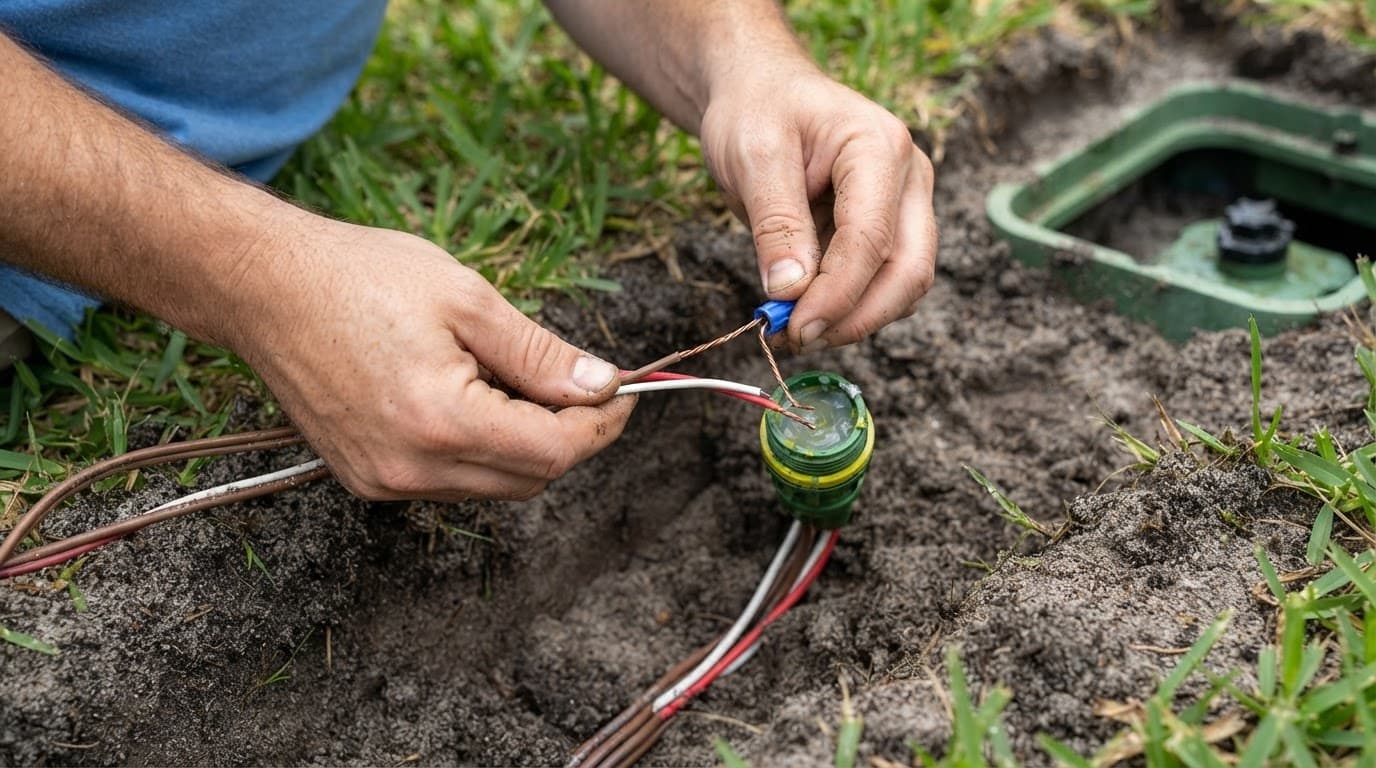
Check the connector package for compatible wire sizes and the number of conductors it accepts. Irrigation systems commonly use multi-strand control cable with individual color-coded conductors, so match the same color wire whenever possible.
You will usually need a wire stripper, side cutters, a direct-burial connector, and a clean towel. If the damaged section is short, have enough replacement irrigation wire to create a proper repair rather than stretching the existing cable.
Expose enough wire without pulling it tight
First, uncover the damaged area carefully with a hand trowel. Don't slice nearby tubing or additional control wires with a shovel.
Cut back each damaged wire end until you reach clean, bright copper and intact insulation. Then leave several inches of service slack on both sides. That extra wire makes future repairs possible without digging farther through sod, mulch, or pavers.
If repeated breaks occur near a hardscape edge, a concrete company can plan protective sleeves before a new patio or driveway is poured.
How to waterproof irrigation wire splices step by step
Once the controller is off and the low-voltage wires are identified, follow the connector manufacturer's directions exactly. Strip length, wire orientation, and closure method vary by product.
Make the electrical connection
- Strip only the amount of insulation specified on the connector package.
- Match the valve wire to its original color-coded control wire.
- Insert the conductors fully into the direct-burial connector.
- Close, twist, crimp, or snap the connector as instructed until it is fully sealed.
- Tug gently on each insulated wire to confirm it is secure.
Don't leave copper exposed outside the connector. Also, do not combine wires from separate zones unless the irrigation design intentionally calls for that connection. A crossed wire can make the wrong valve activate.
Seal one splice at a time
When several wires need repair, complete and inspect one waterproof splice before starting the next. This reduces color mix-ups in crowded valve boxes.
For a cut multi-wire cable, stagger individual splices rather than creating one bulky cluster. Keep each connector separated by a few inches of wire slack. The bundle will sit flatter and remain easier to service.
Professional irrigation, paver, and landscaping solutions can help when a broken wire is part of a larger valve, drainage, or yard renovation issue.
Position the repair above standing water
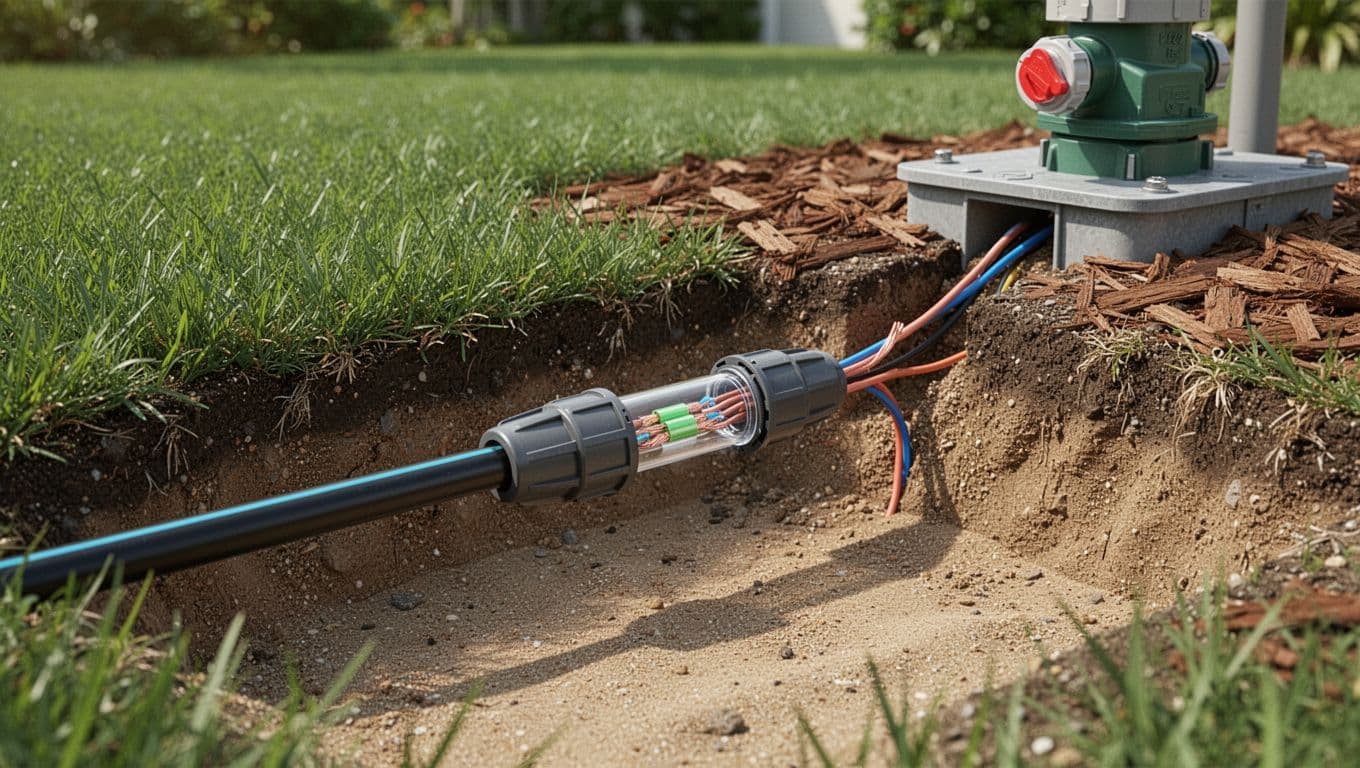
Direct-burial connectors are made for wet soil, but they should not sit in a puddle if you can avoid it. Place the finished splice where water drains away, preferably near but not at the lowest point of the trench or valve box.
If a valve box repeatedly fills with water, correct the drainage issue before relying on a new connection. Keep the splice protected from mower blades, edger cuts, and aggressive digging.
Backfill carefully and test every zone
Lay the sealed connector into the trench with its service loop intact. Backfill gently with soil, then replace mulch or sod without pulling on the wire.
Restore power to the controller and run the repaired zone manually. Confirm that the valve opens, sprinklers have normal pressure, and the controller no longer reports a fault. Then test the remaining zones, because a disturbed common wire can affect more than one valve.
Plan wire repairs before paver cleaning, trenching, or sod work. If you are replacing turf with artificial turf, map and protect irrigation lines that will remain active underneath.
A dry connection protects the whole irrigation system
Waterproof irrigation wire splices are small repairs with a large effect on watering reliability. Use a direct-burial connector, leave service slack, and keep the repair out of standing water whenever possible.
A clean, tested splice lets each zone respond when the controller calls for water, even after Florida's heaviest rain.