


Catch Basins vs. French Drains in Cape Coral, Which One Fits Your Yard and Why
A Cape Coral downpour can turn a normal yard into a shallow pond fast. One day it’s a little puddle by the lanai, the next day you’re watching driveway runoff race toward the garage or the street swale overflow like it’s a tiny river.
If you’re weighing catch basins vs french drains , the best choice usually comes down to one simple question: are you trying to grab water you can see moving on the surface, or are you trying to dry up water that’s soaking the ground? Cape Coral’s sandy soil and high water table can make that decision trickier than it sounds, so let’s break it down in plain language.
Why drainage is tricky in Cape Coral yards (lanai pooling, driveway runoff, swale overflow)
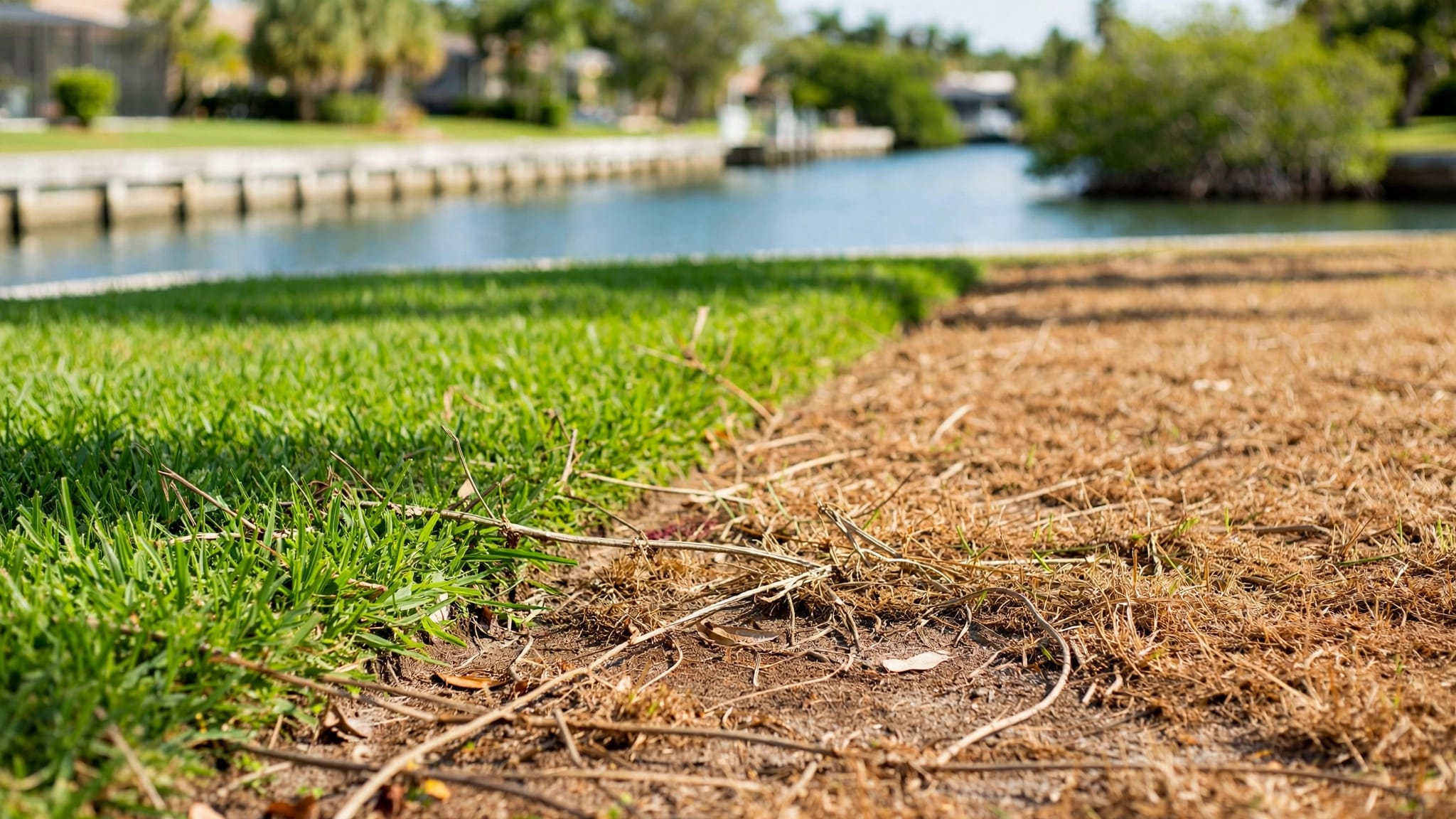
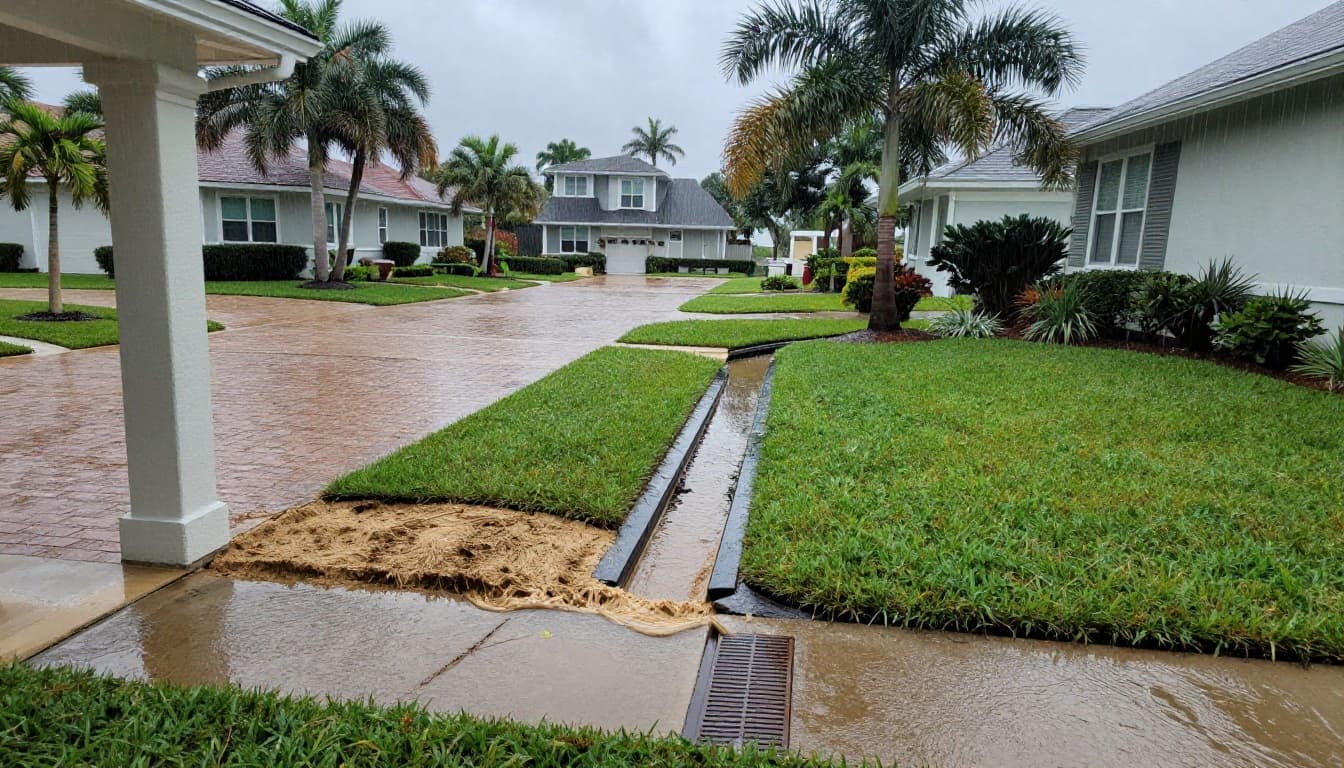 Heavy rain pooling near a lanai and driveway with swale overflow, created with AI.
Cape Coral is built around canals, swales, and stormwater features that move water away during heavy rain. The challenge is that yards often have small grade changes, plus hard surfaces like driveways, pool decks, and pavers that shed water quickly. If the swale at the street is holding water (or the grate is clogged), your yard can’t “hand off” runoff the way it’s supposed to.
The other curveball is the high water table . Even though Cape Coral sand can drain well, it can’t drain into groundwater that’s already near the surface. That’s why some homes get soggy patches that linger for days, even after the rain stops.
One more piece homeowners miss: drainage work near the road is not just “your yard.” The city’s right-of-way and swale system are part of public stormwater management. If you’re changing grades, adding pipes, or tying into the swale area, start with Cape Coral’s guidance through the Surface Water Management program. It’s also smart to understand the city’s flood-focused rules and resources at Cape Coral flood protection information.
Catch basins vs french drains, the plain-English difference
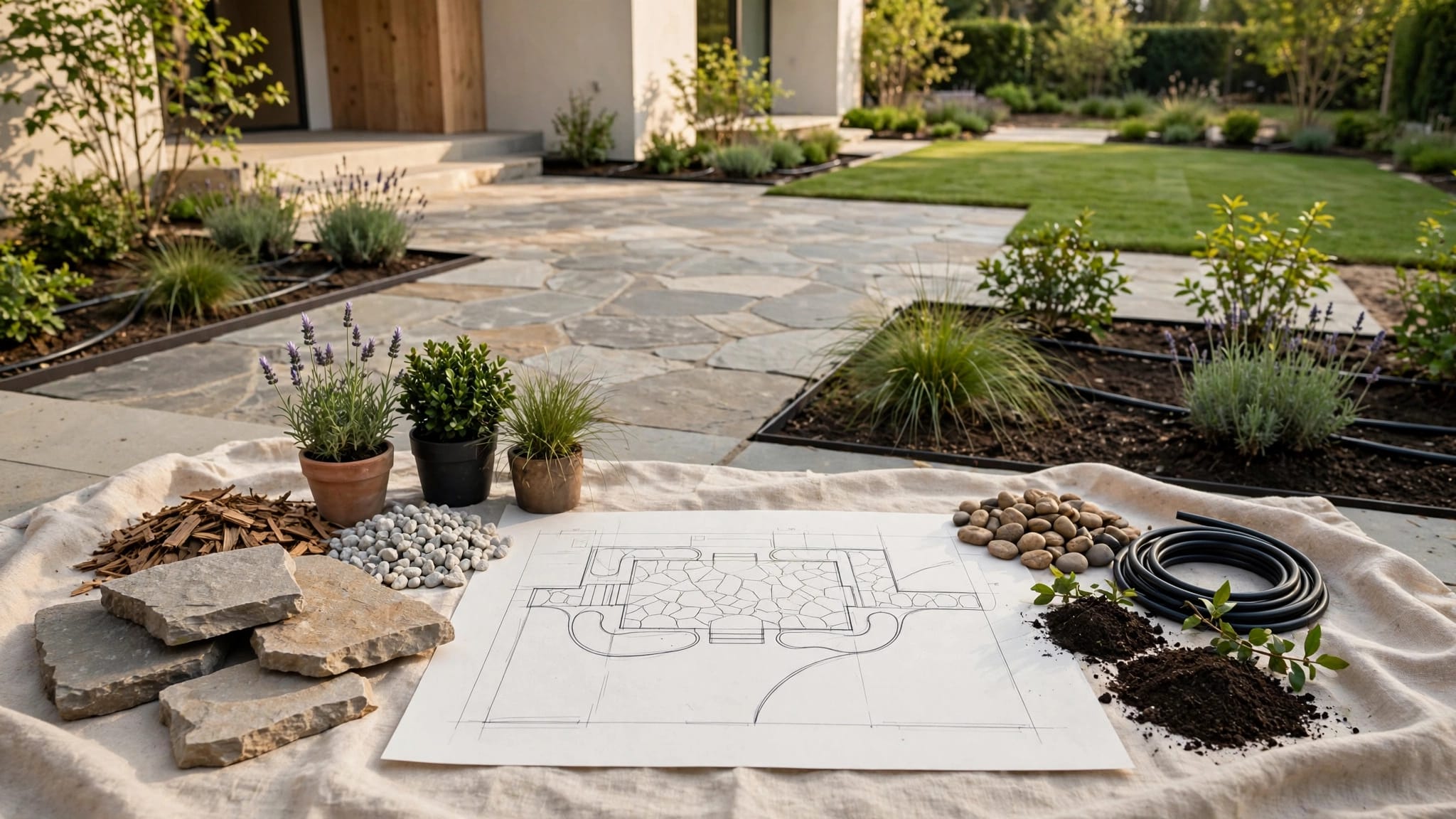
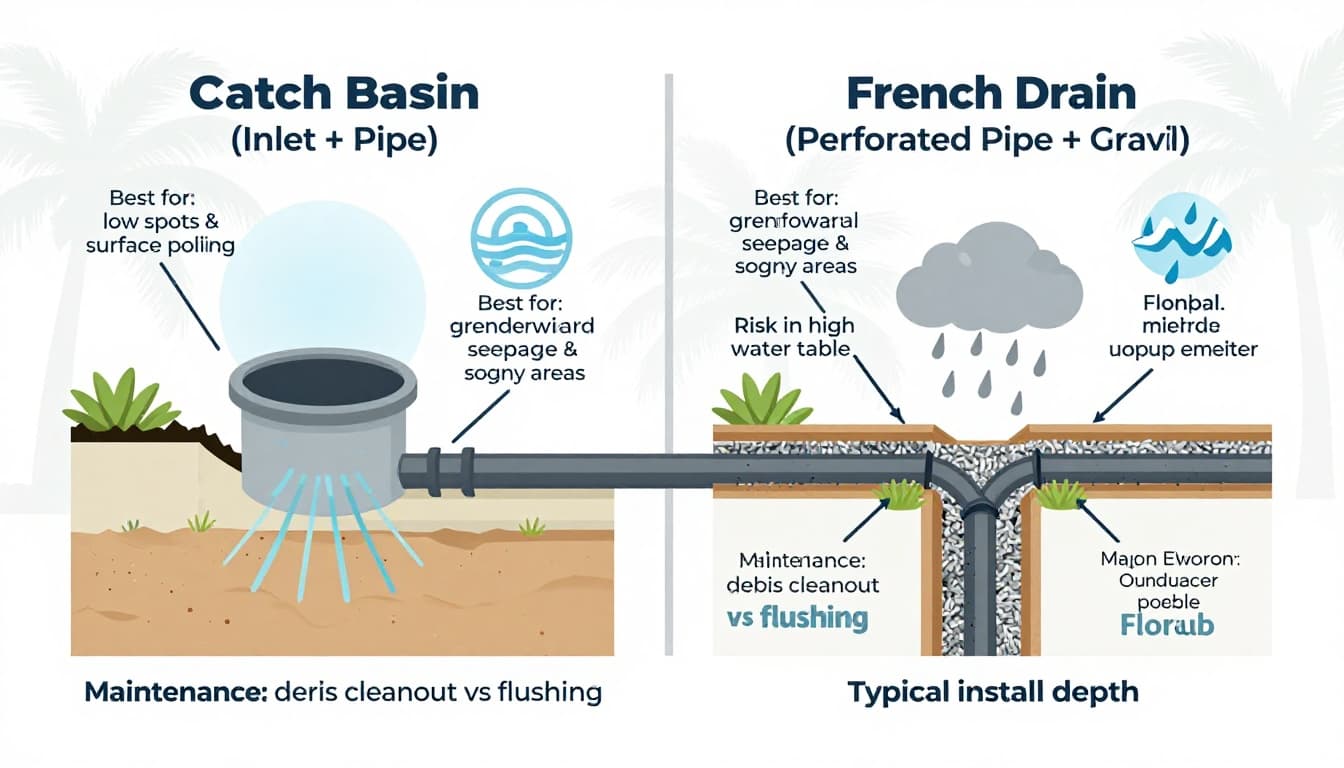 Side-by-side comparison of catch basins and French drains for Florida yards, created with AI.
A catch basin is basically a “yard drain box” with a grate on top. Water runs across the surface, drops into the basin, then flows out through a pipe to a safe discharge point. Think of it like a floor drain in a garage, but outside.
A French drain is a gravel-filled trench with a perforated pipe designed to collect water in the soil. It’s less about surface puddles and more about soggy ground that stays wet, or water that seeps downhill under the grass.
Here’s the practical way to picture it:
- Catch basin : great at grabbing fast water from hard surfaces and low spots, like pooling at the lanai edge or where a downspout dumps next to the patio.
- French drain : better for “spongy lawn” problems, like a side yard that never dries out or a low strip that stays muddy near a fence line.
In Cape Coral, many successful systems are hybrids. A basin might collect surface water, then send it through solid pipe to an outfall, while a short French drain section helps dry a persistently soggy area. If you’re comparing installation options, see how a local system is typically laid out on French drain installation services in Cape Coral.
When a catch basin is the better fit (and what homeowners forget)
Catch basins shine when water is moving where you can see it. Common Cape Coral examples include driveway runoff that sheets toward the garage, downspouts dumping beside a walkway, or a patio edge where water gathers and slowly creeps toward the house.
A few details matter more than the box itself:
First, you need an outlet . A basin with nowhere to send water is just a temporary bucket. In most residential setups, that means solid PVC pipe that runs to a legal discharge point like an approved swale/outfall location, often finished with a pop-up emitter or a protected outfall.
Second, include cleanouts . Cape Coral yards drop leaves, seed pods, and mulch into grates. Without access points, maintenance turns into digging later.
Third, plan around hardscapes. If you’re also working with a concrete company on a driveway or walkway, get the slope right before installing drains. Drainage is easiest when grading and hardscape pitch do most of the work. The same goes for pavers, proper base prep and pitch reduce standing water and help avoid settling. If your patio or pool deck already holds water, combine drainage fixes with paver installation and repair in Cape Coral planning, then keep surfaces flowing with regular paver cleaning so sand, debris, and algae don’t block drainage paths.
When a French drain works, and when it doesn’t in Cape Coral
French drains can work well in Cape Coral sand, but only when the design respects the water table. If the trench sits in saturated soil for long stretches of the year, the pipe won’t move much water, it can even become a muddy “storage ditch” that clogs.
A solid rule for Cape Coral yards: don’t count on infiltration alone . Many French drains here do best when they collect subsurface water and then carry it away through solid pipe to an outfall. That’s also where a pop-up emitter helps, it opens when water flows, then closes to keep bugs and debris out.
Do’s and don’ts that prevent neighbor issues and call-backs:
- Do keep discharge on your property, or to an approved point, and never aim flow toward a neighbor’s lot line.
- Don’t dump water onto sidewalks or the street in a way that creates hazards or erosion.
- Do use fabric and clean gravel to reduce clogging, and add cleanouts so lines can be flushed.
- Don’t run perforated pipe the whole way to the outlet; use solid pipe for the discharge run so water doesn’t re-soak the yard.
If your soggy zone is next to artifical turf or fresh sod, drainage is even more important. Turf and new grass both need a stable, well-drained base to stay flat and healthy long-term. For lawn upgrades that pair well with drainage improvements, see sod and artificial turf installation in Cape Coral.
How to choose the right system for your yard (step-by-step)
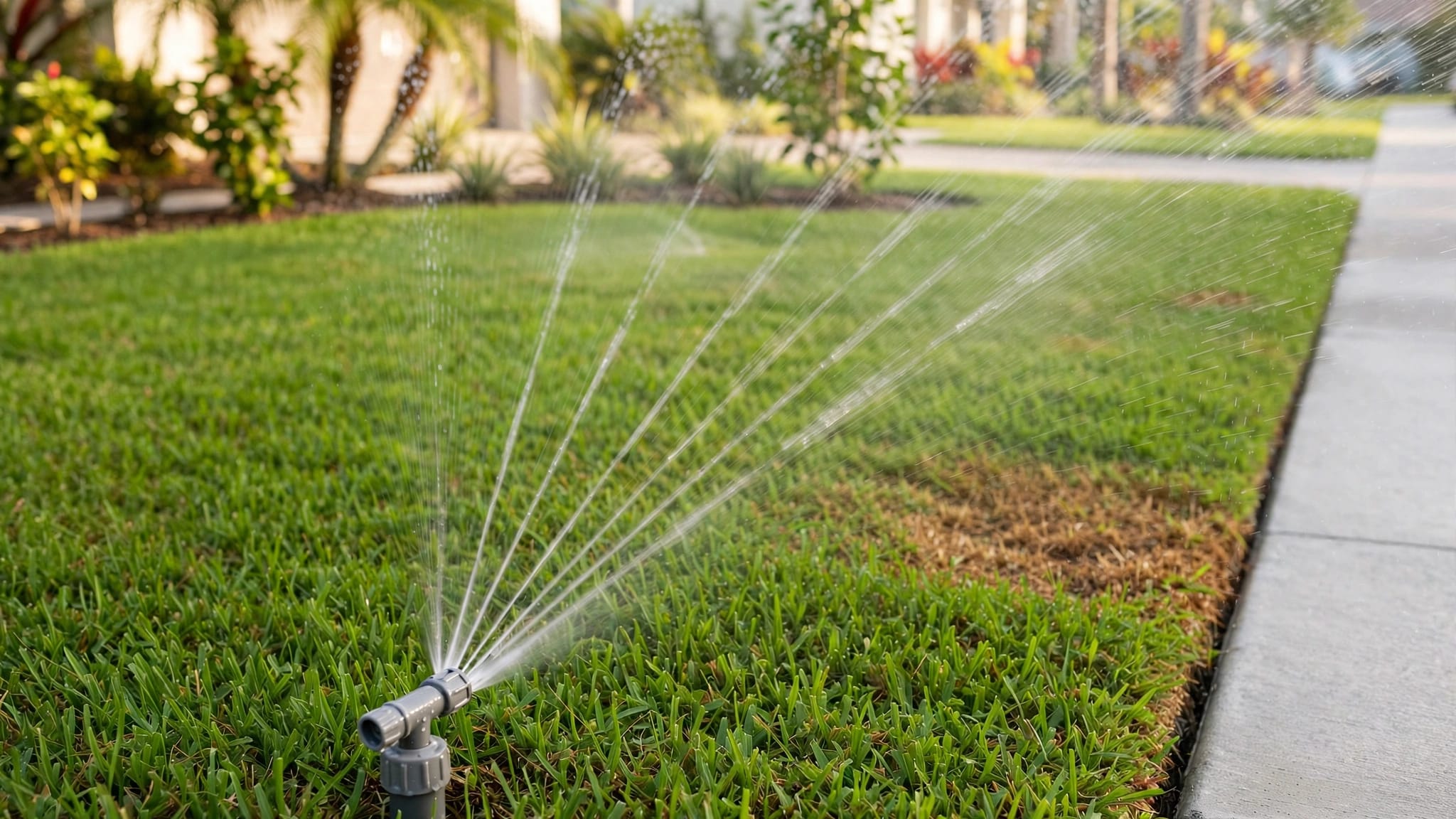
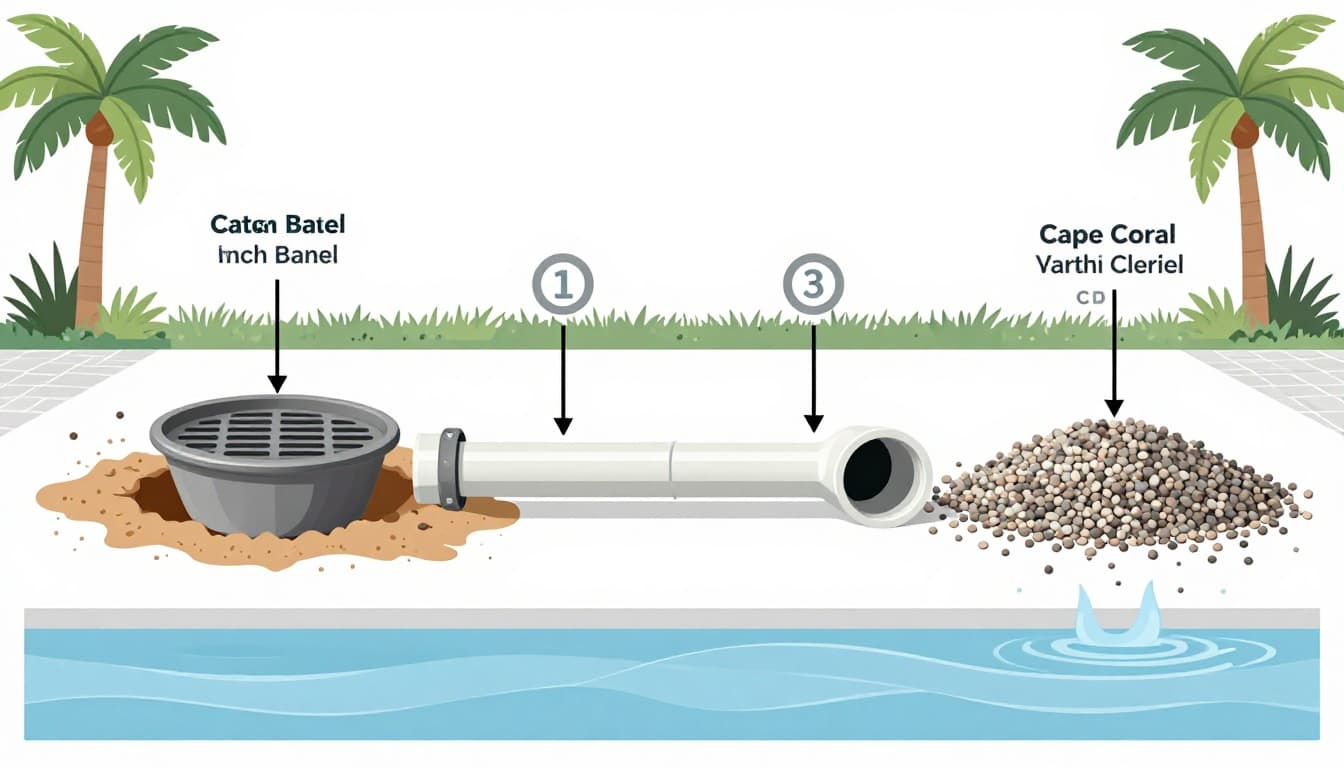 Simple steps for a catch basin install in sandy soil with high water table, created with AI.
- Watch the water in a real storm. Mark where it pools (lanai corners, gate area, low swale spots) and where it flows (driveway edges, paver seams).
- Decide if it’s surface water or soggy soil. Surface flow points to a catch basin. Long-term sponginess points to a French drain or a hybrid.
- Find the legal discharge path. Confirm where water can exit without harming neighbors or public areas. If the route involves the swale/right-of-way, check city guidance through Cape Coral Public Works and related stormwater resources.
- Choose pipe strategy. Perforated pipe for collection zones only, solid pipe for the run to the outlet, with cleanouts for service.
- Match the fix to the rest of your outdoor plan. Drainage should come before new landscaping, sod, rock beds, or hardscape work, so finished surfaces don’t get torn up later.
Quick FAQ for Cape Coral homeowners
Will a French drain work in Cape Coral sand?
Often yes, but it can struggle if the trench sits in a high water table. Many successful installs collect water in gravel, then move it out through solid pipe to a safe outfall.
Do I need a permit for a catch basin or French drain?
If your work affects the city swale or public right-of-way, you may need review or permitting through the city’s stormwater guidance. Start with Cape Coral’s Surface Water Management information.
How deep should it be?
Deep enough to protect the pipe and maintain flow to the outlet, but not so deep that it stays underwater. In Cape Coral, systems are often kept relatively shallow because groundwater rises during rainy season.
How often should I clean a catch basin?
Check it several times during rainy season and after big storms. If your yard has palms, mulch beds, or nearby trees, debris builds up faster. The city also runs maintenance programs for public structures, see Cape Coral’s catch basin program.
Conclusion
The best answer to catch basins vs french drains in Cape Coral is the one that matches the water you’re dealing with: visible runoff needs collection and a clear outlet, while soggy ground needs subsurface capture, careful depth, and usually a planned discharge route. Handle the do’s and don’ts, especially outfalls, cleanouts, and neighbor-safe flow, and your yard stops feeling like a sponge every summer storm. If you’re updating hardscapes or lawns at the same time, build drainage into the plan first so your landscaping stays clean, level, and dry.