


Find Your Irrigation Shutoff Valve Before a Pipe Break
A broken sprinkler pipe is a poor time to discover that you don't know where the water shuts off. Finding your irrigation shutoff valve now gives you a way to limit water loss before it washes soil away from your yard or patio.
The goal is water isolation , not simply switching the sprinkler timer off. Start by distinguishing the irrigation supply from the other valves around your home.
Key Takeaways
- Find the valve that isolates the irrigation supply, rather than assuming any nearby valve controls the sprinklers.
- Photograph its location and keep access clear before new planting, turf, or hardscape work hides it.
- Stop at visual inspection if the shutoff is unidentified, damaged, difficult to operate, or inside a flooded box.
Understand What Supplies Your Sprinklers
Your irrigation water source determines where the search begins. A system may draw water from household plumbing, a separate irrigation supply, or a private well.
Separate the irrigation shutoff from the house main
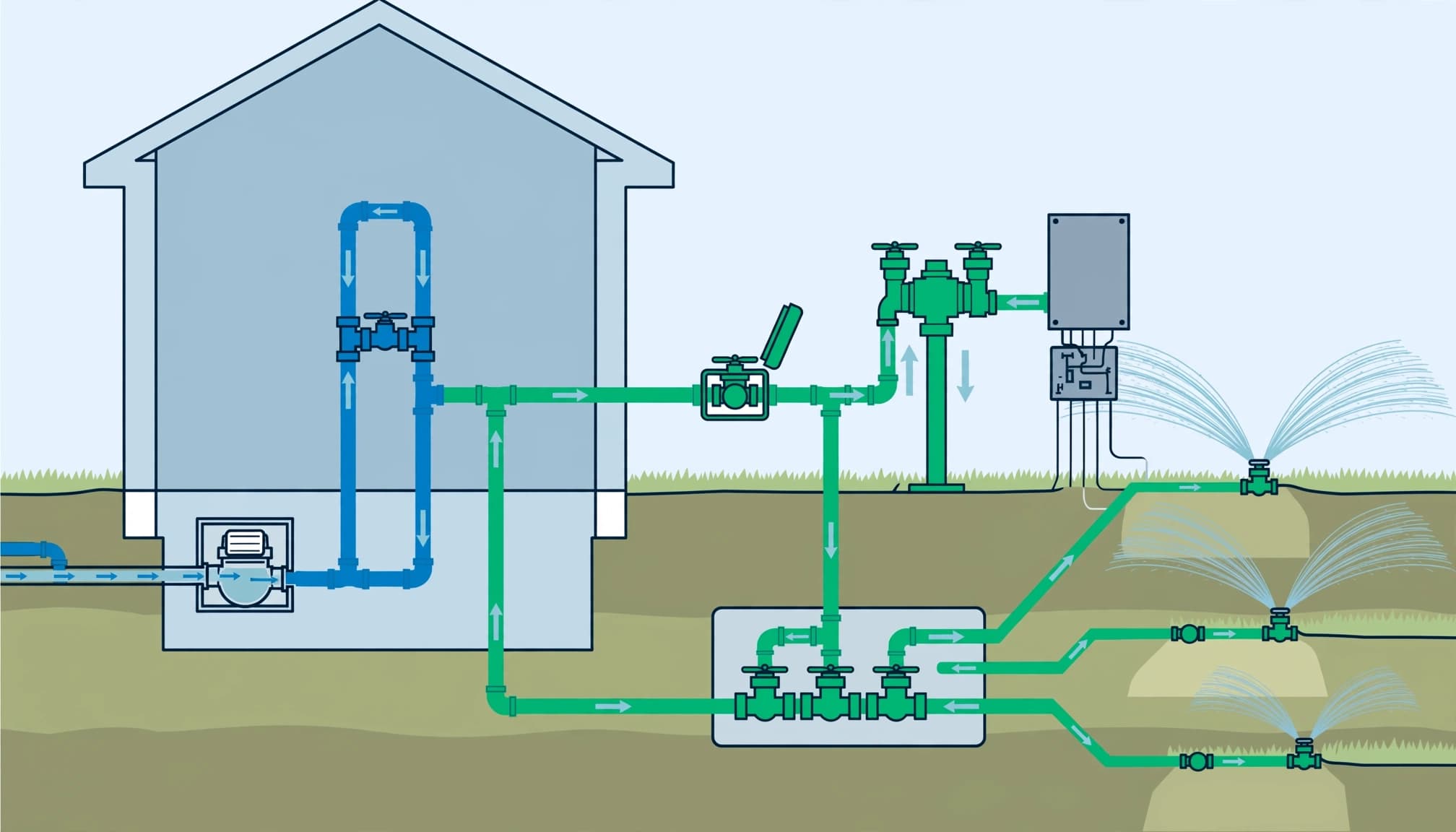
The home's main shutoff controls the water service connected to it. A dedicated irrigation shutoff isolates the sprinkler branch while allowing household water use to continue.
However, shutting off household water won't necessarily stop sprinklers supplied by a separate connection or well. Look for visible clues, including separate meters, labeled piping, or pump equipment.
Follow accessible piping visually where possible. Don't loosen fittings or dig to determine where a line goes. If the connection disappears underground, the visible layout may only narrow your search.
Recognize zone valves and pump equipment
Zone valves control individual groups of sprinkler heads. They often sit inside ground-level boxes and have electrical solenoids with small control wires.
Finding those valves helps explain the layout, but it doesn't identify the main irrigation shutoff. A damaged supply pipe can remain pressurized upstream of the zone valves.
For a well-fed system, pump power and water pressure are separate safety concerns. Closing a water valve doesn't make pump wiring safe. Leave pump, pressure-tank, and electrical work to a qualified professional.
Search Around Fixed Landmarks First
Begin with a slow walk around the property. Bring a flashlight, gloves, and your phone for photographs. Heavy digging tools aren't needed for this first search.
Follow visible equipment and old records
Look near the water meter, exposed backflow equipment, exterior walls, and irrigation control areas. These are possible locations, not guarantees.
Previous repair photos can show a box before grass or mulch covered it. An existing irrigation sketch may also identify the water source and valve locations.
Controller labels such as "front lawn" describe sprinkler zones, not necessarily shutoffs. Our guide to mapping irrigation zones before repairs helps connect those labels with yard locations.
Use permanent reference points, such as a house corner or fence post, rather than movable pots or garden furniture.
Look along bed edges without excavating
Valve boxes often blend into transitions between lawn, mulch, and planting beds. Look for a rectangular outline, shallow depression, or visible plastic edge.
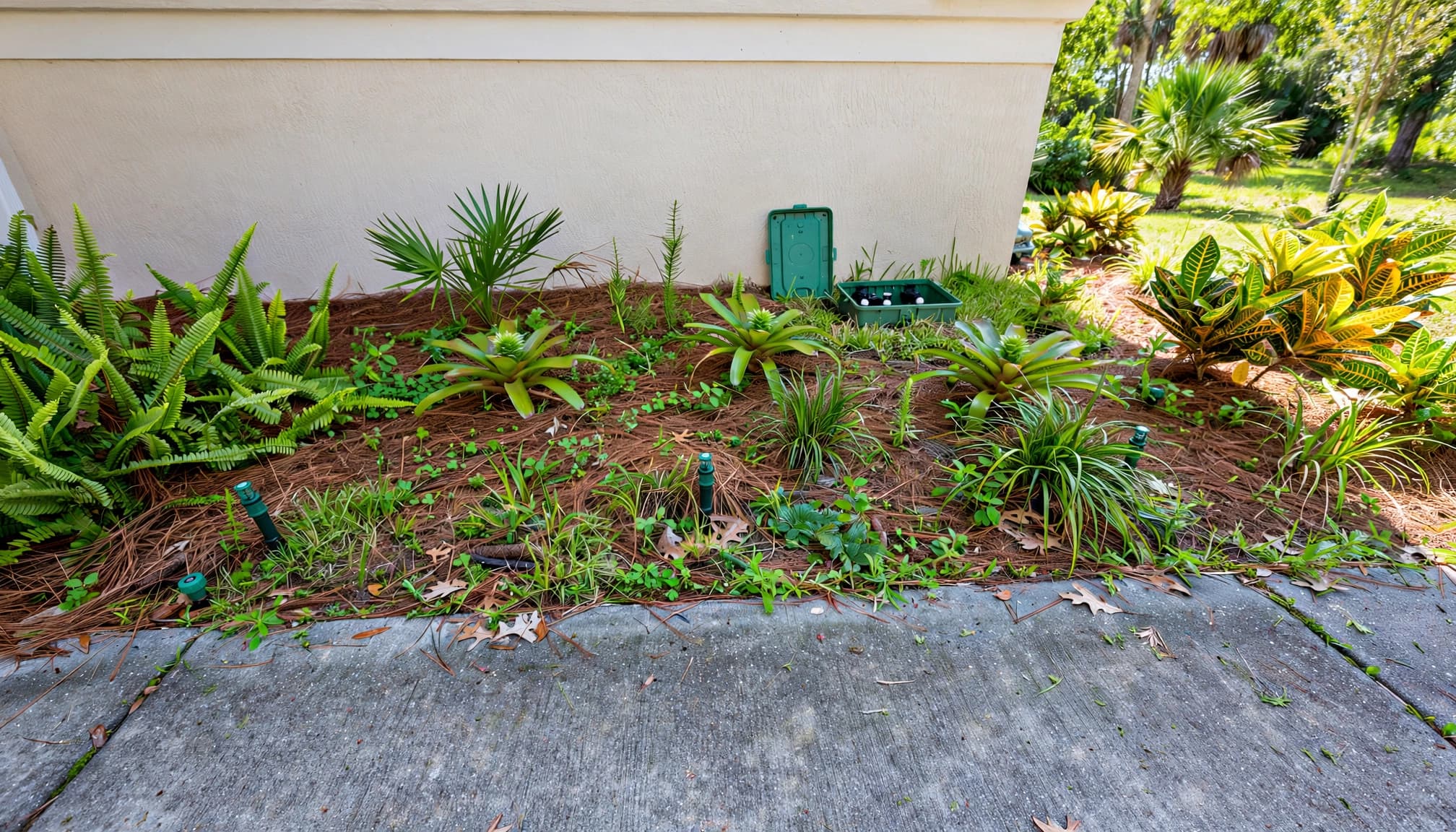
Move loose leaves and clippings by hand. If you expose a lid, use its intended opening slot or a valve-box key. Don't pry aggressively against brittle plastic.
Avoid driving a shovel or sharp rod into the ground to search for piping. A hidden cable, irrigation line, or shallow utility can sit close to the surface.
Know Which Irrigation Shutoff Valve You Found
A valve's location or handle color alone doesn't establish what it controls. The best clues are a clear label, visible pipe connections, and a known system layout.
An irrigation isolation valve should control the relevant irrigation supply. A cluster of wired valves usually points toward zone controls, while a backflow assembly has a different purpose.
Backflow equipment prevents irrigation water from flowing backward into potable plumbing. Many assemblies have full-size shutoff valves on either side and smaller test cocks on the body. Those small test cocks are testing connections, not ordinary water shutoffs.
Keep the assembly connected and accessible. Don't remove it, bypass it, or cap an opening to simplify the plumbing.
If the valve box contains standing water, avoid reaching into murky water or pulling on concealed wiring. Our guidance on water in irrigation valve boxes explains common causes and safe stopping points.
Finding a zone valve doesn't give you a way to isolate every pipe. The main supply can remain pressurized even when every sprinkler zone is off.
Take a photo before changing any valve position. If the pipe route remains unclear, have an irrigation technician identify the correct shutoff.
Test the Shutoff Only Under Safe Conditions
A visible valve isn't useful emergency protection if it doesn't actually stop the irrigation supply. Arrange a controlled test before a break, while the system is otherwise working normally.
Prepare without opening pressurized components
Choose a dry time when you can see the equipment and surrounding ground clearly. Pause the controller so a scheduled watering cycle won't begin unexpectedly.
Only operate a clearly identified, undamaged shutoff whose operation you understand. If you're unfamiliar with it, have a technician demonstrate the shutdown.
Don't force a seized handle, add a wrench for extra force, or twist piping while trying to move the valve. Corroded metal and aged plastic can fail under pressure.
Close the dedicated supply before removing any valve, fitting, solenoid, or other pressurized component. For this preparedness check, leave components assembled .
Observe flow rather than trusting the handle
On a healthy system, a technician can demonstrate whether the valve isolates the entire irrigation supply. That demonstration should also establish how to restore service safely.
If you perform a familiar shutdown yourself, watch for leaks around the valve body and connected fittings. Stop if the handle moves without controlling flow or the pipe shifts.
Some water can drain from low sprinkler heads after shutdown. Persistent flow, renewed spraying, or a continuing leak needs attention. Don't run a test cycle if you already suspect a broken pipe.
Record the Location and Keep It Accessible
Once the shutoff is identified, save a wide photo showing its surroundings and a close photo of the valve. Add its location to a simple yard sketch.
Record which supply it controls and how to reach it. Keep that information somewhere another household member can find, rather than only in a phone album.
A durable label helps distinguish irrigation water from household water. Place it where it won't obstruct the valve, backflow testing connections, or moving parts.
New landscaping should leave the shutoff visible and reachable. Trim plants before they block access, and keep loose mulch and stone away from covers and handles.
Before a concrete company pours a walkway or patio, include irrigation access in the layout. Pipe crossings may need sleeves, and valve boxes should remain reachable without breaking finished concrete.
Artificial turf installation also needs a plan for irrigation lines and accessible covers. Likewise, complete valve-box digging and pipe repairs before paver cleaning or sealing.
Revisit the location after yard work. A correct map loses value when grading or a new planting bed hides the access point.
Know When Professional Help Is the Safer Choice
A shutoff you can't identify or operate safely needs attention before an emergency. Professional locating equipment can help trace valve wiring and find concealed boxes without random excavation.
Stop when water or utilities complicate access
Arrange service for a flooded box, several failed zones, a valve that won't close, or water that continues flowing after the controller stops.
A single zone that keeps watering may have debris inside its valve, a damaged diaphragm, or a solenoid problem. Sprinkler solenoid repair requires diagnosis rather than a timer adjustment.
Stop digging if you uncover unfamiliar conduit, cable, or piping. In Florida, use 811 before excavation . Utility markings may not identify privately installed irrigation lines.
Leaks beneath concrete, pavers, foundations, or established roots also need careful locating. Excavating in the wrong spot can turn a pipe repair into a larger restoration job.
Repair the problem before restoring the yard
Our Cape Coral irrigation repair cost guide lists $150 to $300 as a typical range for an underground pipe leak. The failed component, access, and labor affect the repair bill.
Fix the water source before replacing washed-out soil or repairing settled hardscape. Afterward, test the system zone by zone for leaks, pressure, coverage, and proper valve operation.
We provide irrigation repair and landscape services in Cape Coral and nearby Southwest Florida communities. An unidentified or inaccessible shutoff is a good reason to schedule an inspection before a pipe breaks.
Frequently Asked Questions
Does turning off the sprinkler controller shut off the water?
Turning the controller off stops scheduled watering commands. It doesn't isolate a pressurized supply line, and a faulty zone valve may continue passing water. Use the identified irrigation supply shutoff to isolate the system.
Can I use the house main if I can't find the irrigation shutoff?
The house main only controls water supplied through that connection. It may affect irrigation connected to household plumbing, but it won't necessarily stop a separate irrigation supply or private well. Have an unidentified supply traced before relying on an emergency shutdown plan.
What should I do if a pipe breaks before I've located the valve?
Turn the controller off to prevent another scheduled cycle. Close the irrigation supply only if you can identify and reach it safely. Keep people away from soft ground and wet electrical equipment, then arrange prompt repair. Don't loosen fittings, enter a flooded box, or excavate blindly to chase the leak.
Make the Shutoff Easy to Find Before You Need It
A usable emergency plan starts with the correct valve, clear access, and a known shutdown procedure. Finding a green lid or switching off the timer isn't enough to establish water isolation.
Locate and photograph the shutoff while the system is working normally. Keep it accessible through future yard improvements so a broken pipe doesn't become a search for buried controls.