


Palm Planting Depth in Sandy Soil: A Practical Guide
A palm can look healthy on planting day and still struggle months later because it sits too low. Palm planting depth affects root growth, trunk health, and how well the tree handles Southwest Florida's heat and fast-draining sand.
The goal is simple: set the palm high enough that settling and irrigation do not bury its base. Careful measuring before backfill prevents a costly replant later.
Why Palm Planting Depth Matters in Sandy Soil
Sandy soil drains quickly, which helps prevent standing water around roots. However, loose sand also shifts and settles after digging, watering, and heavy rain. A palm that starts at the surrounding grade can end up below it within weeks.
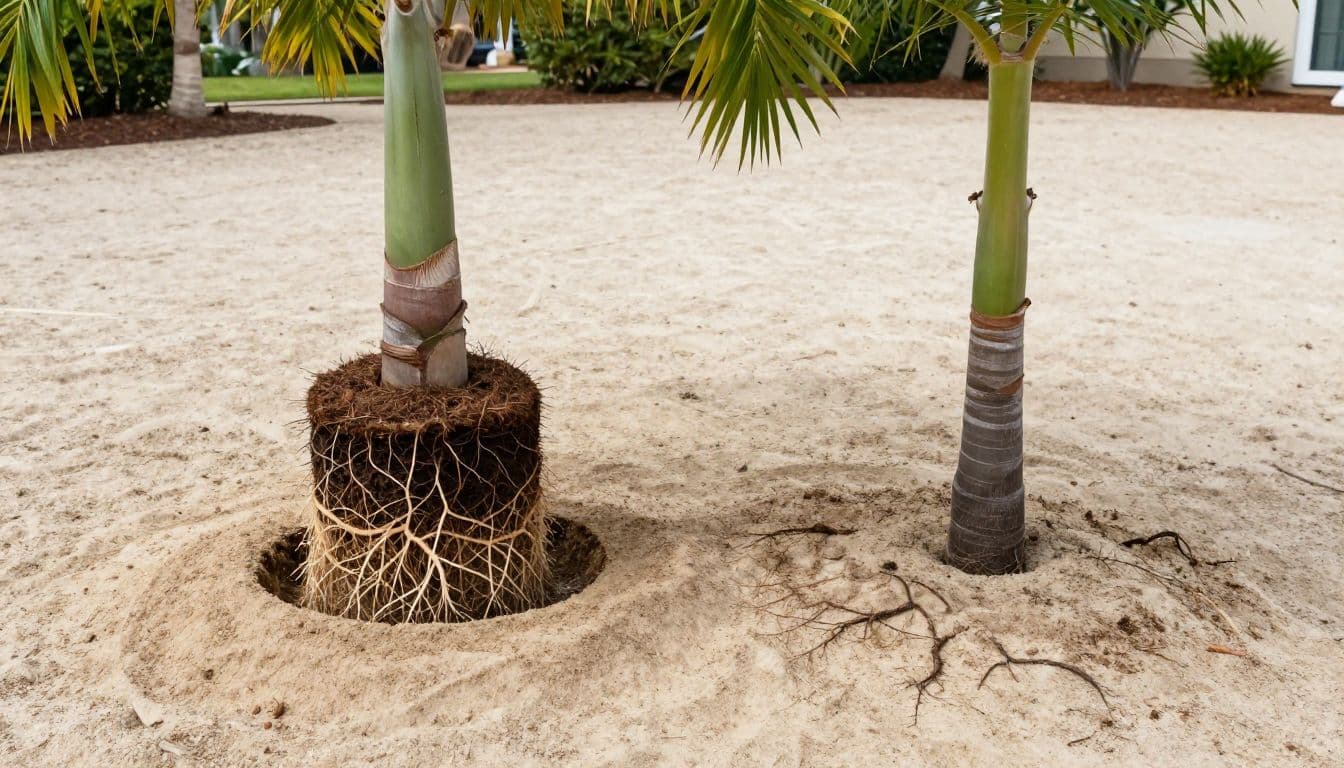
The top of the root ball should usually sit level with, or slightly above, the finished surrounding grade. The root initiation zone, where new roots emerge at the base of the trunk, must remain exposed according to the palm species and the nursery's planting guidance.
Never Cover the Palm Trunk With Soil
Soil piled against a palm trunk holds moisture where it doesn't belong. Over time, this can contribute to decay, pest problems, and weak growth. The trunk should rise cleanly from the soil, with no mound of backfill or mulch touching it.
Palms differ from broadleaf trees because their root systems grow from the lower trunk area. Still, that does not mean the trunk should be buried. Follow the nursery tag or grower's instructions when a species has a visible root initiation zone or a distinct planting line.
If the palm looks like it is sitting in a shallow bowl after watering, raise it before the soil firms up.
Find the Natural Grade Before You Dig
Start by identifying the final soil height around the palm. Do not measure from loose mulch, temporary piles of sand, or an unfinished bed edge. Use the grade where water should flow after the project is complete.
This matters when new borders, pavers, turf, or concrete will sit near the planting area. A palm installed at the right height today can be too low once finish materials change the grade.
Measure the Root Ball, Not the Container
Remove the nursery container or inspect the wrapped root ball before setting the palm. Measure from the bottom of the root ball to its top. The planting hole should be no deeper than that measurement.
Dig the hole two to three times wider than the root ball when space allows. Keep the base firm and mostly flat. A deep, loose hole acts like a settling pocket, dropping the palm below grade after the first few soakings.
If the bottom becomes too deep, add sand back in thin layers and tamp it lightly. Don't use loose mulch, potting mix, or construction debris to lift the root ball.
Plan Around Nearby Surfaces
Hardscape work changes drainage patterns. When a concrete company installs a walkway, curb, or patio edge, confirm the finished elevation before planting nearby palms. Water should move away from the home's foundation without washing soil from the palm bed.
The same planning applies to paver cleaning. Keep high-pressure rinse water and displaced joint sand out of planting beds, where it can bury shallow roots or alter the final grade.
Set the Palm Slightly High, Then Backfill
Lower the palm into the hole carefully and check it from several angles. The root ball's top should align with the surrounding grade or sit a little proud of it. In loose, recently disturbed sand, a slight rise allows for normal settling.
Use the soil you removed for most of the backfill. Sandy soil is already suited to drainage, and packing a small hole with rich material can create a pocket with different moisture behavior than the surrounding bed.
Firm the Soil Without Compacting It
Backfill halfway, then add water to settle sand around the roots. Finish filling the hole and press the soil gently with your hands or the flat side of a shovel. Avoid stomping hard around the trunk.
A stable palm should stand straight, but the surrounding soil must still admit air and water. Large palms may need temporary bracing, especially during windy weather. Remove braces once the root system has anchored the tree.
For broader landscaping in Cape Coral sandy soil, grading and plant-bed preparation should happen before final mulch and decorative finishes.
Water the Root Zone and Recheck the Grade
Newly planted palms need consistent moisture while roots grow into the surrounding sand. Sandy sites dry faster than many homeowners expect, especially in full sun and during dry, windy weather.
Water slowly so moisture reaches the original root ball instead of running across the surface. The exact schedule depends on the palm species, root ball size, weather, and irrigation coverage. Check the soil beneath the surface rather than relying on a fixed calendar.
Check After the First Deep Watering
After a thorough watering, inspect the soil line around the root ball. If the top has sunk below the surrounding grade, lift and reset the palm while the soil remains loose. Adding a little sand on top is not the fix if that sand covers the trunk base.
Then check again after several rains. Replace any sand that erodes from the edge of the planting basin, but keep it below the root initiation zone.
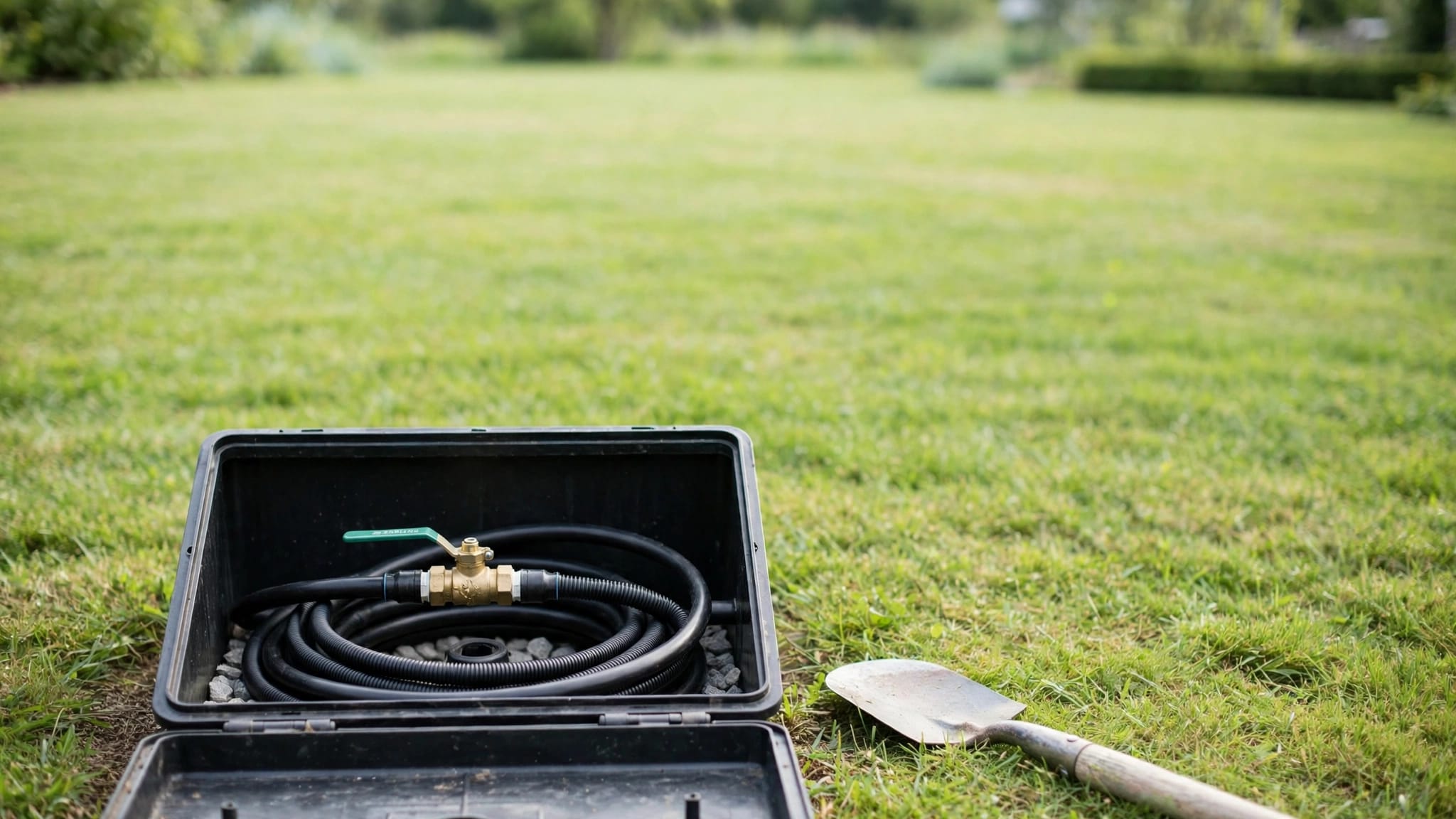
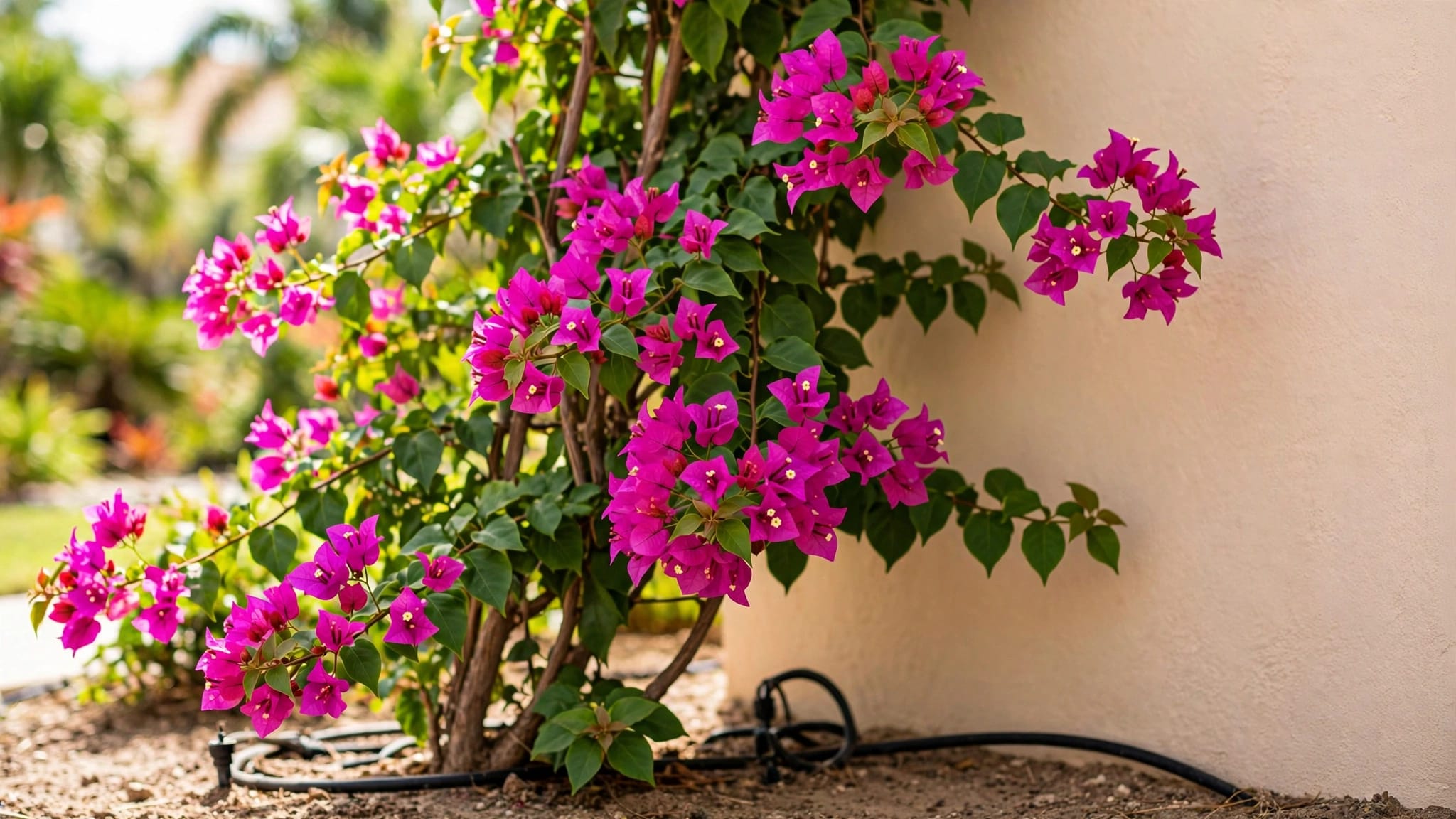
A properly planned irrigation system for sandy soil and palms can deliver water to the root area without overspraying nearby patios, walls, or walkways.
Mulch and Finish Materials Need Breathing Room
Apply a two- to three-inch layer of mulch across the bed after planting. Mulch slows evaporation, helps moderate soil temperature, and limits weeds. Leave several inches of clear space around the palm trunk and root initiation zone.
Keep decorative stone low enough that it does not raise the grade against the trunk. This is especially important when matching a new palm bed to artifical turf, edging, or a paved patio.
Watch for Grade Changes Over Time
Florida downpours can move sand quickly, while nearby construction can add soil where it does not belong. Review the palm's base whenever you refresh mulch, repair irrigation, or change bed borders.
If the bed keeps washing out, address the drainage path instead of continually burying the root ball with replacement material. The palm should remain visible at its original planting level.
A Palm's Long-Term Health Starts at Grade
Correct palm planting depth gives roots a stable, well-drained place to establish. Set the root ball at grade or slightly above it, keep the root initiation zone exposed, and never bury the trunk.
Sandy soil will settle after watering and rain. Checking the final grade early protects the palm long after the planting day is over.