


Cape Coral Tree Removal Permits: What Homeowners Need to Know
A tree removal can affect more than the look of your yard. The approval path may depend on whether your home is inside Cape Coral city limits, what kind of tree you have, where it stands, and why you want it removed.
Cape Coral tree removal permits aren't covered by one simple rule for every residential property. Start by identifying the property's jurisdiction, then ask the responsible authority about the current application steps and fees before scheduling work.
Key takeaways for Cape Coral homeowners
- First identify the jurisdiction. Cape Coral city rules and unincorporated Lee County rules are separate.
- Requirements can depend on the tree, property, and reason for removal. Don't assume a neighbor's experience applies to your lot.
- The City of Cape Coral accepts permit applications through its EnerGov Self-Service Portal, but available City materials don't establish one universal permit process or fee for removing a tree from a private residential lot.
- Lee County's vegetation-removal thresholds and protected-tree provisions apply in unincorporated areas, not automatically within Cape Coral.
- Get the current requirements from the correct authority before removal, stump grinding, or related site work begins.
Start by identifying the property's jurisdiction
A Cape Coral mailing address doesn't, by itself, tell you which rules govern a specific parcel. Cape Coral is within Lee County, but the City of Cape Coral and Lee County have distinct permitting processes. Confirm whether the property is inside the city or in unincorporated county territory before using any permit guidance.
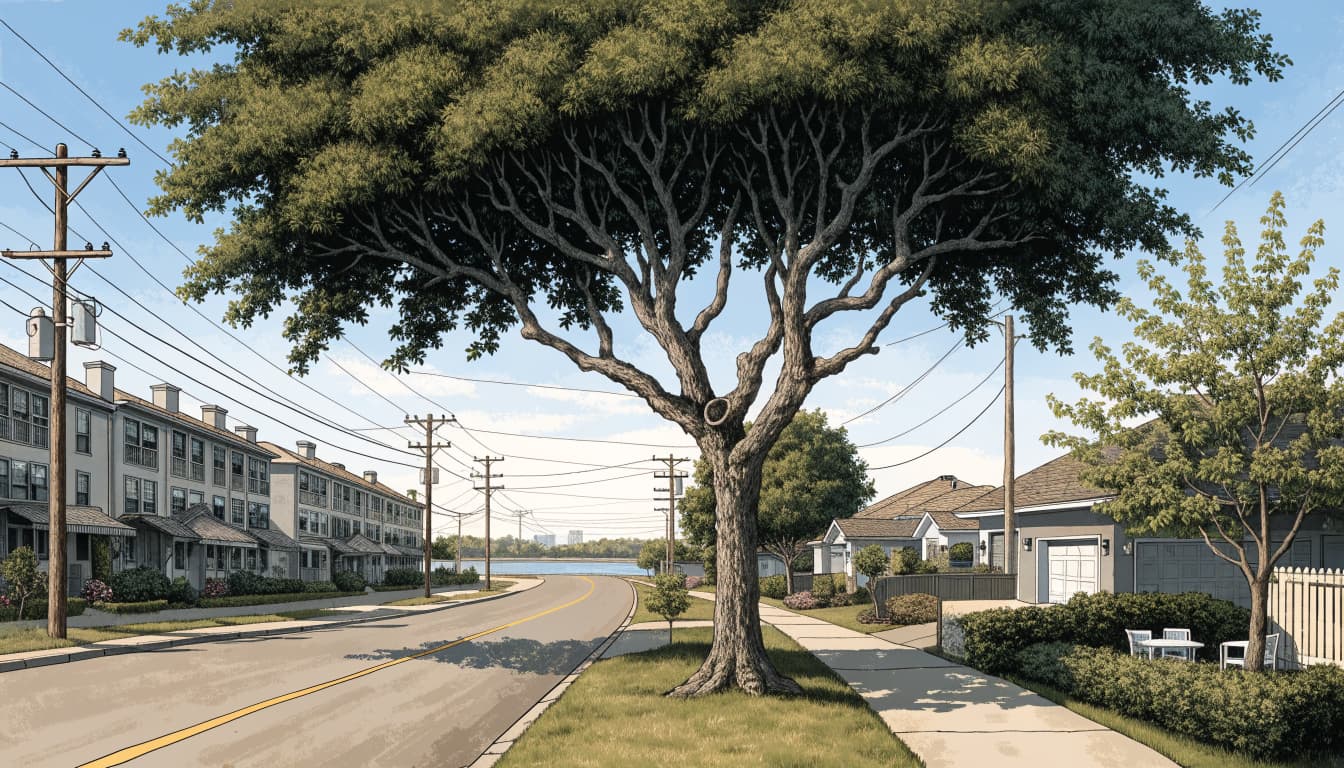
City property or unincorporated Lee County?
If the parcel is within Cape Coral city limits, begin with the City's Permitting Services Division. If it is in unincorporated Lee County, County requirements may apply instead. This distinction matters because County thresholds and exemptions shouldn't be treated as City rules.
When jurisdiction is unclear, give the property address or parcel details to the relevant local permitting office and ask which authority handles the proposed work. Do this before relying on a rule found in a county guide or a neighbor's permit history.
Private yard, public right-of-way, or special conditions?
A tree in a private yard can raise different questions from one near a sidewalk, road, easement, utility line, or other public area. The location may affect who controls the land and what approvals or safety arrangements are needed.
The reason for removal also matters. A dead or hazardous tree, a protected tree, and clearing vegetation for a larger project may fall under different provisions. Describe the tree's location and condition when you ask about requirements.
What Cape Coral's permitting information establishes
The City's available materials explain how permit applications are handled generally, but they don't set out a single, universal tree-removal permit process for every existing residential lot. That distinction matters: don't assume that all tree removal requires a City permit, or that no permit is needed.
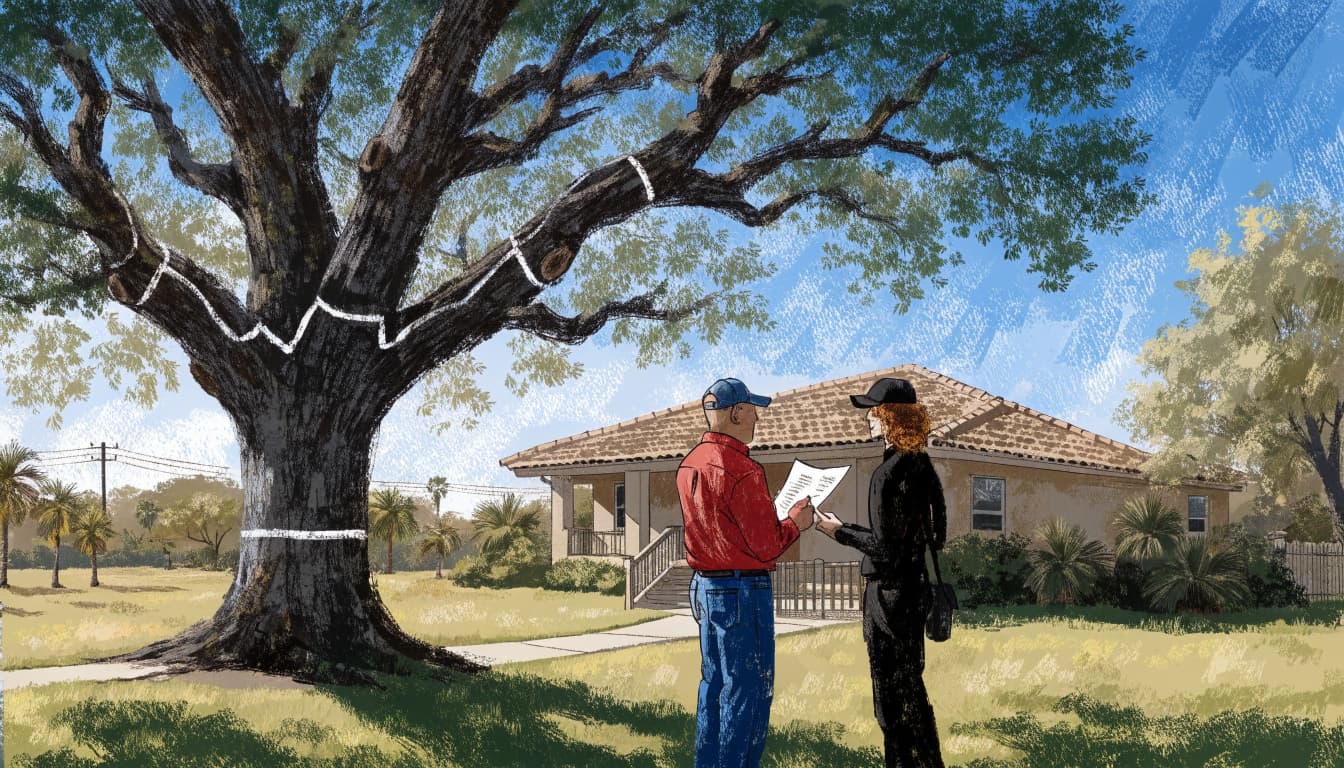
Use the City's current application channel
The City of Cape Coral's Permitting Services Division directs permit applicants to the EnerGov Self-Service Portal . The City says new permit applications aren't accepted at the permit counter. Its guidance also states that owner-builders were expected to use the portal beginning July 1, 2026.
For assistance, contact the City Permitting Help Desk at 239-574-0546 or permits@capecoral.gov . Because the City materials don't establish a universal tree-removal application or standard fee, ask the Help Desk which current process and charges apply to the specific property and work.
Land Clearing and Fill provisions have a limited scope
Cape Coral's code includes a Land Clearing and Fill permit for certain changes to ground elevation or vegetative cover that aren't associated with an approved development plan or building permit. That provision can matter when tree removal is part of broader clearing or site preparation.
However, it doesn't establish that every individual tree removal on an existing home lot falls under that permit. The project's scope and property conditions matter. The City's Permitting Services Division information and Land Clearing and Fill code provisions are useful starting points, but the City Help Desk can identify the process for a particular proposal.
Lee County rules are separate from City rules
Lee County publishes more detailed vegetation-removal guidance, but it applies to unincorporated county areas. Use it only after establishing that the property is outside Cape Coral city limits.
County vegetation-clearing thresholds
Lee County's vegetation-removal guide identifies single-family residential clearing on lots of 5 acres or more in unincorporated Lee County as a permit-related threshold. On Pine Island, the guide identifies clearing of more than 2 acres .
The guide also says that annual removal of five trees or fewer from a single-family lot with an existing single-family dwelling doesn't require a permit. However, the County's separate Tree Protection Ordinance says protected trees can't be removed or damaged without a permit. The scope of those two statements isn't reconciled in the available materials, so don't treat the small-tree-count guidance as blanket permission for a protected tree.
Protected-tree applications
For unincorporated Lee County, the Tree Protection Ordinance describes a written application using a County-provided form and a written reason for removal. A fee is due when the permit is issued; the cited ordinance doesn't provide a current fee amount.
Lee County's vegetation-removal guide directs applicants to its eConnect Citizen Access Portal. The Tree Protection Ordinance provides the protected-tree application requirements. These County materials shouldn't be used as a substitute for Cape Coral's process.
A practical approval sequence before removal
The safest approach is to resolve jurisdiction and scope before booking a crew. A tree service can give you a work estimate, but the property owner should know which local authority handles any required approval.
Describe the project clearly
Gather the property address, a parcel or survey if available, and a few photos showing the tree's position relative to the home, driveway, sidewalk, and property edges. Note the tree type if known, its approximate size, visible damage, and the reason you want it removed.
Also explain whether the work includes stump grinding, clearing nearby vegetation, changing grade, or preparing for new construction. Those details help the authority distinguish a single-tree request from a broader land-clearing project.
Get the application route and fees in writing
Contact the City or County office that has jurisdiction and describe the full scope. Ask whether an application is needed, which form or portal to use, what supporting documents are required, and what fee applies. For Cape Coral, the Permitting Help Desk can direct you to the City's current process.
Keep the response, application, and any approval with your project records. Don't schedule removal or stump grinding until you have the required approval and understand any conditions attached to it. If the authority says no permit is needed, keep a record of that guidance and the details you provided.
Prepare the site details that may affect review
A clear description can prevent confusion about what the contractor plans to do. It also helps separate the tree work from any landscaping or construction that follows.
Include nearby features and related work
Point out easements, utilities, irrigation lines, drainage features, fences, pools, and hard surfaces near the tree. If the removal is part of a larger property improvement, mention plans for new pavers, concrete, planting beds, or turf. Changes to site layout or drainage may raise separate review questions.
Cape Coral's landscape installation process explains why permitting and planning can matter when tree work is bundled with irrigation, drainage, or hardscape installation.
Keep approval records together
Save the application, submitted plans or photos, payment receipt, written determination, and any approval conditions in one place. Share relevant restrictions with the contractor before work begins. This helps prevent a crew from removing additional vegetation or changing the site beyond the approved scope.
If a tree is close to overhead electrical lines, a road, or a structure, keep people clear and leave the work to qualified professionals with appropriate equipment. Don't climb, cut, or attempt to stabilize a hazardous tree yourself.
Plan the yard around the removal
A permit is only one part of the project. Once the tree work is approved, plan how equipment will reach the site, where debris will go, and what should happen to the cleared space.
If you're installing new landscaping, artificial turf, or pavers, schedule that work after tree removal and heavy equipment use. This helps protect fresh surfaces and keeps the sequence clear. For example, paver cleaning is best scheduled after debris hauling and the remaining dusty work are finished.
When a patio or driveway is part of the redesign, coordinate the timing with your concrete company. Tree roots, stump grinding, and access equipment can affect the area around a slab or paved surface. Our Cape Coral tree removal cost guide covers budgeting details such as haul-off and stump work, which may be separate from the removal estimate.
Frequently asked questions
Does every Cape Coral homeowner need a permit to remove a tree?
The available City materials don't establish a universal permit requirement or exemption for every tree on an existing private residential lot. Requirements can depend on the tree, property, and reason for removal. Contact Cape Coral Permitting Services with the project details before work is scheduled.
Can I use Lee County's five-tree guidance in Cape Coral?
No. Lee County's guide applies to unincorporated areas. It shouldn't be treated as a City of Cape Coral rule. Also, the County's guide and Tree Protection Ordinance contain statements whose scope isn't reconciled in the available materials, particularly around protected trees.
How do I find the right application and current fee?
For a City property, contact the Cape Coral Permitting Help Desk at 239-574-0546 or permits@capecoral.gov . For unincorporated Lee County, use the County's Environmental Sciences guidance and eConnect Citizen Access Portal. Ask the authority with jurisdiction for the current application route, supporting documents, and fee before work begins.
Make approval the first project step
Cape Coral tree removal permits can't be reduced to one rule for every yard. The property's jurisdiction, the tree, its location, and the reason for removal all matter.
Identify the responsible authority first, describe the complete scope, and get the current application requirements and fees before scheduling a crew. That gives your tree work, and any landscaping that follows, a clearer path forward.