


Ficus Whitefly Damage: Southwest Florida Hedge Care
A ficus hedge can lose its privacy screen while its branches are still alive. In Southwest Florida, ficus whitefly can cause yellowing and heavy leaf drop, but watering problems, root injury, and other pests can produce similar damage.
The safest starting point is confirming active insects before adding fertilizer or spraying. Good landscaping care supports recovery, while targeted pest management reduces further feeding.
Start with the leaves, then examine the conditions around the hedge.
Key Takeaways
- Yellowing and leaf drop suggest a problem, but whiteflies and immature stages beneath leaves provide stronger evidence.
- Protect natural enemies and correct irrigation or root stress before choosing chemical treatment.
- Judge progress by live pest activity and healthy new growth, rather than expecting damaged leaves to turn green.
What Ficus Whitefly Damage Looks Like
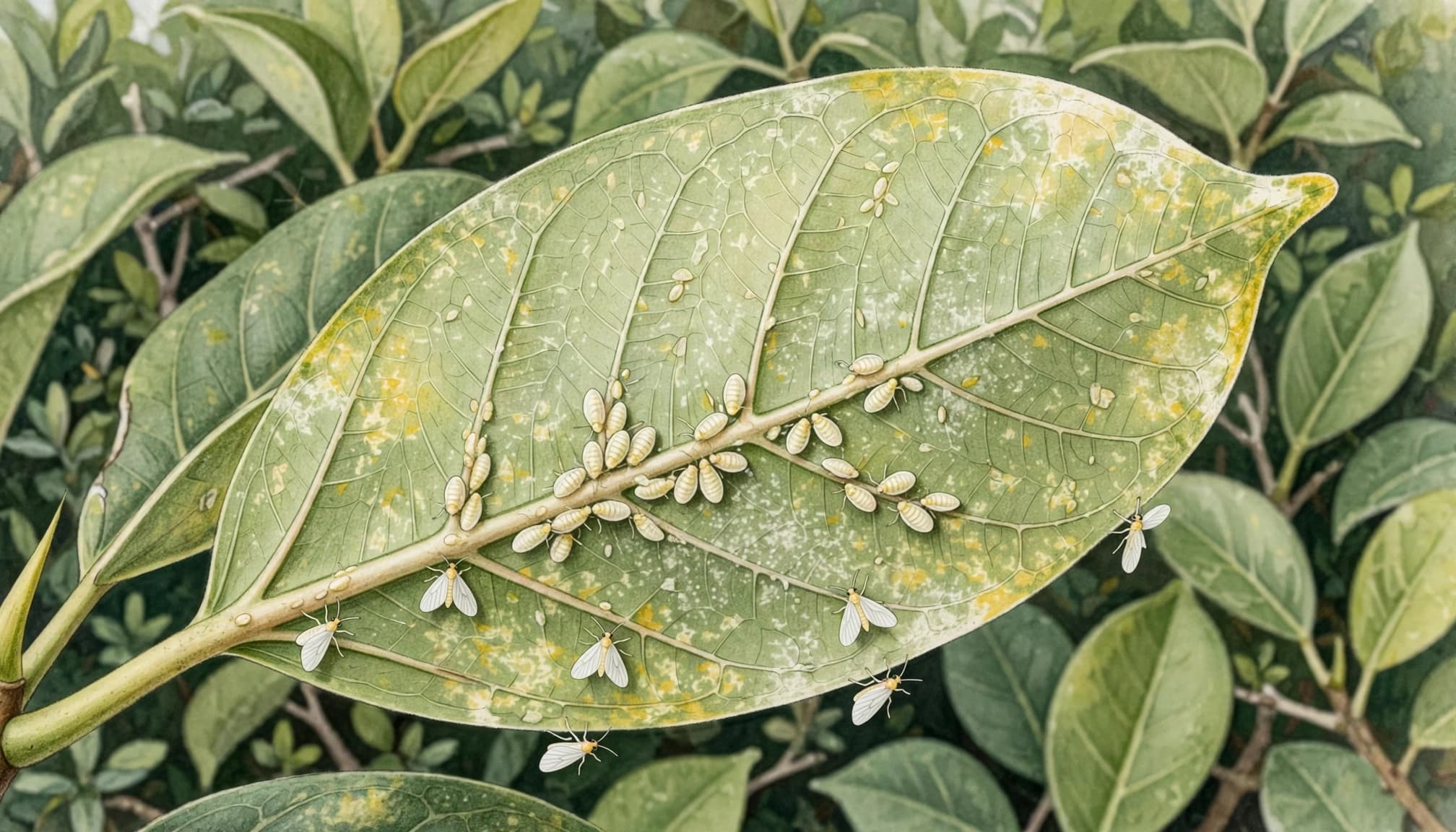
Recognize adults and immature stages
Ficus whitefly, Singhiella simplex , is a small sap-feeding insect. Adults have yellow bodies and white wings, with a moth-like appearance. Gently disturbing an infested branch may send adults into flight.
However, flying insects alone don't establish the species. Turn leaves over and examine their undersides with a hand lens. Eggs and flattened immature stages occur mainly there.
Late-stage nymphs can appear tan or light green, with red eyes. Empty pupal cases may remain as small whitish or silvery marks. Those cases show previous activity, so look for living insects too.
Connect insects with hedge decline
Feeding can cause wilting, yellowing, reduced growth, and substantial leaf drop. Severe infestations may cause branch dieback or plant death.
UF/IFAS identifies Ficus benjamina , commonly called weeping fig, as the preferred Florida host. Another reported host is Ficus microcarpa. However, don't assume every yellowing hedge has this pest because neighboring ficus plants do.
Clusia, podocarpus, and other privacy plants need their own diagnosis. Our guide to privacy hedges for Cape Coral yards discusses plant choices and space requirements when replacement becomes necessary.
Separate Whitefly Feeding From Other Hedge Problems
Leaf color is a warning sign, not a diagnosis. Compare the damaged section with healthy foliage nearby, then examine soil moisture, leaf surfaces, and recent maintenance.
These clues help narrow the cause.
| Possible cause | Useful clues |
|---|---|
| Ficus whitefly | White adults and immature stages beneath leaves, accompanied by yellowing or leaf drop |
| Drought or irrigation failure | Dry root-zone soil and damage corresponding with missed watering |
| Poor drainage or root injury | Persistently wet soil, recent trenching, compaction, or decline near disturbed roots |
| Nutrient or salt problems | Recurring discoloration without matching insect activity, sometimes with scorched margins |
| Other pests or disease | Scale insects, distorted leaves, webbing, distinct spots, or damaged stems |
Several problems can overlap. Finding whiteflies doesn't rule out stressed roots, and wet surface soil doesn't prove the entire root zone receives enough water.
Check moisture several inches below the surface in both healthy and declining sections. Also note recent herbicide spraying, paver cleaning, fertilizer applications, and construction. Drift, chemical exposure, or root disturbance may explain damage that appeared after a project.
If discoloration persists without a clear pest explanation, soil testing can help assess nutrients and soluble salts. Avoid applying phosphorus or a high-analysis fertilizer simply because leaves look pale.
Whitefly feeding and watering problems can occur together. Killing insects won't repair a leaking irrigation line or restore roots damaged by excavation.
Inspect and Monitor the Whole Hedge
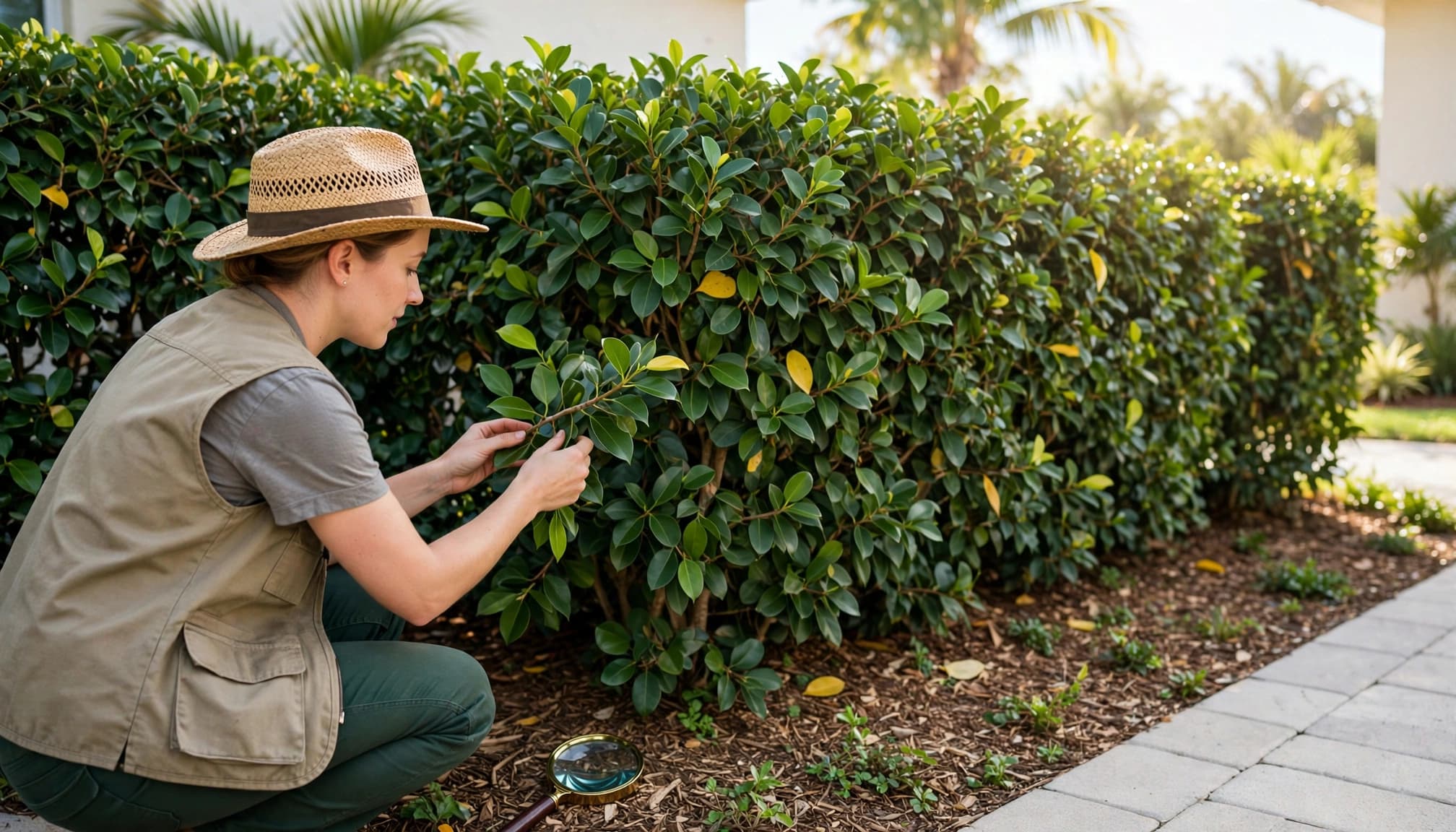
Sample healthy and damaged sections
Inspect several points along the hedge rather than relying on one yellow leaf. Include the ends, middle, outer foliage, and accessible interior branches.
At each point, inspect the undersides of both green and yellowing leaves. Then gently move a branch to look for adults. Sample apparently healthy sections too, because insects may be present before conspicuous leaf loss begins.
A practical homeowner routine is weekly inspection during active damage. Scout promptly whenever adults appear, and shorten the interval if foliage loss accelerates. Use photos from the same locations to track changes.
Measure activity rather than old damage
Record live adults, occupied immature stages, new leaf drop, and fresh growth. Also note predators or evidence of parasitized whiteflies.
Yellow sticky cards can reveal flying insect activity, but they don't identify every whitefly species or measure the entire infestation. Leaf inspection remains necessary.
UF/IFAS recommends considering both pest activity and natural-enemy density when making treatment decisions. There isn't a universal homeowner threshold that makes every hedge ready for spraying.
After treatment, continue monitoring. Empty cases and yellow leaves may persist even when feeding declines.
Reduce Plant Stress and Handle Clippings Carefully
Correct irrigation and protect roots
Water according to soil conditions and rainfall rather than adding irrigation automatically after leaf drop. A partly defoliated hedge may use less water, while saturated soil can damage its remaining roots.
Repair broken emitters, blocked lines, and uneven coverage. Our comparison of drip irrigation and spray heads explains how irrigation choices affect planting beds. Neither system controls whiteflies directly.
Keep mulch away from stems. Also protect roots during patio work or artificial turf installation. If a concrete company is adding a slab beside the hedge, coordinate excavation, drainage, and equipment access before work begins.
Avoid unnecessary pruning
Heavy shearing removes foliage the plant needs for recovery. UF/IFAS cautions that pruning a lightly infested, leaf-dropping Ficus benjamina hedge can increase stress.
Remove confirmed dead or hazardous branches when appropriate, but don't cut a struggling hedge severely just to hide its uneven appearance.
When trimming infested plants, contain the material. UF/IFAS advises keeping clippings on the property or bagging them for removal. Cover or bag material transported in a truck.
Some late-stage whiteflies can remain on fallen leaves. However, sanitation supports management; it doesn't replace inspection of insects still on the hedge.
Preserve the Insects That Attack Whiteflies
Lady beetles and lacewings prey on whiteflies. Tiny parasitoid wasps also attack immature stages, so a hedge supports more than the pest you're trying to control.
UF/IFAS reports parasitoids including Amitus bennetti , Encarsia protransvena , and Baeoentedon balios. Its Florida research identifies B. balios as a consistent and dominant parasitoid attacking ficus whitefly in southern Florida.
These insects can reduce pest pressure. However, natural enemies may not prevent severe damage when whitefly populations are high or plants are already stressed.
Avoid broad-spectrum spraying solely because a few adults appear. Instead, assess whether live pest numbers and new damage are increasing. Unnecessary treatment can kill beneficial insects along with whiteflies.
Also avoid homemade detergent mixtures. Household soaps vary in composition and can injure foliage. A labeled insecticidal soap has defined application directions and plant-safety restrictions.
For a declining hedge, biological control works best alongside adequate root care, regular monitoring, and selective treatment when needed.
Use Pesticides Cautiously and According to the Label
A pesticide application should follow confirmed pest activity and an assessment of hedge condition. Follow current product labels, Florida requirements, and relevant UF/IFAS guidance. When licensing is required, use a properly licensed pest professional.
Contact treatments need coverage and care
Labeled insecticidal soaps and horticultural oils are options for some infestations. Because they work through contact, thorough coverage matters, especially beneath leaves where immature whiteflies occur.
UF/IFAS guidance discusses repeat applications at seven to ten days for these treatments, depending on infestation and product. That interval isn't automatic permission to reapply. The label determines the legal rate, timing, application site, and restrictions.
Follow temperature and plant-stress precautions. Oils and soaps can injure foliage under unsuitable conditions. Don't increase concentration because the hedge looks badly damaged.
Systemic treatments need a targeted plan
Systemic insecticides enter plant tissues and expose feeding insects. Their application methods and duration vary, and uptake depends partly on plant condition.
UF/IFAS's chemical-control pamphlet includes acetamiprid, sold in TriStar 8.5 SL, and clothianidin, sold in Arena 50 WDG. These named examples aren't a universal treatment prescription.
Avoid repeatedly using the same mode of action. Different brand names can contain chemicals from the same insecticide group, so changing brands alone may not reduce resistance risk.
For every application, follow protective-equipment and re-entry directions. Protect children, pets, nearby plants, canals, ponds, and storm drains. Avoid drift and prohibited weather conditions, store products in their original containers, and never pour leftovers into drainage systems.
Help the Hedge Recover Before Replacing It
Stopping feeding doesn't immediately rebuild a privacy screen. Recovery depends on living branches, functioning roots, and reduced stress.
Look for new buds, expanding leaves, and decreasing pest activity. Existing yellow leaves may still fall, so continued leaf drop shortly after treatment doesn't automatically mean treatment failed. New growth provides a more useful recovery signal.
Meanwhile, avoid heavy fertilizer applications intended to force a rapid flush. Match nutrients to demonstrated needs, and follow applicable local fertilizer restrictions.
Professional assessment makes sense when branches die back, the hedge continues thinning despite reduced insects, or several possible causes overlap. Tall hedges also present access and application hazards.
We can help coordinate irrigation repair, drainage improvements, and replacement planting when site problems contribute to decline. Pesticide work that requires licensing belongs with a properly licensed pest professional.
If replacement is necessary, choose plants suited to available space, sunlight, drainage, and mature size. Correct the site problem before installing another hedge.
Keep Diagnosis at the Center of Hedge Care
A thinning ficus hedge needs confirmed pest identification and a realistic recovery plan. Inspect leaf undersides, distinguish active insects from old evidence, and address watering or root problems alongside whitefly pressure.
Preserve beneficial insects and reserve pesticides for justified, label-directed treatment. That approach gives surviving foliage and branches a better chance to rebuild the privacy screen without unnecessary stress.