


Cape Coral Paver Cleaning for Driveway Oil Stains
Fresh oil stains respond best to absorption followed by a paver-safe oil cleaner. Older stains often need targeted treatment because oil can penetrate porous cement-based pavers.
The priority is lifting the oil without spreading it or damaging the surface and joints. Homeowners in canal-front homes in Southwest Cape should contain oily runoff before it reaches drains or waterways. Before you reach for a cleaner, separate a fresh spill from an old stain and look for loose pavers or an existing sealer.
Key Takeaways
- Absorb fresh oil before adding water, because rinsing can carry contamination across the driveway.
- Use a cleaner labeled for your paver material and existing sealer, then test a hidden area.
- Older stains, damaged finishes, and unstable pavers need different treatments, so a general driveway wash may leave problems unresolved.
Start With Absorption for Fresh Oil Spills
Move the vehicle only when it's safe, then address the leak so it doesn't undo your cleanup. Keep people and pets away from the spill while you work.
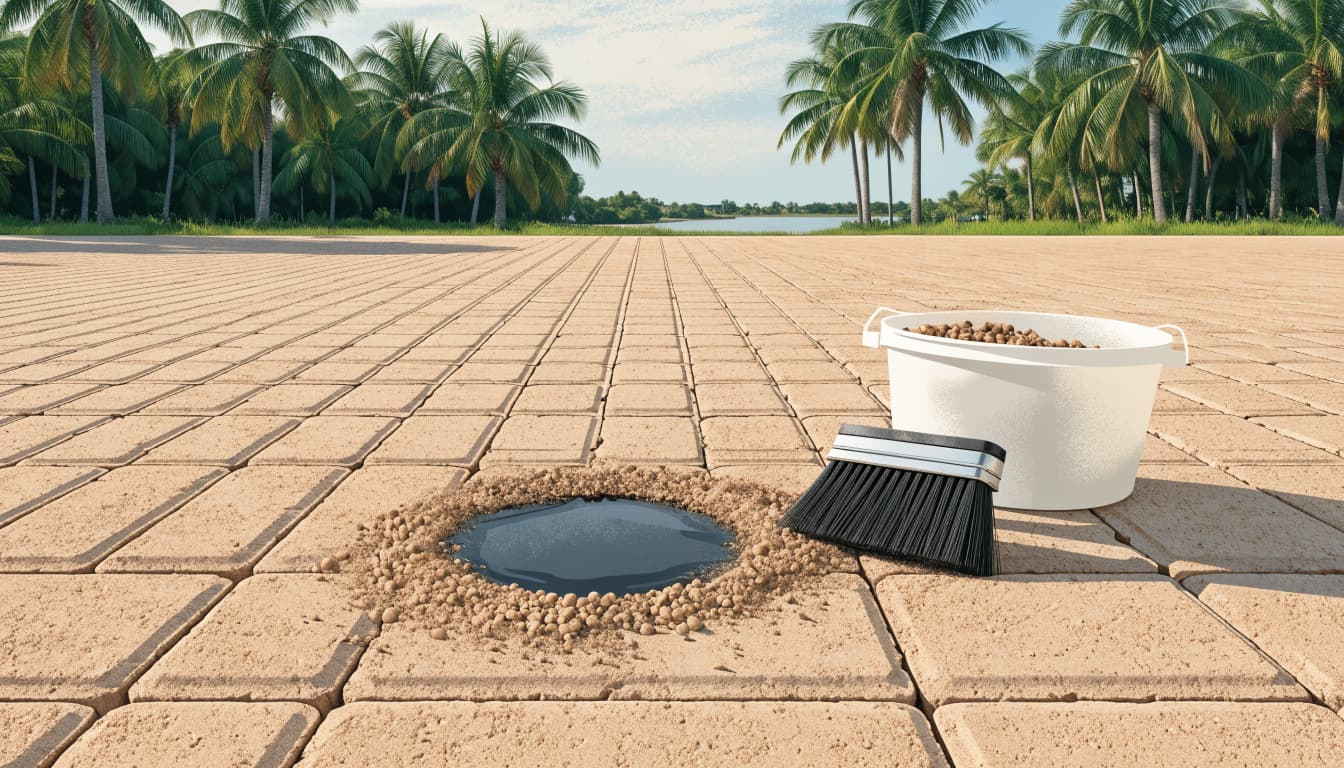
For a small motor-oil spill, work through these steps:
- Blot pooled oil with absorbent pads without rubbing it across neighboring pavers.
- Cover the affected area with an oil absorbent suitable for hard surfaces. Plain, non-clumping clay litter can help absorb a small spill.
- Lift the saturated material carefully. Add fresh absorbent if liquid remains on the surface.
- Apply a cleaner labeled for oil removal on your specific paver material. Follow its dilution and application directions.
- Use a nylon-bristle brush if the label calls for agitation, then collect the residue and rinse only as directed.
Avoid grinding contaminated absorbent into the joints. Also, don't hose the spill toward the street or a storm drain.
Wear gloves and eye protection appropriate for the cleaner. Keep used absorbent contained for proper disposal rather than sweeping it into landscaping.
Dish soap may help with a light greasy film, but it won't reliably extract oil that has soaked into concrete. Excess soap also creates more rinse water to manage.
Treat Set-In Oil Without Spreading the Stain
Older marks need a different approach because the visible spot may extend beneath the paver face. Scrubbing harder can damage the finish without reaching that oil.
Choose a Cleaner for the Material and Finish
Concrete pavers, clay brick, and natural stone don't all tolerate the same chemistry. An existing coating adds another compatibility concern.
Choose an oil-removal product labeled for your paver material. Test it somewhere inconspicuous before treating the visible driveway.
Confirm that the cleaner is compatible with the existing coating, including a water-based sealer where applicable. A cleaner marketed for a pool deck or patio isn't automatically suitable for your pavers or coating.
For absorbed oil, a poultice-style treatment may help draw contamination toward the surface. Use a prepared product intended for that purpose rather than mixing solvents with household powders.
Avoid gasoline, paint thinner, acidic cleaners, and oven cleaner. They can create safety hazards or damage surfaces. Bleach addresses some organic growth, but it isn't an oil-removal treatment.
Treat a Small Area and Assess the Dry Surface
Keep the treatment within the stained area unless the product directs otherwise. Follow the label's dwell instructions, and don't let a wet-use cleaner dry unexpectedly.
After removing the residue, let the pavers dry before judging the result. Wet concrete looks darker and can hide remaining discoloration.
A repeat application may help when the label permits it. However, repeated aggressive scrubbing isn't a substitute for the right cleaner.
A lighter stain can still contain absorbed oil. Applying a coating over it won't remove the contamination and may make later treatment harder.
Complete removal isn't guaranteed, especially with old leaks or previously treated surfaces.
Protect Joints, Plants, and Nearby Surfaces
The oil spot is only part of the job. Cleaner and contaminated rinse water can affect everything around it.
Keep Joint Material in Place
Paver joints help the units work together under vehicle traffic. Avoid digging into them with a screwdriver, wire brush, or other sharp tool while removing oily debris.
Use controlled brushing across the paver face instead. If contaminated material has worked into a joint, surface scrubbing alone may leave residue behind.
After cleaning, look for depleted joints or loose units before returning to normal use. Our guidance on common Cape Coral paver problems explains why cleaning, joint stabilization, and drainage sometimes need attention together.
Contain the Cleaning Area
Keep cleaner and oily runoff away from planting beds, artificial turf, painted trim, and garage-floor coatings. Follow the product's directions for protecting nearby vegetation.
Use absorbent barriers where needed to limit spreading. On canal-front properties, contain oily rinse water and keep it out of nearby canals. Tidal fluctuation doesn't make it safe to let contaminated water disperse.
Work when rain won't immediately carry the treatment away. Cape Coral's summer showers make runoff planning especially important for driveway cleanup.
Never mix cleaners, even when one product appears ineffective. Remove the first product as directed before considering another treatment.
Separate Oil Stains From Other Paver Problems
A dark driveway patch isn't always oil. Algae growth, irrigation or drainage problems, and a high water table can cause other discoloration. Salt air can also wear coastal pavers.
Oil often follows a vehicle's parking position and may leave a greasy residue. Persistent dampness near irrigation or low areas points to a moisture problem.
White haze also needs separate attention. Our guide to white haze on Cape Coral pavers covers discoloration that shouldn't automatically receive oil treatment.
If pavers move underfoot or water repeatedly collects in one place, stop scrubbing and arrange an assessment for paver repair or drainage issues. Sealing won't correct an unstable surface.
Also, distinguish individual pavers from an adjoining poured-concrete apron. A slab contractor may need to assess damage in that slab, while paver maintenance addresses the neighboring units.
This distinction helps prevent spending money on stain treatment when the area needs a broader assessment.
Know What Professional Paver Cleaning Should Include
Professional help makes sense when oil covers a large area, keeps returning, or sits beneath an existing finish. It's also useful when previous cleaning has left uneven color.
Match the Service to the Stain
A general surface wash and targeted oil treatment are different services. The scope should identify the affected material, stain type, existing finish, and nearby areas that need protection.
For driveway oil stains, targeted treatment matters more than a promise to make every paver look new. Deeply absorbed contamination may remain visible after responsible cleaning.
At Outdoor Life Pros, our paver cleaning and repair services address maintenance needs alongside broader surface issues. We can assess the driveway before recommending work beyond cleaning.
Compare the Full Scope of Work
Cleaning, oil treatment, joint preparation, and paver sealing aren't interchangeable line items. Some projects need only a localized cleanup, while others need coordinated maintenance across the driveway.
When comparing providers, including Paver Protectors if they're among your options, check the written scope and Google reviews. Ask whether the proposed treatment could affect an existing sealer warranty.
Targeted oil treatment is separate from paver repair or broader paver restoration. If an estimate also covers a pool deck, ask for that work to be listed separately.
Our Cape Coral cleaning and resealing costs distinguish routine maintenance from more involved restoration.
The useful comparison is what each service includes. An estimate for ordinary washing shouldn't be treated as equivalent to one covering targeted stain treatment and joint preparation.
Keep repairs separate from appearance improvements so necessary work doesn't disappear inside a vague clean-and-seal description.
Prevent the Next Driveway Oil Stain
A drip tray beneath a leaking vehicle gives you more control than repeatedly cleaning the same parking space. Choose one that stays in place and empty it before rain causes overflow.
Repair the vehicle leak, and use a protective mat during maintenance. Keep absorbent material available so you can respond before oil spreads.
Sealing can improve stain resistance and make future cleanup easier, but it doesn't make pavers oil-proof. Clean existing contamination before considering a new application. For pavers exposed to salt air, rinse off surface residue during routine care.
Our guide to paver sealing benefits and maintenance explains how sealing fits into ongoing care.
If you consider a VIP maintenance program, ask whether it includes oil-stain response; routine upkeep may not cover spills.
Routine sweeping helps you notice fresh drips before leaves and dirt cover them. In Southwest Cape, check driveway edges after irrigation runs and adjust heads that repeatedly wet them.
Coordinate messy yard work with paver maintenance. Soil, mulch, and loose construction debris can obscure stains and make a freshly cleaned driveway dirty again.
Frequently Asked Questions About Driveway Oil Stains
Will Rain Wash Away an Oil Stain?
Rain doesn't reliably remove oil absorbed into cement-based paving units. Instead, it can spread surface oil and carry contaminated water beyond the original spot.
Absorb any remaining free oil first. If the driveway is wet, wait until conditions suit the cleaner's application requirements before treating the residue. Adding cleaner immediately before another shower wastes product and increases runoff.
Can Cleaning Leave a Lighter Patch?
Yes. Removing accumulated grime around an oil stain can expose a cleaner patch beside weathered pavers. A previous coating or surface damage can also affect the appearance.
Don't assume the lighter area needs stronger chemicals. Assess the driveway when dry, then distinguish remaining oil from uneven cleanliness. A broader maintenance clean may improve consistency, but it won't reverse damaged pigment or a damaged finish.
Should Pavers Be Sealed Immediately After Oil Removal?
Only after the contamination and cleaning residue have been addressed and the surface meets the sealer's application requirements. Sealing over a visible stain preserves the discoloration rather than correcting it.
The joints and overall surface condition matter too. Sealing belongs at the end of suitable preparation, not in the middle of stain removal.
Keep the Oil Treatment Focused
Successful driveway cleanup starts with absorption and material-safe treatment . Protect the joints, contain the residue, and judge the result only after the pavers dry.
For older stains or a driveway with several maintenance issues, we offer free consultations and estimates in Cape Coral. Persistent stains may call for a broader paver restoration assessment; the same careful evaluation applies to homeowners in Fort Myers. The goal is a suitable cleaning plan without unnecessary damage or promises that every absorbed stain will disappear.