


How to Identify White Grub Damage in Southwest Florida
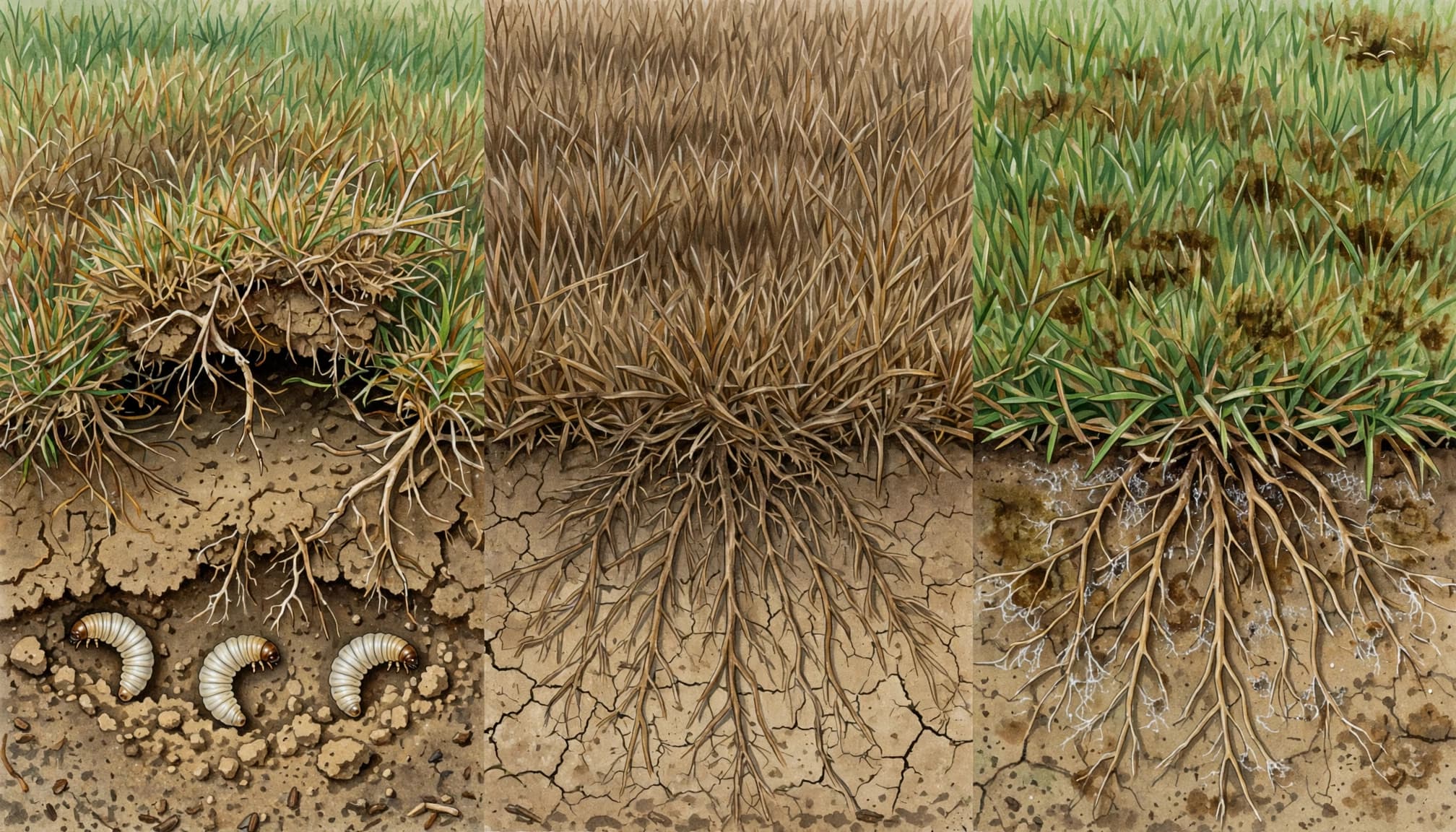
White grub damage often appears as irregular yellow or brown patches that loosen because the grass has lost roots. The clearest evidence is live, C-shaped larvae in the soil beneath actively declining turf, not grass color alone.
In Southwest Florida, heat, heavy rain, uneven irrigation, disease, and insects can all create similar symptoms. Compare affected grass with healthy turf nearby, then inspect the soil before changing your watering schedule or treating the lawn.
What white grub damage looks like
White grubs are beetle larvae that live in the soil and feed on grass roots. When enough roots are damaged, the turf can thin, discolor, and lose its grip on the ground.
Check how the grass sits on the soil
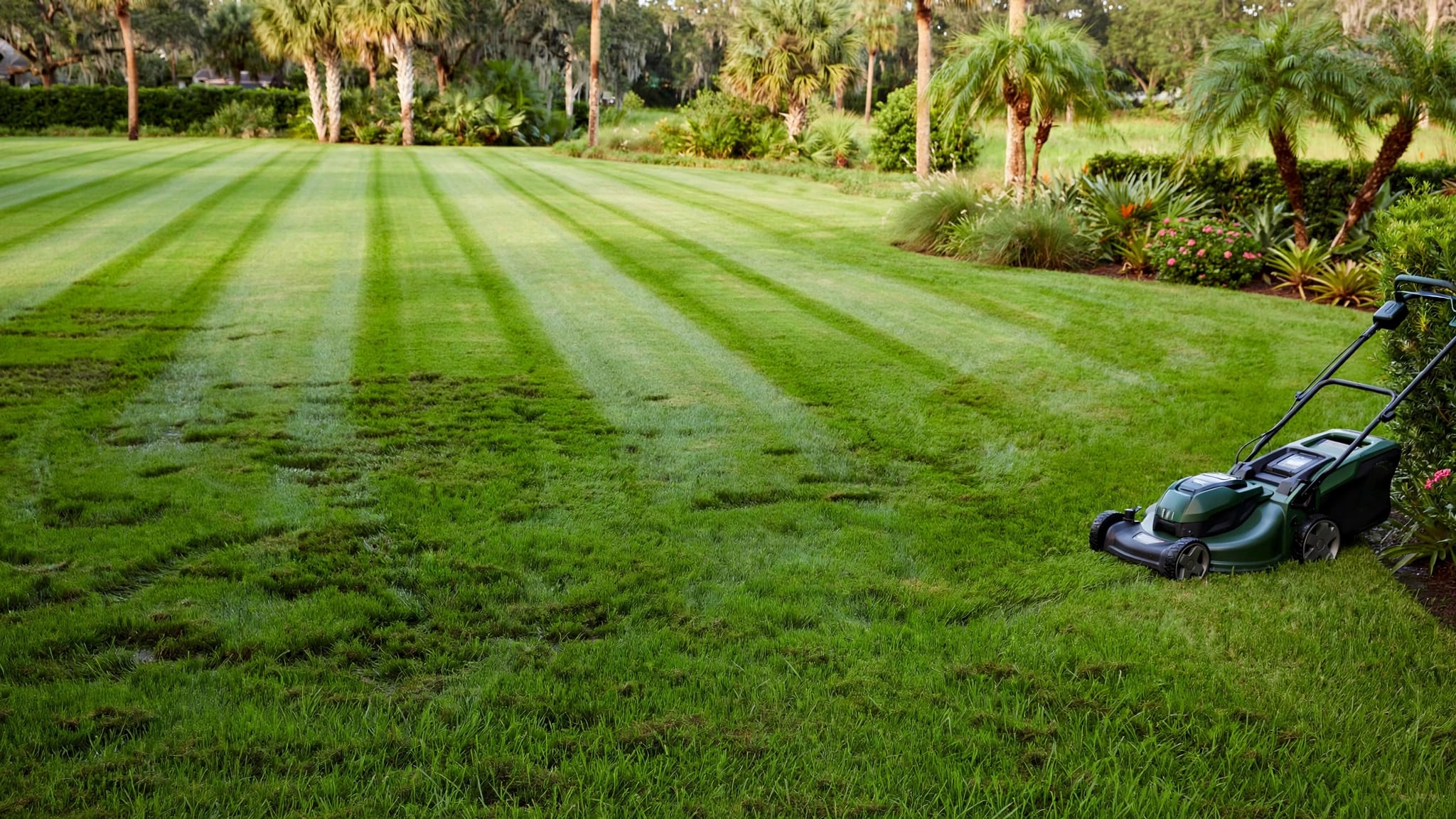
Look for irregular patches of pale, yellow-brown, or thinning grass. The affected area may feel soft or loose underfoot, and a gentle tug can lift the grass more easily than it lifts healthy turf.
Root injury can make a patch expand as feeding continues. However, color and loose sod are clues, not proof. Drought, disease, poor drainage, and other insects can also weaken turf.
Look below the blades
Part the grass and examine the soil and roots beneath the transition between damaged and healthy turf. White grubs are typically plump, pale larvae curled into a C shape. They have a darker head and small legs near the head.
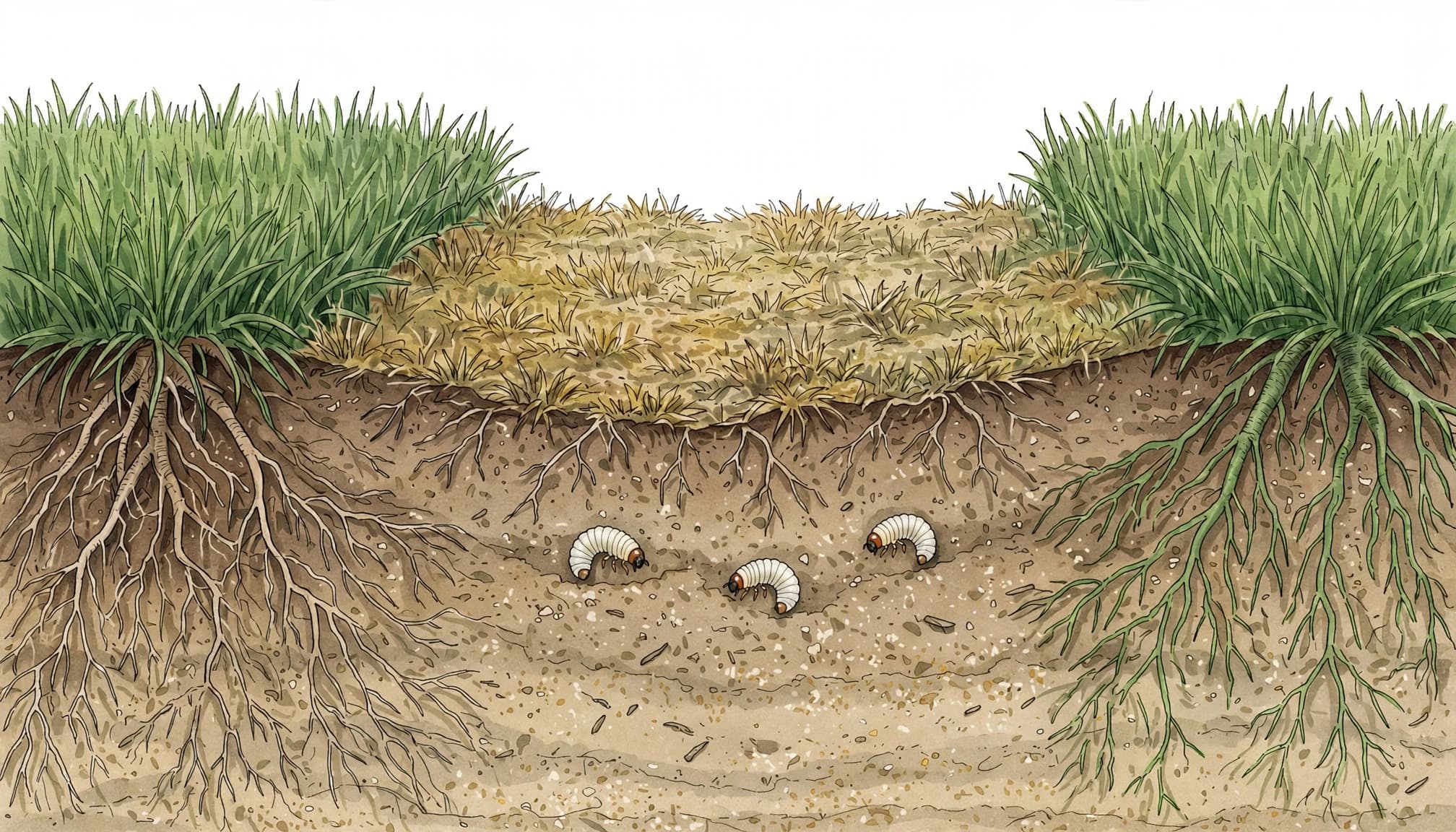
Finding one grub does not automatically mean it caused the damage. Record how many you find and whether the surrounding turf is actively thinning.
When grub damage may appear in Southwest Florida
Warm conditions can support beetle activity and grub development, so homeowners may notice lawn injury during the warm months and into early fall. The timing varies with the beetle species, weather, and the condition of the lawn. A fixed calendar date won't diagnose a grub problem.
Damage may become easier to see after a period of feeding, when weakened roots can no longer hold turf firmly. Heavy rain can also change how a lawn looks or feels, so compare the affected area with nearby grass rather than assuming a patch appeared because of grubs.
The Southwest Florida yard maintenance calendar can help put routine lawn observations in seasonal context. Keep notes on when patches appear and whether they grow or recover.
How to inspect turf and soil for grubs
A small, careful inspection gives you more useful evidence than a broad look across the lawn. Check several locations, especially where healthy grass meets a damaged patch.
Lift a small section of turf
Use a hand trowel to loosen a small square at the edge of the affected area. Lift it gently and inspect the roots and the upper few inches of soil. Look for living grubs, damaged roots, and turf that separates easily.
Repeat the inspection in another part of the patch. Then compare your findings with healthy grass nearby. A single sample can miss a localized population, while checks in several spots give a clearer picture of whether grubs are present across the damaged area.
Record what you find
Note the patch size, soil moisture, number of larvae, and condition of the roots. Take a photo of the area and another of any larvae beside a familiar object for scale. Recheck the same spots after a few days to see whether the damage is spreading.
Look for live grubs and continuing turf decline together. Old brown grass can remain after the cause has stopped, so the presence of dead blades alone is a poor reason to treat.
Tell grub injury from drought, disease, and other problems
Southwest Florida lawns can have more than one stress at once. Compare soil, grass blades, patch shape, and recent conditions before deciding what to do.
Drought often follows the watering pattern
Drought stress may affect broad areas or strips that line up with poor sprinkler coverage. Blades can look dull, folded, curled, or gray-green. Push a screwdriver or narrow trowel into both damaged and healthy areas. Dry, resistant soil several inches down supports a water-coverage problem.
If soil is moist but grass keeps declining, adding more water may not help. Frequent shallow watering can leave roots weak, while saturated soil can create other problems. Consider recent rain, irrigation changes, and whether water reaches the entire lawn.
Disease and insect injury have different clues
Disease may cause spots or lesions on individual blades, or patches that spread while the soil remains moist. In St. Augustine grass, gray leaf spot symptoms appear on the blades, which helps distinguish that problem from root feeding.
Other pests can also thin turf. Mole crickets, for example, can loosen soil and roots as they tunnel, so a soft lawn does not identify grubs by itself. Compare signs with guidance on mole cricket damage in Cape Coral lawns.
When grub findings may justify treatment
Treatment is worth considering when live grubs are present in the affected soil and the turf is actively thinning or lifting. The more clearly the insect findings match the location and spread of the injury, the stronger the case for a grub-specific response.
There is no single count that fits every lawn and every grub species. The number of larvae, grass type, season, and degree of damage all matter. A licensed lawn or pest professional can identify uncertain larvae and help determine whether the population warrants action.
Avoid treating old damage alone
Brown patches may remain after feeding has ended, and a pesticide won't bring dead grass back. If you find no live grubs, or if the symptoms match dry soil, leaf lesions, or a sprinkler pattern more closely, pause before applying a grub product.
When pesticide use is appropriate, follow the product label for the turf species, application rate, timing, watering directions, protective equipment, and re-entry period. Don't repeat an application sooner than the label permits. If you're not comfortable handling pesticides, use a licensed applicator.
Give surviving turf a chance to recover
After the cause is addressed, inspect the grass crowns and runners near the soil. Green, flexible runners or new shoots suggest some turf may recover. Keep mowing and irrigation appropriate for the lawn, and avoid adding stress while it regrows.
If the roots and crowns are dead, the area may need repair. Replacing grass without addressing a recurring irrigation, drainage, or grading problem can lead to the same decline again.
Consider nearby landscaping and hardscape work
Recent yard work can change soil, water flow, or sprinkler coverage. Construction traffic may compact soil, while grading or installation work can alter drainage. When a patch appears beside a new walkway, patio, or planting bed, note when the work occurred and inspect the irrigation nearby.
A concrete company working near the lawn may need access that puts equipment or materials close to turf. Paver cleaning can also send runoff toward grass. These details don't prove the cause, but they help narrow down what changed.
If you're considering a lawn replacement, remember that artificial turf will not correct standing water or poor grading. Some searches misspell it as "artifical turf," but the same site-preparation issues apply. Choose sod or synthetic grass only after the underlying yard conditions are understood.
Key takeaways
- Look for irregular, thinning turf that lifts easily, then inspect the soil for live, C-shaped grubs.
- Compare several damaged and healthy areas, including soil moisture, roots, and grass blades.
- Warm months into early fall are a useful time to watch closely in Southwest Florida, but activity varies.
- Consider treatment only when live grubs and active damage support the diagnosis.
Frequently asked questions
Can I identify grubs by looking at brown grass?
No. Brown grass has many possible causes. Confirm the diagnosis by examining the roots and soil beneath the damaged turf, then compare those findings with the condition of healthy grass nearby.
Should I treat the lawn if I find one grub?
One larva alone doesn't establish that grubs caused the damage or that treatment is needed. Inspect additional locations and consider whether the lawn is still declining. For an uncertain identification or widespread injury, ask a licensed professional.
Will watering fix grub damage?
Water can help living grass when drought stress is the problem, but it won't repair roots that have been eaten or restore dead turf. Check soil moisture before watering more, and look for live grubs if the grass remains loose or continues to thin.
Diagnose before you repair
A brown patch is a reason to inspect, not a diagnosis. Compare the grass, roots, and soil, then look for live grubs where the turf is actively declining.
That evidence helps you avoid unnecessary pesticide use and focus on the real cause, whether it is root-feeding insects, irrigation, disease, or a change in the yard.