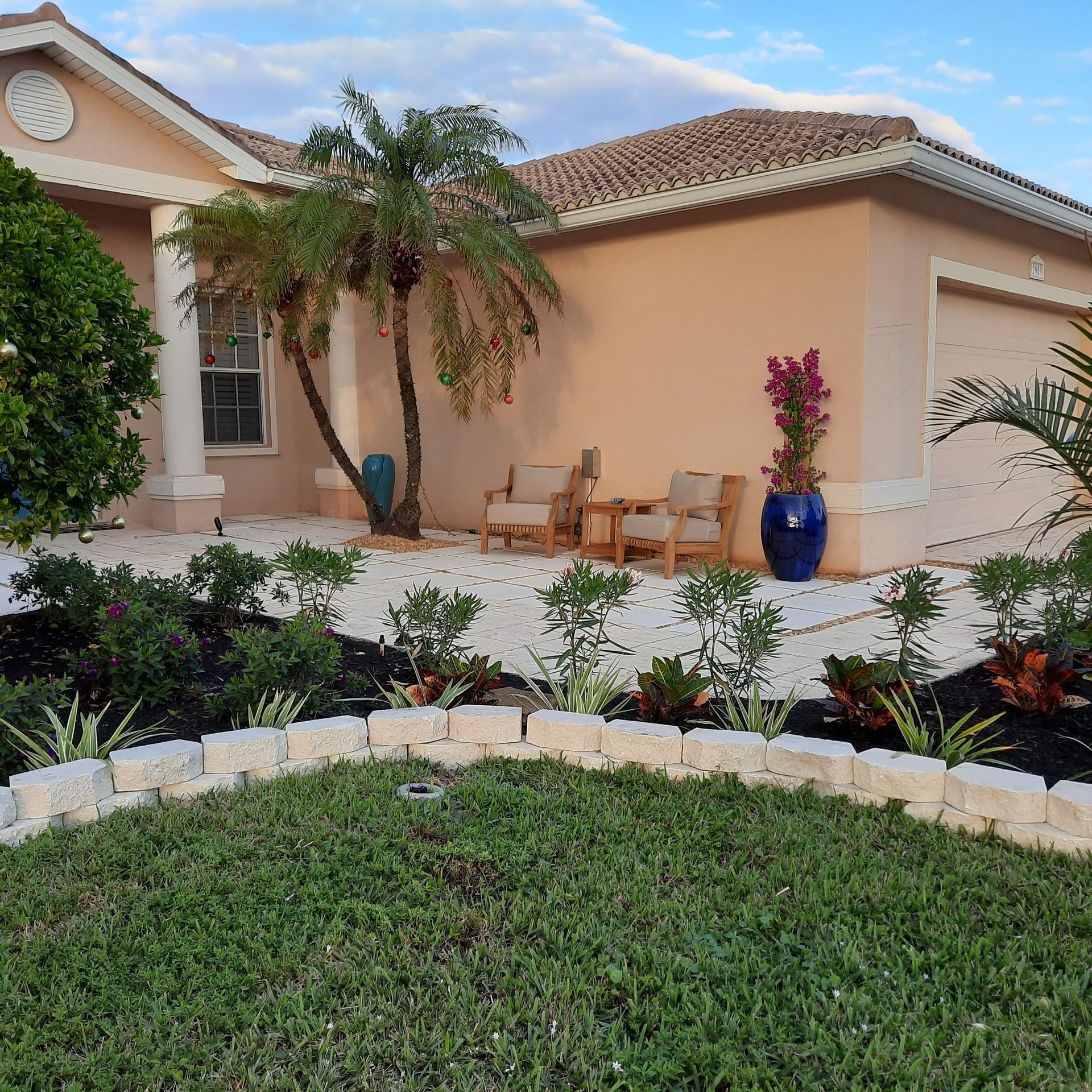



Bougainvillea Not Blooming? Cape Coral Checks and Fixes
A bougainvillea covered in green leaves but short on color deserves a closer look before you change its care. When your bougainvillea isn't blooming in Cape Coral, start with what changed , rather than buying fertilizer or cutting it back.
Sun exposure, irrigation, recent planting, and maintenance history all belong in that review. However, none proves the cause by itself.
Start with the plant's condition, then check whether its location and care still suit it.
Key Takeaways
- Bougainvillea is a sun-loving woody climber, so compare its location with its growing needs before changing care.
- Check irrigation coverage and drainage separately. A wet surface, dry root ball, and hidden leak require different responses.
- Record fertilizer applications, trimming, and recent weather so a plant assessment starts with useful information.
- Newly planted and cold-damaged plants need a different review than established plants that have stopped flowering.
- Fix a documented site or equipment problem first, then track the plant's response without expecting an exact bloom deadline.
Read the Plant Before Changing Its Care
The colorful, papery parts of bougainvillea are bracts. Its actual flowers are much smaller and sit within those bracts. For homeowners, the practical concern is usually the missing display of color.
Look at the whole plant before focusing on flowers alone.
Compare Today With Its Previous Blooming Pattern
First, establish whether your bougainvillea has ever flowered well in this location. A plant that previously produced strong color gives you a useful baseline.
Review photographs, planting records, and maintenance visits. Note when the display changed and whether that followed construction, trimming, irrigation adjustments, or unusual weather. Those details guide the inspection without proving that one event caused the change.
Also check whether the entire plant looks different or only one section. Uneven growth deserves closer inspection of the affected stems and their surroundings.
Separate Missing Color From Visible Damage
Healthy-looking foliage and damaged foliage call for different investigations. Look for browned leaves, broken branches, chewed edges, and declining stems.
Photograph the entire plant and close-ups of anything unusual. Then compare those pictures over time, using the same angle.
If branches are dying or damage is spreading, prioritize a plant-health assessment. Adding a flowering product before identifying the problem gives you another variable to track.
Check Whether the Location Fits Bougainvillea
Bougainvillea likes sun and heat, but placement also determines how easily you can support and maintain it. A good location needs more than an attractive backdrop.
Observe Sunlight Across the Day
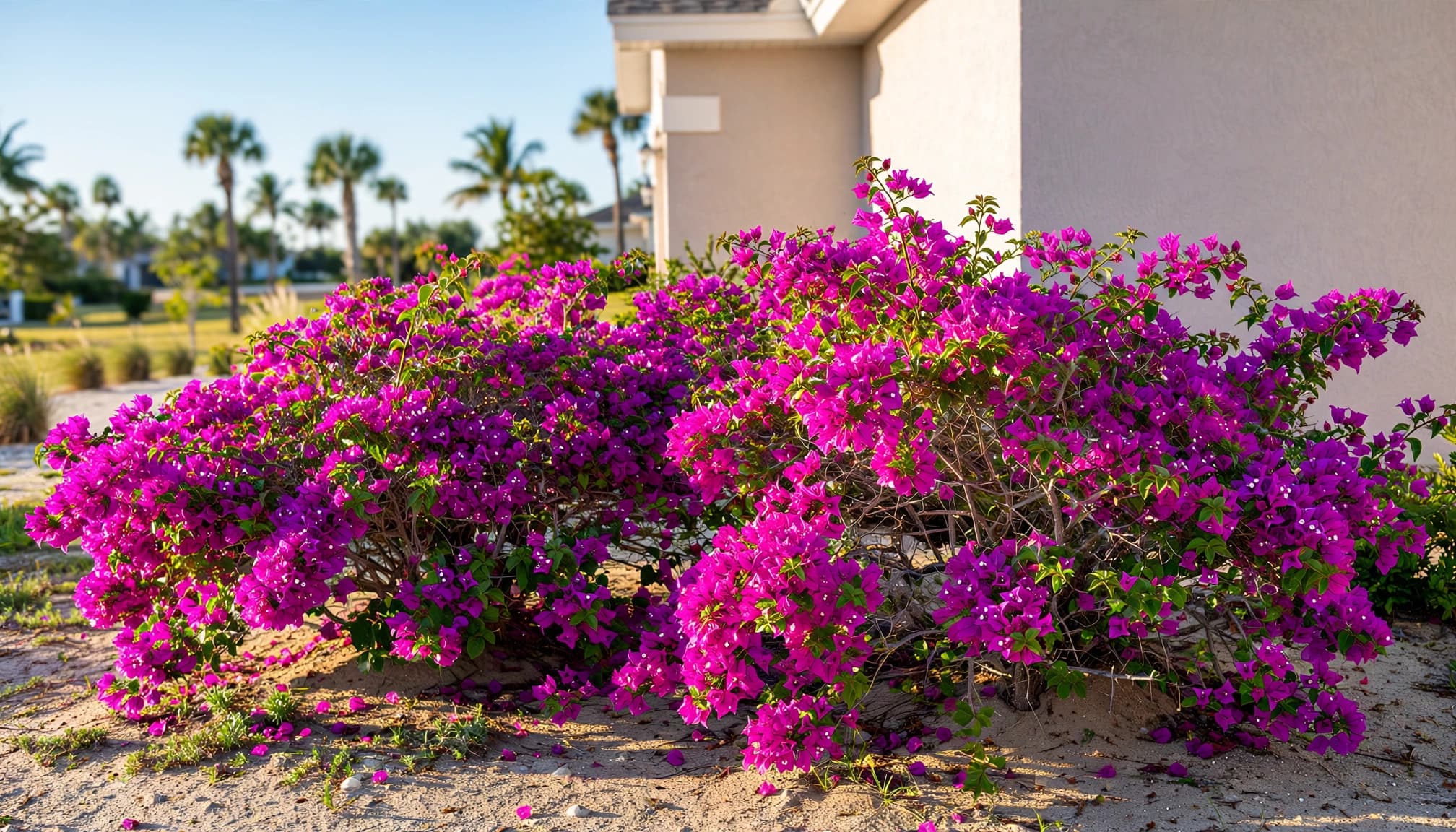
Check the bed in the morning, around midday, and later in the afternoon. Note whether the plant receives direct sun or mostly bright, indirect light.
Nearby palms, roof overhangs, fences, and growing trees can change exposure. A location that looked open at planting may look different several years later.
Compare those observations with bougainvillea's full-sun preference. If the location no longer fits, discuss placement options through Cape Coral landscape design. Don't assume moving a mature plant is a simple first fix.
Leave Room for Growth and Strong Support
Some bougainvilleas can reach 15 to 30 feet when unchecked, although cultivar and training affect their size. A small nursery plant can eventually overwhelm a narrow bed or lightweight trellis.
Check support connections, access for trimming, and clearance around windows and walkways. Wear gloves when working around thorny stems.
A suitable layout allows regular shaping without forcing the plant into a space that constantly needs correction. It also lets you inspect the plant without reaching through dense branches.
Inspect Irrigation and Drainage Separately
Cape Coral's wet and dry seasons create different demands on garden beds. Rainfall, irrigation, runoff, and soil conditions all deserve attention during a site review.
These are general landscape checks, not a diagnosis of why a particular bougainvillea has stopped blooming.
Watch a Complete Irrigation Cycle
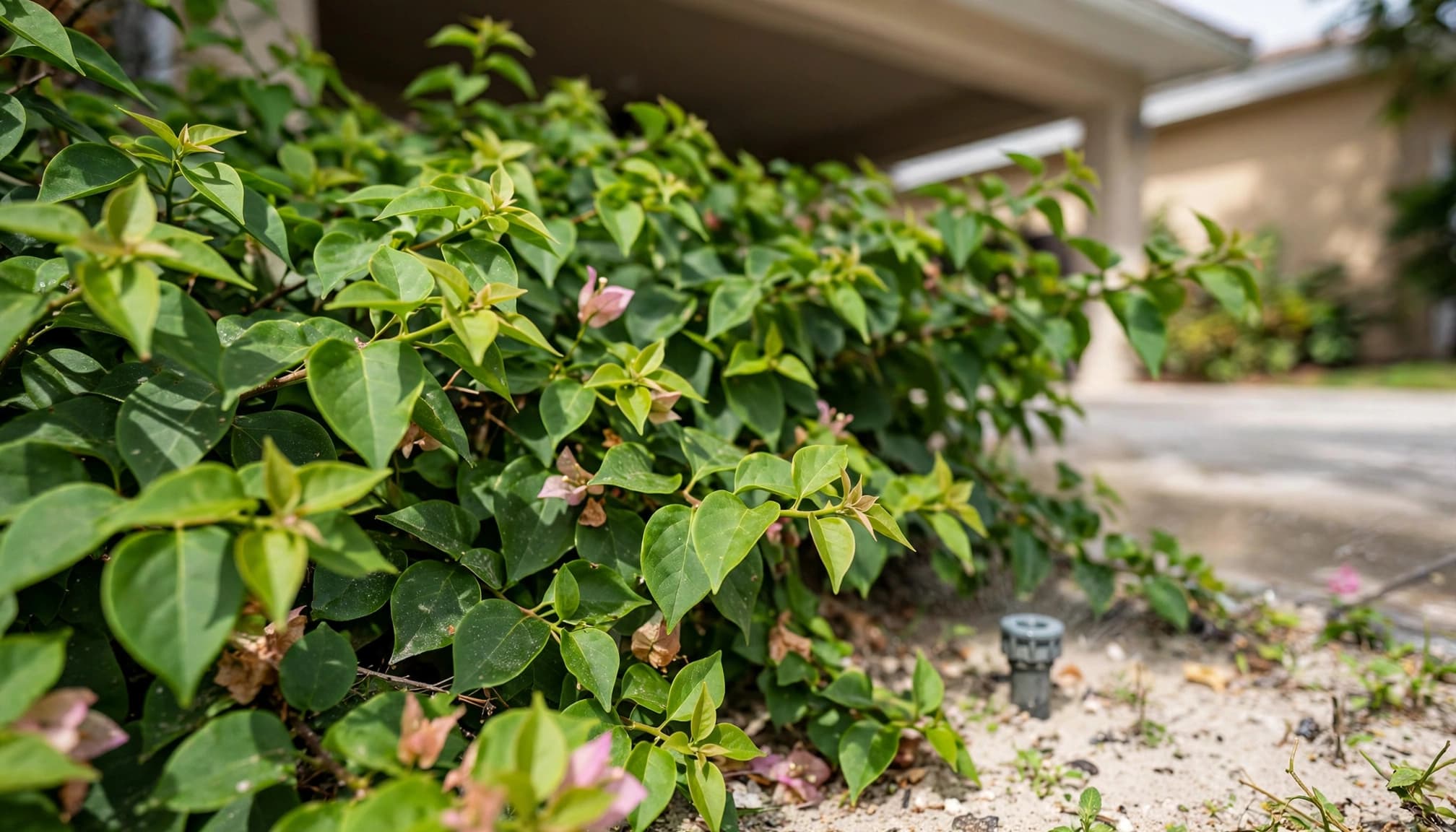
Run the relevant zone and watch where the water lands. Check for broken heads, misdirected spray, leaks, and water arriving from a neighboring lawn zone.
Then review the controller. Confirm that its program matches the intended zones and that rain-sensing equipment functions correctly.
A bougainvillea beside turf may receive water intended for grass. Document that overlap before making adjustments. The goal is to understand actual coverage, rather than guessing from the controller's settings alone.
Look Below the Surface and After Rain
Sandy ground can dry quickly, while low spots and compacted areas can retain water. New roots need moisture and oxygen, so surface appearance tells only part of the story.
Look for downspouts emptying into the bed, standing water after storms, or soil washed onto nearby paving. For a broader assessment, review Cape Coral soil testing guidance.
Don't add sand automatically to a compacted bed. General drainage corrections may involve grading, redirecting runoff, or repairing irrigation, depending on what the inspection finds.
Review Fertilizer and Pruning Before Doing More
When bougainvillea isn't blooming, fertilizer and pruning often become the first proposed fixes. Review what has already happened before adding another treatment.
Check fertilizer labels and application records. Include products used on nearby grass or mixed beds, because the bougainvillea may share that treatment area. Keep the product name, amount applied, and application date available for a plant-specific assessment.
A bag labeled "bloom booster" doesn't establish that the plant needs it. Without a documented need, another application makes the maintenance history harder to interpret.
Next, review trimming frequency and the amount removed. Photograph the plant before its next maintenance visit, including branch tips and its overall shape.
Bougainvillea needs regular shaping, especially on fences and trellises. However, routine size control and troubleshooting missing color are different tasks. Ask whoever maintains the yard to explain the purpose of the next cut before approving a major reduction.
If the plant constantly crowds a path or window, revisit its space and support. Repeated corrective work may indicate that the layout needs attention, regardless of the flowering question.
Give New Plants and Cold-Damaged Growth a Separate Review
A recently installed bougainvillea needs an establishment review before you compare it with a mature plant nearby. Confirm when it went in, how its root ball is being watered, and whether surrounding soil drains properly.
Cape Coral beds beside driveways, walls, and patios can dry differently from open beds. Therefore, check the planting itself instead of applying a yard-wide watering assumption. Avoid a fixed schedule that ignores rainfall, soil moisture, and the plant's condition.
Cold fronts also deserve a separate inspection. In Southwest Florida, tropical foliage can look badly damaged even when lower stems or roots remain alive.
If leaves browned after a cold event, photograph the damage and watch for new growth. Wait until recovery reveals living tissue before removing uncertain sections.
A sheltered wall or courtyard can reduce exposure, but shelter must still suit the plant's light needs. Moving a sun-loving plant beneath dense canopy creates a different site question rather than a complete solution.
Keep Nearby Hardscape From Complicating the Bed
Bougainvillea often frames a driveway, patio, or pool enclosure. That makes the surrounding construction part of the inspection.
Check whether recent paving changed the bed's grade, reduced planting space, or redirected runoff. If you're hiring a concrete company for upcoming work, discuss bed boundaries and irrigation access before the pour. Planning sleeves for irrigation lines can preserve access beneath new concrete.
Artificial turf can simplify an unsuitable narrow strip, but it doesn't correct drainage in the neighboring planting bed. Keep the surface layout and the plant's needs in the same plan.
Likewise, routine paver cleaning can remove loose soil and residue. It can't fix a bed that repeatedly washes across the walkway.
Leave access for collecting fallen bracts and safely trimming thorny branches. A planting that looks attractive against paving should also be practical to maintain without blocking the walkway or damaging nearby surfaces.
Build a Focused Fix Plan
Once you've inspected the plant and site, choose the next action based on what you found.
- Photograph the plant and record its recent care, planting date, and bloom history.
- Document light exposure, irrigation coverage, drainage, and visible damage.
- Repair a confirmed equipment or runoff problem before adding plant treatments.
- Get plant-specific guidance for unresolved health, fertilizer, or pruning questions.
- Track the response before making another unrelated change.
For equipment problems, Outdoor Life Pros provides landscape and irrigation services. Coordinating repairs with planting changes helps keep coverage and bed layout aligned.
Budget according to the actual repair. Outdoor Life Pros lists most straightforward sprinkler repairs in Cape Coral at $135 to $415 for 2026 in its irrigation repair cost guide. That range isn't a price for restoring bougainvillea blooms or a guaranteed quote.
Frequently Asked Questions
Should I Water Less to Make Bougainvillea Bloom?
Don't reduce watering solely because color is missing. First check the root ball, surrounding soil, rainfall, and irrigation coverage. Newly planted specimens and established plants require different assessments. Correct a documented watering problem rather than deliberately stressing the plant without knowing its condition.
Should I Move a Bougainvillea That Isn't Blooming?
Start by comparing its present location with its sun, space, and support needs. Relocation deserves consideration when the site no longer fits, but it isn't a confirmed solution to missing flowers. Assess a mature plant before digging, and compare relocation with improving its existing surroundings.
How Soon Will the Color Return?
There's no reliable deadline without knowing the plant's condition and the underlying issue. Record changes in foliage, stems, and bracts after the selected correction. If decline continues, seek plant-specific guidance rather than stacking additional treatments or repeatedly changing the care routine.
Give Bougainvillea a Better-Supported Next Step
Missing color is a reason to inspect the plant, its location, and its maintenance history. A documented problem gives you a sounder next step than an assumed fertilizer or watering fix.
Start with what changed, correct what you can verify, and assess the response. In Cape Coral, thoughtful placement and coordinated care help keep bougainvillea manageable while you work toward restoring its colorful display.