


Cape Coral Swale Easement Landscaping Rules for Homeowners
A beautiful front yard can create a drainage problem if its lowest area can't move rainwater. A Cape Coral swale easement may look like part of your lawn, yet its drainage function can limit what you plant, pave, fill, or fence.
The practical rule is simple: keep water moving and leave room for utility or City access. Before changing grass, beds, irrigation, or hardscape, confirm exactly what applies to your lot.
What a Cape Coral Swale Easement Is Meant to Do
A swale is a shallow, grass-lined channel that directs stormwater away from homes, driveways, streets, and low spots. During dry weather, it may look like an ordinary dip in the lawn. During a heavy summer storm, it becomes part of the neighborhood's drainage route.
The City of Cape Coral's Stormwater Division maintains public infrastructure to reduce flooding and move stormwater safely. Blocking a swale can leave water standing in your yard or redirect it toward a neighbor's property.
A swale and an easement are not always the same thing
A swale describes the shape and job of the ground. An easement describes a legal right for a government entity, utility, or other party to access or use a defined part of private property.
Some front-yard swales sit in a City-owned right-of-way. Others may overlap public drainage or utility easements. A recorded plat, survey, title documents, and deed restrictions help show which situation applies. Don't assume every low area is public, but don't assume it is yours to alter without review either.
Drainage function comes before curb appeal
Cape Coral Code Section 3.24 restricts construction, fill, vegetation changes, and objects in a City-owned right-of-way or swale unless the code allows the work. The rule also protects the established grade, slope, and contour.
That means a small visual upgrade can matter. A raised rock bed, thick mulch pile, filled-in depression, or solid border may interrupt a route that only carries water during storms.
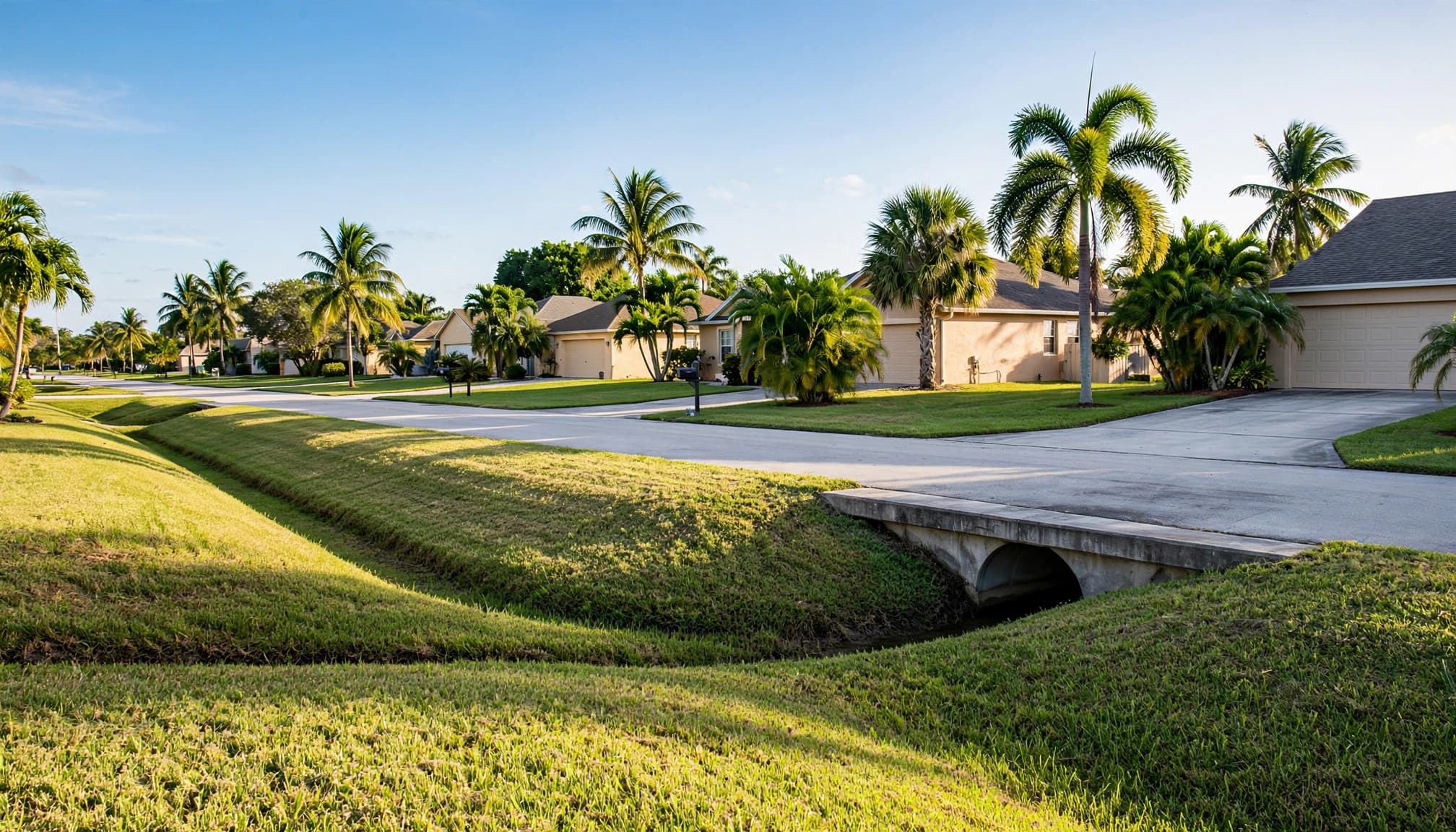
A swale should drain, mow easily, and remain accessible. If an improvement narrows, raises, or blocks its low point, it needs closer review.
Confirm Your Exact Easement Before Planning Landscaping
The same street can contain lots with different plats, utility layouts, drainage needs, and HOA rules. Start with documents instead of relying on where a neighbor placed their plants or driveway.
A survey is often the clearest starting point. It can show lot lines, recorded easements, existing driveways, structures, and some drainage features. If you can't locate it, check closing paperwork or order an updated survey before investing in a front-yard redesign.
Review the plat, deed restrictions, and HOA standards
Read your recorded plat and deed restrictions alongside your community's architectural rules. An HOA may regulate plant material, mulch colors, edging, turf, driveway finishes, or fence style even when a project does not need a City permit.
For a full property update, include the swale on the same sketch as beds, lighting, irrigation heads, hardscape, and drainage. The Cape Coral landscape installation process starts with that site review because drainage and easement limits can change the whole layout.
Watch for perimeter easements too
Front swales get attention, but side and rear easements can matter just as much. In R-1, RML, RE, and A zoning districts, Cape Coral's regulations preserve a six-foot perimeter easement. The code identifies certain improvements, including driveways, walkways, sidewalks, fences, and wells, as permitted items in that area.
However, the permitted-item list doesn't replace a parcel-specific review. Utility access, drainage conditions, setbacks, permits, and HOA restrictions may still affect your plan.
Driveways, Concrete, Sod, and Irrigation Need Careful Planning
In City-owned right-of-way areas, permits are required for culverts, sod, driveways, sprinkler systems, and permitted median landscaping. A permit requirement can depend on location and scope, so check current City requirements before scheduling work.
Treat a driveway replacement as a drainage project as well as a surface upgrade. Changing the driveway's height or widening its footprint can send water into the swale differently.
Driveway aprons and culverts must keep water moving
A driveway crossing normally depends on a properly functioning culvert beneath it. If the pipe is crushed, undersized, buried, or blocked by soil and roots, water may pond on both sides of the drive.
A qualified concrete company should review the existing slope, culvert condition, apron connection, and runoff direction before pouring. Paver driveways need the same care with base depth, edge restraints, and finished elevation. For related questions, see this Cape Coral patio and driveway permit guide.
Sod and sprinklers can affect the swale's grade
Fresh sod may seem like a simple cosmetic project. Yet adding soil to level the surface before sod goes down can flatten the channel that carries stormwater. Likewise, irrigation installation in a City-owned right-of-way requires attention to permit rules and utility locations.
Keep sprinkler heads from spraying pavement, driveway aprons, and the street. Leaks or overspray can wash soil into the swale, while misplaced heads make mowing and maintenance harder. Call 811 before digging for irrigation, edging, drainage pipe, or new planting.
Rules for Plants, Trees, Rocks, Mulch, and Edging
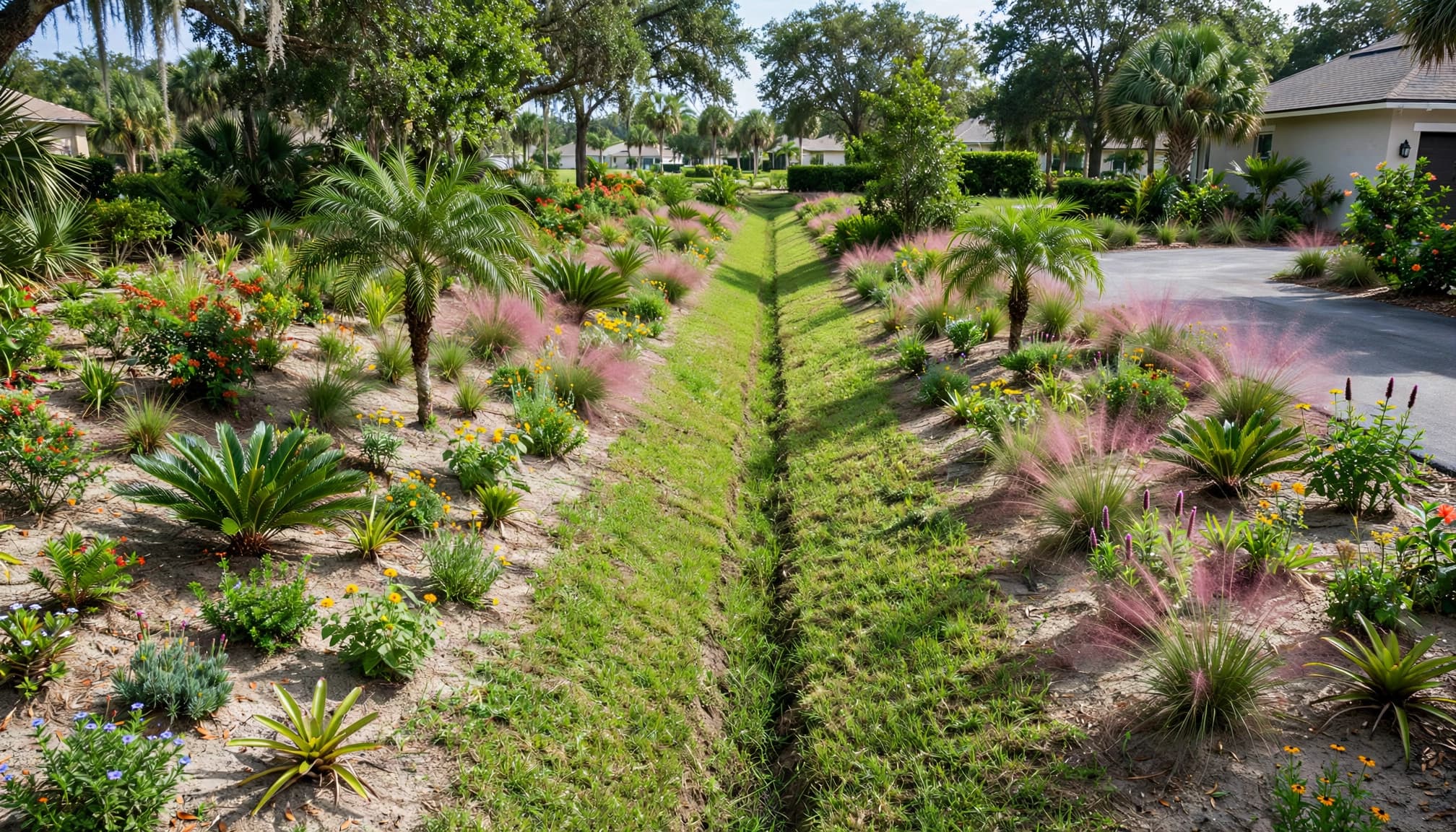
Landscaping near a swale works best when the center flow line stays open, stable, and easy to maintain. The side slopes may offer more flexibility, but plant placement still needs to respect roots, utilities, access, and the direction of runoff.
City rules say required canopy trees, accent trees, palms, and shrubs cannot be planted in a public drainage or utility easement without City approval. The City can deny a request when the planting conflicts with drainage or utility service.
Choose low-profile materials near the flow path
Grass or another stabilizing groundcover often suits the lowest portion of a swale. It holds soil while allowing water to pass. Retention and detention areas must be stabilized with sod or suitable groundcover, and City standards prohibit organic mulch in or adjoining those areas.
Avoid dumping pine bark, loose soil, or gravel into a swale. Heavy rain can carry those materials into culverts and drains. Decorative rock deserves equal caution because it can shift, trap debris, or make future grading difficult.
Trees, edging, and fences can create access problems
A tree might look well placed when it is young, then develop roots that disrupt the grade or interfere with pipes. Raised concrete curbing and rigid edging can act like a small dam when they cross the swale's natural low point.
Fences also need attention. A fence line across a drainage path can catch leaves and storm debris, especially where the grade is shallow. Keep fence design, gate placement, and any clearance below panels consistent with the approved drainage plan.
Artificial Turf, Pavers, and Decorative Upgrades
Artificial grass can be useful in a narrow side yard or a worn pet area. However, artificial turf does not solve a drainage issue by itself. Its base must be stable, permeable where appropriate, and graded so water has somewhere legal to go.
Installing turf over a swale, then raising it with compacted base, can change the channel's capacity. Confirm whether the work is outside the easement and whether it affects public drainage before selecting materials.
Pavers, stepping stones, lighting bases, planters, and raised beds deserve the same review. Hard surfaces can redirect runoff toward a home, driveway, sidewalk, or adjacent lot. Start with grades and drainage, then set final elevations for finish materials.
When a project combines sod, irrigation, pavers, and drainage corrections, use a drainage-first sequence. This Cape Coral backyard renovation planning guide explains why grading and underground work should come before hardscape and planting.
What Happens When the City Needs Easement Access
City approval does not turn a public drainage or utility easement into a permanent private garden. Crews may need access for drainage repairs, swale grading, utility service, or emergency work.
The City's Swale Grading Program restores roadside swales in public rights-of-way to improve stormwater flow and reduce localized flooding. It does not provide aesthetic upgrades, and it does not rebuild driveways without an approved permit.
If City-approved material in a public drainage or utility easement is removed or damaged during work, the owner may need to replace it within 30 days after the work is complete, following the Residential Landscape Code Guidelines. Some projects may also involve a hold-harmless agreement.
Keep copies of approvals, site plans, material lists, and before-and-after photos. They help clarify what was installed and where it sits if access is needed later.
Questions to Ask Before Hiring a Landscaping Contractor
A good quote should describe more than plants and labor. It should show how the contractor evaluated the grade, swale, easement, utility locations, restoration work, and permit expectations.
Ask where stormwater will go after the work
Ask the contractor to explain the finished flow path in plain language. Water should not leave the project and collect near your slab, under a driveway, or on a neighbor's property.
If grading or drainage is part of the proposal, request separate line items for soil work, sod restoration, irrigation repairs, edging removal, and disposal. That makes it easier to compare landscaping quotes in Southwest Florida fairly.
Put project order and cleanup in writing
Complete excavation, drainage correction, and concrete or paver work before final sod, plant beds, and finishing touches. Heavy equipment can compact soil, damage irrigation, and wash sand over finished surfaces.
Schedule paver cleaning after the dirty work ends. Cleaning and resealing before grading or driveway construction can waste money when soil, concrete residue, or washed-out joint sand returns to the surface.
FAQ
Can I plant flowers in a Cape Coral swale easement?
It depends on the easement type, the planting location, and current City requirements. Low groundcover may work in some areas, while shrubs, palms, or trees in a public drainage or utility easement may require approval. Check the plat, survey, HOA standards, and City guidance first.
Can I put rocks or mulch in my swale?
Avoid placing loose mulch, soil, or decorative rock in the active drainage path. These materials can wash into culverts or reduce water flow. A contractor can help place beds and borders on higher ground while leaving the channel open.
Can I widen my driveway over the swale?
A driveway change can affect the culvert, apron, right-of-way, and runoff pattern. The City may require a permit, and the final design must preserve drainage. Verify the current requirements before ordering concrete or pavers.
Final Thoughts
A Cape Coral swale easement is part of your property's outdoor space, but it may also be part of a larger drainage or utility system. Keeping the grade open, stable, and accessible protects your landscaping and helps your neighborhood handle heavy rain.
The best-looking improvements respect the path water needs to take . Check your recorded documents and current City requirements before building, then choose a plan that adds curb appeal without closing that path.