


Torpedo Grass Control Without Damaging St. Augustine
Torpedo grass control becomes difficult when the weed grows through healthy St. Augustinegrass. A treatment strong enough to kill the invader can also leave your lawn thin, brown, or permanently damaged.
The safest plan starts with correct identification, careful label review, and realistic expectations. In many mixed lawns, removing the affected turf and replacing it is safer than searching for a selective herbicide that does not exist.
Key Takeaways
- Torpedograss, or Panicum repens , spreads through underground rhizomes and can grow year-round in warm, wet soil.
- Its coarse shoots may resemble St. Augustinegrass, so inspect the underground runners before treating.
- UF/IFAS reports that no herbicide controls torpedograss in St. Augustinegrass without severe turf injury.
- Glyphosate and other nonselective herbicides can kill desirable St. Augustinegrass if they touch the lawn.
- Pre-emergent products do not solve torpedograss because it spreads mainly through rhizomes, not new seeds.
- Small isolated areas may need careful removal and resodding. Widespread infestations call for professional help.
How to Identify Torpedograss Before Treating
Torpedograss often survives mistaken treatment because homeowners confuse it with the desirable grass around it. Confirm both the weed and the turf before applying any product.
Look for the torpedo-shaped rhizome
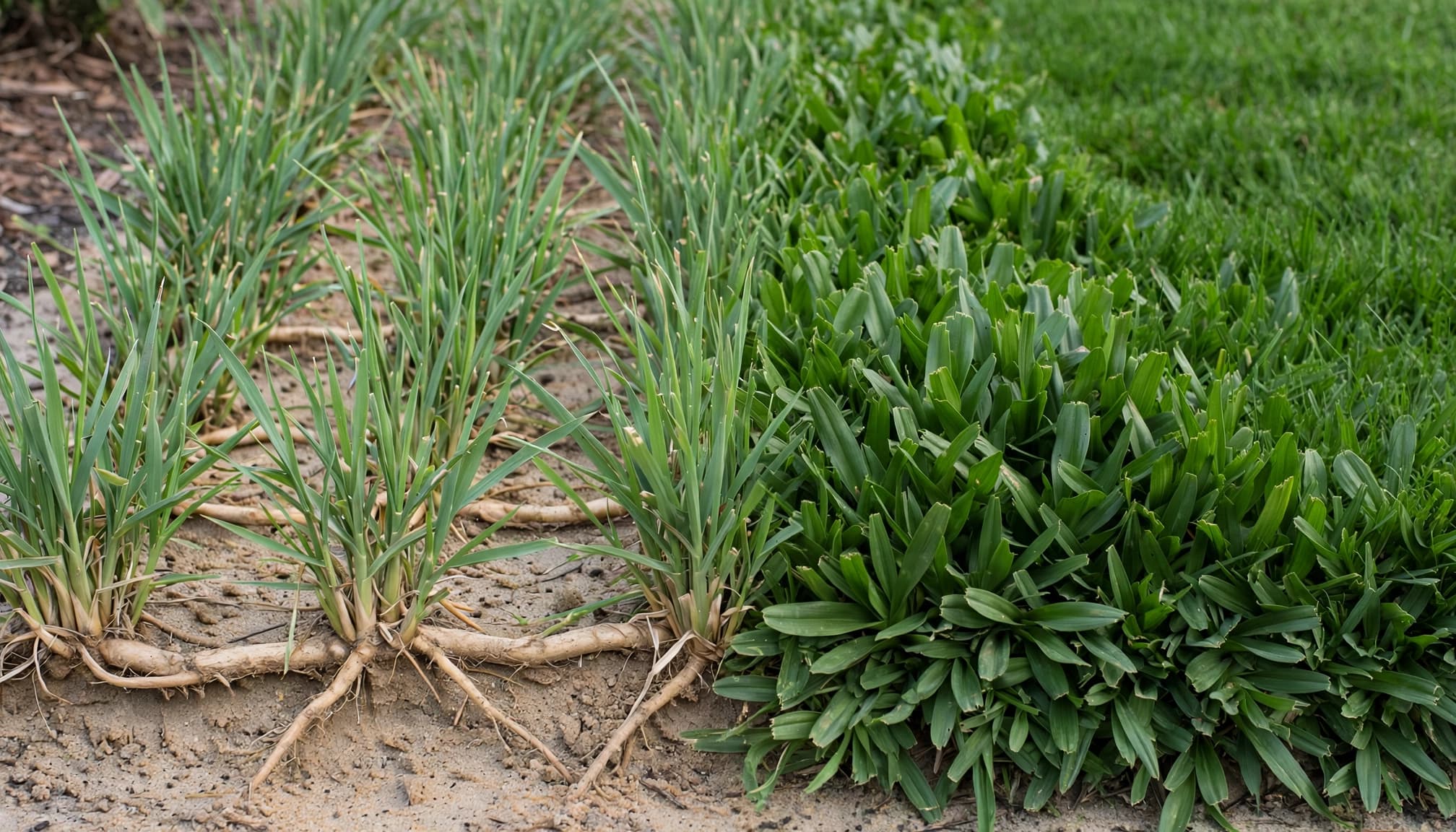
The strongest identifying feature is underground. Torpedograss produces pale, pointed rhizomes with sharp tips that resemble small torpedoes. These runners spread through moist soil and produce new shoots along their length.
Aboveground growth usually has coarse, stiff blades that stand more upright than surrounding St. Augustinegrass. The plant can remain green through much of the year in Southwest Florida, especially where irrigation or poor drainage keeps the soil moist.
Compare it with St. Augustinegrass
St. Augustinegrass has broad blades and aboveground runners called stolons. Those runners spread across the soil surface and root at the joints. Torpedograss spreads primarily through underground rhizomes, which is why a small visible patch can return after mowing or shallow pulling.
Digging up a sample can help with identification, but avoid chopping through the soil repeatedly. Small rhizome fragments may produce new shoots. If the plant still looks uncertain, place a fresh sample or clear photographs beside the turf and ask a county extension office or qualified lawn professional for confirmation.
For homeowners comparing replacement grass after damage, this guide to best sod for Cape Coral yards covers how St. Augustine, zoysia, and Bahia differ.
Why Common Weed-Control Tactics Often Fail
Torpedograss behaves differently from many annual lawn weeds. Treating it like crabgrass, dollarweed, or a young broadleaf weed can waste time and create more turf damage.
Rhizomes make the infestation persistent
The plant's underground rhizomes allow it to spread sideways and survive mowing. A fragment left in the soil can produce another plant. Soil movement, edging, trenching, and other yard work can carry those pieces into clean areas.
Mowing may keep the shoots less noticeable, but it does not remove the underground system. Frequent digging can also spread pieces instead of eliminating them. If you remove a patch, collect the contaminated roots and soil carefully rather than scattering them across the lawn or planting beds.
Pre-emergent is not the main answer
Pre-emergent herbicides create a surface barrier that prevents many weed seeds from developing. Torpedograss is mainly a vegetative, rhizome-forming weed, so pre-emergent treatment will not eradicate an established infestation.
Seasonal pre-emergent treatment can still help with other weeds in a St. Augustine lawn. However, timing depends on soil conditions, turf type, irrigation, and the product label. See this guide to Southwest Florida pre-emergent weed control timing for seasonal prevention of seed-grown weeds.
What Herbicides Mean for St. Augustinegrass
The central safety issue is simple: products that control torpedograss in one turf species may seriously injure St. Augustinegrass.
There is no verified selective cure for mixed turf
UF/IFAS guidance published January 10, 2024, states that no herbicide controls torpedograss in St. Augustinegrass without severely damaging the desirable turf. Other UF/IFAS materials also report no effective treatment for removing torpedograss from established St. Augustine lawns.
Quinclorac and trifloxysulfuron may have uses against torpedograss in bermudagrass or zoysiagrass. That information does not make them safe for St. Augustinegrass. Fluazifop, sethoxydim, imazapyr, and similar products also require exact label review. Do not rely on a recommendation written for another grass.
Read every label before considering treatment
Product labels and local rules vary. Before applying any herbicide, verify all of the following:
- The label lists your exact turf species and the target weed.
- The application rate and maximum annual amount match the product directions.
- Temperature, rain-free, and wind restrictions allow treatment.
- The label permits use on your lawn's age and condition.
- Re-entry instructions protect children, pets, and other people.
- Local Florida, county, and municipal regulations allow the application.
- The product will not drift into planting beds, canals, ponds, drains, or neighboring lawns.
MSMA deserves special caution. The EPA label for MSMA Arsonate Liquid says, "DO NOT apply to St. Augustinegrass." Never treat that product as a St. Augustine-safe solution.
Safer Options for Small Infestations
When torpedograss appears in one or two contained areas, the goal is usually to limit spread while protecting the surrounding lawn.
Suppress the patch without spreading it
Keep the mower at the correct height for St. Augustinegrass, and avoid scalping the lawn to expose the weed. Standard cultivars such as Floratam, BitterBlue, and Classic commonly perform well around 3.5 to 4 inches with a rotary mower, although the grass variety and mower type still matter.
Do not use aggressive tilling or repeated shallow digging. If you cut out a small section, remove the affected sod and as much contaminated soil and rhizome material as practical. Bag the debris. Clean mower decks, trimmers, shovels, and footwear before using them elsewhere.
A chemical treatment that kills the torpedograss may also kill the surrounding St. Augustine. If a homeowner chooses that route, the affected area may need to be sacrificed and replanted. The current product label must govern the treatment, and a licensed professional is the safer choice when the patch borders valuable turf or water.
Fix moisture conditions at the same time
Torpedograss favors moist to wet soil. Inspect sprinkler coverage, leaking valves, broken heads, downspouts, low areas, and runoff from hard surfaces. Correcting the water pattern will not remove established rhizomes, but it can make the area less favorable for continued spread.
A concrete company may need to correct a settled patio, walkway slope, or drainage edge that sends water toward the lawn. Routine paver cleaning can improve nearby hardscape appearance, but it will not solve a saturated soil problem.
When Removing Turf and Resodding Makes Sense
For mixed patches, renovation is often more dependable than repeated spraying. It also gives you a chance to correct drainage and soil problems before installing new grass.
Replace isolated damaged sections
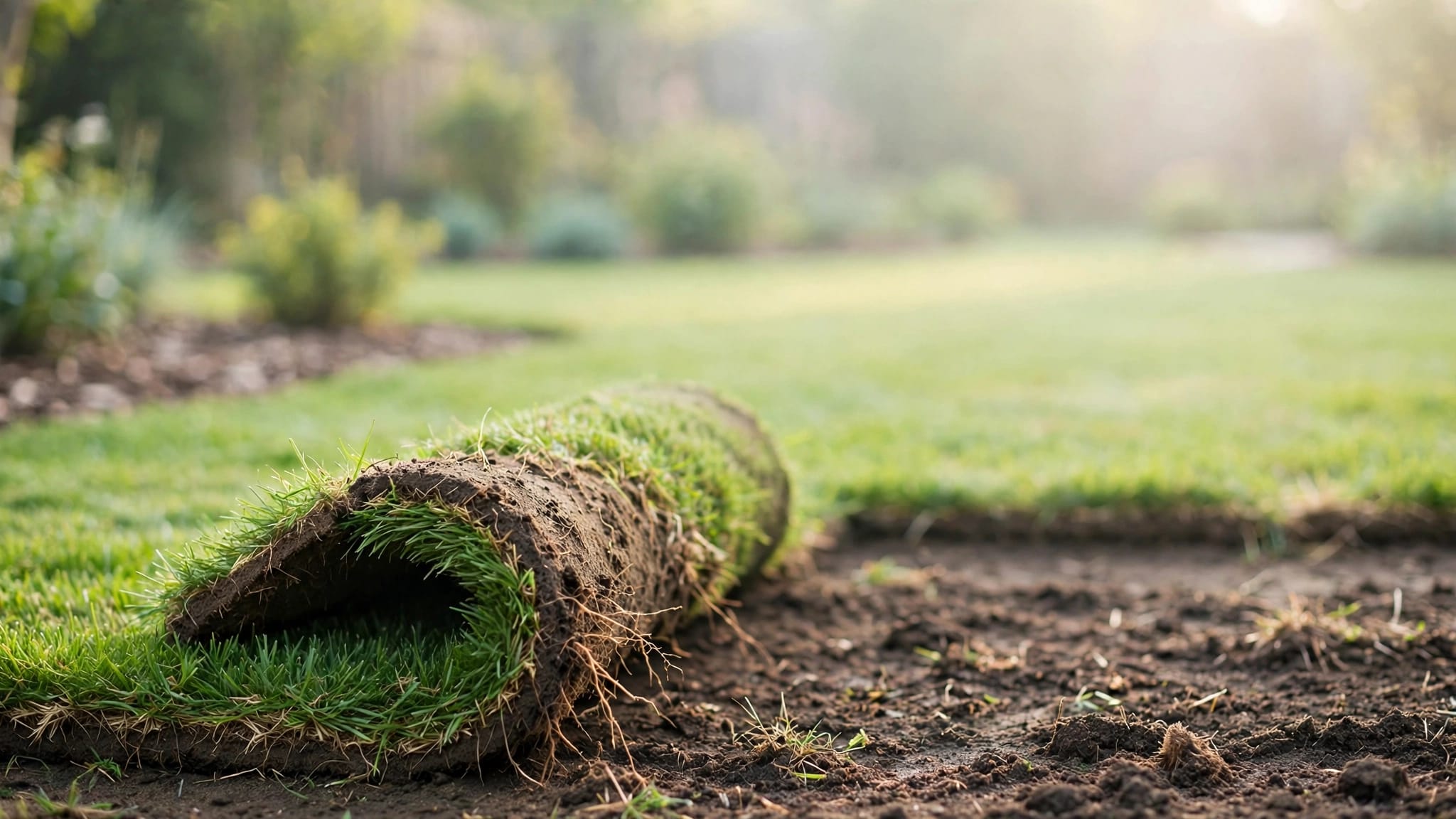
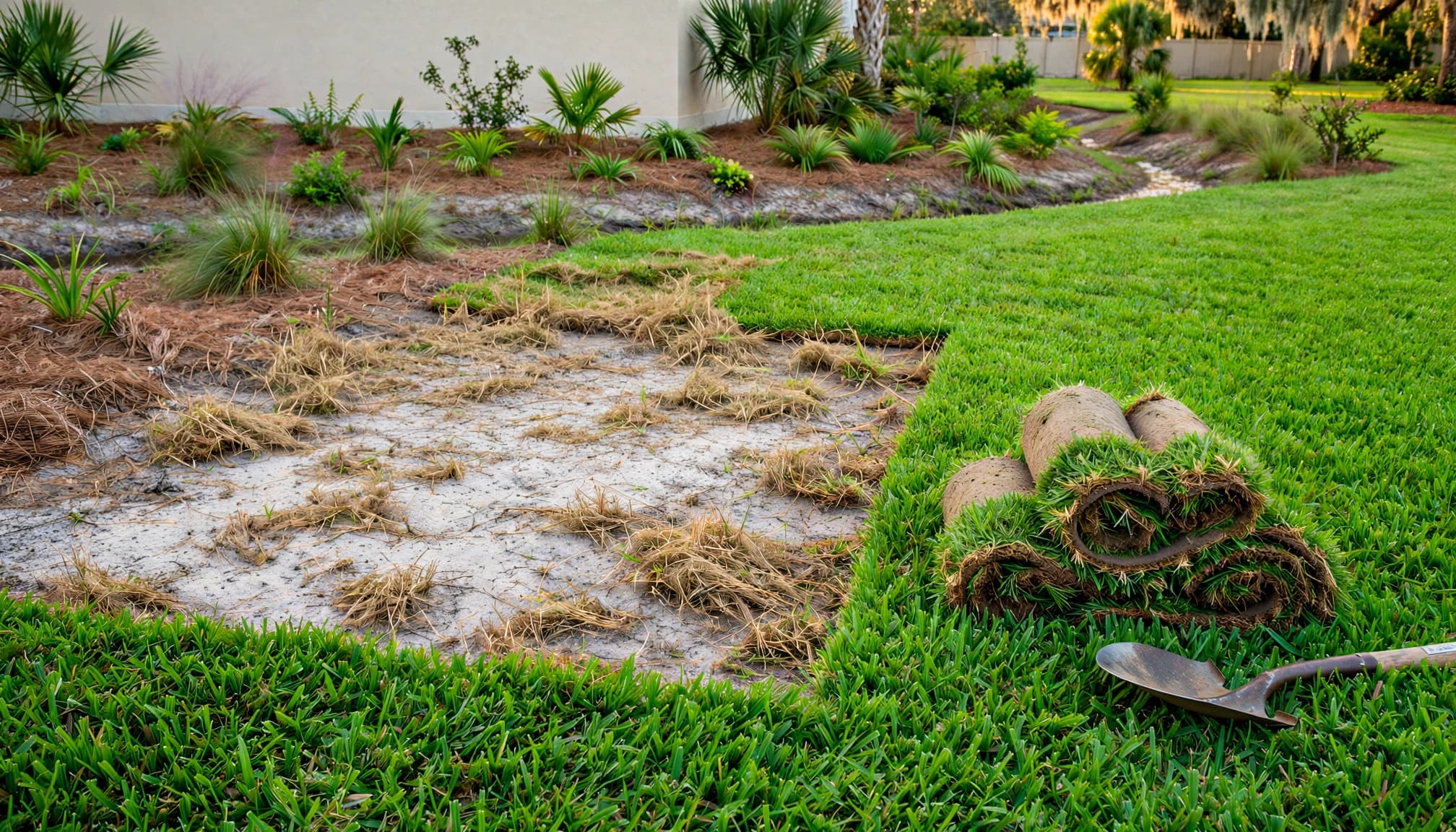
Mark the full affected area, including weak turf around the visible shoots. Cut and remove the sod in manageable sections. Avoid breaking the soil into small pieces, and collect loose rhizomes rather than leaving them beside the excavation.
Inspect the exposed area before replacing it. If water collects there, repair the grade or irrigation problem first. Otherwise, replacement St. Augustinegrass may develop the same weakness and allow torpedograss to return.
Always check the herbicide label for the required interval before installing new sod. Some products restrict how soon turf can be planted after treatment.
Plan renovation in the right order
Complete drainage correction, grading, irrigation repair, and major hardscape work before laying sod. This order prevents new grass from being damaged by trenching, concrete work, or equipment traffic.
The Cape Coral backyard renovation project order explains why soil preparation and hardscape work should come before final turf installation.
Some homeowners consider artificial grass for narrow side yards or areas where natural turf repeatedly fails. Online searches sometimes use the misspelled phrase "artifical turf," but synthetic grass still needs a stable base and proper drainage. It should not cover an unresolved wet spot or contaminated soil without a removal plan.
Prevent Torpedograss From Returning
Long-term prevention depends on limiting rhizome movement and keeping the lawn strong enough to compete for space.
Control water and turf stress
Adjust irrigation after rainfall instead of running fixed cycles through wet weather. Check whether one zone stays saturated while another dries out. In Southwest Florida's sandy soil, excess irrigation can also move products below the intended treatment area.
Mow with a sharp blade and remove no more than one-third of the leaf height at a time. Keep foot traffic and heavy equipment away from recovering sections. Follow a seasonal care plan such as this Southwest Florida lawn maintenance calendar, while adjusting it for weather, shade, rainfall, and turf condition.
Keep rhizomes out of clean areas
Avoid bringing contaminated soil, mulch, hay, or plant material onto the property. Clean equipment after working near infested canals, drainage areas, or lawns. If new sod contains unfamiliar grass, stop installation and inspect it before the material spreads across the yard.
Widespread torpedograss, recurring infestations, or uncertainty about the plant calls for professional help. A qualified service can map the affected areas, inspect irrigation and drainage, and recommend whether suppression, selective removal, or full renovation makes sense.
Torpedo Grass Control FAQ
Can I spray glyphosate on torpedograss in St. Augustinegrass?
Glyphosate is nonselective. It can kill torpedograss, St. Augustinegrass, ornamental plants, and other vegetation it contacts. Avoid spraying it across or near desirable turf unless the entire affected area is being intentionally removed and the product label permits the use.
Even then, drift and runoff can damage nearby plants and enter drainage systems. Professional application is appropriate when the patch is close to a canal, pond, pool, planting bed, or valuable lawn.
Will pre-emergent stop torpedograss?
No. Pre-emergent products target many weeds that grow from seeds. Torpedograss spreads mainly through underground rhizomes, so pre-emergent will not eliminate established plants.
A properly timed pre-emergent program may reduce other weeds and help maintain dense turf. It should be treated as general lawn prevention, not as torpedograss control.
Can I use a product labeled for bermudagrass or zoysia?
Not automatically. Bermudagrass and zoysiagrass have different herbicide tolerances from St. Augustinegrass. A product that controls torpedograss in those lawns may injure St. Augustine.
Check the current label for the exact turf species, target weed, rate, temperature restrictions, re-entry period, and local requirements. If St. Augustinegrass is not listed as an approved use site, do not apply the product.
When should I call a professional?
Call for help when torpedograss covers several areas, grows through the lawn, returns after removal, or sits near water or hardscape. Professional guidance also makes sense when you cannot distinguish torpedograss from St. Augustinegrass or another grass weed.
Conclusion
The safest torpedo grass control plan protects the St. Augustine lawn first. Confirm the weed, avoid nonselective herbicides contacting desirable turf, and remember that rhizomes make repeated mowing or shallow digging unreliable.
For isolated patches, careful removal and resodding may offer the cleanest result. Larger infestations need a professional assessment of turf, drainage, irrigation, treatment restrictions, and local regulations before anyone applies a product.