


Armyworm Damage in St. Augustine Grass: Treatment Steps
One night of feeding can turn a healthy St. Augustine lawn into a patchwork of brown, ragged areas. If you searched for "armyworms St. Augustine grass," the first job is to confirm caterpillars are causing the damage because drought, fungus, sod webworms, and chinch bugs need different fixes.
Early action can limit turf loss. The right process is simple: inspect the grass, identify the pest, apply only a properly labeled treatment, and correct the lawn conditions that support repeat problems. Start by learning what armyworm damage looks like.
Armyworm Damage in St. Augustine Grass: What to Look For
Armyworms are caterpillar larvae that feed on grass blades. In Florida lawns, the name often refers to caterpillars such as fall armyworms. They can move through turf quickly when conditions support active feeding.
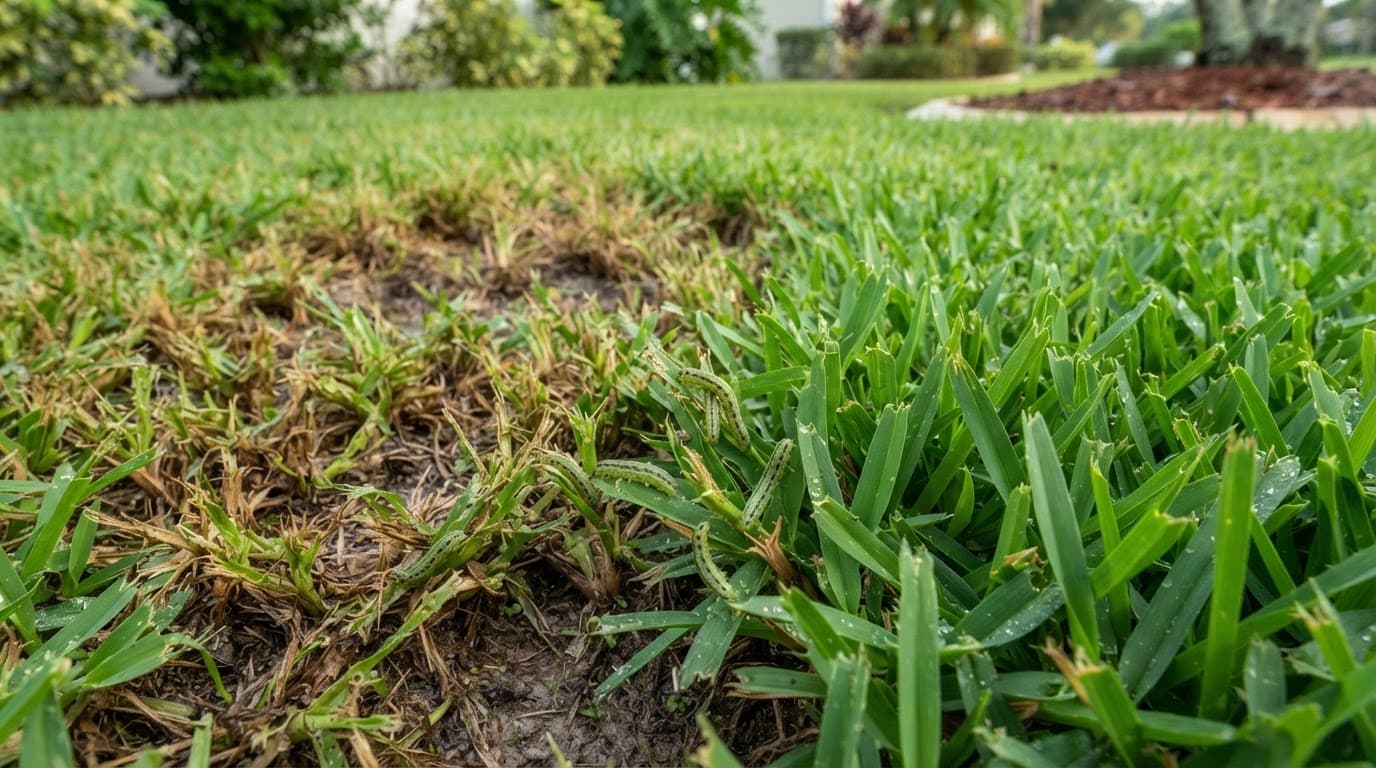
What "armyworms St. Augustine grass" damage looks like
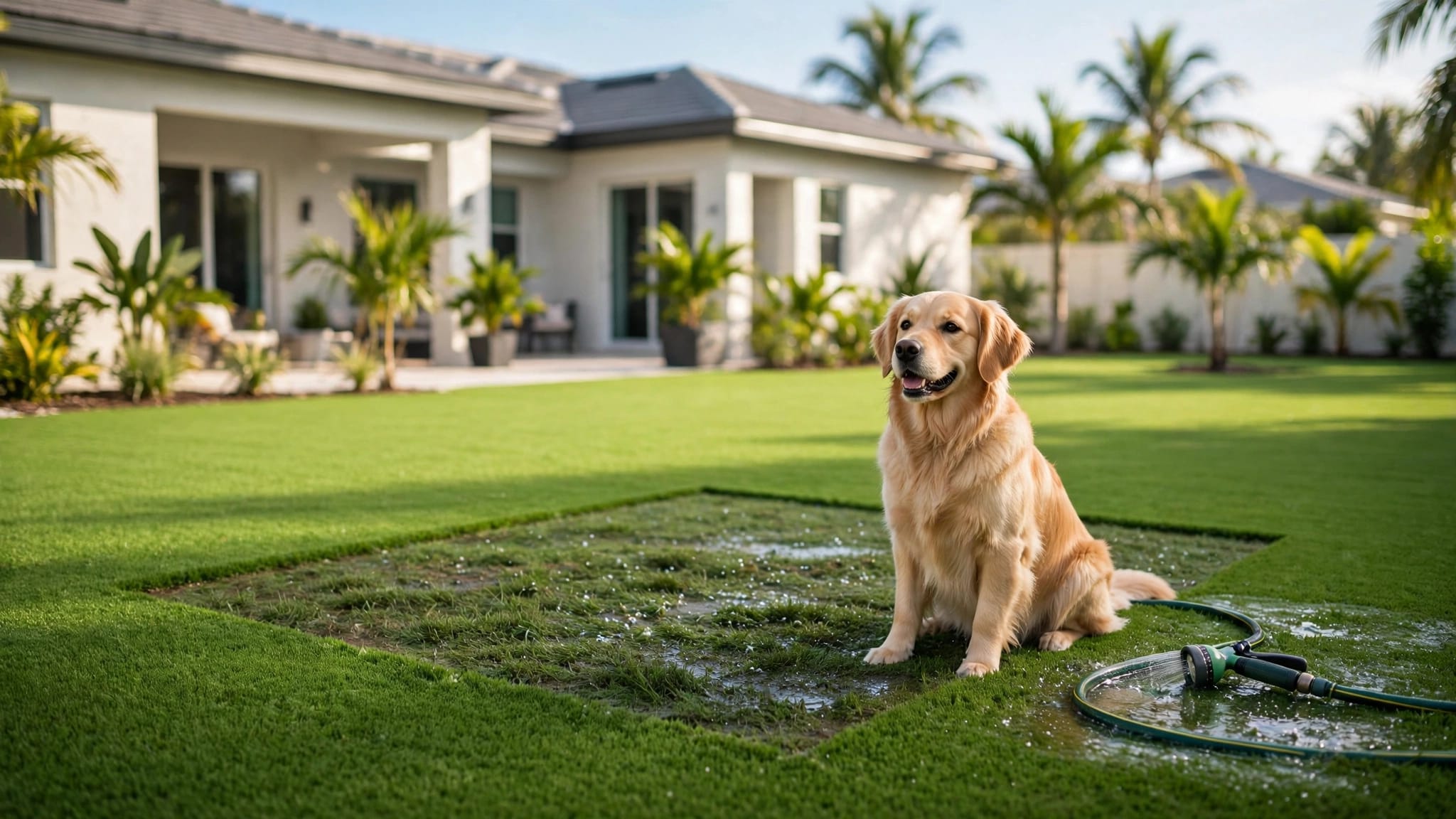
Armyworm injury often appears as irregular brown patches with grass blades chewed down to short stubble. Damage may begin near one section of the yard, then expand across adjoining turf. Unlike a gradual watering problem, an active infestation can change the lawn's appearance within several days.
Inspect the grass in the early morning or after sunset. Armyworms often hide near the soil surface, inside thatch, or low in the grass during the hottest part of the day. Look for soft-bodied caterpillars, dark droppings that resemble pepper, and freshly chewed blades.
The larvae may be green, tan, or brown, depending on the species and growth stage. Fall armyworms often have stripes and a light, inverted Y-shaped marking on the head. Identification becomes harder when larvae are very small, so take a close photograph or collect a sample for confirmation.
How armyworms differ from sod webworms and chinch bugs
Armyworms usually cause chewed foliage and fast-moving bare patches . Sod webworm larvae also chew grass, but they tend to leave small notches along leaf edges and hide in silk-lined areas within the thatch. You may also see small moths flying in a zigzag pattern around the lawn at dusk.
Chinch bugs are much smaller insects, not caterpillars. They pierce grass and feed on plant juices, often creating yellow or brown areas in hot, sunny parts of St. Augustinegrass. Check the base of the grass and thatch for tiny moving insects. See this guide to identifying chinch bug damage before choosing a treatment.
Confirm the Pest Before Treating
Brown grass doesn't automatically mean armyworms. Southwest Florida lawns can also develop damage from poor irrigation coverage, fungal disease, compacted soil, or drainage changes after outdoor construction.
A correct diagnosis prevents unnecessary pesticide use and helps you fix the underlying problem.
Use a short inspection routine
Follow these steps before applying anything:
- Walk the damaged edge and compare it with healthy grass. Armyworm feeding usually leaves ragged blades, while drought often creates more uniform thinning.
- Part the grass with your fingers or a small hand tool. Check the thatch and soil surface for caterpillars, droppings, shed skins, or fresh feeding.
- Inspect at dawn or dusk with a flashlight. Larvae may be easier to find when temperatures are lower and feeding resumes.
- Shake a small section of grass over a white sheet, tray, or piece of cardboard. Movement makes small insects and caterpillars easier to spot.
- Look at the whole yard. Check whether damage follows sprinkler zones, low areas, shaded sections, or the edges of a patio.
A mild soap flush can bring some turf insects to the surface, but household detergents may injure grass. Test a small area first, and use extension or professional guidance before treating a large section.
Check irrigation and disease symptoms
Dry soil beneath damaged turf points toward an irrigation problem, especially when the brown area follows a sprinkler gap. Wet, thinning grass with discolored blades may have a disease issue instead. Compare the symptoms with this guide to lawn fungus or drought stress.
If you find no insects after several inspections, pause before buying a pesticide. A local lawn professional can examine a sample that includes both healthy and damaged grass.
How to Treat Armyworms in St. Augustine Grass
Treatment works best when you catch small larvae before they strip large sections of turf. Use this practical sequence:
- Confirm active larvae first. Treating old brown patches won't remove damage that already happened. Make sure live caterpillars are present or that fresh feeding continues.
- Choose a product labeled for the pest and grass. The current label must list armyworms, the intended turf use, and St. Augustinegrass as an approved application site. Formulations and legal requirements can vary, so don't rely on an old recommendation or a product label meant for ornamental plants.
- Apply exactly as directed. Follow the label for mixing, application rate, timing, watering, protective equipment, and re-entry. Applying extra product won't make treatment safer or more effective.
- Protect people, pets, waterways, and nearby plants. Keep everyone away from the treated area for the label's stated period. Never pour leftover material into a storm drain, canal, pond, or irrigation ditch.
- Inspect again at the permitted interval. Look for live larvae and new feeding rather than expecting damaged blades to turn green. Don't repeat an application early unless the label allows it.
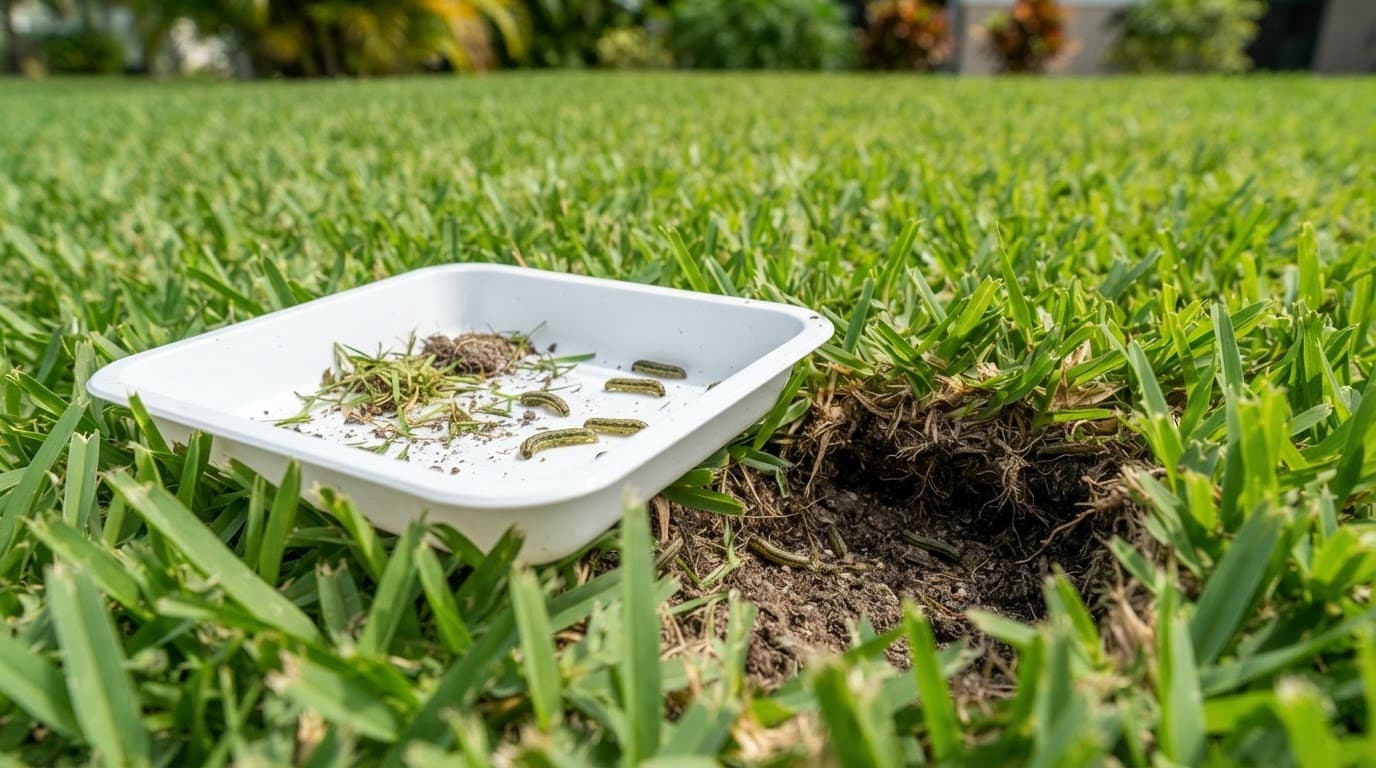
Treating a lawn before confirming live armyworms can leave the real problem untouched, especially when drought or disease caused the brown areas.
Homeowners who don't feel comfortable handling pesticides should hire a licensed applicator. Always follow current pesticide labels and applicable Florida and local regulations.
Help St. Augustine Grass Recover
Pest control stops new feeding, but the lawn still needs time and proper care. Recovery depends on whether the grass crowns and runners remain alive.
Water and mow without adding stress
Check the soil before turning on irrigation. St. Augustinegrass needs consistent moisture, but saturated soil can weaken roots and increase disease pressure. Water deeply enough to moisten the root zone, then adjust the schedule for rainfall, soil, sun exposure, and current local watering rules.
A controller can help manage changing conditions, but it can't correct poorly aimed sprinkler heads or broken zones. Compare your settings with these smart irrigation timers for Cape Coral, especially if different lawn areas have different watering needs.
Keep the mower at the upper end of the recommended height for your cultivar. Many St. Augustine lawns are maintained around 3.5 to 4.5 inches, but the correct range varies. Never remove more than one-third of the blade at a time, and keep the mower blade sharp.
Repair areas that don't recover
Green runners and firm crowns usually indicate that damaged sections may fill back in. Avoid rushing to replace every brown patch. Wait until the armyworms are gone and new growth shows whether the turf can recover.
Completely dead areas may need plugs or new sod. Remove the cause first, including pest activity, poor drainage, or missing irrigation coverage. For local grass choices, compare St. Augustine, Zoysia, and Bahia sod options.
Prevent Repeat Armyworm Damage
Prevention depends on regular observation and a lawn that receives balanced care. No treatment removes the chance of a future outbreak.
Monitor during active growth
Walk the yard once a week during warm growing periods, especially after noticing moths around outdoor lights or fresh feeding near the lawn edge. Check several locations instead of examining only the most damaged patch.
Keep records of where infestations appear. A recurring problem in one zone may point to thatch, excess moisture, poor airflow, or a maintenance pattern that differs from the rest of the yard.
Avoid heavy fertilizer applications unless a soil test or local lawn recommendation supports them. Excessive lush growth can create more tender foliage for pests and may increase other lawn problems. Mow on schedule, remove only the recommended blade length, and keep the turf from becoming excessively tall.
Coordinate lawn care with outdoor improvements
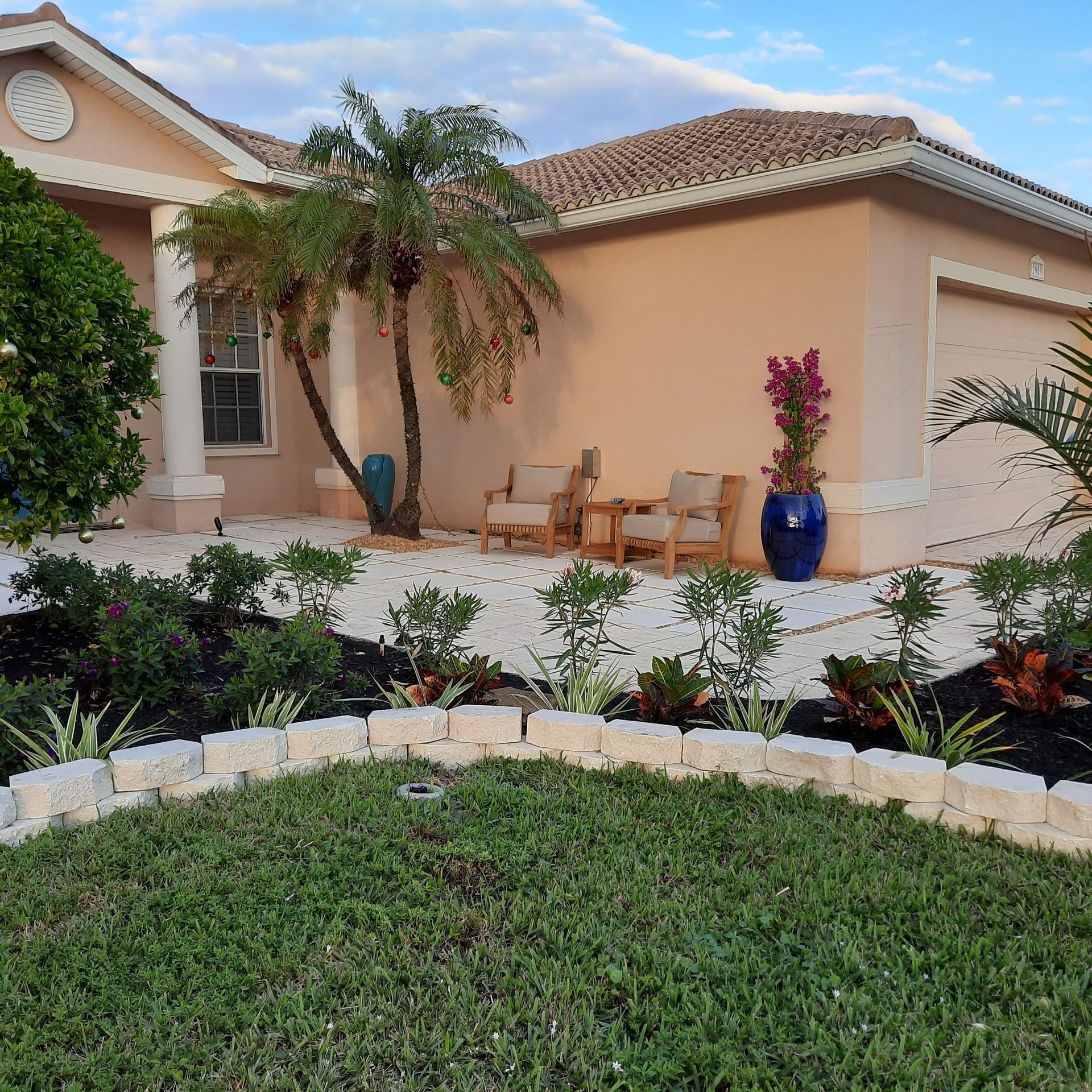
New landscaping can change water flow and sprinkler coverage. A patio, driveway, retaining edge, or planting bed may redirect runoff toward one area while leaving another dry. When a concrete company installs or repairs hardscape, review the finished grades and irrigation coverage before replacing damaged sod.
Paver cleaning won't treat armyworms, but maintenance can reveal drainage trouble around patios and walkways. If a narrow side yard repeatedly loses natural grass to shade, foot traffic, or difficult irrigation, artificial turf may be an option. It still needs a properly prepared base and drainage system, so it shouldn't cover an unresolved water problem.
A mixed yard can work well in Southwest Florida. St. Augustinegrass may fit open lawn areas, while mulch beds, pavers, or synthetic grass can reduce stress in locations that are difficult to maintain.
Conclusion
Armyworm damage in St. Augustine grass usually shows up as ragged, quickly expanding brown patches. Confirm live caterpillars before treating, then use only a product labeled for the pest and turf, following every direction for safety and timing.
After treatment, focus on irrigation, mowing height, drainage, and recovery signs such as living runners and new growth. A careful inspection is more useful than a heavier application, and it gives your lawn the best chance to return to a healthy green condition.