


St. Augustine thatch removal without scalping your lawn
St. Augustine thatch removal can help a struggling lawn, but aggressive treatment can damage the grass you're trying to save. In Southwest Florida, the safest plan starts with measuring the thatch layer, checking the lawn's health, and choosing a time when the grass is actively growing.
A thin layer usually needs better mowing, watering, and soil care rather than mechanical dethatching. Before you reach for a power machine, identify what's actually affecting your lawn and match the treatment to the problem.
What thatch looks like in St. Augustine grass
Thatch is a tightly woven layer of undecomposed stolons, roots, crowns, and other organic material between the green canopy and the soil. St. Augustinegrass produces above-ground runners, so some organic buildup is normal.
The problem begins when the layer becomes thick enough to block water, fertilizer, and air from reaching the root zone. UF/IFAS uses 1 inch as the point where vertical mowing or more serious thatch removal may be considered.
Measure before removing anything
Use a hand trowel to cut a small square of turf in several parts of the yard. Choose areas that look healthy, thin, brown, or unusually spongy. Lift the section carefully, then measure the compressed brown layer between the leaf canopy and the soil.
Measure the fibrous mat only. Don't count loose leaves sitting on top, green blades, or normal stolons lying across the soil surface. A thatch layer under 1 inch usually doesn't justify aggressive mechanical work.
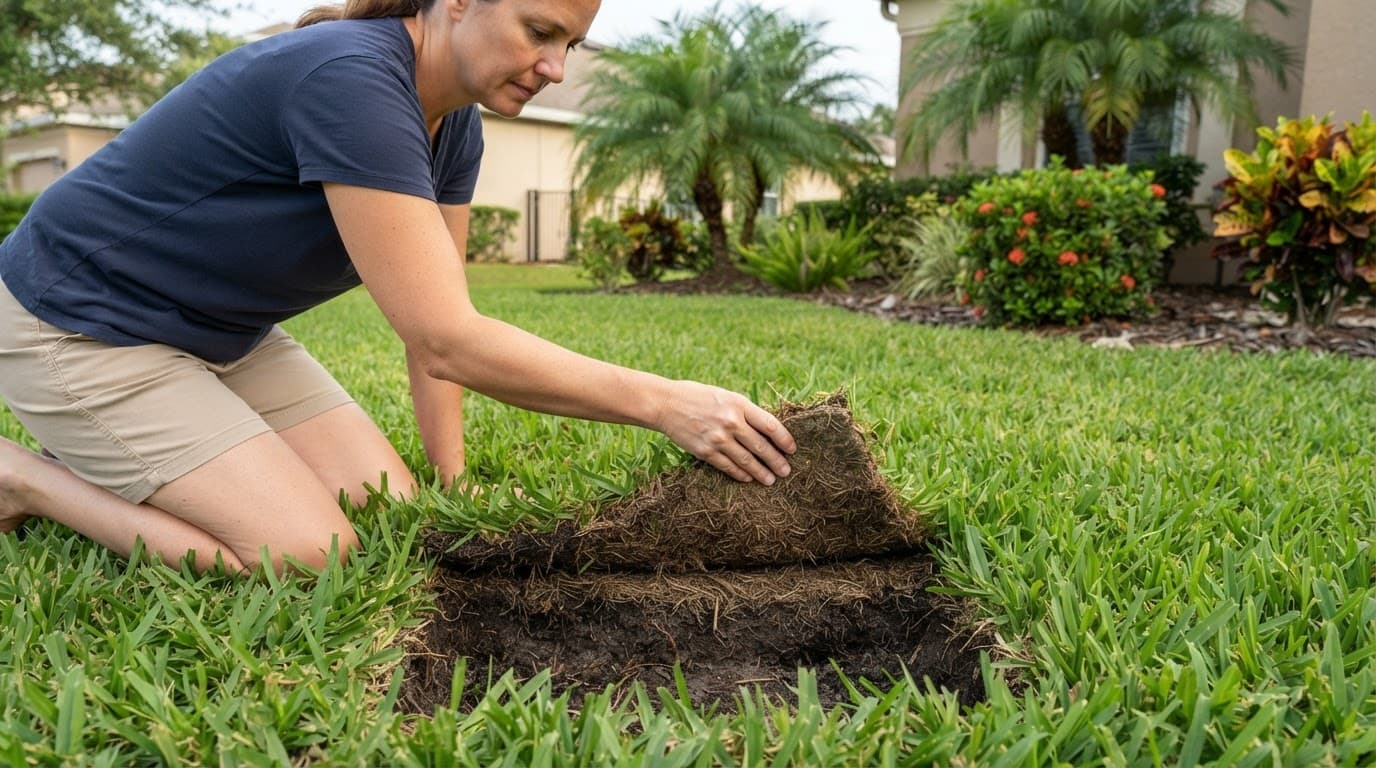
Roots growing above the soil and into the thatch are another warning sign. These roots dry out quickly and leave the turf more vulnerable during hot, dry weather.
Don't confuse thatch with other lawn problems
Dead leaves and loose grass blades often disappear after firm hand raking. Grass clippings don't cause thatch because they break down quickly in healthy soil.
Compacted soil creates a different set of symptoms. Water may puddle, a screwdriver may struggle to enter the ground, and roots may remain shallow even when the surface looks green. Core aeration addresses compaction, while dethatching removes organic buildup.
Chinch bugs can also hide in thatch and cause yellow or brown patches. To check a damaged edge, sink a coffee can with both ends removed about 3 inches into the turf. Fill it with water and watch for five minutes. Chinch bugs should float to the surface.
Fungal disease can create similar patches, especially after wet weather or excess fertilization. Expanding areas, damaged leaf sheaths, or repeated decline after irrigation changes deserve a closer diagnosis before you disturb the lawn.
If the grass needs replacement rather than treatment, compare the best sod for Cape Coral yards before ordering new material.
St. Augustine thatch removal: decide if your lawn is ready
A thick thatch layer doesn't automatically mean the lawn should be dethatched today. St. Augustinegrass needs enough energy to repair damaged stolons and roots after vertical mowing.
If the thatch is less than 1 inch thick, correcting water, mowing, and fertilizer practices is often safer than removing it mechanically.
Check the lawn's condition first
Healthy, actively spreading grass has the best chance of recovering. Look for firm green runners, new leaf growth, and consistent color across most of the yard. The soil shouldn't be bone-dry, saturated, or muddy.
Delay treatment when the lawn is under drought stress, recovering from installation, heavily damaged by insects, or showing an active disease pattern. Mechanical dethatching creates wounds in the turf. Stressed grass may take longer to close those openings.
Also check your irrigation coverage. A dry zone caused by a clogged nozzle won't improve after thatch removal. In some cases, the irrigation problem is the main reason the lawn looks thin.
Choose the active-growth season
UF/IFAS recommends vertical mowing while St. Augustinegrass is actively growing. In South Florida, that generally means a window between about March and August, although weather and lawn condition matter more than a calendar date.
Early summer can work well when the lawn has regular moisture and strong growth. Avoid treating dormant or slow-growing turf during cooler periods. A late-season job may leave bare areas exposed before the grass can recover.
Rainy-season weather doesn't automatically make every day suitable. Saturated soil can compact under equipment, while repeated heavy rain can worsen fungal problems. Choose a dry day when the soil is moist but firm and the lawn is growing steadily.
The safest way to remove excessive thatch
When the layer measures more than 1 inch and the grass is healthy, use the least aggressive method that can solve the problem. St. Augustinegrass can be injured by aggressive mechanical dethatching because its stolons sit close to the surface.
- Start by mowing at the lawn's normal height. Never lower the mower to shave away the thatch, and remove no more than one-third of the leaf blade.
- Use a stiff hand rake for light buildup or small problem areas. Pull gently enough to remove loose material without tearing healthy runners from the soil.
- Leave heavy buildup to a professional with a properly adjusted vertical mower. UF/IFAS lists about 3-inch blade spacing for St. Augustinegrass, but the depth still needs adjustment for the turf and soil.
- Make a controlled pass instead of repeatedly grinding over the same area. The blades should reach the thatch layer without cutting deeply into the crown, stolons, or soil.
- Rake, sweep, or vacuum the loosened material as soon as the work ends. Leaving a thick layer of dry debris on the lawn can block light and hold excess moisture against the leaves.
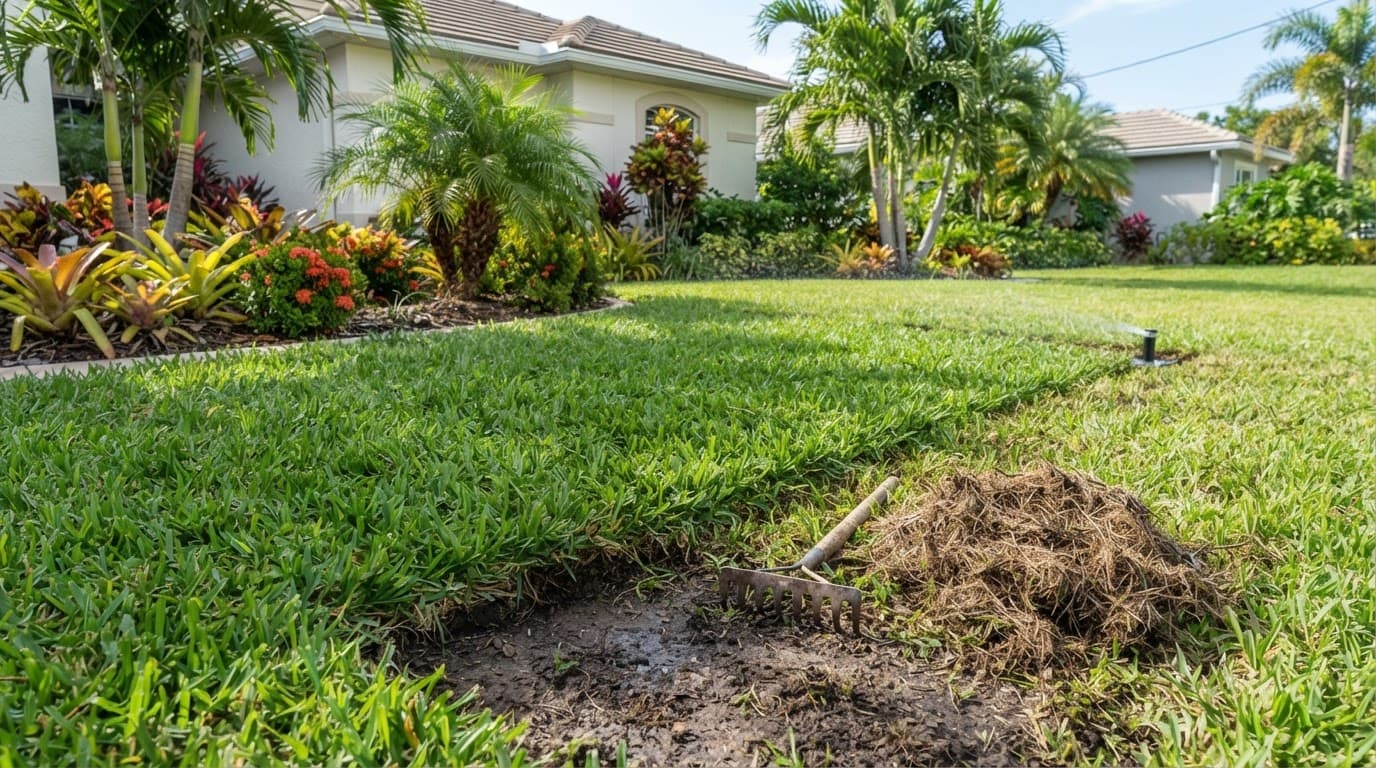
A rental machine set too low can scalp the lawn in minutes. It may also tear runners into short pieces and expose roots to Southwest Florida's heat. If you can't see the thatch clearly or don't know how to adjust the equipment, hand rake a small test area or stop and get an assessment.
Care for the lawn after thatch removal
Dethatching is a recovery event, not routine weekly maintenance. The lawn needs careful moisture and moderate mowing while new growth fills the disturbed areas.
Water the exposed root zone
UF/IFAS guidance recommends about 3/4 inch of water immediately after vertical mowing to help prevent exposed roots from drying. Apply that amount only if rainfall hasn't already supplied it. A rain gauge or shallow container can help you check the output.
After the first irrigation, return to an as-needed schedule. Established St. Augustinegrass needs water when the leaves fold, wilt, turn blue-gray, or leave footprints that remain visible after walking across the lawn.
Water deeply enough to wet the root zone, then allow the surface to dry before watering again. Short daily cycles can keep the canopy wet and encourage shallow roots. Inspect each irrigation zone because a broken head or poor spray pattern can leave part of the lawn dry.
For more help with irrigation planning, review these guidelines for smart irrigation timers for Cape Coral homes. If overspray keeps reaching a patio, driveway, or walkway, paver cleaning may remove stains, but correcting the spray pattern and grading addresses the cause.
Keep mowing high and delay fertilizer
Standard St. Augustine cultivars such as Floratam, BitterBlue, and Classic generally perform best at 3.5 to 4 inches . Dwarf cultivars need a shorter setting, often around 2 to 2.5 inches. Check the variety before adjusting the mower.
Wait about one week after vertical mowing before fertilizing. UF/IFAS guidance uses a maximum of 1 pound of actual nitrogen per 1,000 square feet per application . That is the amount of nitrogen, not the total weight of the fertilizer bag.
Choose a slow-release nitrogen product and water it in immediately. Heavy applications of quick-release nitrogen can push soft growth and increase chinch-bug pressure. A recovering lawn needs steady nutrition, not a large dose.
Clean up and monitor the recovery
Remove loosened thatch from the lawn, beds, drains, and hard surfaces. Dry material left against sidewalks can wash into storm drains, while piles near the turf can hold moisture and attract pests.
Watch the lawn for two to four weeks. New runners, fresh green blades, and less sponginess indicate recovery. Avoid unnecessary herbicides or insecticides while the grass is stressed. Treat pests or disease only after confirming the problem and following the product label.
Prevent another heavy thatch layer
Good lawn care reduces the conditions that cause thatch to accumulate. In Southwest Florida landscaping, the most common contributors are excess nitrogen, frequent watering, poor soil drainage, and compacted soil.
Adjust watering, mowing, and fertilizer
Overwatering keeps the soil and thatch layer wet, which slows decomposition. It can also promote shallow roots and fungal problems. Water when the lawn shows stress, then apply enough to wet the root zone instead of running short cycles every day.
Keep standard St. Augustine at its recommended height. Cutting too low removes too much leaf tissue, weakens the runners, and leaves the crowns exposed. Sharpen mower blades so the grass receives a clean cut rather than a torn edge.
Use fertilizer according to a soil test, turf variety, and local application rules. Minimal nitrogen is usually better than repeated high-nitrogen treatments. Leave normal clippings on the lawn because they decompose readily and don't create the dense organic mat associated with thatch.
Aerate compacted soil instead of dethatching it
If water runs off, puddles, or takes a long time to soak in, the lawn may need core aeration. Aeration removes small soil plugs and opens channels for water, air, and roots. It doesn't remove a thick thatch layer, so test the soil and thatch separately.
A light topdressing can also support decomposition. UF/IFAS guidance describes applying roughly 1/4 inch of soil similar to the existing soil, or using sand where appropriate. Avoid burying the canopy or applying a heavy layer. Excess topdressing can increase disease risk, including large patch problems.
When professional help makes sense
Professional help is warranted when the thatch exceeds 1 inch across much of the yard, the grass lifts easily, roots sit above the soil, or mechanical treatment could expose large bare areas. A qualified crew can measure several locations, identify the turf variety, adjust the equipment, and avoid cutting into the crowns.
Call for an inspection when brown patches continue expanding, the coffee-can test suggests chinch bugs, irrigation coverage is uneven, or the lawn shows signs of fungal disease. The correct solution might be pest treatment, irrigation repair, core aeration, drainage work, or selective sod replacement instead of dethatching.
A professional can also help when the lawn is part of a larger property project. If runoff is washing soil toward a patio, coordinate with a concrete company before replacing turf. The grade and drainage should work before new sod goes down.
For narrow side yards, dog runs, or heavily used strips that repeatedly fail, artificial turf may be more practical than repeated repairs. Some homeowners search for "artifical turf," but the correct term is artificial turf. Compare that option with natural sod based on drainage, heat, foot traffic, maintenance, and installation requirements.
Before approving work, ask what the crew will measure, which method they recommend, how they will protect irrigation heads, and what aftercare is included. A clear written proposal should identify cleanup, disposal, irrigation adjustments, and follow-up monitoring. You can also use this guide to compare landscaping quotes in Southwest Florida.
Conclusion
A brown, spongy St. Augustine lawn needs diagnosis before it needs a machine. Measure the layer, separate thatch from compaction, dead leaves, chinch bugs, and disease, then treat only when the grass is actively growing.
The safest St. Augustine thatch removal uses the least aggressive effective method, avoids scalping, and follows with proper cleanup, irrigation, high mowing, and delayed fertilization. When the layer is thick or the cause is uncertain, an accurate inspection can protect the lawn from damage that a rushed cleanup would create.