


Well Water vs City Water for Florida Irrigation
Choosing the wrong irrigation source can leave orange stains on a pool deck, weak sprinkler coverage, or an expensive monthly water bill. This guide compares well water vs city water for irrigation so Florida homeowners and property managers can make a practical choice.
Southwest Florida properties also have reclaimed water options, especially in areas served by a local utility. Water quality, pump performance, coastal conditions, and local watering rules all affect the decision. Start with the basic trade-offs before choosing equipment or changing your yard.
Well Water vs City Water for Irrigation: The Basic Trade-Off
The short version is simple. A private well can reduce utility costs and provide independence, while city water usually offers more predictable pressure and less equipment maintenance.
The better option depends on the property. A small residential yard may work well with a city connection. A larger property with several turf zones may benefit from a properly designed well system.
Private wells reduce dependence on utility water
An irrigation well draws groundwater for sprinklers, so the property owner doesn't pay a municipal charge for every gallon used. That can matter during Florida's long growing season, when lawns and planted beds may need frequent watering.
Well water also keeps irrigation separate from household consumption. A property manager can run scheduled zones without adding irrigation use to a tenant's potable-water bill, depending on the site's plumbing and utility setup.
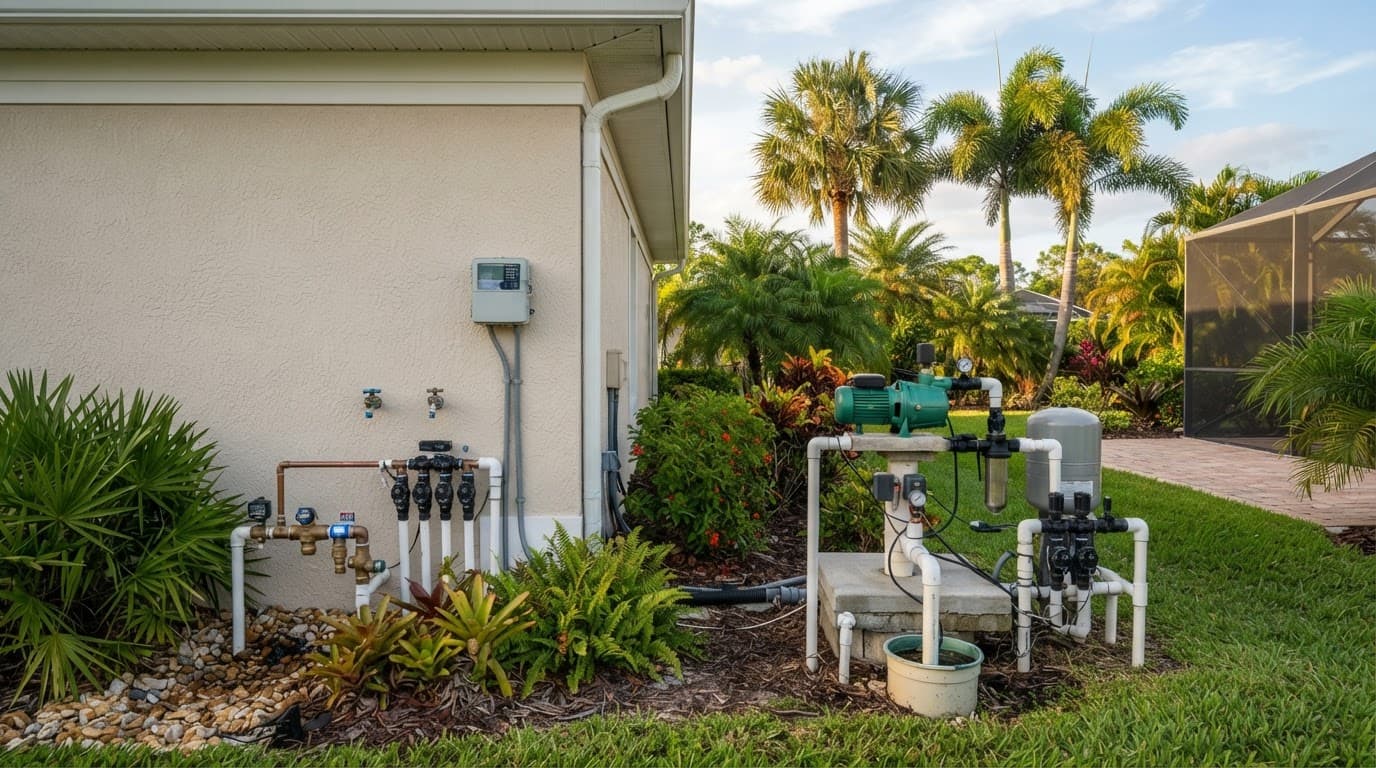
However, the well system needs its own pump, electrical supply, pressure controls, and maintenance. Water quality can also create problems that don't appear with treated municipal water.
City water offers steady access
City water is often easier to connect and operate. The utility supplies the water, so the property doesn't need to maintain a groundwater pump or pressure tank. A licensed irrigation professional may still need to install a backflow device, separate meter, or approved connection.
The main disadvantage is cost. Irrigation can increase the water bill, and local utilities may limit watering during dry periods or declared shortages. City pressure can also vary, especially in larger neighborhoods or during peak demand.
Well Water Irrigation: Lower Operating Cost, Higher Maintenance
Well water irrigation can be economical, but it transfers more responsibility to the property owner. Testing and equipment checks help prevent water quality problems from spreading through every sprinkler zone.
Minerals can stain hardscape and clog equipment
Iron is one of the most common complaints with Florida well water. It can leave rusty orange or brown marks on concrete, pavers, walls, light-colored stone, and pool areas. The stains often become more visible after sprinkler water evaporates.
Hydrogen sulfide can create a rotten-egg odor. Sulfur smell doesn't automatically mean the water will damage plants, but it signals that the water deserves testing. A treatment system may help, although the right choice depends on the concentration and the rest of the water chemistry.
Hard water can leave mineral scale on filters, valves, sprinkler nozzles, and other components. Sandy sediment creates a separate problem. It can enter through the well, collect in filters, and restrict flow to spray heads or drip tubing.
Water treatment shouldn't be selected by smell or appearance alone. A test can show whether the system needs filtration, an iron treatment, sediment control, or no treatment at all.
Pump performance controls sprinkler coverage
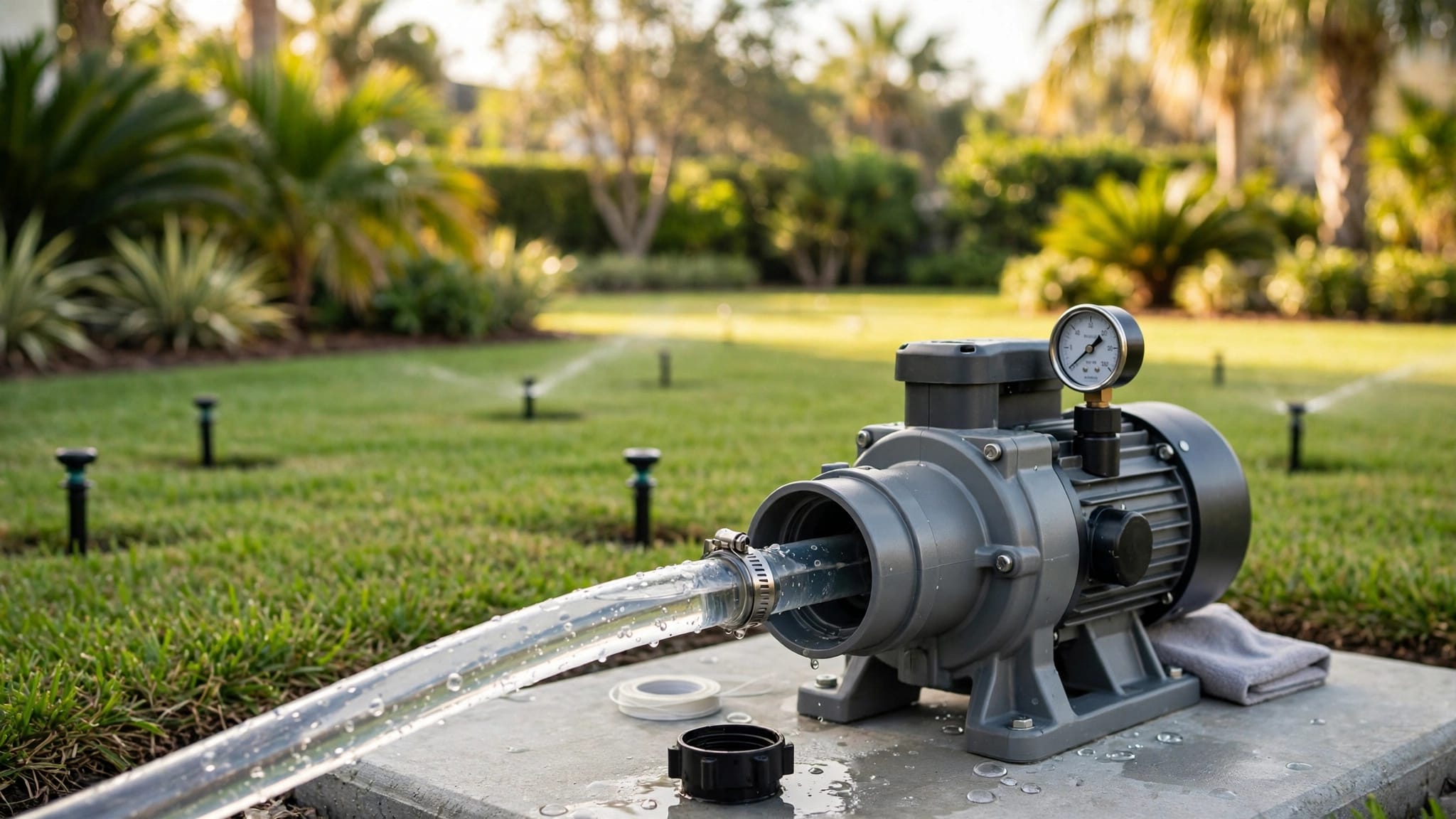
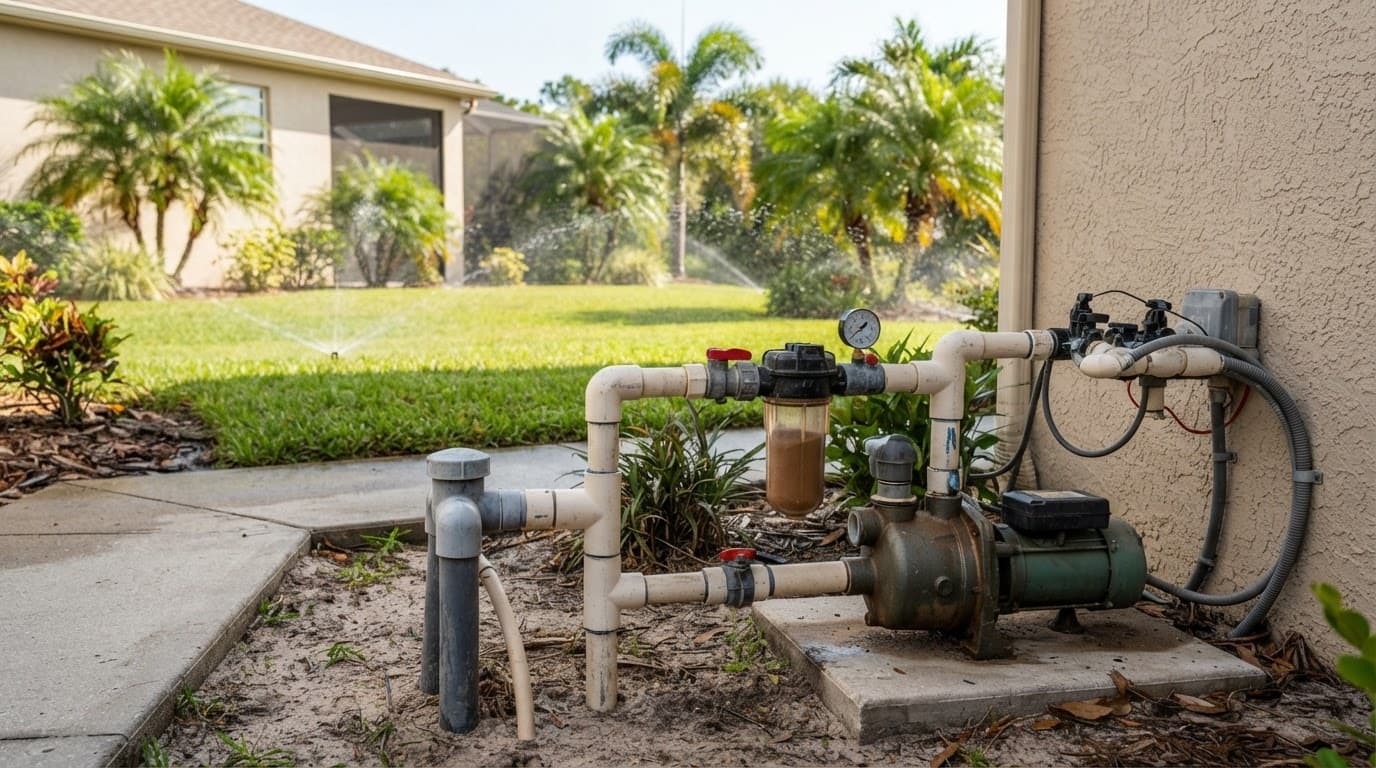
A well pump must provide enough flow and pressure for the active irrigation zone. If the pump can't keep up, the first sprinklers may spray normally while heads at the end of the zone barely operate.
Pressure cycling is another warning sign. A pump that starts and stops too often may have a pressure-tank issue, an undersized system, a leak, or a zone that demands more water than the well can produce.
A professional evaluation should measure static pressure, operating pressure, available flow, and pump recovery. It should also check the well casing, electrical components, filters, valves, and buried lines.
The number of zones and sprinkler heads affects the design and price. Review irrigation system zones and sprinkler heads before replacing a pump or adding turf. A larger pump isn't always the answer if the well itself has limited yield.
City Water and Reclaimed Water Need Different Planning
Florida property owners often use the phrase "city water" to mean any utility-supplied water. Irrigation planning should separate potable municipal water from reclaimed water because the rules and equipment differ.
Potable city water is simple, but it isn't free
Municipal water usually arrives without iron or sand from a private well. That reduces staining and sediment concerns, although old service lines or neighborhood water conditions can still affect quality.
A city-fed system may need a dedicated irrigation meter. It may also need backflow protection to keep irrigation water from entering the potable supply. Local utility requirements control the exact connection, meter, and inspection process.
Watering schedules can change during drought declarations. Hillsborough County, for example, has published guidance limiting conventional irrigation to one day per week under a Modified Phase III water shortage. That rule is an example of local policy, not a universal Florida schedule.
Private well users may also face watering limits during declared shortages. The water source doesn't always exempt a property from conservation rules.
Reclaimed water is designed for irrigation
Reclaimed water is treated wastewater intended for approved non-potable uses, including landscape irrigation. It can reduce demand on drinking-water supplies and may offer a lower-cost source where a utility has installed a reclaimed-water network.
Reclaimed systems usually use purple pipe, fittings, and warning markings. They must remain isolated from potable plumbing, private wells, lakes, pools, hose bibs, and indoor fixtures. Reclaimed water isn't drinking water, and it shouldn't be used where people may be immersed.
The Southwest Florida Water Management District says 100% reclaimed water isn't restricted to specific days or times by the district, but local utilities can set additional rules. Hillsborough County, for example, allows reclaimed irrigation on any day but restricts use between 10 a.m. and 4 p.m. under its published guidance.
Rules can vary even more elsewhere. Broward County's reclaimed-water requirements prohibit irrigation wells on properties connected to its reclaimed system. Ocala and Polk County have published rules requiring some properties to connect to reclaimed water within 90 days after written notice that service is available.
Ask the local utility about availability, connection costs, pressure, approved equipment, watering times, rain shutoff requirements, and cross-connection testing before planning around reclaimed water.
Test Florida Irrigation Water Before Buying Equipment
Irrigation water should be judged by how it affects plants, soil, hardscape, and equipment. Drinking-water standards answer a different question.
Test for landscape and system problems
For an irrigation-only well, request a test that includes pH, iron, hydrogen sulfide, hardness, turbidity, electrical conductivity, sodium, and chloride. A laboratory can also recommend additional testing based on the property and well history.
Coliform bacteria and nitrate are especially important when a well supplies the home. Florida Department of Health guidance for private drinking wells commonly includes coliform bacteria, nitrate, lead, and pH. Some South Florida testing recommendations add iron, hydrogen sulfide, hardness, and PFAS.
A well used only for irrigation may not need the same drinking-water panel. Still, test it before installing expensive filtration or replacing a pump. Retest annually when the well supplies household water, after flooding reaches the wellhead, or whenever odor, staining, pressure, or plant health changes.
Coastal wells need salinity screening
Saltwater intrusion is a concern for some coastal and near-coastal wells in Southwest Florida. Excessive pumping, drought, low groundwater levels, and storm-related changes can affect the balance between fresh and salty groundwater.
Salt can stress turf and ornamental plants, damage soil structure, and make irrigation water unsuitable for sensitive plantings. A well that worked well several years ago may need a new test after major storms, prolonged dry weather, or nearby construction.
Ask for electrical conductivity plus sodium and chloride analysis. One USGS Florida study used 30 milligrams per liter of chloride as an indicator in its research, but that figure isn't a universal homeowner cutoff. Plant tolerance, soil conditions, and the complete water analysis matter.
Don't treat suspected saltwater intrusion by adding a larger pump. Confirm the water chemistry first, then have a qualified well or irrigation professional evaluate possible solutions.
Match the Water Source to the Whole Property
The right source should support the property's plants, hardscape, drainage, maintenance schedule, and future improvements. A low-cost water source can become expensive if it stains surfaces or cannot supply every zone.
Consider planting and turf needs
Natural sod generally needs consistent coverage while it establishes. Beds may work better with drip irrigation, while turf often uses spray or rotor heads. A mixed system can reduce overspray and keep water off walls, walkways, and patios.
Some homeowners reduce irrigation demand with artificial turf in selected areas. Beds, palms, trees, and remaining natural grass still need a properly planned water supply. The surface choice doesn't remove the need to solve drainage or pressure problems.
Property managers should also consider access and maintenance. Filters need room for service, pump controls need protection from weather, and irrigation valves should remain accessible after new planting or hardscape installation.
Plan irrigation before concrete and pavers
Irrigation lines should be mapped before installing patios, walkways, driveways, retaining walls, or pool decks. Sleeves under future hardscape are easier and less expensive than cutting concrete later.
Before hiring a concrete company, confirm finished elevations and drainage slopes. Sprinkler heads should clear the planned edges, and valve boxes shouldn't sit where they interfere with foot traffic or maintenance.
The same planning helps protect pavers. If a line must be repaired under a patio, the work may disturb bedding sand and joint material. Schedule irrigation repairs before paver cleaning and sealing when possible.
A useful proper sequence for a backyard renovation puts drainage and underground work before hardscape and planting. That order gives the irrigation contractor room to adjust lines, heads, and zones before the finished yard closes around them.
Questions to Ask During a Professional Evaluation
A site visit should produce more than a recommendation to "use a well" or "connect to city water." Ask the contractor to document the system's actual conditions.
- Have the well pump's flow, pressure, and recovery been measured while an irrigation zone runs?
- Does the water contain iron, sulfur, sand, hardness, sodium, or chloride at levels that affect the yard?
- Will the system need a filter, separator, treatment unit, pressure tank, or additional controls?
- Are backflow protection, purple pipe, rain sensors, or utility inspections required for this water source?
- Can the irrigation layout be adjusted before sod, planting, pavers, or concrete work begins?
- Will the recommended source support every zone during the property's busiest watering period?
Get the test results and equipment recommendations in writing. For a residential or commercial property, also confirm who will service the pump, filters, valves, and controller after installation.
Choose the Water Source That Protects the Yard
Well water can lower irrigation costs, but iron, sulfur, sand, hardness, pump limits, and coastal salinity require attention. City water offers simpler operation, although utility charges, backflow requirements, and watering restrictions still apply.
Reclaimed water is a strong option where service is available, but it remains non-potable and follows local connection and use rules. The safest decision starts with water testing, a pressure and flow evaluation, and an irrigation layout that fits the entire property.
When the opening choice feels like a simple bill comparison, look closer at the pump, the soil, and the hardscape. Reliable irrigation is the source that keeps every zone working without creating a new maintenance problem.