


Lawn Fungus vs Drought Stress in Cape Coral Lawns
A brown patch in your Cape Coral lawn can point to dry soil, fungal disease, or both at once. Summer rain may soak the surface while compacted soil stays dry below, and frequent irrigation can keep grass damp enough for disease.
Knowing the difference helps you avoid wasting water or applying fungicide when the roots need better irrigation. Start with the pattern, check the soil, and look at what changed before treating the lawn.
Why Cape Coral lawns can show both problems
Cape Coral lawns face intense sun, sandy soil, high humidity, and quick weather changes. St. Augustine grass is common in Southwest Florida, but it can struggle when irrigation coverage is uneven or rain falls in short, heavy bursts.
Drought stress begins when grass loses moisture faster than the roots can replace it. During a hot, windy stretch, exposed areas may dry quickly. Grass beside a driveway, pool deck, or south-facing wall often shows damage first because nearby concrete reflects heat.
Fungal problems develop under different conditions, but those conditions can overlap. Warm nights, wet leaves, poor airflow, and frequent shallow watering create a favorable setting for disease. A lawn may also become stressed by drought, then develop fungus after irrigation increases or summer rain returns.
That overlap makes diagnosis harder. A lawn can have dry roots beneath grass that appears damp. Likewise, a disease-damaged area may look worse during hot weather because weakened turf cannot handle heat as well as healthy grass.
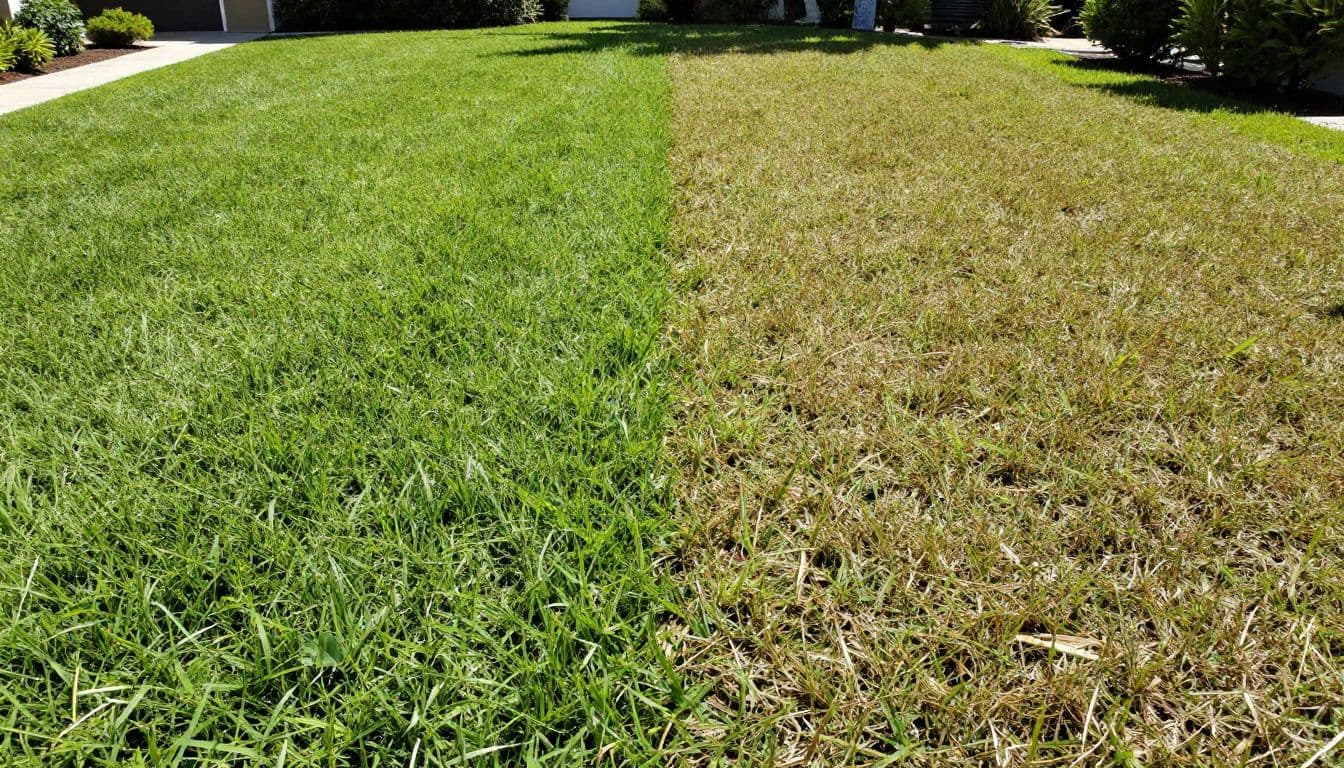
A useful first step is to compare the damaged area with healthy grass nearby. Check the color, blade condition, soil moisture, and shape of the affected patch. Also consider recent rainfall, irrigation changes, mowing, fertilizing, and drainage.
Compare the warning signs before you treat
No single symptom proves that a lawn has fungus or drought stress. However, several clues can point you in the right direction.
| Clue | Drought stress | Fungal disease |
|---|---|---|
| Patch shape | Broad, dry areas or strips linked to poor irrigation coverage | Irregular spots, circles, or expanding patches |
| Grass blades | Folded, curled, brittle, or gray-green | Speckled, spotted, streaked, or rotting blades |
| Soil condition | Dry several inches below the surface | Often damp, especially after rain or frequent watering |
| Damage pattern | Starts near hot surfaces or missed sprinkler areas | May appear where shade, moisture, and poor airflow meet |
| Morning appearance | May look slightly better after overnight moisture | May show fresh lesions, dark tissue, or worsening patches |
| Response to water | Healthy blades may recover within a few days | Extra water can leave the area unchanged or make disease spread |
Drought stress often affects a larger, fairly consistent section of turf. For example, one sprinkler zone may produce green grass near the head while the far edge turns brown. Narrow dry strips can also appear beside a fence or under a tree where irrigation does not reach.
Fungal disease tends to create a less predictable pattern. Brown or yellow patches may expand outward, and some areas may show a darker border. In St. Augustine grass, large patch disease can appear after warm, wet conditions. Gray leaf spot may produce small lesions on individual blades instead of one large brown area.
Look closely at the blades. Drought-stressed grass usually feels dry and crisp. Fungal damage may include small tan, gray, reddish, or dark marks. Some diseases cause leaf blades to pull away from the stolons, while others thin the turf without creating sharply defined spots.
Brown grass does not automatically mean the lawn needs more water. Moist soil, spreading patches, and marked leaf lesions can point toward disease instead.
Pests can create similar symptoms. Chinch bugs, for example, can damage St. Augustine grass in hot, sunny areas. Soil compaction, poor drainage, herbicide injury, and mower damage also belong on the list of possible causes.
Use simple checks to separate dry roots from disease
Before adjusting the irrigation timer, test the soil. Push a screwdriver or narrow trowel into the damaged area and then into healthy turf. Dry, resistant soil several inches down supports a drought-stress diagnosis. If the soil is moist but the grass continues to decline, look more closely for disease, insects, or root damage.
Next, inspect the sprinkler system while each zone runs. Watch for clogged nozzles, tilted heads, broken pipes, blocked spray patterns, and overspray onto sidewalks. Place several straight-sided containers across the zone to compare the amount of water collected in different locations. Uneven amounts reveal coverage problems that a timer adjustment cannot fix.
Timing also provides useful evidence. If the lawn faded during a long hot period and improves after thorough irrigation, drought stress becomes more likely. If patches appeared after several wet days, humid nights, or repeated evening watering, fungal disease deserves more attention.
Cape Coral's summer rainfall can make irrigation decisions confusing. A storm may wet the top layer while water runs off compacted soil or drains away before the root zone receives enough moisture. Then a homeowner may add more water, keeping the foliage damp without solving the dry soil below.
Water early in the day when possible. Morning irrigation gives grass time to dry and reduces the hours that blades stay wet overnight. Follow current Cape Coral and Southwest Florida watering rules, since local restrictions and permitted watering days can change.
Avoid short daily watering unless a newly installed lawn needs a temporary establishment schedule. Frequent shallow cycles encourage shallow roots and can keep the surface wet. At the same time, don't extend watering blindly. Correcting a broken sprinkler or compacted area may matter more than adding minutes to every zone.
Take photos of the affected areas and record when the damage started. Note rainfall, irrigation changes, mowing height, fertilizer applications, and whether the patch is growing. Those details can help a lawn professional identify a pattern that is difficult to see during one visit.
Treat the actual cause, not the color of the grass
Drought-stressed grass needs more consistent access to moisture, but recovery depends on how much living turf remains. Correct sprinkler coverage, improve soil contact, and water according to current conditions. Avoid soaking a lawn repeatedly when the soil is already wet.
Mow at the proper height for the turf type, and keep the blade sharp. Scalping stressed grass creates additional injury. Extra nitrogen can also create problems when turf is under heat or disease pressure, so wait for a clear diagnosis before adding fertilizer.
Fungal treatment depends on the disease, turf species, weather, and severity. Fungicides don't repair dry roots, correct poor drainage, or fix a sprinkler that misses half the yard. They also work best when paired with better moisture management. Use only products labeled for the specific grass and disease, and follow the label's application directions.
Some damaged areas need time to recover. Others have lost enough turf to require sod replacement or spot repair. If the lawn keeps declining after irrigation coverage improves, collect a sample that includes both healthy and damaged grass, or ask a local professional to inspect it. A diagnosis based only on a photograph may miss insects, root disease, or drainage trouble.
Outdoor upgrades can also change lawn moisture. New pavers, concrete, mulch beds, or planting areas may redirect runoff toward turf or leave some sections without enough water. For broader improvements, review Cape Coral landscaping and paver services that include irrigation repair, sod, artificial grass, pavers, and concrete work.
If a patio or driveway sends water toward a problem area, a concrete company may help correct hardscape drainage or surface grading. The right contractor depends on the problem. Irrigation repair handles distribution, while concrete and drainage work address water movement around hard surfaces.
Some homeowners consider artificial grass when recurring lawn problems make natural turf difficult to maintain. During online research, you may also see the misspelled term "artifical turf." Synthetic grass avoids fungal disease in the turf blades, but it still needs proper base preparation, drainage, cleaning, and occasional maintenance. It isn't a cure for standing water or poor grading.
When a lawn problem points to a larger yard issue
A small brown spot may need only a sprinkler repair or a short recovery period. Widespread damage deserves a broader inspection, especially when several zones show different symptoms.
Look for water pooling after rain, soil washing away, grass dying along hardscape edges, or repeated damage in the same location. These signs may point to grading, compaction, shade, drainage, or irrigation design rather than one isolated disease event.
Landscaping changes can reduce future stress when they match the site's conditions. Drought-tolerant plantings can replace grass in difficult strips, while mulch or stone can protect areas that receive reflected heat. Pavers and concrete should direct water away from foundations without flooding planting beds or turf.
Even maintenance tasks can affect the diagnosis. Paver cleaning may send dirty water and debris toward the lawn, while sealing work or construction traffic can compact nearby soil. Protect turf during projects, and check the irrigation system after any hardscape installation.
Conclusion
The clearest difference between lawn fungus and drought stress appears in the pattern, soil, and timing. Dry soil and uneven sprinkler coverage support drought stress, while spreading patches, leaf lesions, and wet conditions point more toward disease.
Cape Coral's heat and summer rainfall can create both problems in the same yard. Check moisture below the surface, inspect irrigation coverage, and avoid treating brown grass by color alone. A careful diagnosis protects the lawn and prevents unnecessary water, chemicals, and replacement work.