


Why Florida Irrigation Pumps Keep Short Cycling
Irrigation pump short cycling can point to pressure-tank trouble, a leak, restricted flow, or a valve or control problem. Repeated starts are a warning sign , but they don't identify the failed component by themselves.
For Florida homeowners, the useful clues are when the cycling happens, which zones are affected, and whether water continues flowing after watering ends. Start by separating a pressure problem from a scheduling or electrical problem before replacing parts.
Key Takeaways
- A pump cycling between scheduled watering periods needs attention, especially when pressure falls or water appears where it shouldn't.
- Pressure tanks, switches, filters, valves, and wiring require different tests. One symptom rarely confirms which repair is needed.
- Compare affected zones with working zones, record visible symptoms, and stop testing if the pump cycles rapidly, overheats, or presents an electrical hazard.
Recognize What Irrigation Pump Short Cycling Looks Like
Separate repeated starts from scheduled watering
Short cycling describes repeated pump starts and stops over an unusually brief period. However, several complete watering cycles can also result from duplicate controller start times.
Review every active program, including Programs A, B, and C when available. On many controllers, one start time launches all stations assigned to that program. Additional start times can repeat the entire sequence.
Also distinguish intentional cycle-and-soak programming from unexpected pump interruptions. Planned breaks between watering periods are different from a pump repeatedly stopping while one zone remains active.
Note whether watering is active
A pump starting when no watering program is running deserves attention. Our guide to signs of an irrigation leak includes unscheduled pump cycling among the reasons to arrange service.
During scheduled watering, note whether every zone has the problem or only one. A single affected zone directs attention toward its valve, wiring, and piping.
Meanwhile, problems across several zones justify a broader assessment of the pump, controls, filtration, and supply. Neither pattern proves a particular component has failed.
Evaluate the Pressure Tank and Pressure Switch Together
Pressure-tank symptoms need testing
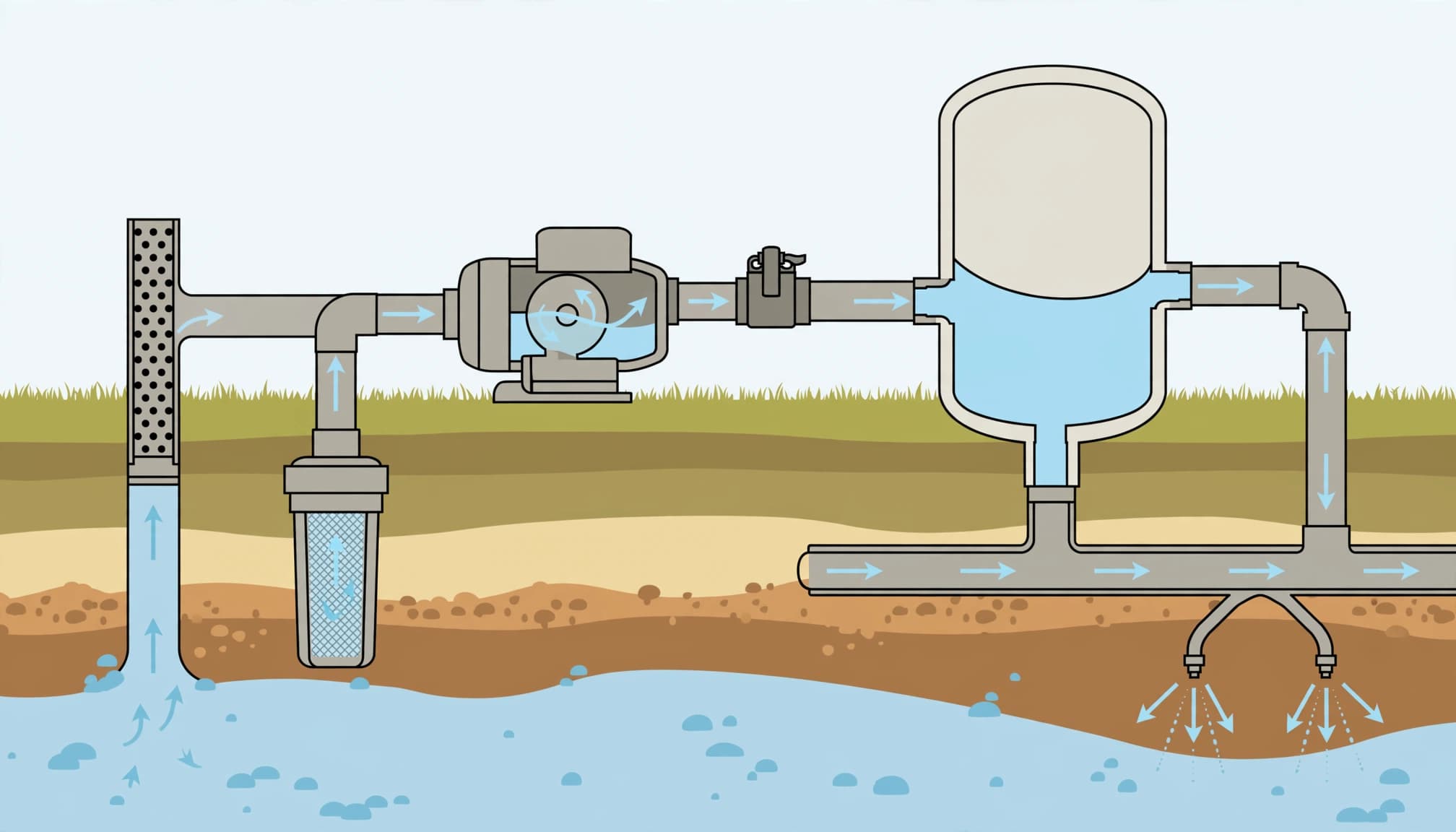
On systems equipped with a pressure tank, the tank stores water under pressure. A tank issue is one possible explanation for frequent starts, but the pump's behavior alone doesn't establish that diagnosis.
A technician should evaluate the tank alongside system pressure, available flow, and pump recovery. This helps distinguish a tank problem from a leak or a mismatch between supply and demand.
Don't add air or replace the tank based only on the sound of repeated starts. Tank servicing involves pressurized equipment and requires the correct procedure for that installation.
Pressure-switch faults require a separate assessment
A pressure switch controls pump operation according to pressure on systems that use this arrangement. Its operation needs assessment alongside the tank and other controls.
Not every yard pump uses the same setup. Some irrigation installations activate the pump through a controller and pump-start relay.
Because these arrangements differ, changing pressure settings isn't a universal repair. Leave switch-cover removal, contact inspection, relay testing, and electrical measurements to a qualified pump technician. Increasing a setting can also hide the original problem without correcting it.
Look for Leaks and Zone-Valve Problems
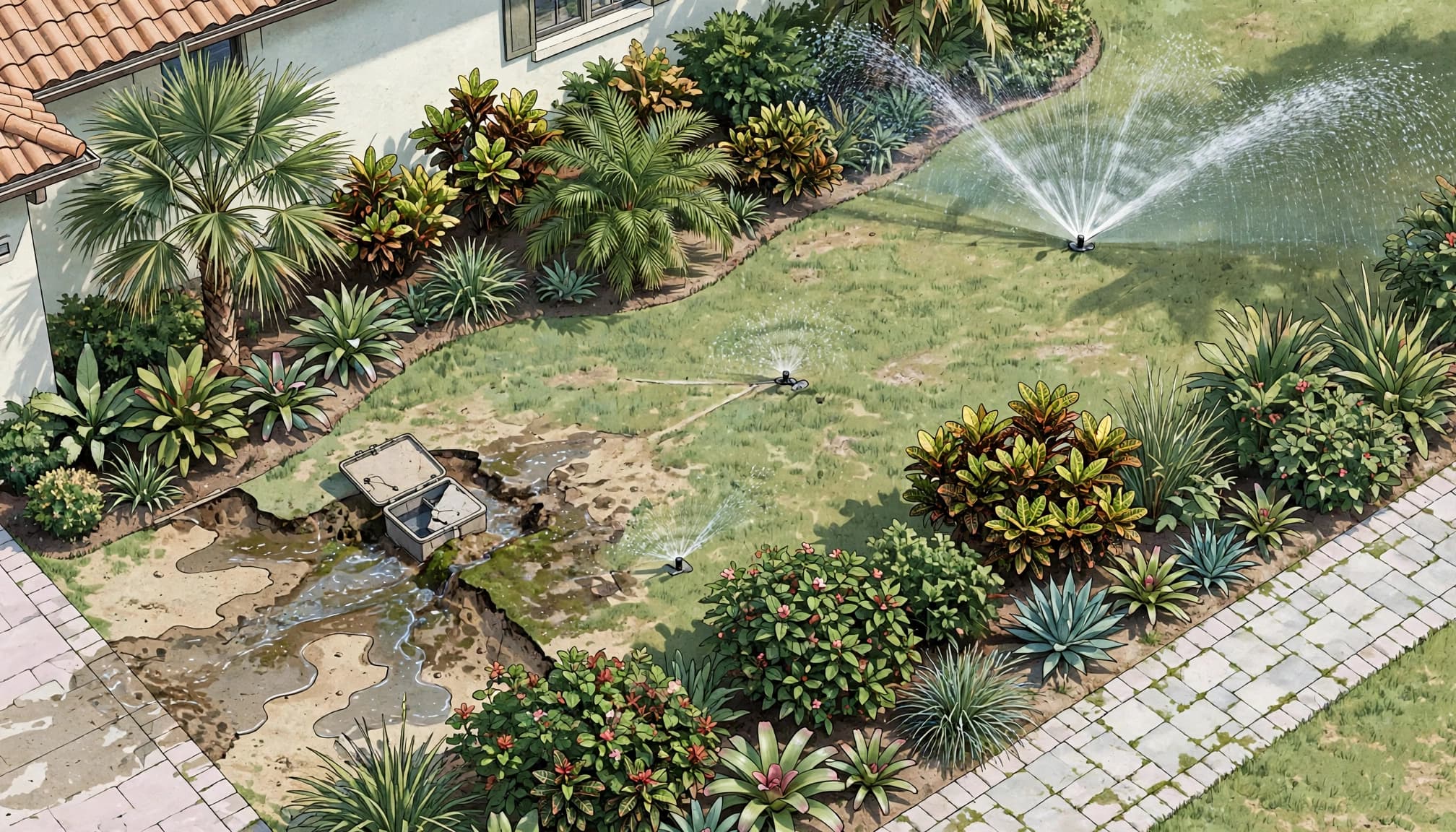
Look beyond obvious puddles
Walk the affected area and look for bubbling soil, water around fittings, unusually soft ground, or a patch of faster-growing grass. A leak in sandy soil may drain downward before a large puddle forms.
Also watch sprinkler performance. Several weak heads can indicate a zone-wide problem, while one weak head may have a local blockage or damaged nozzle.
These observations narrow the search, but they don't confirm a buried leak. Low pressure can also accompany a restricted valve, clogged filter, or supply problem. A technician can isolate sections rather than excavating wherever the lawn looks wet.
Separate a stuck valve from a controller command
A zone that continues watering after its command ends needs a valve assessment. Debris, diaphragm damage, or a partially open manual bleed can prevent proper closure.
Brief drainage after shutdown isn't the same as sustained watering. Record whether the flow fades or continues.
When two areas operate together, their timing matters too. If both start and stop together, wiring or controller outputs deserve attention. If one continues after its command ends, its valve becomes a stronger suspect.
Don't loosen solenoids, open valve bodies, or handle wiring while the system remains powered and pressurized.
Consider Clogged Filters and Restricted Flow
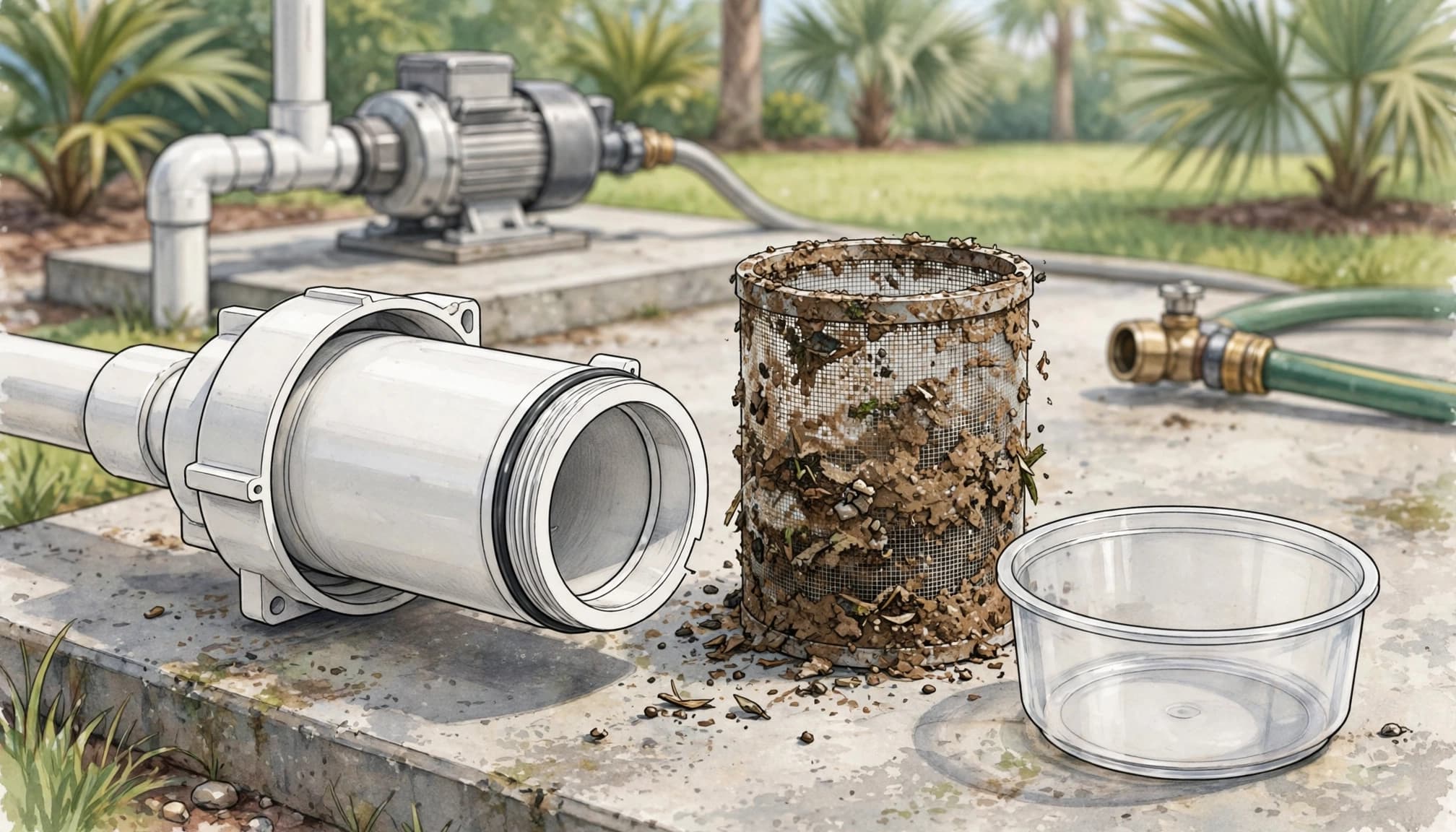
A clogged filter can reduce flow, while sand inside a valve can interfere with its opening. These faults can resemble pump or controller trouble because the sprinklers receive too little water.
Still, weak sprinkler output doesn't prove the filter is causing short cycling. Filter location, pump controls, and zone demand all matter.
Start with visible observations. Note whether several zones are weak, whether water carries sediment, and whether recently cleaned heads clog again. Recurring sand deserves attention at the source rather than repeated nozzle cleaning.
Our guide to flushing sand from irrigation lines explains sediment-related troubleshooting.
Before removing a filter housing, disconnect pump power, isolate the irrigation supply, and relieve pressure using the equipment's proper procedure. If you can't identify the shutoff or breaker, leave the assembly closed and arrange service.
Don't raise pump settings to compensate for an unresolved restriction.
Gather Useful Clues Without Taking Equipment Apart
A short observation record helps a technician distinguish symptoms from confirmed causes. However, skip further operation if the pump is already cycling rapidly or showing distress.
- Review the controller's programs and start times. Record duplicate entries before changing anything, since some repeated starts may support intentional cycle-and-soak watering.
- If operation remains stable, run one affected zone briefly from the controller. Watch which heads operate and compare their coverage with a nearby working zone.
- End the command and observe shutdown. After about two minutes, note whether sprinklers still discharge steadily or water continues collecting around a valve box.
- Record pressure readings only from an existing, safely accessible gauge. Don't loosen fittings, install a gauge, or remove electrical covers while the pump operates.
- Write down the sequence: which zone started, when pressure changed, and whether the pump stopped before the watering command ended.
Our guide to testing irrigation pressure covers pressure patterns and the role of professional testing.
A technician can measure static and operating pressure, assess available flow and recovery, inspect electrical signals, and isolate damaged sections. That testing provides evidence for a repair instead of relying on a symptom alone.
Shut Off Power When These Warning Signs Appear
Stop operation when repeated cycling accompanies burning odors, smoke, sparking, unusual heat, persistent humming without normal pumping, or a tripped breaker. Don't repeatedly reset the breaker.
Also stop if water reaches electrical equipment, wiring is damaged, or the pump runs without delivering water normally. A flooded electrical area requires professional attention; don't enter standing water to reach equipment.
Turning the controller off may not disconnect pump power. Use the identified pump disconnect or breaker only when it's safely accessible. If you can't identify it, call a qualified professional.
Leave pressure-switch internals, pump-start relays, line-voltage wiring, and electrical testing to a qualified pump technician.
For a substantial leak, close the identified irrigation isolation valve if it's safe to reach. Keep the system out of service until the fault is addressed, especially if escaping water is washing soil from beneath a patio or driveway.
Coordinate Repairs With Other Yard Projects
Irrigation trouble can become harder to reach after new landscaping or hardscape installation. Locate valves, wiring routes, and irrigation pipes before excavation or surface work begins.
If erosion has exposed the base beneath a slab, repair the water problem before a concrete company assesses the affected surface. Otherwise, continuing leakage can undermine restoration work.
Schedule paver cleaning after digging and pipe repairs are finished. This avoids covering freshly cleaned surfaces with repair mud.
Artificial turf also changes the planting layout and watering needs. Nearby shrubs and beds may still need separate irrigation, so the final zone arrangement matters.
At Outdoor Life Pros, we offer irrigation repair alongside outdoor improvements across Southwest Florida. Coordinating those jobs helps preserve access to buried components.
Frequently Asked Questions
Does a new controller fix pump short cycling?
Only when testing identifies a controller-related fault. A new timer won't repair a leaking pipe, restricted filter, or mechanical valve problem. Our guide to smart irrigation controllers discusses pump-start relays and existing components that affect installation.
Does one weak zone mean the pump is failing?
No. When other zones operate normally, the affected zone's valve, wiring, nozzles, and piping deserve attention first. Compare their behavior before replacing shared equipment. One weak zone is a useful clue, but it doesn't confirm either a pump failure or a particular zone repair.
Can a leaking valve keep watering with the controller off?
Yes. A valve held open mechanically can pass water after its electrical command ends. Sustained flow therefore needs a valve inspection rather than repeated schedule changes. Shut off the irrigation supply when substantial leakage continues, and arrange repair before restoring normal watering.
Restore Steady Operation With a Confirmed Diagnosis
Frequent pump starts deserve attention, but replacing parts without testing can leave the original fault unresolved. The strongest clues are the affected zones, pressure behavior, visible leakage, and shutdown timing.
Keep homeowner troubleshooting to safe observations and controller review. Leave pressurized equipment and electrical testing to a qualified technician.
A confirmed diagnosis connects the repair to the actual fault, whether it involves the tank, controls, filtration, valves, or piping.