


Why Ixora Leaves Turn Yellow in Southwest Florida
In Southwest Florida, ixora leaves turning yellow often signal nutrient availability problems or stressed roots. Alkaline soil is a common concern, but poor drainage, dry soil, salt exposure, and pests also deserve attention.
Adding fertilizer before identifying the cause can waste money or worsen root stress. Start with the leaf pattern, then examine the root zone and recent changes around the planting bed.
Key Takeaways
- Yellow leaves with greener veins, especially on new growth, can indicate that high soil pH is limiting nutrient uptake.
- Dry soil and waterlogged soil can both produce yellowing, so moisture conditions matter more than a fixed watering schedule.
- Salt injury and insects need supporting evidence. Leaf color alone doesn't establish either problem.
Read the Leaf Pattern Before Treating Your Ixora
Look at several branches, including the newest shoots and older interior foliage. Notice whether the veins stay green, the edges turn brown, or leaves drop throughout the shrub.
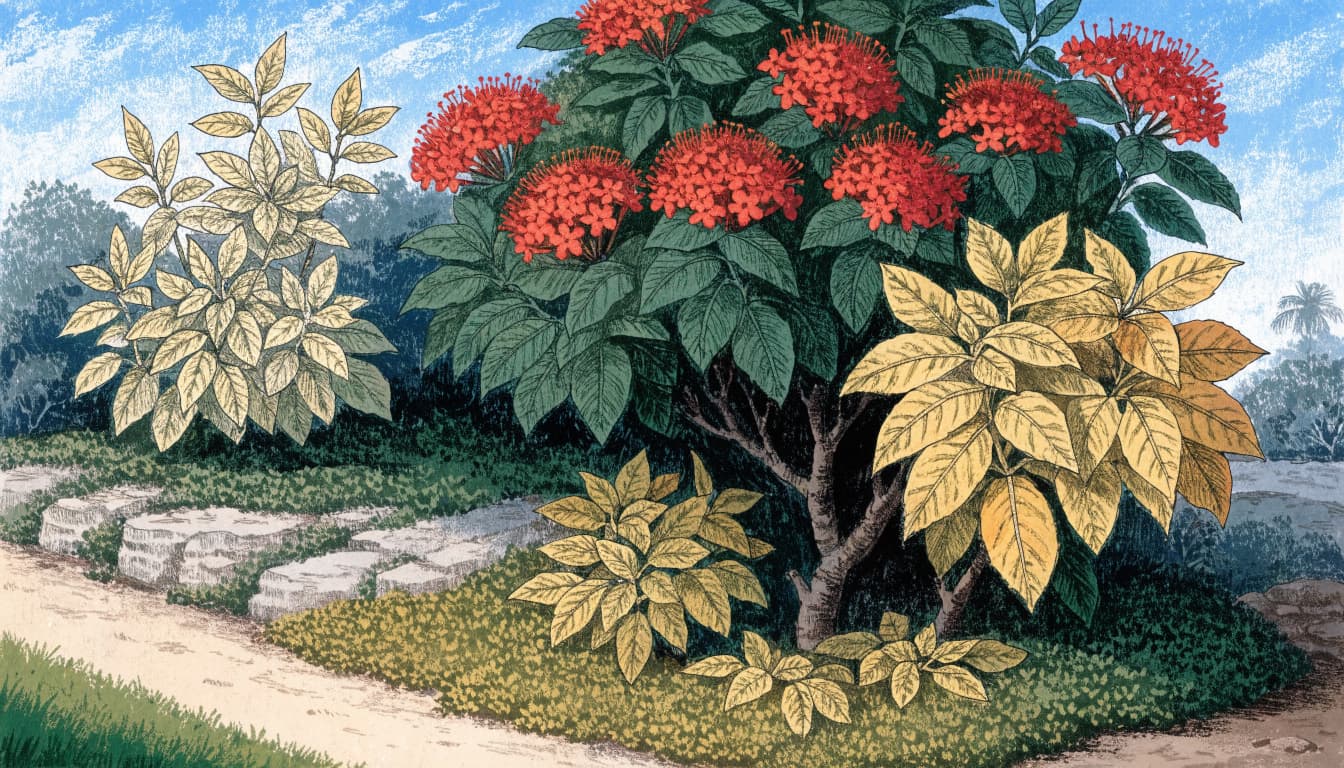
These patterns help narrow the possibilities, although none proves a diagnosis by itself.
| Leaf pattern | Possible explanation | Useful next step |
|---|---|---|
| New leaves yellow between greener veins | Limited iron or manganese availability | Assess soil pH and root conditions |
| Older foliage becomes uniformly pale | Nutrient shortage or impaired uptake | Review soil nutrients and watering |
| Yellow leaves develop brown tips | Drought stress or salt injury | Examine moisture and salt exposure |
| Yellowing accompanies wilting in wet soil | Poor drainage or damaged roots | Investigate water accumulation |
| A few older interior leaves yellow | Normal leaf aging | Watch whether new growth stays healthy |
Compare neighboring plants, too. One declining shrub beside healthy ixoras suggests a localized issue, such as a blocked emitter or construction damage.
Our guide to Cape Coral soil problems connects common foliage symptoms with sandy soil, salt, and nutrient concerns.
Alkaline Soil Can Limit Nutrient Uptake
Ixora favors acidic growing conditions. However, Southwest Florida planting beds may contain shell fragments, limestone, or calcareous fill that push soil toward alkalinity.
That mismatch can leave the shrub short of usable nutrients even when those nutrients exist underground.
Why green veins matter
Iron availability problems often appear first in young foliage because iron doesn't move readily from older leaves into new growth. The tissue between veins becomes pale while the veins remain greener.
Manganese availability problems can produce overlapping symptoms. However, leaf appearance alone can't reliably separate them, especially when roots are also struggling.
A soil test helps identify whether soil chemistry contributes to the problem. Our guide to soil testing before planting shrubs explains why different beds on the same property may need different treatment.
Why more fertilizer may disappoint
A general-purpose fertilizer doesn't necessarily correct high-pH nutrient restrictions. Meanwhile, adding unnecessary nutrients can increase salt stress or nutrient loss through sandy soil.
Use laboratory recommendations to guide treatment. A labeled micronutrient product may help when the findings support it, but the product must suit the soil conditions.
Don't apply sulfur automatically. Calcareous soils can resist lasting pH changes, so repeated attempts to acidify an unsuitable bed may become an ongoing expense.
Watering and Drainage Can Produce Similar Symptoms
Ixora needs moisture and oxygen around its roots. Problems develop when the bed swings between excessive dryness and saturation.
Southwest Florida's seasonal rainfall makes a year-round timer setting unreliable. A schedule that works during dry weather may overwater the same bed during frequent summer showers.
When the root zone dries out
Sandy soil drains quickly and holds relatively little water. A new shrub's nursery root ball can also dry differently from the surrounding soil.
Examine moisture below the mulch and within the original root ball. A wet surface doesn't prove that water reached the roots.
Watch irrigation operate. A blocked emitter, damaged spray head, or poor coverage can leave one ixora dry while nearby plants receive enough water. Water slowly enough for moisture to enter the root zone without running onto pavement.
When roots stay too wet
Yellowing combined with wilting in persistently wet soil calls for drainage investigation. Adding more water can worsen the problem because saturated roots have less access to oxygen.
Compacted construction fill, low spots, leaking irrigation, and runoff from roofs or patios can all keep a bed wet.
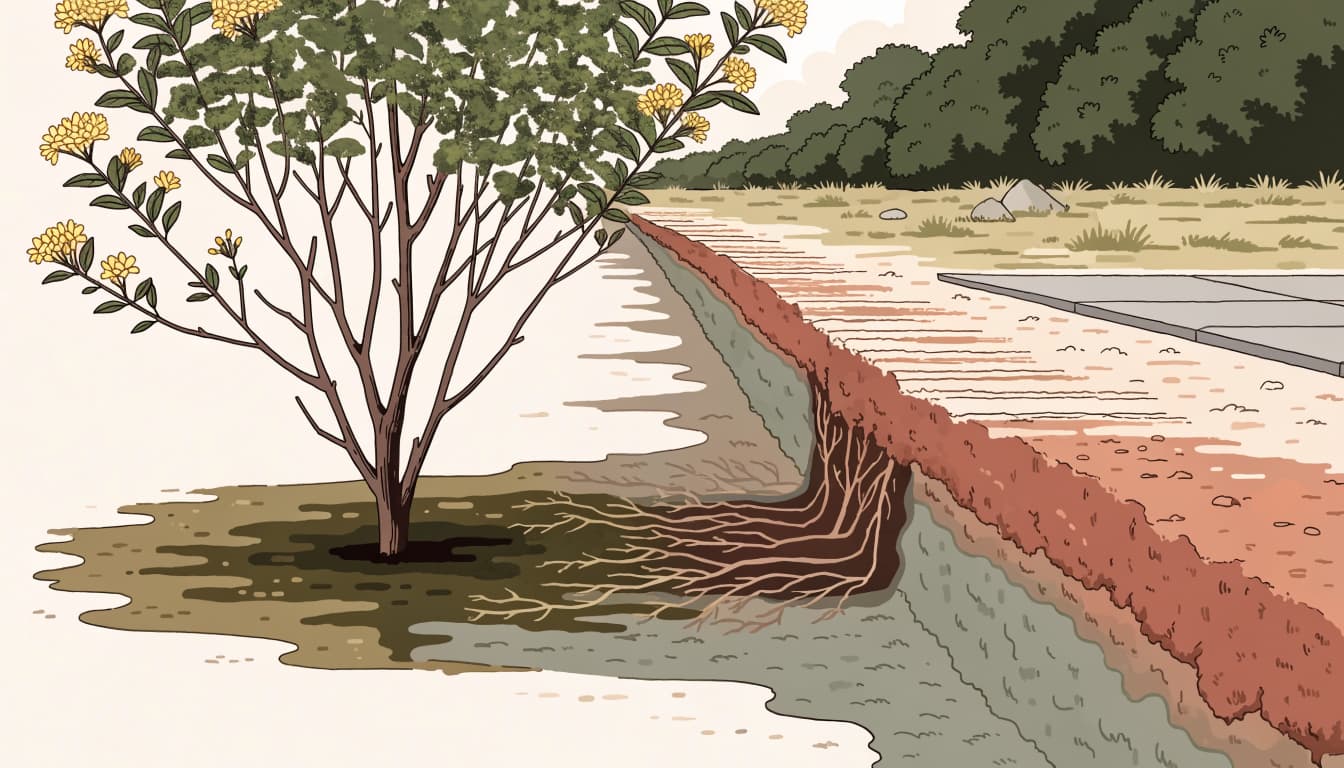
If a patio directs water toward the shrubs, a concrete company and landscape contractor can coordinate drainage corrections. Fertilizer won't repair a grading problem.
Salt and Recent Yard Work Add More Clues
Brown leaf tips or scorched margins make salt exposure worth investigating. Possible sources include coastal spray, saline irrigation water, storm flooding, and accumulated fertilizer.
However, drought can produce similar browning. Examine the exposure history alongside soil moisture rather than deciding from the leaves alone.
A separate irrigation-water test can identify salt concerns that a soil nutrient report may miss. If the soil report includes soluble salts or electrical conductivity, use the laboratory's interpretation.
Flushing salts requires suitable water and drainage. Adding water to an already saturated bed can create another root problem.
Recent projects also matter. Excavation can damage roots, while equipment can compact soil. Keep paver cleaning runoff and chemical overspray away from shrub beds.
When installing artificial turf or expanding a patio, preserve adequate planting space and plan where runoff will go.
Inspect for Pests Without Assuming They're Responsible
Yellowing, thinning, and a dirty-looking canopy don't establish a pest diagnosis. Soil chemistry and watering problems can produce an unhealthy-looking shrub without an active infestation.
Still, examining leaves and stems belongs in a complete inspection, particularly when damage affects scattered shoots.
Look for physical evidence
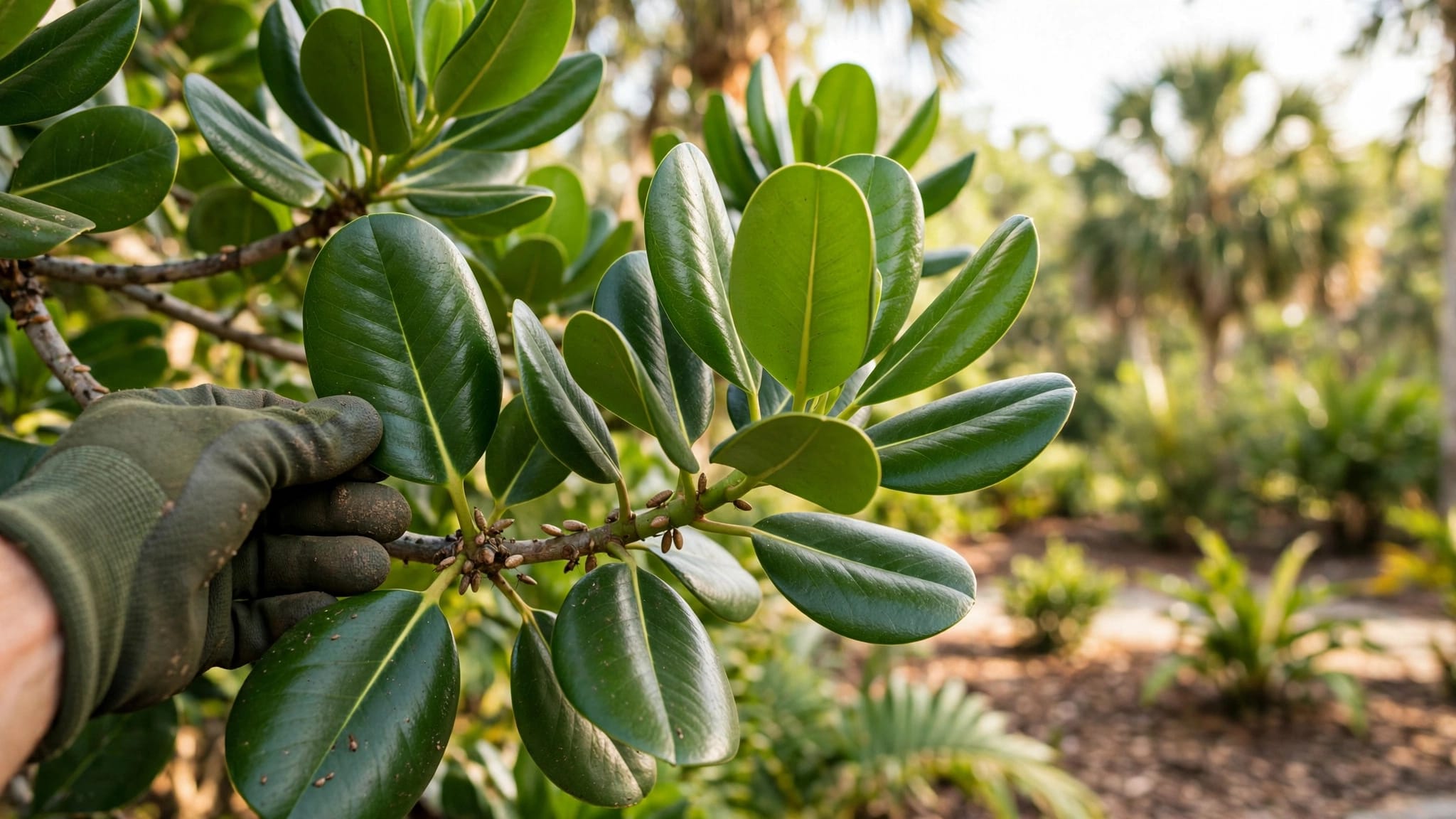
Inspect leaf undersides, tender shoots, and branch junctions. Raised bumps attached to stems, cottony material, visible insects, or sticky residue deserve closer examination.
Scale insects can resemble small bumps rather than moving insects. However, bark texture and harmless material can confuse identification.
Photograph suspicious areas clearly. Include both the affected branch and a close view of what you found. UF/IFAS Extension can help identify specimens when the cause remains uncertain.
Match treatment to the finding
Avoid applying an insecticide simply because leaves are yellow. An unnecessary application won't correct alkaline soil or poor drainage and may affect beneficial insects.
If an infestation is identified, use a product labeled for the plant and pest. Follow its heat precautions because some foliar treatments can injure foliage under unsuitable conditions.
Troubleshoot in an Order That Avoids Extra Stress
Several problems can occur together. For example, alkaline soil may limit nutrients while excessive irrigation damages the roots needed to absorb them.
A practical sequence helps you address the underlying conditions before adding products.
- Record where yellowing appears and what changed recently. Note storms, irrigation adjustments, fertilizer applications, planting, or nearby construction.
- Examine moisture beneath the mulch and around the original root ball. Compare affected shrubs with healthy plants in the same bed.
- Observe irrigation coverage and runoff. Correct leaks, blocked outlets, or persistent saturation before increasing watering.
- Use a soil test to guide nutrient decisions. Include irrigation-water testing when salt exposure or water chemistry is a concern.
- Inspect suspicious foliage for actual pest evidence. Treat only after identifying a problem that warrants treatment.
- Watch the next flush of growth. Photograph the same branches so you can judge progress without relying on memory.
For pale, slow-growing plants, modest organic-matter additions and a suitable slow-release fertilizer may help when soil findings support them. Avoid extra phosphorus when the soil already contains enough.
If the site repeatedly creates problems, reconsider the plant choice. Our flowering shrubs for Cape Coral guide compares ixora with other options for residential beds.
Our landscaping and irrigation repair services can also address planting layout and uneven watering when those contribute to recurring stress.
Frequently Asked Questions About Yellow Ixora Leaves
Will yellow ixora leaves turn green again?
Some pale leaves may improve after you correct the underlying problem, but damaged or aging leaves may remain yellow and drop. Healthier new growth is often the more useful recovery sign.
Avoid stripping every yellow leaf or heavily pruning a stressed shrub to improve its appearance. Instead, keep observing the canopy while correcting the identified soil, moisture, or pest issue. Recovery depends on root health and whether the original stress continues.
Should I add iron as soon as leaves yellow?
Iron treatment makes sense only when the symptoms and growing conditions support an iron-availability problem. Uniform yellowing, brown margins, or wilting in wet soil can point elsewhere.
Even when iron availability contributes, the formulation matters because soil pH affects product performance. Use a labeled product suited to the identified conditions rather than applying several supplements together. Combining treatments makes results harder to interpret and can increase stress on an already struggling shrub.
Help Your Ixora Recover by Fixing the Cause
Yellow ixora leaves are a symptom with several possible causes. In Southwest Florida, soil alkalinity and root-zone conditions deserve attention before fertilizer or pest treatment.
Match the leaf pattern with moisture, drainage, soil findings, and visible evidence. Correct the supported cause, then use new growth to judge whether the shrub is recovering.