


Pre-Emergent Weed Control Timing in Southwest Florida
A February application can be right in Fort Myers and late for a warm, irrigated lawn in Cape Coral. Effective pre-emergent weed control depends on when weed seeds germinate, not simply on a date printed on the calendar.
Southwest Florida's mild winters, sandy soil, irrigation patterns, and turf varieties create different conditions from one yard to the next. Apply too early, and the barrier may weaken before weeds germinate. Apply too late, and the product won't control weeds that are already growing. Start with local weather, soil temperature, turf type, and the product label.
Why pre-emergent weed control timing follows the weather
Pre-emergent herbicides work at the soil surface. They create a chemical barrier that stops many newly germinated weed seeds before young roots and shoots develop. They don't kill mature weeds that are already visible in the lawn.
UF/IFAS commonly uses February 1 as a general spring application date for South Florida . That date includes Southwest Florida, but it shouldn't replace observation. Another useful guide is a stretch of four or five days with air temperatures around 65 to 70 degrees Fahrenheit. Spring applications should also happen before soil temperatures reach about 55 degrees, which is a common germination range for crabgrass and other warm-season annual weeds.
Weather can vary between a sunny Cape Coral yard and a shaded property near the Caloosahatchee River. Irrigated turf may warm and grow sooner than a dry lawn. Coastal wind, shade from palms, recent rain, and soil moisture all affect how quickly the ground changes temperature.
Watch for these signs that a spring application window is approaching:
- Nighttime temperatures stay mild instead of dropping into repeated cool spells.
- Soil temperatures begin trending toward the mid-50s.
- The lawn starts producing active new growth after winter.
- Weed pressure appears first along bare edges, thin turf, sidewalks, and driveway borders.
The first visible crabgrass plant usually means the timing window has already passed for that seed. A pre-emergent treatment may still help with later-germinating weeds, but it won't remove the weeds that are already established.
Turf type also matters. St. Augustine, zoysia, and bahia grass have different growth habits and herbicide tolerances. If you're deciding which grass fits your yard, compare these sod types for Cape Coral yards before building a long-term weed-control plan.
Spring application windows in Southwest Florida
For many Southwest Florida lawns, the main spring window falls between late January and early February. The best date depends on soil temperature and the weeds you want to prevent.
Crabgrass and other summer annual grasses often require treatment before soil reaches approximately 55 degrees. Some lawns may reach that point around January 1, while the broader South Florida rule of thumb places treatment around February 1. Use these dates as planning markers, then check current conditions.
| Target or situation | General Southwest Florida timing | Important adjustment |
|---|---|---|
| Crabgrass and summer annual grasses | Late January to early February | Apply before soil reaches about 55 degrees |
| Goosegrass | Often three to four weeks after the main spring treatment | Follow the label and identify the target weed first |
| Extended spring coverage | A second application six to eight weeks later | Use only when the product label allows it |
UF/IFAS guidance states that many pre-emergent products provide about six to 12 weeks of control. A split application can extend coverage because one treatment may not last through the entire warm season. The second application must match the product's interval, rate, and turf restrictions.
Common active ingredients used in Florida lawn programs include prodiamine, dithiopyr, pendimethalin, bensulide, and benefin. Product names and formulas vary, so don't select a herbicide from the active ingredient alone. Check the label for your exact turf species, application rate, irrigation instructions, re-entry rules, and restrictions around trees or planting beds.
Goosegrass needs special attention because it can germinate later than other summer annual grasses. If it is your primary target, a treatment made three or four weeks after the usual spring date may fit better. That timing still depends on local soil conditions and the label.
Fall timing helps limit winter annual weeds
Southwest Florida lawns also face winter weeds, including annual bluegrass, also called Poa annua, along with certain broadleaf weeds. These plants germinate as summer heat fades and cooler nights arrive.
A common fall signal is several nighttime temperatures between 55 and 60 degrees. Soil temperature near 70 degrees and falling can also indicate that winter weed germination is getting closer. In much of South Florida, late October to early November is a useful starting range, but warm coastal yards may follow a different schedule.
Begin watching conditions in late September and October. A warm fall can delay the window, while a quick change in nighttime temperatures can shorten it. Applying by habit in early fall may leave the product exposed for weeks before winter weeds germinate.
Fall applications also need enough time to activate before the lawn enters its slower growth period. Many products require irrigation after application. Others have specific watering or rainfall requirements. Read the label before treatment, especially if heavy rain is expected.
Pre-emergent herbicides don't control annual bluegrass that has already emerged. If green tufts are visible, a professional may recommend a turf-safe post-emergent treatment or another control method. St. Augustine lawns have limited herbicide options, so misidentification can cause turf injury.
Match the treatment to turf, irrigation, and soil
A product that works on one lawn may damage another. St. Augustine grass is common in Fort Myers, Estero, Bonita Springs, and Cape Coral, but homeowners also maintain zoysia, bahia, bermudagrass, and mixed turf. Read the label for the full scientific or common name of your grass before applying anything.
Avoid treating newly planted or recently repaired areas unless the label specifically permits it. Pre-emergent products can interfere with seed germination and may affect new sod roots. Thin areas often need soil correction, irrigation repair, or new turf rather than repeated herbicide applications.
Southwest Florida's sandy soils drain quickly. That can help prevent standing water, but it can also move products below the target zone when irrigation is excessive. Most treatments need water to activate, yet the amount and timing vary. Apply only what the label calls for, and don't use extra product to compensate for poor coverage.
Irrigation heads should provide even coverage without creating runoff. If one part of the lawn stays wet while another dries out, fix the system before building a treatment schedule. A lawn professional can check spray patterns, clogged nozzles, broken valves, and overspray onto sidewalks or planting beds.
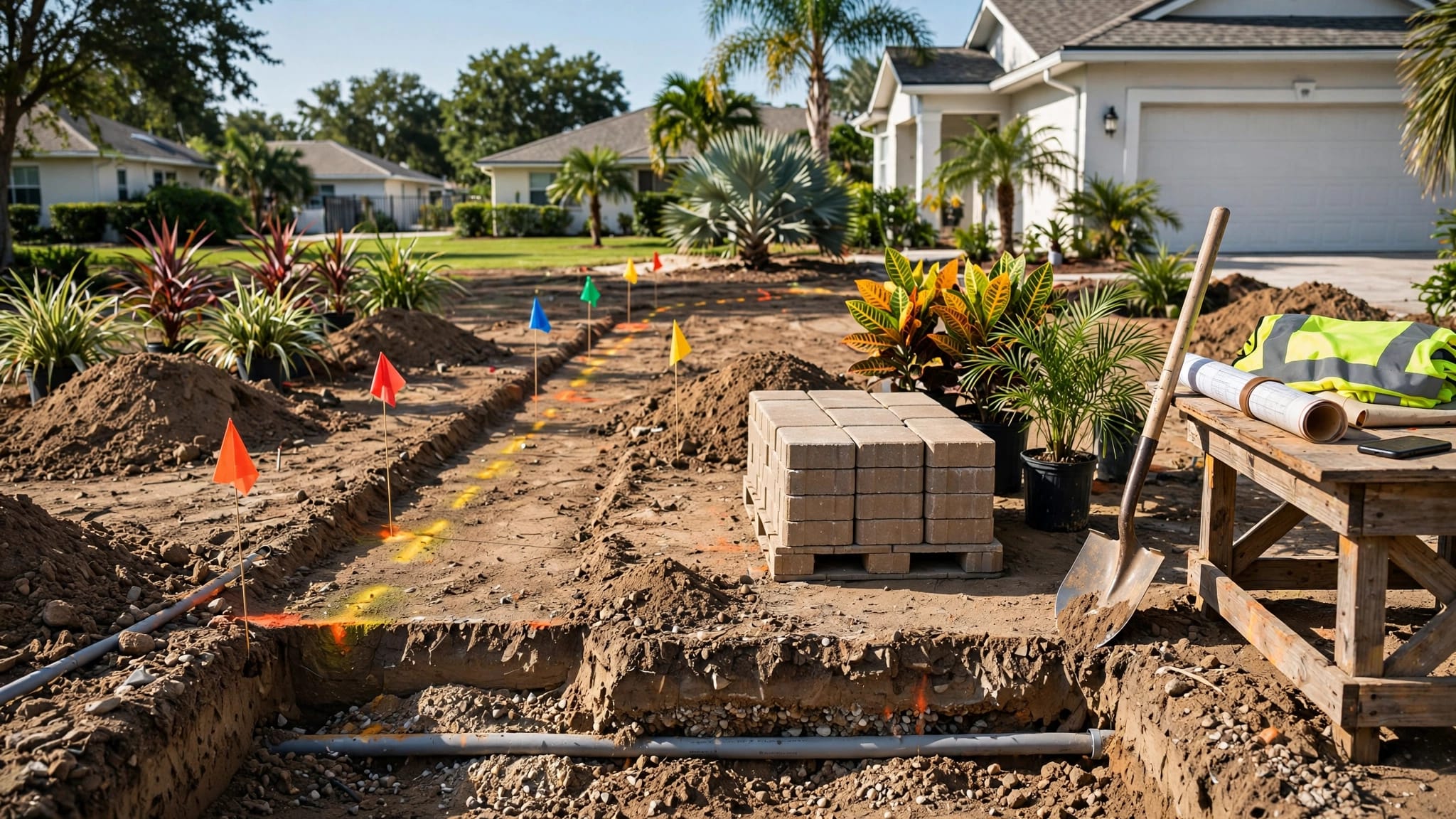
Soil disturbance can also break the treatment barrier. Plan applications around aeration, edging, trenching, grading, irrigation repairs, and major landscaping work. If a concrete company will pour a patio, install a walkway, or repair a slab, complete the soil work first whenever possible. Routine paver cleaning usually won't affect turf treatment, but replacing joint sand or moving soil along hardscape edges can.
For homeowners comparing natural grass with artificial turf, the phrase "artifical turf" also appears in online searches. Synthetic grass reduces weed growth within the turf surface, but seeds can still collect along seams, borders, drainage areas, and nearby planting beds. A proper base and drainage plan still matter.
When to call a local lawn professional
Timing is only one part of successful weed control. Correct identification matters because crabgrass, goosegrass, sedges, broadleaf weeds, and lawn diseases need different responses.
Contact a local lawn professional when:
- You can't identify the weed before choosing a treatment.
- The turf is thin, stressed, newly installed, or recovering from insect damage.
- Your lawn has standing water or uneven irrigation.
- The treatment area borders ponds, drains, vegetable gardens, or ornamental plants.
- You need help calibrating a spreader or sprayer.
- A major outdoor construction or landscaping project is scheduled.
Nutgrass and other sedges are common sources of confusion. They don't respond to every pre-emergent product, and established plants may need a separate approach. See these local instructions for how to get rid of nutgrass in your lawn before treating a sedge problem with a general weed preventer.
A professional can inspect the grass, soil, irrigation, and surrounding beds together. That matters because recurring weeds often point to thin turf, compacted soil, excess moisture, or a drainage problem. Herbicide alone won't correct those conditions.
Pre-emergent treatment reduces weed pressure, but it won't promise a completely weed-free lawn. Dense, properly mowed turf and even irrigation help close the open spaces where weeds take hold. Regular scouting also makes it easier to address a problem before it spreads.
Conclusion
The most dependable pre-emergent weed control schedule for Southwest Florida starts with conditions, not a fixed date. Use February 1 as a South Florida planning marker for spring, watch soil and nighttime temperatures, and monitor late October into November for winter weed prevention.
Choose a turf-safe product, follow every label direction, and water it in only as instructed. When weeds are difficult to identify or the lawn has drainage and irrigation problems, local help can prevent a small timing mistake from becoming turf damage. A well-timed application reduces pressure, while healthy grass provides the rest of the defense.