


Perennial Peanut vs St Augustine Grass in Southwest Florida
Southwest Florida can turn a lawn choice into a maintenance problem before the first plant goes in. Heat, humidity, sandy soil, summer downpours, winter drought, and filtered shade all affect how well a yard performs.
For homeowners weighing perennial peanut vs St Augustine grass, the main question is simple: do you want a walkable turf lawn or a flowering groundcover? Perennial peanut fits sunny, low-traffic areas, while St. Augustine grass creates the familiar green carpet around a home. Start with the site conditions before choosing the plant.
Choosing: perennial peanut vs St Augustine grass
These plants grow well in warm climates, but they fill different roles in a Southwest Florida yard.
Perennial peanut, also called Arachis glabrata , is an ornamental, rhizome-forming legume. It produces low green foliage and small yellow flowers during active growth. Once established, it can cover sunny spaces with less mowing than conventional turf. However, it doesn't create the same smooth, uniform surface as lawn grass.
You can mow perennial peanut occasionally to tidy its appearance, but mowing won't turn it into a traditional turf lawn. Its flowers and slightly softer texture are part of its appeal. It works well beside planting beds, on sunny slopes, around pool areas, and in low-use sections of a property.
St. Augustine grass, or Stenotaphrum secundatum , is a true warm-season turfgrass. Its broad blades and above-ground runners form a dense lawn when the soil, irrigation, and sunlight are suitable. It handles normal household foot traffic better than perennial peanut, although neither option is ideal for constant heavy use.
The difference matters when planning your landscaping. Groundcover can soften an area and reduce mowing, while turf provides a clear surface for walking, playing, and outdoor furniture.
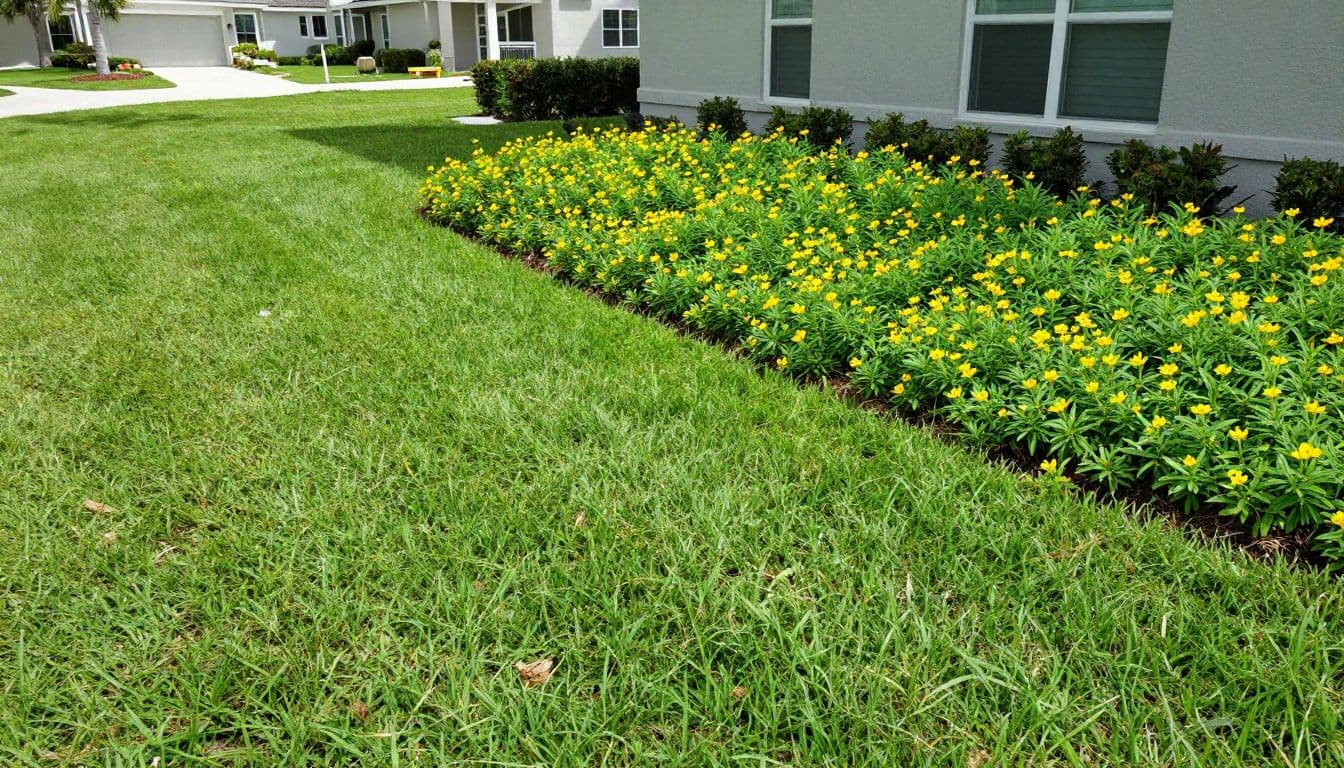
A quick comparison for Southwest Florida yards
This side-by-side view highlights how each option fits common residential needs.
| Factor | Perennial peanut | St. Augustine grass |
|---|---|---|
| Main use | Ornamental groundcover | Traditional lawn turf |
| Appearance | Low foliage with yellow flowers | Dense, broad-bladed green grass |
| Best sunlight | Full sun | Full sun to filtered shade |
| Mowing | Occasional tidying | Regular mowing during active growth |
| Water needs | Regular moisture while establishing, less after rooting | Consistent irrigation during dry periods |
| Foot traffic | Low to occasional use | Moderate household use |
| Installation | Often plugs or sprigs, with slower coverage | Sod or plugs, with faster lawn coverage |
| Main concerns | Weeds during establishment and standing water | Chinch bugs, fungal problems, drought stress, and shade |
The perennial peanut vs St Augustine grass decision comes down to function. Choose peanut when flowers, lower mowing, and a relaxed groundcover look matter most. Choose St. Augustine when you need a recognizable lawn with a more even surface.
Southwest Florida conditions that change the decision
Heat, sandy soil, and the dry season
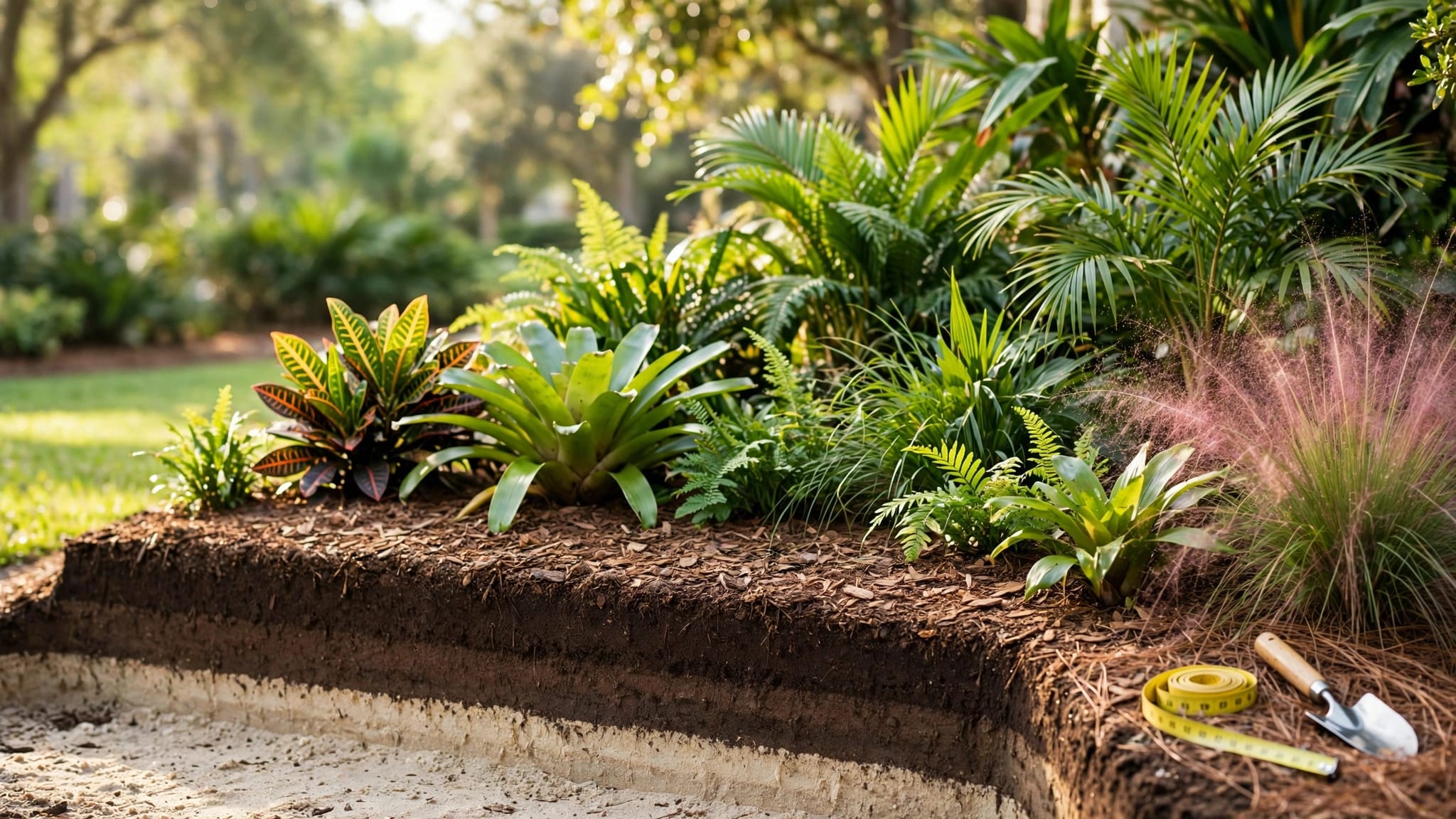
Both plants handle warm weather, but neither can overcome poor preparation. Sandy soil in Cape Coral, Fort Myers, Estero, and Bonita Springs often drains quickly. That helps prevent some standing water, yet it also means irrigation and nutrients can move below the root zone fast.
Perennial peanut often performs well in sunny, well-drained soil after its roots become established. It still needs steady moisture during the early growth period. New plugs can struggle if the bed dries out repeatedly before they spread.
St. Augustine grass also needs reliable irrigation during Southwest Florida's dry season. A lawn may look healthy after rain, then develop thin or brown areas when several dry weeks follow. Check sprinkler coverage across the entire yard, especially near sidewalks, walls, and corners where spray patterns often miss.
Neither plant should receive fertilizer based only on color. A soil test can show whether the lawn or groundcover needs nutrients. Perennial peanut is a legume that can fix nitrogen, but that doesn't mean every planting needs zero fertilizer. St. Augustine also responds poorly to excess fertilizer, which can encourage weak growth and certain disease problems.
Rainy-season drainage, shade, and foot traffic
The rainy season creates a different set of problems. Heavy rainfall can leave low spots saturated, wash soil toward patios, and spread fungal issues through turf. Perennial peanut dislikes standing water, and St. Augustine grass can also thin when its roots remain wet for too long.
Drainage comes first. Correct grading, downspout discharge, irrigation leaks, and compacted areas before installing either plant. Adding new sod over a wet, poorly graded section only hides the problem for a short time.
Shade separates the two choices in many residential yards. St. Augustine generally handles filtered shade better than perennial peanut and many other warm-season grasses. Still, dense shade beneath a large tree or beside a tall wall can cause thinning. Perennial peanut needs strong sunlight for dense coverage and reliable flowering.
Regular foot traffic also favors St. Augustine. A path to the pool, mailbox, or side gate can wear through perennial peanut and expose soil. If people cross the same area every day, add stepping stones or a defined walkway instead of expecting either plant to withstand constant traffic.
Maintenance, appearance, and long-term upkeep
St. Augustine grass needs regular mowing during the growing season. Keep the blade sharp and follow the proper mowing height for the variety. Cutting too low exposes soil, stresses the roots, and gives weeds more room to appear. Mowing wet grass can also leave clumps and ruts, so wait until the surface dries.
The grass may also face chinch bugs, gray leaf spot, and root problems when conditions favor them. Brown patches don't always mean the lawn needs more water. Check for irrigation failure, insects, disease, compacted soil, and drainage problems before applying a treatment.
Perennial peanut usually needs less mowing, but it isn't maintenance-free. Weeds can appear while plugs are filling in. Early weed control and consistent irrigation help the planting close its gaps. After the groundcover fills out, occasional mowing can keep the area neat and control taller growth.
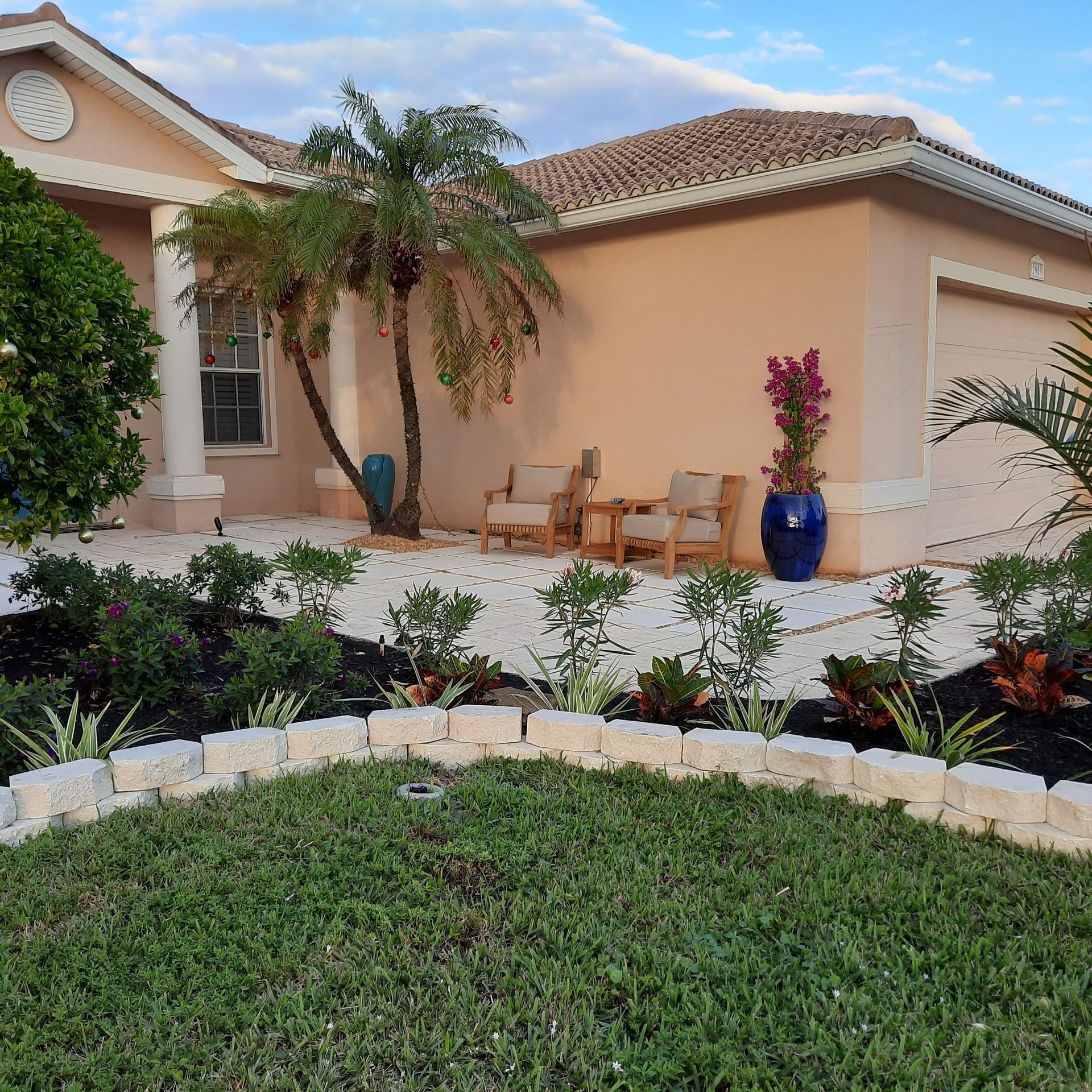
Both choices need defined edges. St. Augustine runners can move into flower beds, while perennial peanut can spread beyond its intended border. Steel, concrete, plastic, or stone edging can keep the transition cleaner.
Hardscape edges need attention as well. Keep grass runners, soil, and plant debris away from pavers so routine paver cleaning doesn't become more difficult. A narrow planting gap beside a patio may look attractive, but it needs enough room for maintenance equipment and hand trimming.
Which option fits your yard?
Your perennial peanut vs St Augustine grass choice should follow how each section will be used.
- Choose St. Augustine grass for a front lawn where you want a continuous green surface around the house. It suits ordinary walking, outdoor furniture, and regular lawn care when the site has enough sunlight.
- Choose perennial peanut for a sunny side yard, broad planting bed, pool border, or slope that doesn't receive constant foot traffic. Its yellow flowers add seasonal color, and its lower mowing needs can reduce routine upkeep.
- Use St. Augustine in areas with filtered light, but avoid planting it in deep shade. If sunlight remains limited, mulch, stone, or a shade-tolerant groundcover may perform better than a struggling lawn.
- Fix low spots and wet areas before planting either option. A drainage correction may include grading, a swale, a catch basin, or an irrigation repair, depending on the cause.
- Consider artificial turf for a small area that needs a consistent green appearance without mowing or irrigation. Some online searches call it "artifical turf," but artificial turf is the standard spelling. It has different heat, drainage, and installation considerations than living plants.
- Keep heavy-use zones separate from ornamental groundcover. A short walkway, paver path, or patio often protects the planting and makes the whole yard easier to maintain.
A sunny, low-use area gives perennial peanut its strongest case. A conventional lawn area with moderate use gives St. Augustine the advantage.
Installation details that protect the result
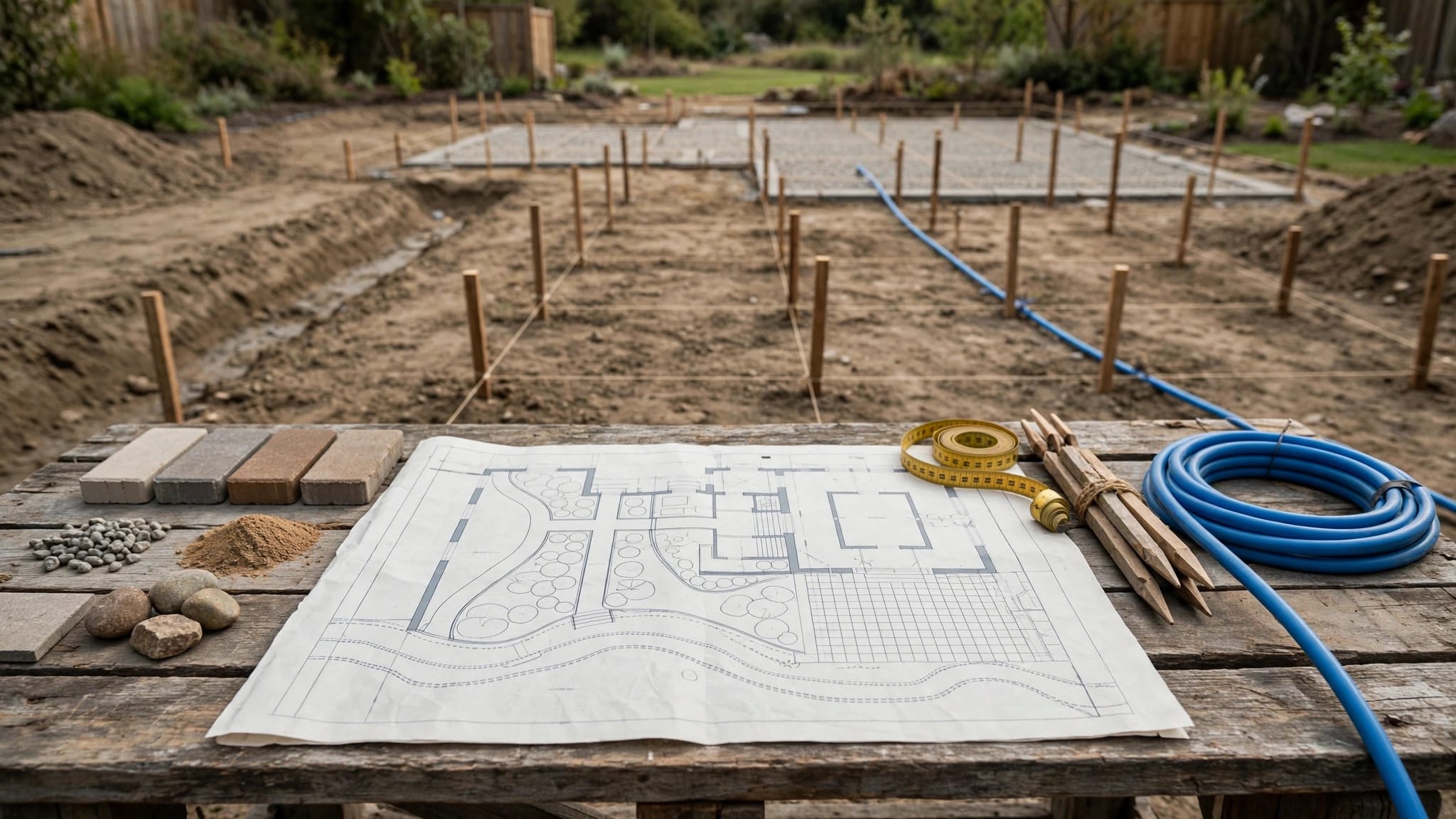
Start by assessing sunlight at different times of day. A space that looks sunny in the morning may spend most of the afternoon beneath tree or building shade. Check irrigation coverage, soil drainage, and the direction of roof runoff before removing existing grass.
Perennial peanut is commonly installed with plugs or sprigs, so coverage develops over time. The bed must stay free of aggressive weeds while the plants spread. Follow the grower's spacing and watering recommendations for the selected cultivar, since establishment time varies with plant material, season, and site preparation.
St. Augustine sod provides a faster finished appearance. However, the soil beneath it still needs grading and preparation. Uneven soil leaves low seams, creates mowing problems, and can direct water toward the house. Sod also needs prompt watering after installation so the roots don't dry before they connect with the soil.
Avoid blending the two plants across a large open area. Their textures, mowing needs, and growth habits differ, so an undefined boundary can look untidy. Use edging, a planting bed, or a hardscape strip to create a clear transition.
If you plan to replace part of the lawn with a patio, walkway, or seating area, coordinate the elevations before planting. A concrete company or paver installer needs finished grades that direct water away from the home and protect nearby planting areas.
For a broader local comparison of turf types and installation considerations, review this guide to choosing the right turf for your yard. Site access, soil preparation, irrigation work, and removal of old lawn can all affect the final quote.
Conclusion
Perennial peanut and St. Augustine grass can both fit Southwest Florida, but they shouldn't be treated as interchangeable lawn products. Perennial peanut suits sunny, low-traffic areas where flowers and reduced mowing are welcome. St. Augustine remains the better fit for a conventional, walkable lawn with filtered shade.
When comparing perennial peanut vs St Augustine grass, start with how the space will be used , then check sunlight, drainage, and irrigation. The right plant is the one that matches the site instead of fighting it.