


Landscape Warranty Questions to Ask Before You Sign
A beautiful yard can become a costly headache when a contractor's warranty sounds clear but leaves out the details that matter. Before you hire a landscaping or hardscape professional, ask what the landscape warranty covers, how long it lasts, and who handles problems.
A written promise about plants may differ from a workmanship guarantee for pavers, irrigation, concrete, or artificial grass. The right questions help you compare estimates fairly and avoid arguments after the work is complete.
What a Landscape Warranty Should Cover
A landscape warranty should connect directly to the work listed in your proposal. It may cover installation defects, failed plant material, defective products, or repairs caused by poor workmanship. Those categories often have different terms.
Start by asking the contractor to describe each warranty in plain language. A single sentence such as "all work guaranteed" doesn't tell you what happens if a patio settles, an irrigation valve fails, or a newly installed palm dies.
Workmanship warranties
A contractor workmanship warranty usually covers labor and installation quality. Depending on the project, that may include improperly installed pavers, loose edging, faulty irrigation connections, poor grading, or installation defects in concrete work.
Ask whether the contractor will repair the problem, replace the affected material, or refund part of the cost. Also ask who pays for removal, disposal, replacement materials, and return visits.
Concrete deserves detailed wording because cracks, settlement, surface wear, drainage, and soil movement can have different causes. If a separate concrete company performs the work, confirm whether its warranty applies directly or passes through the main contractor.
Product and plant guarantees
Manufacturer warranties cover products, not necessarily the labor used to install them. For example, an artificial turf manufacturer may cover defects in fibers, backing, or color stability, while the installer handles base preparation and seams.
Plant guarantees also need careful review. Some contractors cover replacement plants for a stated period, but the guarantee may exclude damage caused by irrigation problems, neglect, pests, extreme weather, animals, or improper maintenance.
A warranty may also require you to follow written watering instructions. Ask whether the contractor will inspect the irrigation system before denying a plant claim.
Define the Project Scope Before Discussing Coverage
Warranty questions are easier when the proposal names every part of the job. A vague scope creates room for disagreement because the contractor and homeowner may remember different promises.
Review the estimate line by line. A complete description should identify the materials, quantities, installation areas, preparation work, and cleanup. It should also state which items come from another supplier or subcontractor.
For a Southwest Florida project, ask whether the scope includes:
- Soil preparation, grading, drainage adjustments, and removal of existing materials.
- Pavers, base material, joint sand, edging, sealer, and final cleanup.
- Concrete thickness, reinforcement, finish, color, expansion joints, and curing expectations.
- Plant sizes, species, soil amendments, mulch, and irrigation adjustments.
- Artificial grass, including the aggregate base, seams, edge restraint, infill, and drainage work.
- Warranty paperwork for branded products installed on the property.
The installation sequence can affect future repairs. Underground irrigation work usually needs attention before a new patio or walkway covers the area. This proper sequence for landscape installation can help you identify which contractor is responsible for each phase.
Ask what the warranty excludes
Exclusions aren't automatically unfair. Outdoor materials face weather, soil movement, root growth, vehicle traffic, maintenance errors, and accidental damage. However, you should understand those limits before approving the work.
Ask whether the warranty excludes:
- Hurricane or storm damage.
- Flooding, standing water, erosion, or drainage conditions outside the contractor's control.
- Damage from vehicles, trailers, heavy furniture, pets, or pool chemicals.
- Cracks or movement caused by unstable soil, tree roots, or changes made by another contractor.
- Plant loss caused by missed watering, irrigation failure, pests, disease, or pruning.
- Problems caused by pressure washing, sealing, chemical treatments, or homeowner repairs.
The key question is whether an exclusion could apply to a normal condition on your property. For example, if the contractor knows a low area collects water, ask how that condition affects the warranty before installation begins.
Landscape Warranty Questions to Ask Before Signing
Take these questions to the estimate meeting or send them by email. The answers should appear in the contract, proposal, or attached warranty document.
- What exact work and materials does the warranty cover?
Ask the contractor to name each covered item. "Installation" may mean something different for pavers, plants, irrigation, concrete, lighting, and turf. - When does coverage begin, and how long does it last?
The start date might be the installation date, final payment date, or project completion date. Get the time period in writing for both labor and materials. - What remedy will you provide if there is a covered problem?
Find out whether the contractor repairs, replaces, adjusts, or reimburses. Ask whether the warranty covers labor as well as replacement materials. - What maintenance must I perform?
Request watering schedules, mowing or cleaning instructions, sealing recommendations, and limits on chemical use. Ask whether failing to follow those instructions voids the entire warranty or only affects the damaged item. - How do I submit a claim?
Confirm the contact person, required photos, response time, inspection process, and notice deadline. A short claim deadline can matter if you discover a problem after returning from vacation. - Who handles manufacturer warranties?
Ask whether the contractor will help submit a product claim or whether you must contact the manufacturer yourself. Keep product names, model numbers, invoices, and warranty cards with your project records. - Does the warranty transfer if I sell the home?
Some guarantees stay with the original customer. Others may transfer if the next owner receives the documents within a stated period.
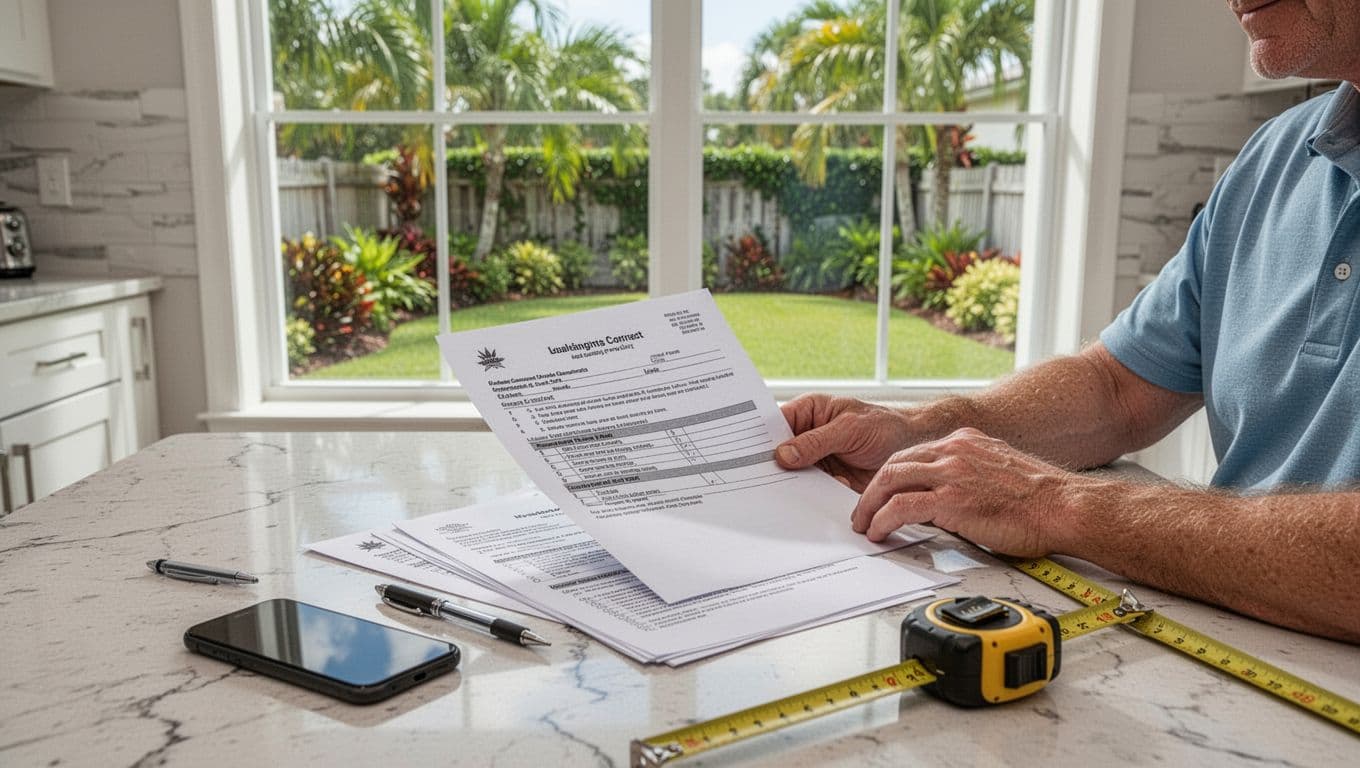
A contractor who answers these questions clearly is easier to evaluate than one who relies on broad verbal assurances. You can also compare the warranty against the project details listed in the landscape and paver services being considered.
Keep Contractor, Manufacturer, and Plant Coverage Separate
These three types of protection often overlap in conversation, but they don't provide the same rights or remedies.
| Coverage type | Usually concerns | Questions to ask |
|---|---|---|
| Contractor workmanship warranty | Installation quality and labor defects | What installation failures are covered? |
| Manufacturer warranty | Product defects or premature product failure | Which parts and conditions does the manufacturer cover? |
| Plant guarantee | Plant survival during a stated period | What care requirements and exclusions apply? |
A contractor may install a product correctly, yet the product can still fail. In that case, the manufacturer may handle replacement while the contractor handles removal and installation. Your written agreement should explain how that process works.
The opposite can also happen. The product may be sound, but poor base preparation, faulty wiring, incorrect irrigation, or weak installation can cause failure. A manufacturer usually won't pay for a workmanship problem.
Pavers and concrete require cause-based questions
For pavers, ask how the warranty treats sinking, shifting, spreading joints, broken units, color changes, and drainage problems. Ask whether repairs include lifting and rebuilding the affected section or only adding sand or adjusting individual pieces.
A properly prepared base is central to paver performance. Review this paver base depth guide and ask the contractor what preparation your soil and intended use require.
For concrete, ask how the contractor defines a covered defect. Surface cracks, structural cracks, settlement, stains, scaling, and discoloration may have different causes. The contract should state what inspection standard applies and what repair method the contractor will use.
Plants, turf, and irrigation need care instructions
Plant guarantees often depend on watering and maintenance that begin as soon as installation ends. Ask who starts the irrigation schedule, how you know each zone works, and what happens if a controller or valve fails.
If the proposal includes "artifical turf," ask the contractor to correct the wording and identify the exact turf product. More importantly, ask who covers fading, seam separation, drainage problems, loose edges, and damage to the prepared base.
For pavers, clarify whether routine paver cleaning or sealing is homeowner maintenance or part of a covered repair. A contractor may exclude damage caused by aggressive pressure washing, harsh chemicals, or improper sealing.
Warning Signs in a Landscape Warranty
Some warranty language should prompt more questions before you sign. You don't need a guarantee that covers every possible problem, but you do need terms you can understand.
Watch for wording such as:
- "Satisfaction guaranteed" without a definition of satisfactory work.
- "Lifetime warranty" without naming the owner, product, coverage, or conditions.
- A promise that covers materials but says nothing about labor.
- Exclusions that remove nearly every outdoor cause of damage.
- A requirement to report problems within an unusually short period.
- A clause that voids coverage after any repair by another professional, even an unrelated repair.
- Verbal promises that don't appear in the estimate or contract.
- No process for inspection, repair scheduling, or dispute handling.
A contractor might offer a reasonable warranty with several exclusions. The concern is whether the exclusions are visible and connected to real risks. Ask the contractor to explain any term you can't understand, then request a revised document if the explanation changes the original promise.
Put every promise in writing
Save the signed contract, estimate, warranty, receipts, product documents, plant list, care instructions, inspection photos, and payment records. Keep emails and text messages that clarify materials or repair responsibilities.
Before work begins, photograph existing cracks, drainage areas, plants, irrigation heads, walls, and adjacent surfaces. Those photos can help separate pre-existing conditions from installation damage.
Ask for a final walkthrough after completion. Test lights and irrigation, inspect paver edges and joints, look for concrete finishing issues, and confirm that all promised cleanup is complete. Write down open items with a target repair date.
Match the Warranty to Your Property and Contractor
A warranty has value only when it fits the conditions on your property. A yard with poor drainage needs different questions than a simple planting refresh. A driveway used by heavy vehicles needs different concrete and base discussions than a small walkway.
Ask how the contractor accounts for local soil, rain, irrigation, salt exposure, shade, and plant selection. In Fort Myers, Cape Coral, Estero, and Bonita Springs, the right design may still need careful watering and maintenance during establishment.
You should also confirm licensing, insurance, permits, subcontractor responsibilities, and payment terms where applicable. Requirements vary by location and project type, so check current city, county, and state rules or speak with a qualified local professional. This article offers practical planning guidance, not legal advice.
A written warranty won't prevent every outdoor problem. It will, however, make responsibilities easier to identify when a problem appears.
Conclusion
The strongest landscape warranty is clear about scope, time limits, exclusions, maintenance, remedies, and claim procedures. Before hiring a contractor, separate workmanship coverage from manufacturer protection and plant guarantees.
Ask how the terms apply to your actual soil, drainage, irrigation, pavers, concrete, plants, and turf. Then put every answer in the contract and keep the supporting records. A careful review before installation can save far more time than a warranty dispute after the project is finished.