


Commercial Irrigation Audit Checklist for Florida Properties
A commercial irrigation audit can uncover wasted water before it appears as a high utility bill, dead turf, stained sidewalks, or angry tenants. For Florida property managers, the goal is simple: confirm that each zone delivers the right amount of water to the right plants without spraying buildings, pavement, parked cars, or neighboring properties.
Florida does not have one universal watering schedule. Local rules can depend on the city, county, utility, and water management district. This checklist helps you inspect the system, document problems, prioritize repairs, and verify corrections without treating local requirements as statewide rules.
What a Commercial Irrigation Audit Should Accomplish
A useful audit gives you more than a list of broken sprinkler heads. It creates a working record of the property's water source, irrigation zones, controller settings, equipment condition, and actual coverage.
That record helps with budgeting and vendor management. It also gives your maintenance team a baseline after construction, storm damage, irrigation repairs, or changes to the property's landscaping.
Set the audit scope by property type
Start by identifying every irrigated area. An office park may have turf around monument signs, tree islands, entry beds, and sidewalks. A multifamily community may add pool areas, dog parks, courtyards, and separate zones around each building.
Retail centers need extra attention near storefronts and parking lots. Overspray can create slippery pavement, water vehicles, stain masonry, and encourage algae growth. HOA managers should also include common areas, entrances, retention pond edges, and irrigation serving shared amenities.
A full baseline audit should cover every controller and zone. If the property is too large for one visit, divide it by controller or valve group and document which areas remain untested.
Gather records before the field visit
Collect recent water bills, irrigation plans, controller photographs, repair invoices, backflow reports, and prior audit results. Ask the irrigation contractor for valve maps, zone descriptions, and known problem areas.
Also record the age of each controller, the water source, and any recent construction. New sidewalks, drainage work, pavers, trees, or turf can damage lines or change the amount of water a zone needs.
Verify Florida's Local Watering Requirements
Watering rules should be checked before anyone changes the controller. UF/IFAS states that watering days and times vary by municipality and water management district. A property in Fort Myers may not follow the same schedule as one in Tampa, Miami, or Jacksonville.
Florida Department of Environmental Protection rules and local ordinances can also affect high-use properties, reclaimed water, and automatic irrigation systems. Treat the local schedule as a required audit record, not as background information.
Confirm watering days and times
Check the applicable city, county, water utility, and water management district before approving a new schedule. A common Florida model limits irrigation to two days per week and allows watering before 10 a.m. or after 4 p.m., but local authorities may set different or stricter requirements.
Southwest Florida Water Management District guidance commonly recommends watering only one or two days per week when needed, with seasonal adjustments. It also advises property owners to verify local watering days and start times.
Record the authority consulted, the date checked, the approved days, the permitted hours, and any exceptions for new plantings or repairs. Keep a copy of the written guidance with the audit file.
Check the water source and backflow protection
Identify whether each system uses potable water, reclaimed water, a private well, or a combination. Note the meter, isolation valve, backflow assembly, pump, filter, and pressure regulator.
Florida Statutes Section 403.086 gives DEP authority to require backflow prevention on potable water lines in reclaimed-water service areas. Utilities may add their own cross-connection procedures, inspection rules, and testing intervals.
Never assume that a backflow requirement or testing schedule is identical across Florida. Confirm the current requirement with the applicable utility or authority, then retain the test report and repair documentation. A backflow protection guide can also help your team identify common device failures before calling a qualified contractor.
Build a Zone Map Before Testing
A zone map turns a confusing irrigation system into a manageable maintenance record. It should show the controller, valve boxes, backflow device, water meter, mainline, shutoff points, and the area served by each valve.
Update the map after every major repair or outdoor improvement. A map that does not match the property can lead to missed zones, repeated service calls, and repairs in the wrong location.
Inventory every controller
For each controller, record the manufacturer, model, location, power source, backup battery, date and time, and programmed start times. Photograph the controller screen before making changes.
List every active program and note whether the controller uses seasonal adjustment, weather data, soil moisture, or a rain sensor. Mark unused programs and manual overrides. Old programs can continue running after a property changes vendors or irrigation zones.
Look for one start time that initiates all zones in sequence. Southwest Florida Water Management District guidance says one start time is normally enough. If the controller has several start times, document whether they support cycle-and-soak watering or indicate duplicate programming.
Walk each zone from the valve to the last head
Open one zone at a time and compare the map with the actual property. Count the heads, identify spray heads, rotors, rotary nozzles, bubblers, and drip areas, then record the approximate coverage.
Check whether turf, shrubs, trees, and flower beds share a zone. Mixed plant material often has different water needs. Turf may need shorter, more frequent coverage than established shrubs, while drip zones need different pressure and filtration.
Mark missing heads, capped outlets, exposed pipe, crushed tubing, buried valves, and areas where roots or mulch block the equipment. Take photographs that show the problem and its location.
Inspect Sprinkler Heads, Valves, and Planting Areas
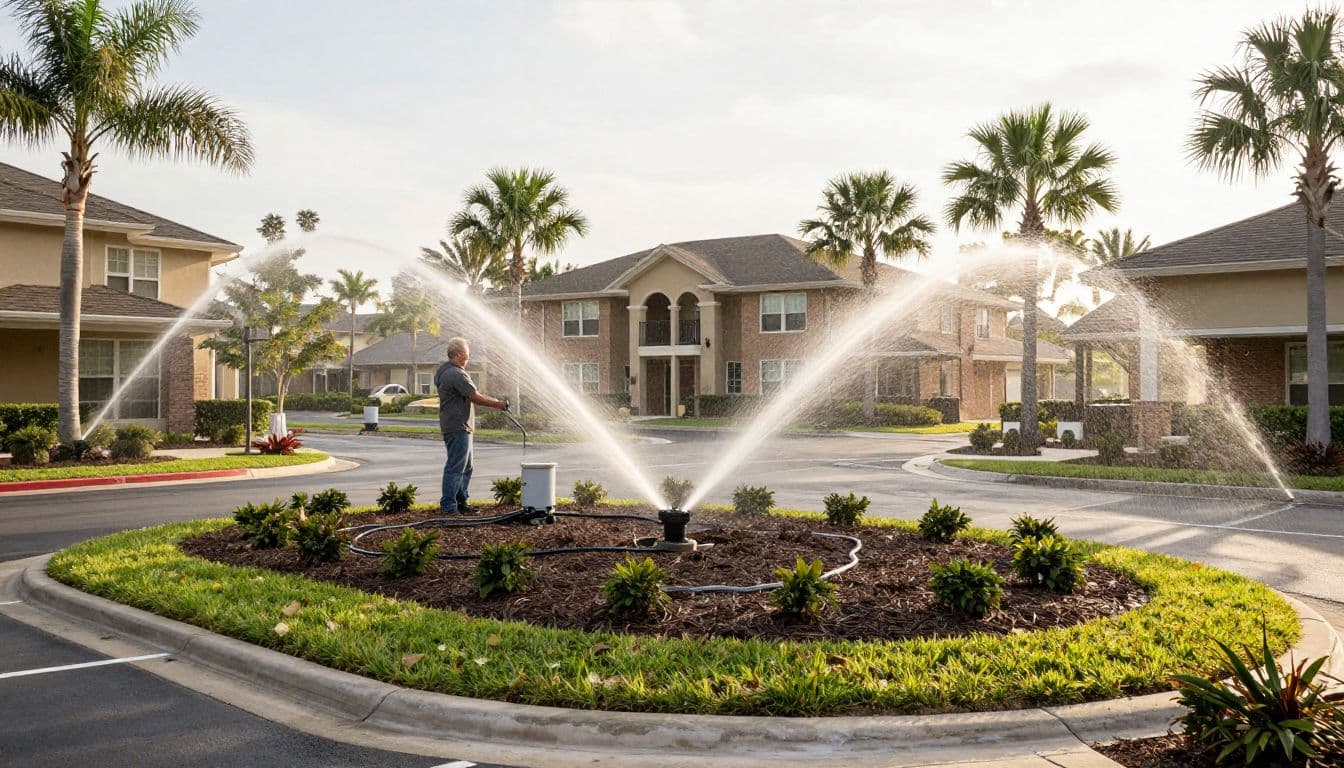
Field inspection reveals problems that controller screens cannot show. Run each zone long enough to observe startup, pressure, rotation, shutoff, and drainage.
Check sprinkler hardware and valves
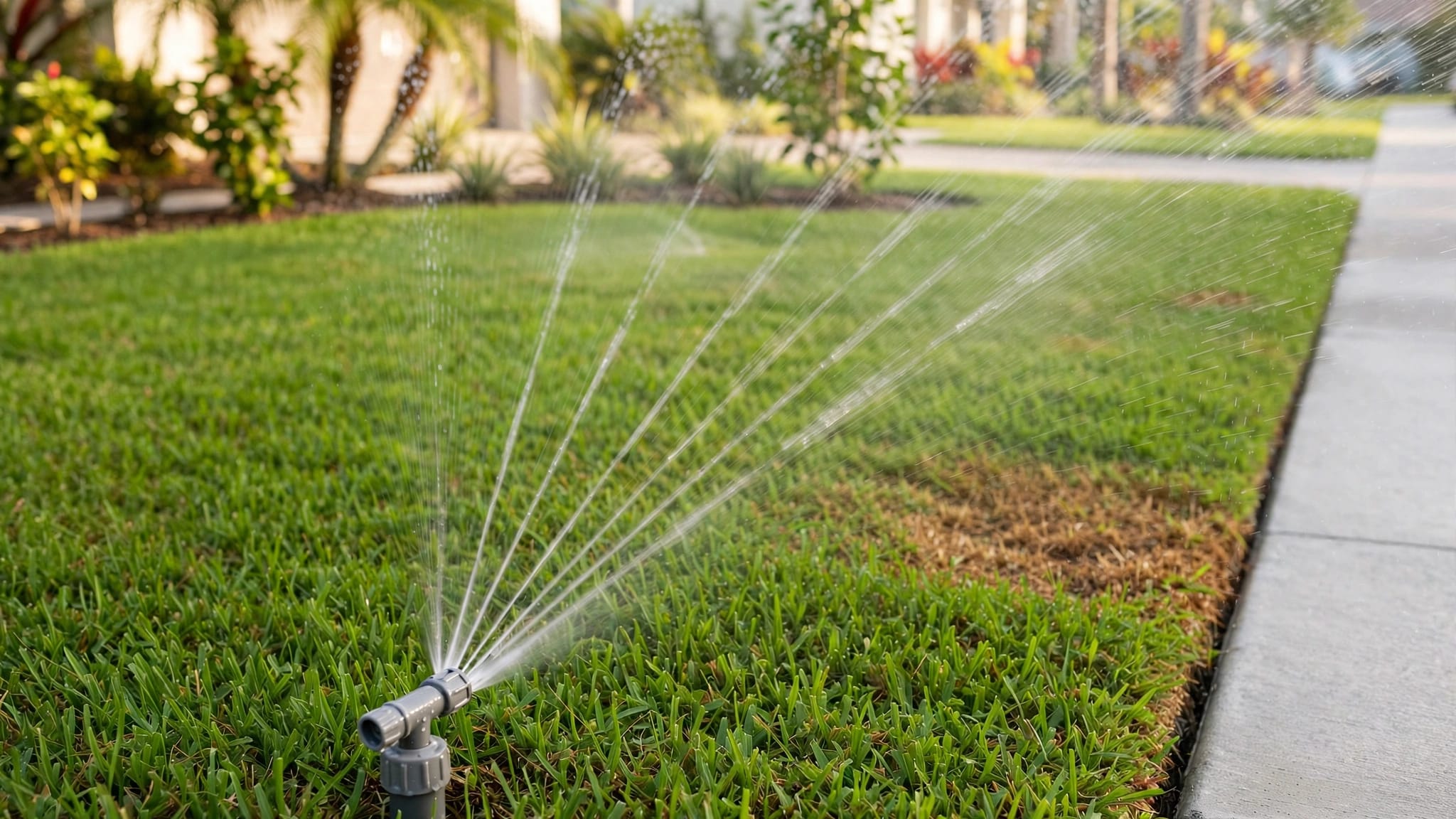
Inspect each spray head for a broken body, clogged nozzle, tilted stem, missing cap, or incorrect arc. A head that sprays a parking stall may have shifted after mowing, traffic, settling soil, or routine maintenance.
For rotors and rotary nozzles, check rotation speed, arc adjustment, nozzle condition, and head elevation. Heads that sit too low can disappear under turf. Heads that sit too high can become mowing hazards.
Inspect valve boxes for standing water, cracked lids, damaged wiring, and leaking valves. A zone that continues running after the controller shuts off may have a stuck valve, damaged diaphragm, or wiring problem.
Drip zones need clean filters, working pressure regulators, intact tubing, and unobstructed emitters. Look for disconnected lines, dry plants at the end of a run, and water pooling around one emitter.
Look for overspray, runoff, and wet spots
Sprays and rotors should not water sidewalks, curbs, buildings, roads, loading areas, or parked vehicles. Florida-Friendly Landscaping guidance also identifies emitters that spray buildings or sit too close to structures as problems.
Inspect the property during and after irrigation. Watch for water flowing into storm drains, eroded mulch, muddy turf, algae on pavement, and soggy areas near valve boxes. These signs can point to excessive runtime, poor grading, broken equipment, or compacted soil.
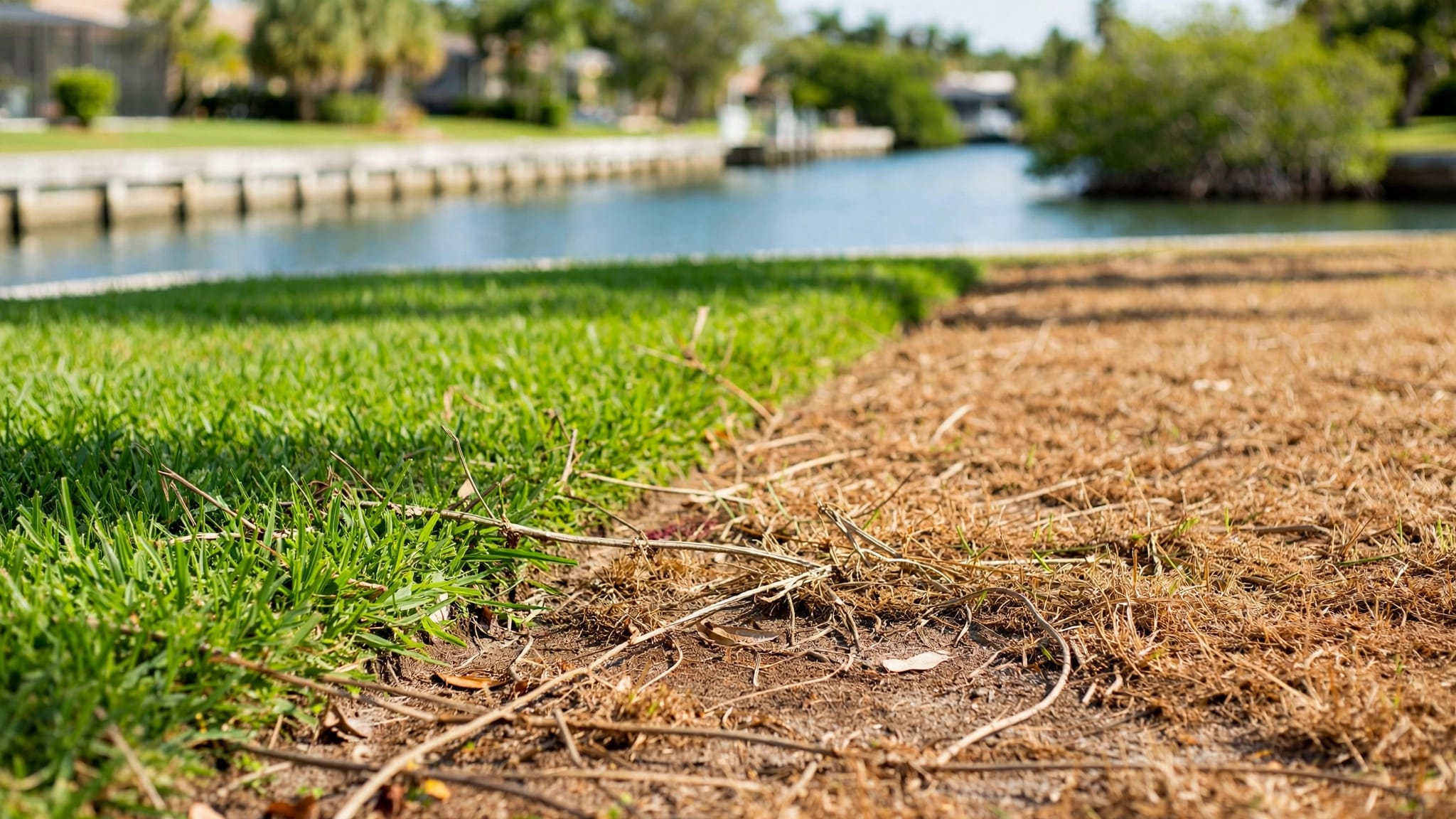
Compare plant health with water patterns. Brown turf beside saturated turf often indicates poor distribution rather than a system-wide shortage. Fix the coverage problem before adding minutes.
Measure Flow, Pressure, and Distribution
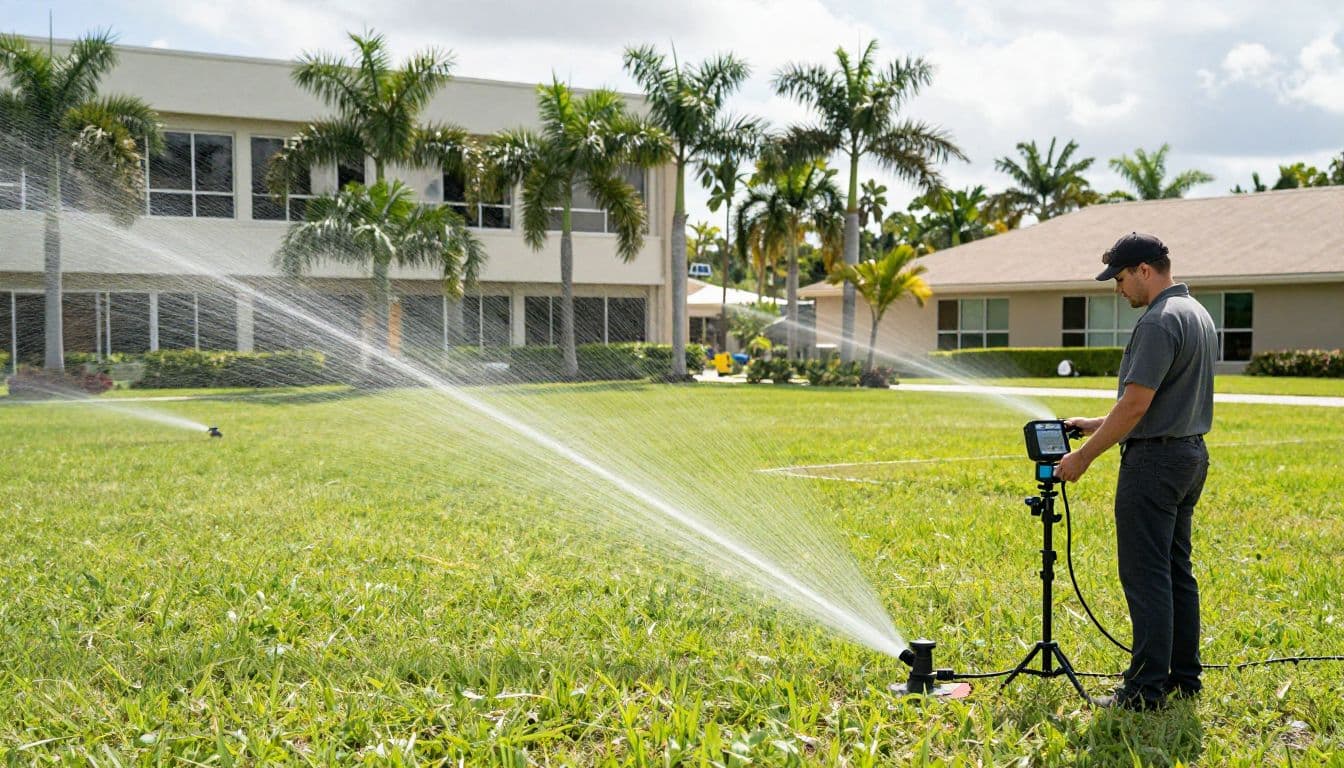
A visual walkthrough tells you where to look. Measurements show how much water the system actually applies.
Record readings under consistent conditions. Note the controller, zone number, weather, time, gauge location, and whether other water uses were operating.
| Reading | What to record | What the result may show |
|---|---|---|
| Static pressure | Pressure with the zone off | Supply or regulator concerns |
| Dynamic pressure | Pressure while the zone runs | Restrictions, undersized piping, or excessive demand |
| Flow | Gallons per minute by zone | Leaks, broken heads, or valve problems |
| Catch-cup depth | Water collected during a timed run | Coverage and precipitation differences |
| Runtime | Minutes by season and program | Overwatering or plant stress |
Compare pressure and flow by zone
Take static pressure before starting the zone. Then record dynamic pressure while the zone operates. A large pressure drop may point to a clogged filter, undersized pipe, excessive head count, failing pump, or an open valve elsewhere.
Measure flow at the meter or with a suitable flow device. Compare the result with design information, previous audit records, or the expected head count. A sudden increase can indicate a broken lateral line, missing nozzle, damaged valve, or underground leak.
Do not compare readings from different meter locations as if they were equal. Use the same measurement point whenever possible.
Run a catch-cup test
Place catch cups across the irrigated area at even intervals. Run the zone for a timed period, measure the water in each cup, and calculate the average depth. Then compare the average of the lowest quarter with the overall average to estimate low-quarter distribution uniformity.
Low uniformity means some areas receive far less water than others. Extending the runtime may keep dry areas alive, but it also overwaters the wet areas.
A low catch-cup reading is usually a coverage problem first, not a reason to add more minutes.
Correct mismatched nozzles, poor spacing, blocked heads, incorrect arcs, pressure problems, or damaged equipment. After the repair, repeat the test using the same cup layout and timing. This irrigation catch-cup testing guide can help maintenance staff keep the test method consistent.
Review Controller Programming and Sensors
An efficient system can still waste water if the controller runs the wrong program. Review settings zone by zone instead of changing the entire property at once.
Match programs to plant needs
Separate turf from shrubs, trees, palms, and flower beds whenever the system design allows it. High-volume spray heads and low-volume drip emitters should not share a zone unless the equipment and pressure requirements match.
Check watering days, start times, runtimes, seasonal adjustment, and rain delay settings. Remove duplicate programs and document any manual schedule. If the system uses cycle-and-soak, record the purpose and the time between cycles.
UF/IFAS recommends changing timer schedules by month when using fixed runtimes. That does not mean every property needs the same monthly settings. Soil, plant type, shade, rainfall, root depth, and irrigation equipment all affect the correct schedule.
Test rain, soil, and weather sensors
A sensor should change system operation when conditions call for it. Confirm that the sensor has power, a clean sensing surface, correct wiring, and an unobstructed location.
Test the rain sensor instead of relying on a controller icon. Check whether the system pauses after simulated rainfall or a documented sensor test. For soil-moisture or weather-based controllers, compare the programmed weather data with the actual property conditions.
Replace failed sensors and correct settings that override them. Also check for manual watering that bypasses the sensor and remains active after a repair.
Set Runtimes for Florida Soil and Seasons
Florida's sandy soils can drain quickly, but frequent irrigation can still create shallow roots, disease pressure, and nutrient loss. The schedule should respond to plant stress and measured coverage, not a fixed number copied from another property.
UF/IFAS guidance recommends watering when plants show visual signs of stress. For wilting turf in sandy soil where root growth is not limited, approximately 0.5 to 0.75 inches may be a useful watering benchmark. Rainfall, shade, soil compaction, and plant species can change that amount.
Use head type as a starting point
Southwest Florida Water Management District provides example runtimes for a two-day-per-week schedule. These figures are reference points, not a universal Florida schedule.
| Head type | Summer example | Fall example | Winter example | Spring example |
|---|---|---|---|---|
| Spray heads | 25 minutes | 15 minutes | 0 minutes | 20 minutes |
| Rotors or rotary nozzles | 45 minutes | 30 minutes | Under 10 minutes | 40 minutes |
Measure precipitation and distribution before adopting these settings. A spray zone with clogged nozzles or poor pressure may need equipment repair, not longer runtimes.
Adjust for site conditions
Reduce watering in shaded areas, during rainy periods, and where established plants show no stress. Use shorter cycles on slopes or compacted soil when runoff begins before water enters the root zone.
Inspect after schedule changes. Look for dry edges, pooling, runoff, and plant stress during the next representative irrigation cycle. Record the new settings and the reason for the change.
Prioritize Repairs and Coordinate Site Work
Use the audit to separate immediate water loss from improvements that can wait for a planned capital project. This makes the maintenance budget easier to defend.
Fix uncontrolled water loss first
Give priority to broken mainlines, stuck valves, major leaks, damaged backflow assemblies, and zones that run when the controller is off. Correct irrigation that sprays roads, entrances, buildings, or busy walkways.
Next, repair clogged nozzles, misaligned heads, damaged drip tubing, failed sensors, and exposed wiring. These repairs often improve coverage without redesigning the entire system.
If a required repair affects a water meter, backflow assembly, pump, or mainline, verify whether local permitting or licensed work requirements apply before scheduling the job.
Coordinate irrigation with outdoor improvements
Irrigation lines should be located before a concrete company pours a new sidewalk, patio, dumpster pad, or driveway. Relocating lines before hardscape work costs less than cutting fresh concrete later.
The same planning applies to paver installation, drainage work, tree planting, and bed renovations. Schedule paver cleaning after recurring overspray is corrected, or the stains may return.
Artificial turf reduces irrigation demand across the turf area, but nearby palms, shrubs, and planting beds still need correctly separated zones. During a larger landscaping project, confirm the final planting plan before setting sprinkler arcs and runtimes.
For Southwest Florida properties that need irrigation repairs alongside outdoor improvements, professional irrigation and landscape services can help coordinate the work sequence.
Retain Audit Records and Verify Corrections
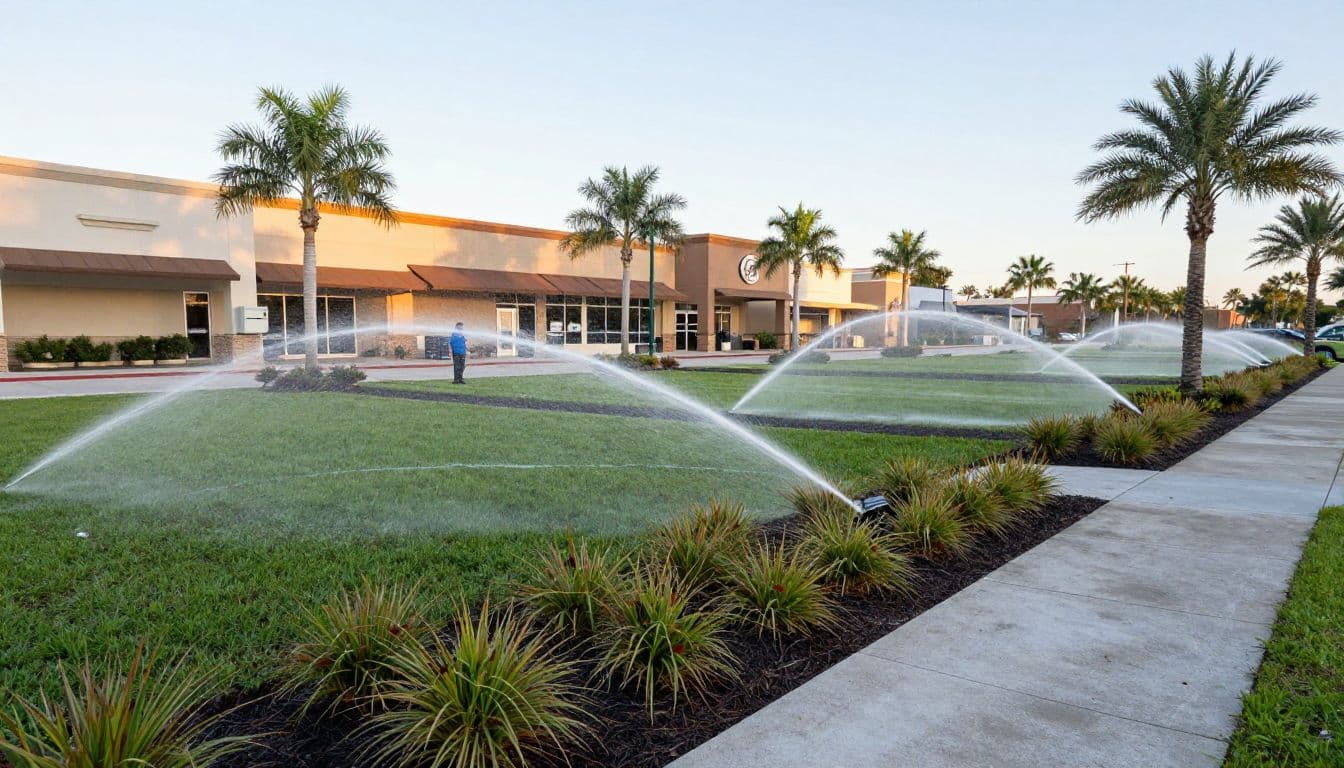
A commercial irrigation audit becomes more useful every time you repeat it. Keep the records in a shared property file, not only in a contractor's email.
Build a complete audit file
Retain the zone map, controller photographs, water source details, local watering schedule, and equipment inventory. Add pressure readings, flow readings, catch-cup results, sensor tests, and photographs of each significant defect.
Keep invoices, work orders, parts lists, warranties, backflow reports, permits, and contractor qualifications when applicable. Water bills can help identify leaks or unusual use after repairs, especially when you compare similar weather periods.
For every correction, record:
- The date and zone number.
- The original problem and measured evidence.
- The repair or adjustment completed.
- The new controller setting.
- The person or company who completed the work.
- The retest result and remaining recommendations.
Retest after repairs and construction
Run the affected zone after replacing heads, moving valves, correcting pressure, repairing wiring, or changing the planting layout. Repeat a catch-cup test when coverage changes.
Retest after grading, drainage work, new sod, artificial turf installation, tree removal, or hardscape construction. These projects can change runoff, shade, root zones, and head placement.
Compare before-and-after photographs and measurements. Close the work order only after the zone shuts off correctly, covers the intended area, and avoids unnecessary spray onto hard surfaces.
Set a Practical Audit Schedule
Property managers don't need to wait for a high water bill before checking irrigation. A simple inspection calendar catches small failures before they become expensive repairs.
Use routine checks between formal audits
Grounds staff can walk the property weekly during active growing periods. Look for wet pavement, broken heads, pooling, unusually dry turf, dead plants, exposed tubing, and water flowing after the system shuts off.
Review controller settings monthly or after a vendor visit. Confirm the date and time, active programs, watering days, seasonal adjustment, rain delay, and manual overrides.
Schedule a more complete audit at least annually, then add inspections after hurricanes, major storms, utility work, construction, pressure changes, or a sharp rise in water use. High-use properties may need a more frequent schedule based on their system size and operating history.
Use this field sign-off list
Before closing the audit, confirm that:
- Every controller and zone appears on the map.
- Watering days and hours match current local guidance.
- Turf and bed zones are separated where practical.
- Heads operate, rotate, and shut off correctly.
- Drip filters, regulators, and emitters function properly.
- No spray reaches buildings, sidewalks, roads, or parked vehicles.
- Pressure and flow readings are recorded by zone.
- Catch-cup results support the programmed runtime.
- Rain and weather sensors respond correctly.
- Backflow records and repair documents are current.
- Follow-up testing is scheduled for every corrected zone.
Make the Commercial Irrigation Audit Part of Property Operations
A well-run commercial irrigation audit gives property managers facts they can use. The records show where water is being lost, which repairs deserve priority, and whether a contractor's work improved the system.
Start with local watering requirements, then verify the water source, map every zone, measure performance, and adjust schedules to actual Florida conditions. When each change has a recorded reason and a retest result, irrigation becomes a manageable operating cost instead of a recurring surprise.