


How to Read a Florida Nursery Tag Before Buying Plants
Buying a plant by its flowers or current size can leave you with a shrub that outgrows the bed within a few years. A Florida nursery tag gives you the information needed to judge whether that plant fits your yard, but only if you read beyond the price and picture.
Florida yards vary widely. A sunny Cape Coral bed beside a paver driveway has different conditions than a shaded Fort Myers corner with slow drainage. Before you buy, match the tag to your site's sun, soil, mature space, irrigation, and local climate.
How to Read a Florida Nursery Tag Before Buying
Start with the details that identify the plant and describe its long-term needs. Labels can vary by grower, so use the tag as a guide rather than a complete guarantee.
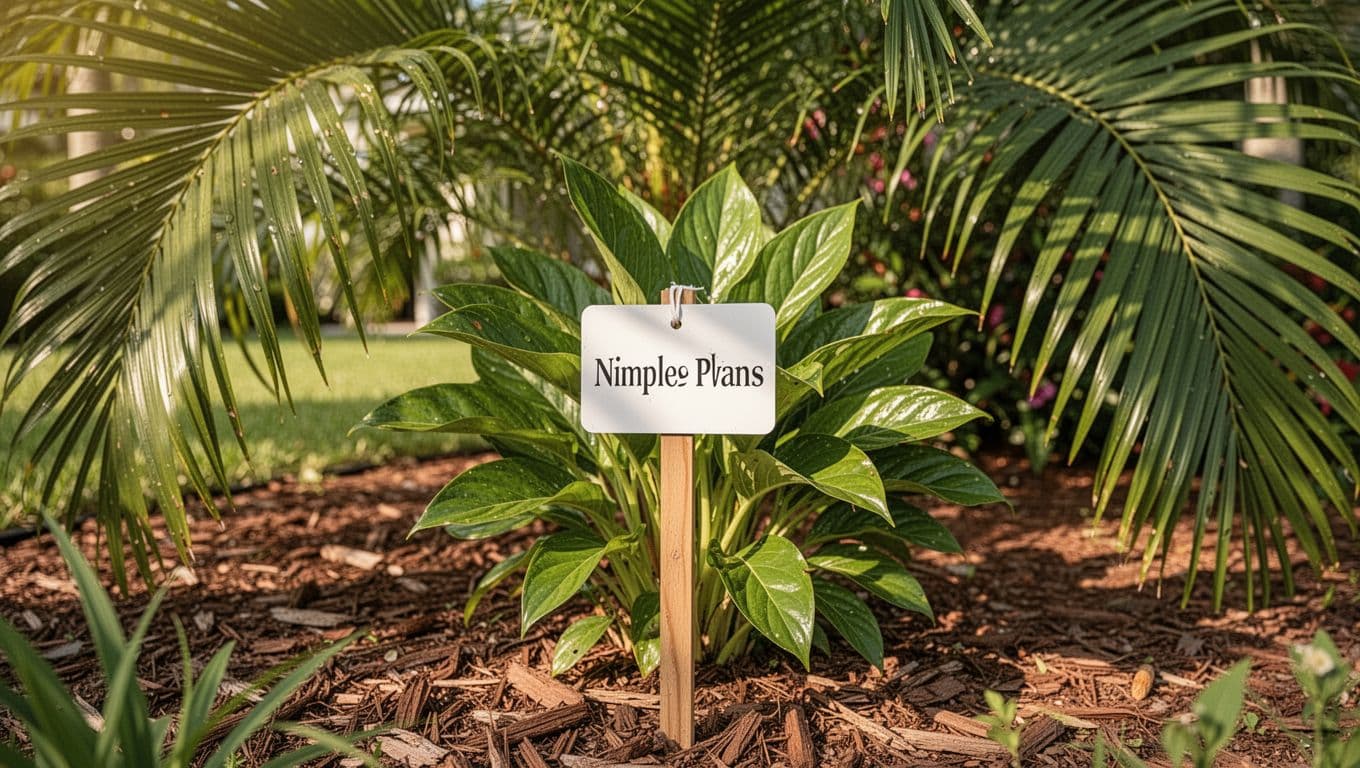
Find the botanical and common names
Most nursery tags list a common name and a Latin, or botanical, name. The common name helps you recognize the plant, while the botanical name identifies the exact species or cultivar.
Common names can vary between regions and nurseries. A tag that lists only "hibiscus" may not tell you whether you're buying a particular variety with a different mature size or growth habit. The botanical name gives you a more reliable way to confirm the plant with nursery staff or a Florida gardening resource.
Look for additional words after the species name. A cultivar name, often shown in single quotation marks, can point to a selected variety with different flower color, height, spread, or disease resistance.
Know whether you're reading a care label or inspection tag
A plant may carry a printed care label from the grower, along with a regulatory tag or inspection certificate. The care label discusses light, water, soil, and mature size. The regulatory tag relates to the plant's inspection and sale requirements.
The Florida Department of Agriculture and Consumer Services regulates nursery stock under Chapter 581, Florida Statutes. Approved nursery stock for sale or distribution must be inspected and accompanied by a valid inspection certificate or tag.
That certificate doesn't tell you whether the plant belongs beside your lanai. Use it as evidence that the stock passed the required inspection, then rely on the care information and your site conditions to make the buying decision.
Read mature size before current pot size
A five-gallon plant may look easy to fit beside a walkway today. The mature height and spread tell you whether it will still fit after years of growth.
Check both height and width
Look for measurements such as "mature height," "mature spread," or "space at maturity." The spread is especially important for foundation beds, pool areas, sidewalks, and narrow side yards.
UF/IFAS identifies mature size as one of the most important label details. Its Extension guidance also offers a useful rule of thumb: double the advertised plant height to get a better sense of how large a young plant may eventually become. That estimate isn't a substitute for the tag, but it can prevent you from underestimating a fast-growing shrub.
Words such as "dwarf" need careful reading. A dwarf cultivar may be smaller than the standard form while still becoming too large for a two-foot bed.
If the mature width doesn't fit the planting space, the plant is the wrong choice, even when the pot looks perfect today.
Plan around paths, walls, and utilities
Measure the available bed before shopping. Then compare that measurement with the plant's mature spread, not the container diameter.
Leave room for people to walk, irrigation equipment to operate, and workers to maintain the area. A shrub that grows into a walkway can become a constant trimming problem. Large roots can also affect nearby slabs, pavers, drains, or utility lines.
Southern live oak is a good example of why the mature-size line matters. A small tree may fit near a patio at the nursery, but its future canopy and root system require much more room. For smaller beds beside hard surfaces, choose plants with a mature form that stays inside the planned area.
Match light and water to your planting site
The same yard can contain full sun, bright shade, reflected heat, and wet soil within a few steps. Read the light and moisture sections together.
Translate light words into real yard conditions
"Full sun" usually means the plant needs several hours of direct sunlight. A south-facing or west-facing bed beside a wall may provide strong heat and light, while a bed under a mature tree receives filtered light.
"Part shade" can describe morning sun with afternoon shade, or bright filtered light throughout the day. Those conditions aren't identical. Afternoon sun in Southwest Florida is much harsher than gentle morning light.
If a tag lists "shade," check whether it means deep shade or bright shade. Many flowering plants need more light than their leaves suggest. In contrast, a plant that tolerates shade may scorch beside a concrete wall or pool deck.
Read water requirements as an ongoing commitment
Tags may describe plants as low, moderate, or high moisture. Some also use terms such as "drought tolerant," "keep moist," or "well-drained soil."
Drought tolerance doesn't mean a new plant needs no water. Newly installed roots need regular irrigation while they establish. After that period, a low-water plant may need less frequent watering than a moisture-loving species.
Water requirements should also match the irrigation system. A bed with spray heads may stay wetter than one using drip tubing. Read irrigation options for Cape Coral plant beds before mixing plants with very different moisture needs in one zone.
Check soil, drainage, and hardscape conditions
Florida soil can change across a single property. Sandy fill drains quickly, while compacted construction soil may hold water. A plant tag can help you spot a mismatch before you bring the plant home.
Look for soil and drainage information
Some tags list a preference for acidic, alkaline, or neutral soil. Others mention sandy soil, rich soil, or well-drained conditions.
"Well drained" doesn't mean dry all day. It means water can move away from the root zone instead of remaining around the roots. Test the proposed planting spot after irrigation or heavy rain. If water sits there for hours, a plant that needs fast drainage may struggle, even if the bed receives perfect sunlight.
A low area near a downspout also needs attention. You may need to correct grading, improve the soil, or choose a plant that handles more moisture. Don't assume mulch will solve standing water.
Consider heat from pavers and concrete
Pavers, driveways, walls, and concrete patios reflect heat and can dry nearby soil faster. A plant tag that says "full sun" doesn't automatically mean the plant will tolerate reflected heat beside a west-facing slab.
If a concrete company is pouring a patio or walkway, mark future planting areas before the work begins. That helps preserve enough soil volume and keeps plants away from slab edges, drainage paths, and walking routes.
Plants beside hardscape also drop leaves, flowers, and fruit onto the surface. Give them enough clearance for routine trimming and paver cleaning. If a narrow side yard has poor light or difficult irrigation, artificial turf may be a better surface choice than forcing plants into an unsuitable strip.
For new construction, plants for new construction yards in Cape Coral can help you compare planting space with patios, driveways, irrigation, and other outdoor features.
Use Florida climate and hardiness information carefully
Florida is one state with several growing conditions. A plant that performs well in North Florida may respond differently in the hot, humid conditions of Southwest Florida.
Account for regional weather
Fort Myers, Cape Coral, Estero, and Bonita Springs have long warm seasons, intense summer sun, heavy rain, and occasional tropical weather. Coastal yards may also face salt exposure and strong wind.
Check whether the tag mentions heat tolerance, salt tolerance, wind exposure, or protection from cold. Also consider the plant's position. A sheltered courtyard may protect a plant from wind, while an open corner near the coast receives more exposure.
Florida-Friendly Landscaping guidance recommends checking soil and water needs before buying. Local conditions matter more than a plant's appearance at the nursery.
Treat hardiness zones as one clue
Some tags list a USDA hardiness zone range. That information describes the cold temperatures a plant can tolerate, but it doesn't tell you whether the plant can handle your yard's drainage, summer heat, salt, or irrigation pattern.
A zone range also doesn't replace local advice. Ask whether the plant has performed well in your part of Florida, especially if the label gives limited care information. When a tag doesn't list a zone, focus on the details it does provide, such as light, moisture, mature size, and soil preference.
Inspect the plant and ask questions before paying
A tag can be accurate while the individual plant still has problems. Look at the plant itself before placing it in your cart.
Check leaves, stems, roots, and the container
Choose a plant with healthy color, firm stems, and balanced growth. Inspect both sides of the leaves for pests, sticky residue, spots, or heavy damage. Avoid plants with sour-smelling soil, mushy stems, or roots circling densely around the bottom of the container.
A few minor blemishes may come from handling or weather. Widespread damage, severe wilting, or visible insects deserves a question before purchase.
The tag should also match the plant in front of you. Compare the flower color, leaf shape, and growth habit with the name printed on the label. If something seems different, ask an employee to verify the identification.
Use nursery staff as a second source
Nursery tags vary by grower. One may list mature size and water needs in detail, while another may provide only a name and a light symbol. Staff can often explain how a plant behaves in local yards, how quickly it grows, and whether it handles your soil or irrigation water.
Bring a photo of the planting area or record the hours of direct sun. Tell the staff whether the bed stays wet, dries quickly, sits beside a pool, or receives reclaimed water. Those details produce better advice than simply naming the plant you like.
Final buying checklist for Florida plants
Before you load a plant into the car, confirm these points:
- The botanical name and common name identify the plant you intend to buy.
- The mature height and spread fit the bed, walkway, wall, and nearby utilities.
- The site's actual sunlight matches the plant's light requirement.
- The soil drains at a rate the plant can handle.
- The plant's water needs fit your irrigation zone and watering routine.
- The plant can handle your local heat, wind, salt, and occasional cold.
- The leaves, stems, roots, and container look healthy.
- Nursery staff agree that the plant suits your yard.
Choose plants by future fit, not today's appearance
A Florida nursery tag helps you replace guesswork with practical information. Read the botanical name, mature size, light, moisture, soil, and climate notes, then compare them with the exact place where the plant will grow.
The healthiest-looking plant can still fail in a wet corner or become too large beside a walkway. When the tag, the planting site, the plant's condition, and local nursery advice all agree, your purchase has a much better chance of thriving.