


Paver Base Depth Guide for Cape Coral Patios and Driveways
Your new patio shifts after the first big rain. Or your driveway pavers sink under car tires. These problems hit Cape Coral homes hard. Sandy soils and heavy storms make a solid base essential. Get the paver base depth right, and your outdoor space lasts years.
Homeowners often wonder about exact depths. The answer depends on your site. Soil stability, drainage needs, and traffic loads all play a role. This guide covers typical ranges for patios and driveways. It fits Florida conditions too. Read on for practical steps.
Why Base Depth Matters More Than You Think
Cape Coral backyards face unique challenges. Sandy soil drains fast but shifts easily. Summer rains dump inches in hours. Without enough base, water erodes layers below pavers. Pavers rock, crack, or settle.
A thick base spreads weight evenly. It also lets water escape. Think of it as the unseen frame for your outdoor living area. Skip it, and surface beauty fades quick.
Local pros see this daily. They build paver installation and repair in Cape Coral with bases that handle our climate. Base failures cause most calls. Proper depth prevents that.
Compaction seals the deal. Loose base turns mushy fast. Always check soil first. Test for soft spots or pooling water. These signal deeper excavation.
In short, base depth protects your investment. It boosts curb appeal and safety. Now let's look at patio specifics.
Recommended Depths for Patios
Patios see foot traffic and furniture. They need less depth than driveways. Aim for 4 to 6 inches of compacted crushed stone base. Add 1 inch of bedding sand on top. Total dig depth hits 7 to 8 inches, including paver thickness.
Sandy Cape Coral soil often calls for geotextile fabric first. It stops base mixing with subgrade. Lay it over excavated soil. Then add base in 2-inch lifts. Compact each layer tight.
Here's a quick layer breakdown:
| Layer | Depth | Purpose |
|---|---|---|
| Subgrade | Excavated to slope | Stable start with drainage |
| Geotextile | Full coverage | Separation |
| Crushed stone base | 4-6 inches compacted | Support and drainage |
| Bedding sand | 1 inch | Leveling |
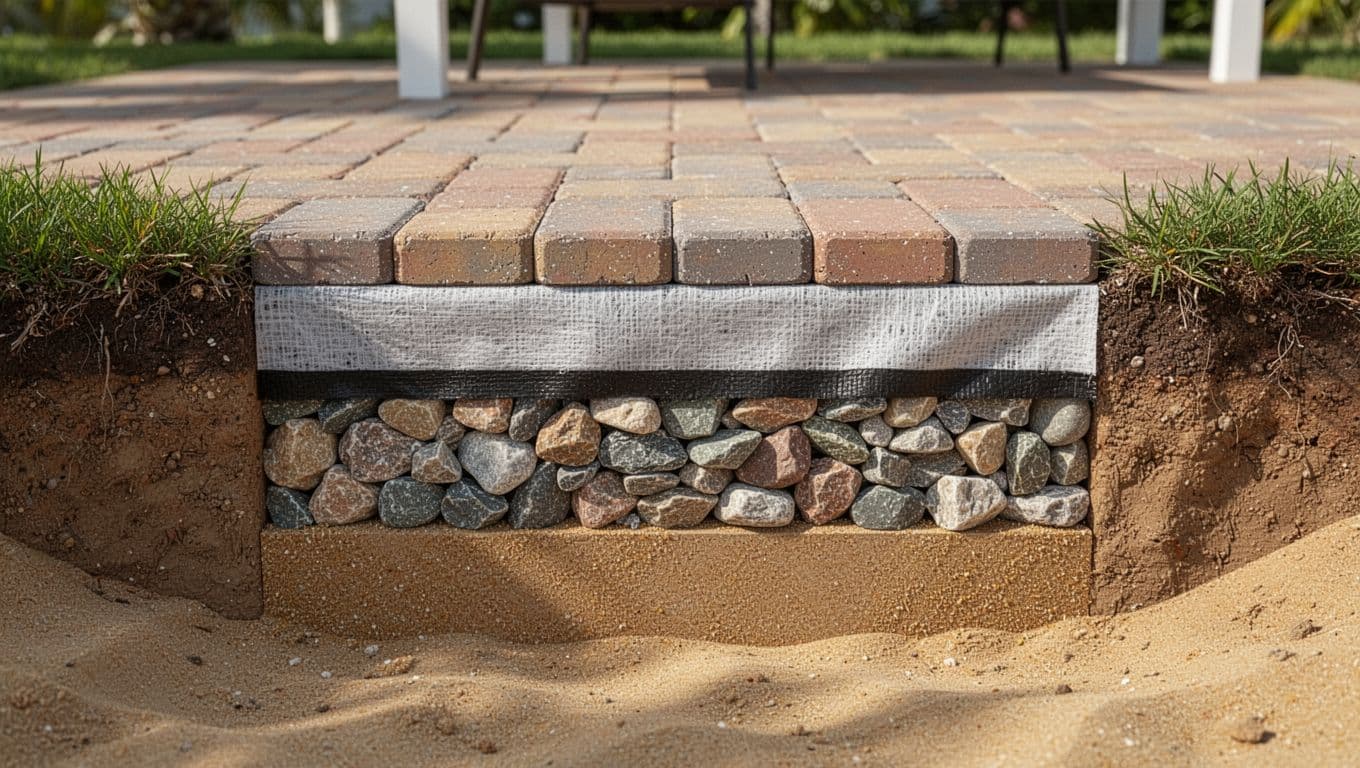
Slope everything 1/4 inch per foot away from your house. This keeps water moving. Patios near pools or lanais may need extra depth if shade holds moisture.
For stable results, pair with good landscaping. Edge beds keep sand out of joints. Regular paver cleaning helps too. It spots early wear.
These depths work for most homes. But test your yard. Soft areas mean go deeper.
Recommended Depths for Driveways
Driveways take real punishment. Cars turn, brake, and park heavy. Use 6 to 8 inches of base minimum. Some sites need 8 to 12 inches on weaker soil. Bedding sand stays at 1 inch.
Vehicle loads demand thicker layers. Geotextile fabric helps here too. It stabilizes sandy subgrade. Compact in lifts to 98% density. Poor compaction leads to ruts.
See this driveway setup:
| Layer | Depth | Purpose |
|---|---|---|
| Subgrade | Deeper excavation | Handles turning forces |
| Geotextile | Essential | Prevents migration |
| Aggregate base | 6-8 inches compacted | Load distribution |
| Bedding sand | 1 inch | Fine leveling |
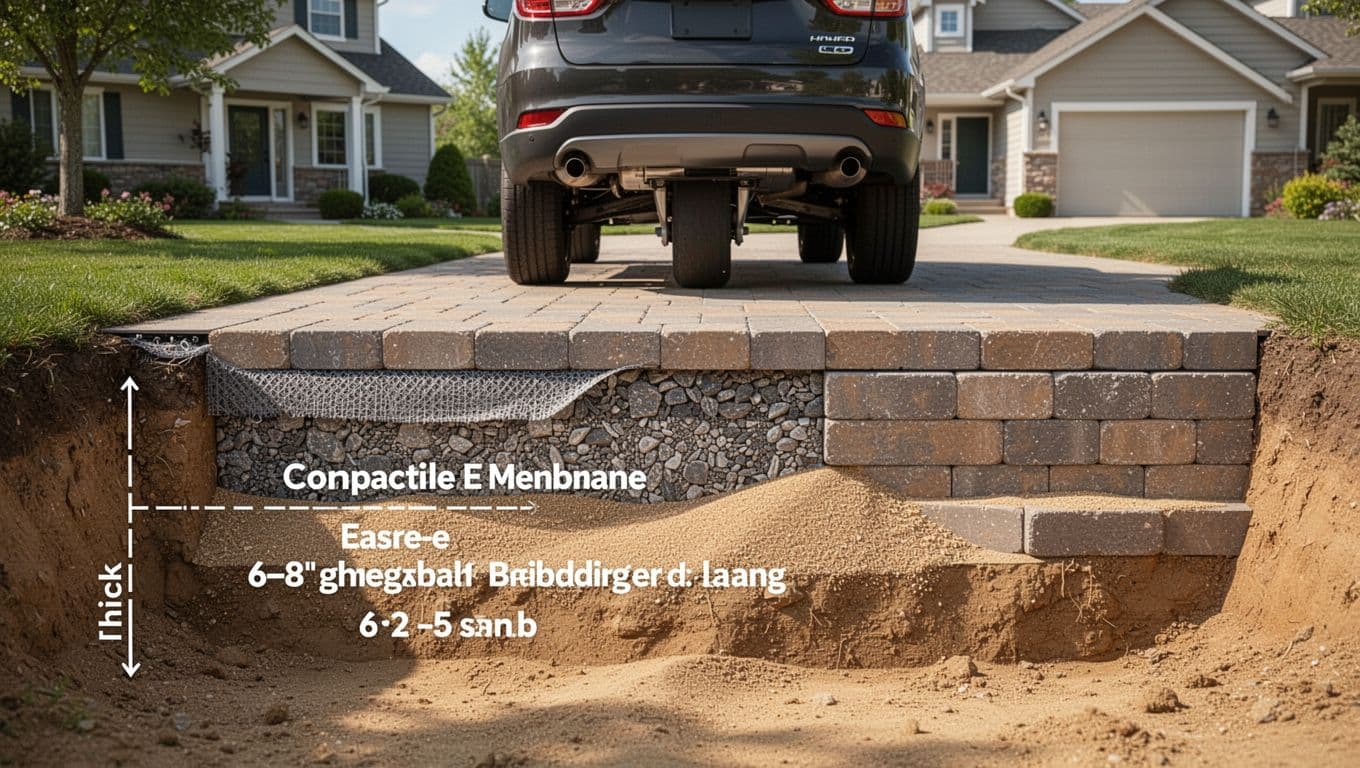
Driveways tie into aprons often. Coordinate with a concrete company for smooth transitions. Check paver thickness guide for Cape Coral driveways and patios too. Thicker pavers pair with deep bases.
Always slope for runoff. Tie into street drains if needed. This setup lasts through hurricanes.
Key Preparation Steps for Any Project
Start with excavation. Remove organics and loose soil. Shape subgrade to slope.
Next, roll out geotextile. It shines on sandy lots. Add base material. Crushed limestone works best here.
Compact in layers. Use a plate compactor. Pass over each lift multiple times.
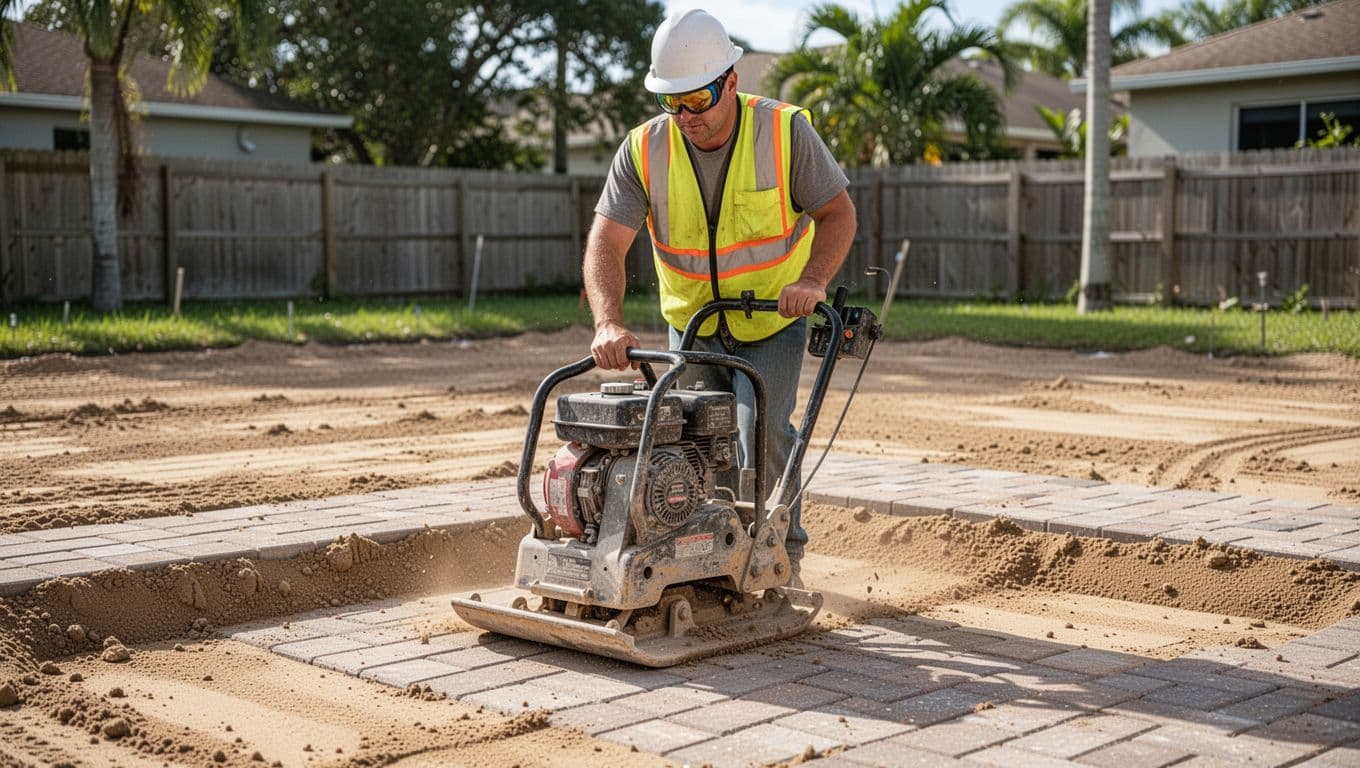
Screed sand even. Set edge restraints. Install pavers, then joint with sand. Final compact locks it.
Moisture aids compaction. Lightly dampen dry sand. Avoid mud though.
These steps match comprehensive landscape and paver services. Pros handle permits too.
Cape Coral Factors: Soil, Drainage, and Rules
Sandy soil drains well but erodes. Heavy rain demands permeable bases. Add French drains in low spots.
Local codes stress setbacks and slopes. Check with city hall. HOA rules may apply.
Pair pavers with artificial turf for low-water yards. It cuts erosion near edges.
For maintenance, schedule paver cleaning. It keeps joints tight.
Site visits reveal needs. One size never fits all.
Right base depth turns Cape Coral patios and driveways into lasting features. Patios thrive at 4-6 inches. Driveways need 6-8 inches or more. Focus on compaction, drainage, and soil tests. Consult local installers for your yard. Enjoy worry-free outdoor space year-round.