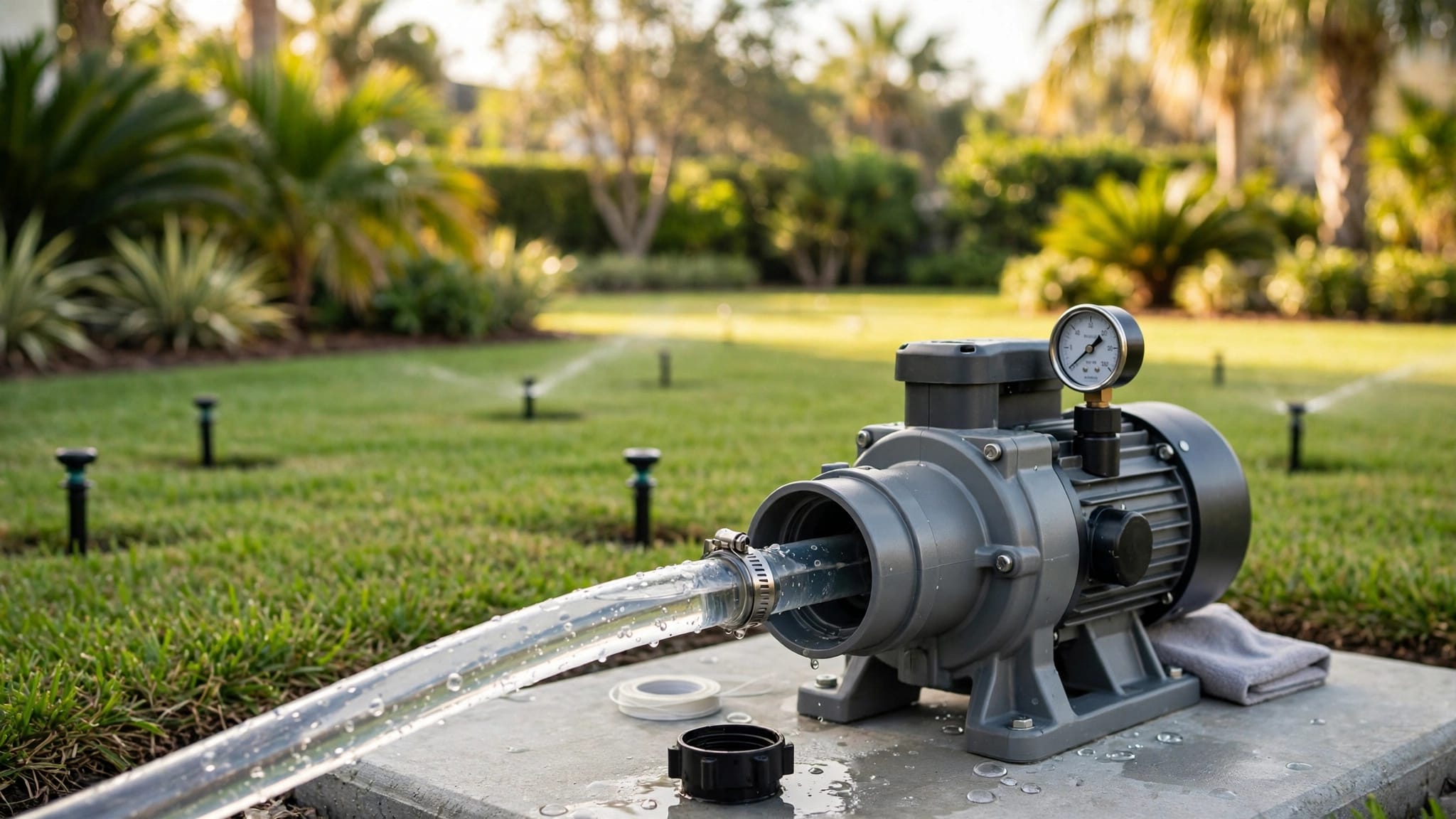



Irrigation Controller Losing Its Schedule? Check These Causes
Finding your sprinklers running at the wrong time doesn't always mean the timer has forgotten its settings. A disappearing irrigation controller schedule needs a different fix than a rain delay, incorrect clock, or valve that won't close.
Before you reset anything, save the existing settings and confirm what's actually changing. That protects your landscaping and avoids rebuilding a working program unnecessarily.
Start by comparing the stored schedule with what the sprinklers do outside.
Key Takeaways
- Record every program, watering day, start time, and zone runtime before changing settings.
- Battery-backed memory and nonvolatile memory behave differently during power interruptions, so check your model's manual.
- Rain sensors, seasonal adjustments, and duplicate programs can change watering behavior without erasing the schedule.
- Repeated setting loss, damaged electrical components, or water that won't stop calls for professional diagnosis.
Confirm Whether the Schedule Is Actually Disappearing
A missed watering cycle is a symptom, not proof of erased programming. Read the controller before entering replacement settings.
Compare saved settings with the clock
Check the date, time, watering days, start times, and station runtimes. Also confirm which program you're viewing. Many controllers have separate programs labeled A, B, and C.
If those values remain unchanged, the controller hasn't necessarily lost its schedule. An incorrect clock can shift watering to another hour or day while leaving the program intact.
Take photos of the display when you first notice the problem. Then compare them after the next unexpected event. Record whether it followed an outage, storm, maintenance visit, or manual watering session.
Separate whole-system problems from one-zone failures
If every zone starts at unexpected times, inspect the active programs and clock first. However, if one zone fails while the others follow their schedules, investigate that zone separately.
A station wire, valve solenoid, splice, or controller terminal can prevent watering even when the settings remain correct. Comparing the affected zone with a working zone helps narrow the problem.
For that symptom, follow the checks for finding a broken irrigation wire before anyone starts digging.
Preserve Your Settings Before Troubleshooting
Don't begin with a factory reset. It can remove useful evidence and erase settings that have nothing to do with the fault.
Find the exact model number and download its manufacturer's manual. Hunter, Rain Bird, Orbit, and Irritrol controllers don't all use the same memory, backup, or reset arrangements.
Document the system in this order:
- Photograph every active program, including watering days, start times, and station runtimes.
- Record the clock, seasonal adjustment, rain delay, sensor settings, and any cycle-and-soak settings.
- Note special connections, including a pump-start relay or master valve, without disconnecting wiring.
- Save or export a backup if your controller supports it, and verify how the manual says to restore it.
Also photograph the station labels. Names such as "front lawn" and "east planting bed" are more useful than station numbers alone.
Keep this record somewhere separate from the controller. A phone photo album or printed sheet helps a technician restore your setup accurately.
Record all start times, not just station runtimes. On many controllers, each program start time launches the entire programmed sequence.
Change one setting at a time afterward. Otherwise, you won't know which adjustment corrected the problem. Avoid deleting programs until you've confirmed whether they serve different plants or provide intentional soak intervals.
Check Power and Understand the Controller's Memory
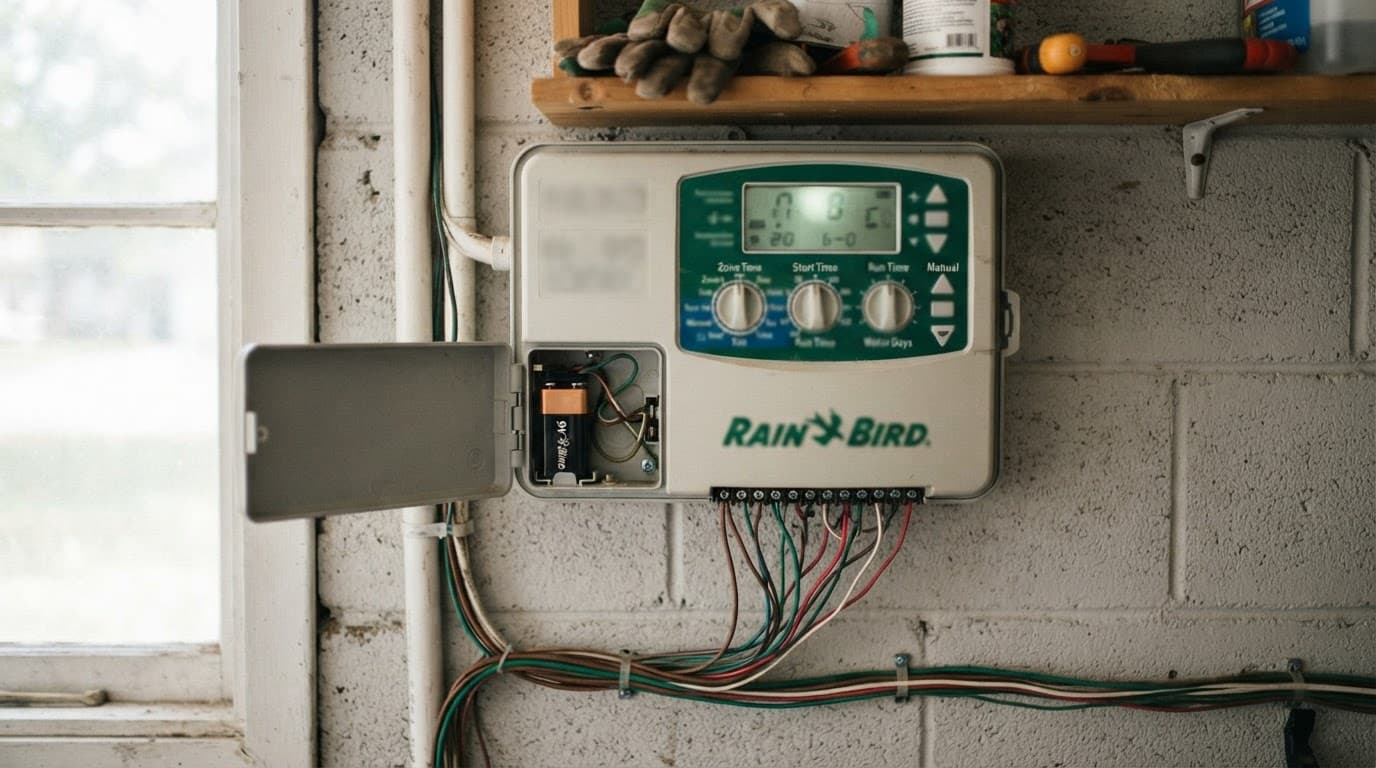
An outage is a useful clue, but it doesn't automatically identify the failed component. The controller's memory design determines what should survive a power interruption.
Battery-backed controllers
Some controllers depend on a backup battery to retain volatile memory during an outage. Other models use a battery primarily for the clock or off-power programming.
A weak battery is therefore a possibility only when that model relies on it for the affected function. Replacing a battery won't fix every case of unexpected watering or missing settings.
Check the manual for the battery's purpose, replacement specification, and replacement procedure. Don't assume that removing it is harmless to stored programming.
Replace only a user-serviceable battery according to those directions. Leave leaking battery compartments, corroded contacts, and internal components to a qualified technician.
Controllers with nonvolatile memory
Nonvolatile memory retains stored programming without continuous power. However, clock retention can work differently, so a controller may preserve runtimes while losing the correct date or time.
If documented settings repeatedly disappear on a model designed to retain them, arrange diagnosis rather than repeatedly rebuilding the program.
From outside the enclosure, check whether the display goes blank, restarts, or shows a power warning. Inspect an accessible plug for an obvious loose connection without opening electrical compartments.
The OFF position isn't electrical isolation. Before handling wiring, disconnect the appropriate power source as directed by the manual. Hardwired supplies and pump relays need qualified help.
Review Programming, Sensors, and Automatic Adjustments
Unexpected watering often comes from settings that remain stored but don't match what you expect. Inspect these controls before blaming the memory.
Duplicate starts and the wrong operating mode
Review every program and every start-time slot. An accidental extra start can repeat a watering sequence and make the controller appear to have rewritten the schedule.
Also check AM versus PM, interval watering, odd/even-day settings, and the current date. Confirm that the controller has returned to its normal automatic operating mode after manual testing.
Before removing duplicate-looking entries, check whether they provide intentional cycle-and-soak watering. That approach divides watering into shorter runs with time for absorption.
Finally, compare your planned watering days and hours with current city, utility, and HOA requirements. Southwest Florida restrictions can differ by location and water supply.
Rain delays, sensors, and weather adjustments
A rain sensor can interrupt a scheduled cycle without deleting it. Similarly, a rain delay can suspend watering while leaving the original program unchanged.
Seasonal adjustment changes watering duration. Weather-based controllers can also adjust or skip irrigation according to their configuration.
Check the displayed reason for a skipped cycle and compare it with the manual. If the controller has an app, verify its schedule and permissions using the model's instructions rather than assuming how connected features behave.
For sensor-related symptoms, review rain sensor troubleshooting in Florida. Don't permanently bypass a sensor to make an unexplained problem disappear.
Run a Controlled Zone Test Without Reprogramming

Use the controller's documented manual-test function to run one station briefly. Watch which heads activate, whether pressure looks normal, and whether water stops when the test ends.
Next, compare the affected station with a known working station. Record any controller warning or fault message before clearing it.
If the controller shows a station running but no water appears, the problem may involve wiring, the solenoid, the valve, or water delivery. Re-entering the schedule won't repair those components.
Water that continues after the controller stops commanding the zone points toward a valve problem. Stop testing and use the irrigation shutoff if you can identify it safely.
Recent property work matters, too. A concrete company installing a driveway may disturb shallow pipes or wiring. Artificial turf installation can also require moving heads or changing coverage.
Correct those physical problems before paver cleaning or sealing. Otherwise, excavation can disturb joint sand and leave mud on newly finished surfaces.
After any repair, repeat the test and check the next scheduled cycle.
Know When Professional Repair or Replacement Makes Sense
A controller replacement should follow diagnosis. A new timer won't correct a damaged field wire, leaking valve, or incompatible pump-control setup.
Warning signs that need professional attention
Call for service when stored settings repeatedly disappear despite following the manual's recommended checks. A display that repeatedly restarts or buttons that fail to respond also need inspection.
Stop DIY troubleshooting if you find burned areas, damaged power wiring, water inside an electrical enclosure, or uncertainty about which wires carry household voltage.
Several failed zones, a flooded valve box, or a pump that runs without a watering command deserve prompt attention. So does water that continues after the controller shuts down.
A technician can compare controller output with field-circuit behavior before recommending parts. That helps separate a genuine controller failure from faults elsewhere in the system.
Decide between repairing and replacing
Repair may make sense when the fault involves a serviceable component and the controller otherwise works reliably. Replacement deserves consideration when programming loss continues or required parts are unavailable.
Any replacement must suit the existing valves, sensors, master valve, and pump-start equipment. Have the installer verify compatibility rather than choosing solely by smart features.
For budgeting, Outdoor Life Pros' published Cape Coral irrigation repair costs lists $100 to $300 as typical for controller or timer issues. That's a local estimate, not a guaranteed quote. Ask for diagnosis, parts, and labor separately.
Frequently Asked Questions
Will replacing the backup battery restore my schedule?
A replacement battery doesn't automatically restore erased settings. Its job depends on the controller's design, and some models retain programs in nonvolatile memory independently of a battery.
Check the manual before buying a replacement or removing the existing battery. If the schedule has already disappeared, use your saved record to restore it through the documented procedure. Then monitor the next cycle rather than assuming the battery solved the underlying problem.
Should I reset the controller after a power outage?
Check the clock, stored programs, and displayed warnings first. An outage alone doesn't establish that the controller needs a reset.
Reset procedures vary by model, and a factory reset may erase programming or other configuration. Consult the exact manual before proceeding. If the settings remain intact, investigate the specific symptom instead. If they repeatedly disappear, preserve photos and event notes for a technician before making further changes.
Keep the Schedule, Find the Fault
Unexpected sprinkler operation becomes easier to diagnose when you separate missing settings from clock errors, suspended cycles, and zone faults. Preserve the program first , then follow your controller's manual.
Record what changes and verify the next watering cycle after each correction. If programming loss continues or electrical warning signs appear, get a professional diagnosis before resetting again or replacing the controller.