


Choosing Commercial Parking Lot Trees for Parking Islands
A parking island can add shade and soften a wide stretch of pavement, but a poor tree choice can create years of pruning and repair work. The best commercial parking lot trees fit the island's mature growing space, local conditions, and daily maintenance needs.
In Southwest Florida, heat, heavy rain, and coastal salt exposure all affect what will thrive. Start with the site itself, then choose a tree that can grow there without crowding parking, walkways, signs, or hardscape.
Key takeaways
- Choose for the tree's mature height and spread, not its size at planting.
- Match the tree to the island's sunlight, soil drainage, irrigation, and salt exposure.
- Leave room for roots, branches, maintenance equipment, and clear vehicle sightlines.
- Include tree care and pavement upkeep in the long-term plan, not only the installation budget.
Start with the island's size and growing conditions
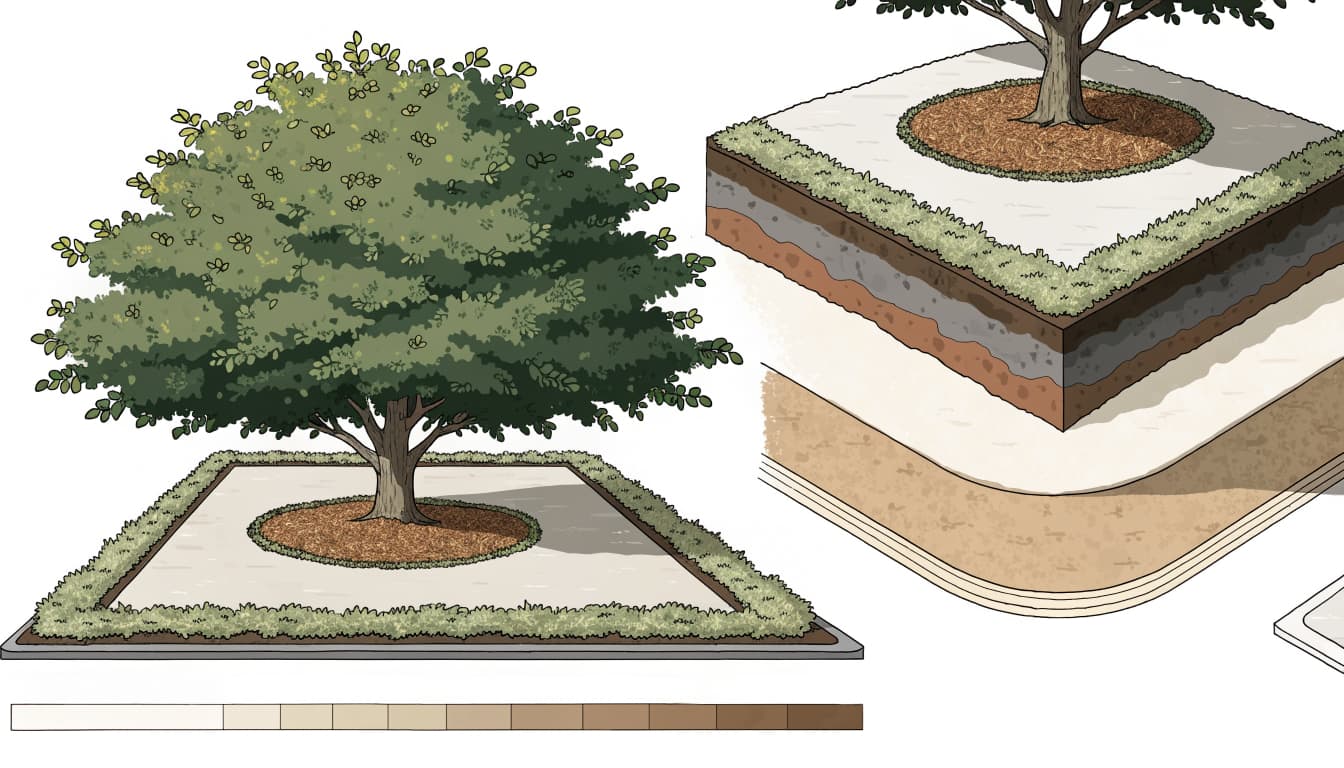
A planting island has limited space above and below ground. Its shape, soil depth, curb design, and nearby pavement help determine what kind of tree can grow there. Measure the actual planting area and note any utility lines, signs, lighting, or pedestrian routes.
Measure the usable planting area
The island's paved outline can make it look larger than the soil area available to a tree. A narrow bed beside parking stalls may not support a broad canopy or root system. Check for compacted soil, buried infrastructure, and nearby concrete before deciding how much room the tree will have.
Also consider the surrounding landscaping. Groundcover or low shrubs may fit beneath the canopy, but they shouldn't take up the space the tree needs to establish. Keep enough clear area for irrigation access and routine maintenance.
Match the light to the site
Parking lots often combine direct sun with reflected heat from asphalt and buildings. A spot beside a wall or open pavement can be much hotter than a shaded edge. Compare the site conditions with the tree's light and moisture needs rather than relying on a general label such as "full sun."
Choose for mature size, not nursery size
A young tree may fit comfortably in an island while its mature canopy reaches over parking stalls, signs, or pedestrian paths. Its roots also need room, even when the crown looks modest. Plan around expected mature size and form, then account for the space available on every side.
Check height and spread together
Canopy width affects parked vehicles, lighting, and visibility. Height matters near overhead utilities and signs. A tree that grows too close to a building can also create recurring pruning needs. Compare the mature measurements with the island's layout before choosing a variety.
For a practical review, checking mature plant size and care needs helps clarify how a plant's eventual dimensions differ from its current container size.
Plan for the full site
Look beyond the island itself. Nearby walkways, curb ramps, building foundations, drains, and utility corridors can limit placement. Leave space for people to walk and crews to reach irrigation or maintain the pavement. When several small islands sit close together, consider how neighboring canopies may overlap over time.
Match the tree to Southwest Florida conditions
Fort Myers, Cape Coral, Estero, and Bonita Springs have intense sun, warm seasons, heavy rain, and occasional tropical weather. Coastal sites may also face salt exposure, while irrigation water and soil conditions can vary across the same property. A tree suited to one island may struggle in another.
Consider salt, wind, and heat
Salt exposure matters near the coast, canals, or areas where irrigation water is salty. Open parking lots also give trees little shelter from wind. Look for plants suited to the particular exposure and avoid assuming that one Florida-friendly choice will work across every site.
The broader approach is to select plants for local sun, soil, water, and salt conditions. Our guide to Florida native and Florida-friendly plant choices covers how those conditions shape planting decisions.
Understand how water moves
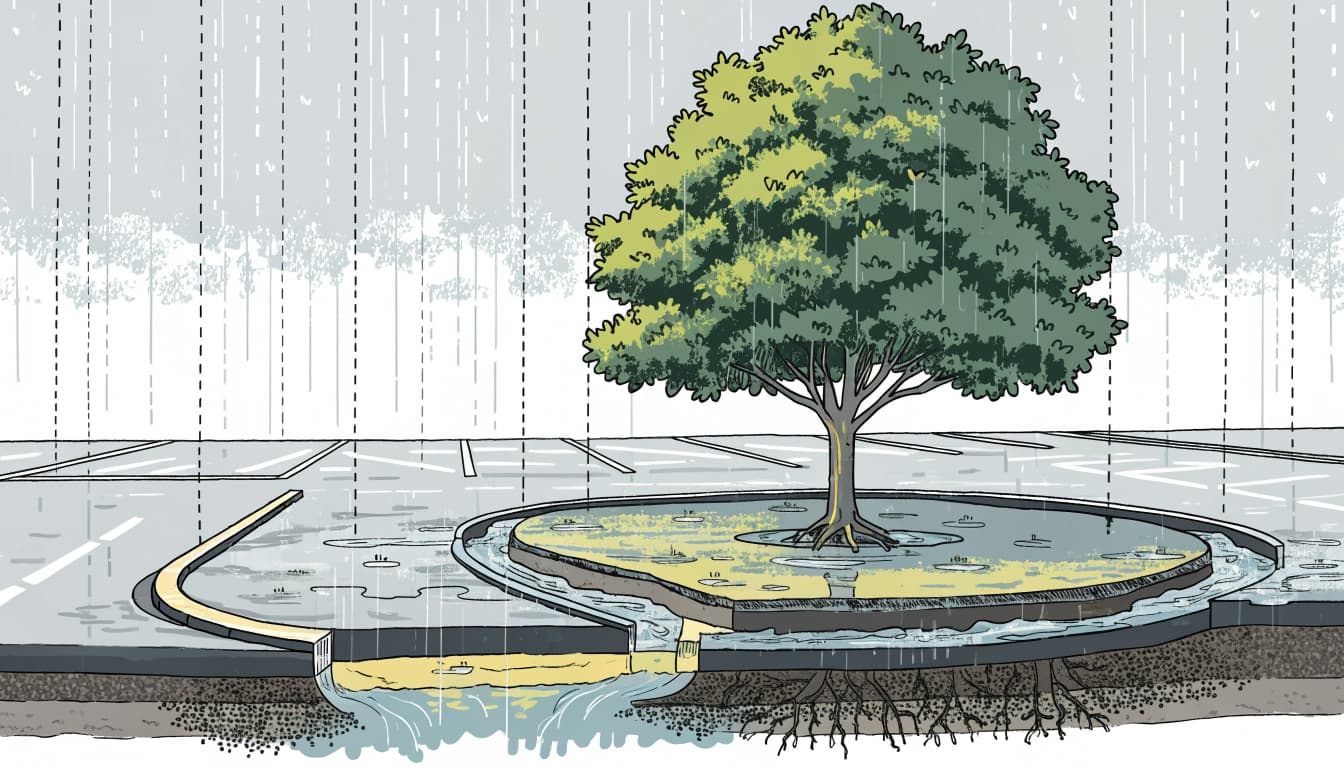
An island can receive runoff from nearby pavement, while another may drain quickly or stay wet after rain. Check the soil and the direction water flows before settling on a tree. Poor drainage or inconsistent irrigation can stress plants, while runoff that carries soil or mulch onto pavement adds cleanup work.
Keep parking and pedestrian routes clear
Trees should add shade without blocking a driver's view or narrowing a walkway. Consider vehicle turning paths, backing maneuvers, accessible routes, signs, lighting, and building entrances. A low planting layer around the trunk can help maintain open views, while placement should keep branches clear of vehicles as the tree matures.
Protect sightlines
Pay special attention to corners, driveway entrances, and sign faces. A tree positioned where it hides approaching traffic or pedestrians creates a safety problem. Likewise, low branches can interfere with vehicles, and dense foliage may make signs harder to see.
Plan pruning access before installation. If maintenance crews can't reach the island safely, routine care can become difficult. Leave room for equipment and avoid designs that force workers to stand in active vehicle paths.
Reduce conflicts with pavement and utilities
Tree roots can displace pavers and create uneven edges that become trip hazards. Open joints also let water and weeds in, which can worsen pavement problems over time. No tree is entirely root-proof, so the goal is to give it a suitable growing area and reduce conflict with nearby hardscape.
Coordinate trees and concrete
The curb, island, and adjacent pavement should work as one design. A concrete company installing or repairing an island needs to understand where planting areas and root space will sit. Keep trees away from slabs, drains, and utility lines when the site layout allows.
Where roots have already lifted pavers, an arborist can advise whether selective root pruning is appropriate. Root barriers may help limit future intrusion, while lifting and relaying pavers can correct uneven sections. These measures require care because aggressive root cutting can harm a tree.
Plan routine surface care
Leaves, flowers, and soil can collect around curbs and joints. Regular sweeping and paver cleaning help remove debris before it accumulates or gets tracked across the lot. If the property includes artificial turf elsewhere, it still needs occasional cleaning and should not replace the tree's planting space.
Compare tree proposals by their details
A proposal should identify the tree and show how it fits the property, rather than offering a generic promise of shade or low maintenance. Compare mature size, spacing, sun exposure, water needs, and pruning expectations. Also review whether replacement terms and ongoing care are included.
Look for a site-specific planting plan
A useful plan connects each tree to its actual island and nearby features. It should account for utilities, signs, pavement, irrigation, and drainage. If a tree is proposed near a coastal or exposed area, the plant choice should reflect those conditions.
When proposals differ, reviewing landscape plant selections and costs helps separate differences in plant size, spacing, exposure, and care from differences in price.
Include the planting bed
The tree is only one part of the island. Mulch or groundcover, irrigation, edging, and soil preparation all affect how the finished area functions. A clean bed with room to access the trunk and irrigation is easier to maintain than one packed with plants.
Budget for care as well as installation
A tree's initial cost doesn't capture pruning, cleanup, irrigation maintenance, or pavement repair. Commercial properties should account for those needs in their ongoing landscaping budget. Routine work can become more expensive when branches reach signs, roofs, sidewalks, or power lines.
For reference, a 2026 planning range for commercial tree and shrub care at moderate sites is $2,000 to $5,000 annually. That allowance covers routine pruning and cleanup, not hazardous removals, crane access, utility conflicts, or extensive palm trimming. Broader commercial landscape maintenance budgeting varies with property size and scope.
Set a maintenance rhythm
Schedule inspections to identify dead branches, irrigation issues, uneven paving, and debris buildup. Prune when needed to protect access and visibility, rather than waiting until branches obstruct parking or signs. Keep records of recurring issues, such as standing water or roots lifting paving, so the design can be adjusted before small problems grow.
FAQ about parking lot island trees
Should every parking island have a tree?
No. A small or shallow island may not provide enough room for a tree to mature safely. In that case, low planting can keep sightlines open and avoid placing a tree where it will crowd pavement or utilities.
Can a tree damage pavers or concrete?
Yes. Expanding roots can lift pavers and create uneven surfaces. Placement, available root space, and ongoing observation help reduce the risk, but no tree can be guaranteed not to affect nearby hardscape.
What matters most when comparing tree options?
Start with mature size, then compare light, water, salt exposure, and maintenance needs. A tree that fits the island and the local conditions is more useful than one selected only for appearance.
Choose a tree that fits the whole property
The right parking island tree provides shade while keeping pavement, signs, and walkways usable. Its long-term success depends on matching the tree to the island's space and conditions, then planning for regular care.
A clear planting plan also makes coordination among landscaping, irrigation, and concrete work easier. When the island is designed around the mature tree, the parking lot can stay functional as the landscape grows.