


Outdoor Shower Drainage and Privacy Planning for Cape Coral Yards
An outdoor shower can make rinsing off after a swim or yard work easy, but its water needs a safe destination. In Cape Coral, a well-planned shower considers wastewater disposal, surface drainage, and privacy together .
The key distinction is that shower water isn't automatically ordinary yard runoff. Choosing permeable pavers or a gravel surface may help manage water at the surface, but it doesn't by itself establish an approved way to dispose of wastewater. Start with the destination, then plan the pad, planting, and screening around it.
Key Takeaways
- Plan where shower wastewater is legally allowed to go before choosing a drain or surface.
- Keep water on your property and direct surface flow away from the house, neighboring lots, and areas where it can erode soil.
- Permeable pavers, gravel, and planting can support surface-water management, but they don't replace an approved wastewater system.
- Screens and plants can provide privacy, but the layout should keep drains accessible and allow the area to dry.
- Cape Coral requirements and site conditions matter. Confirm the current rules and the appropriate design before construction.
Start with the wastewater destination
Shower water needs an approved route
The City of Cape Coral treats wastewater as a separate issue from rainwater runoff. Its wastewater rules call for discharge to an available approved sanitary sewer, or to an approved private wastewater-disposal system when sewer service isn't available. The City must approve construction of a private disposal facility.
The rules also prohibit discharging sanitary wastewater into a storm sewer. A yard drain, French drain, or stormwater feature is designed for water management, not automatically for shower wastewater. Don't assume that a shower can drain into a lawn, gravel pit, planted bed, or nearby swale just because the surface absorbs water.
The 2023 Florida Plumbing Code includes an exception for showers connected to an approved graywater system used for toilet or urinal flushing. That exception still depends on an approved system and its design.
Keep wastewater and rainwater plans distinct
A shower pad may need a drain connection, while nearby yard grading handles rainfall. These are related parts of the project, but they shouldn't be treated as interchangeable. Before selecting materials, understand the current Cape Coral requirements and the conditions on your lot.
This distinction is especially important if a property already has standing water. A French drain installation in Cape Coral can help address certain yard drainage problems, but it shouldn't be assumed to be a lawful destination for shower wastewater.
Grade the area to prevent pooling and runoff
Set the pad and surrounding ground deliberately
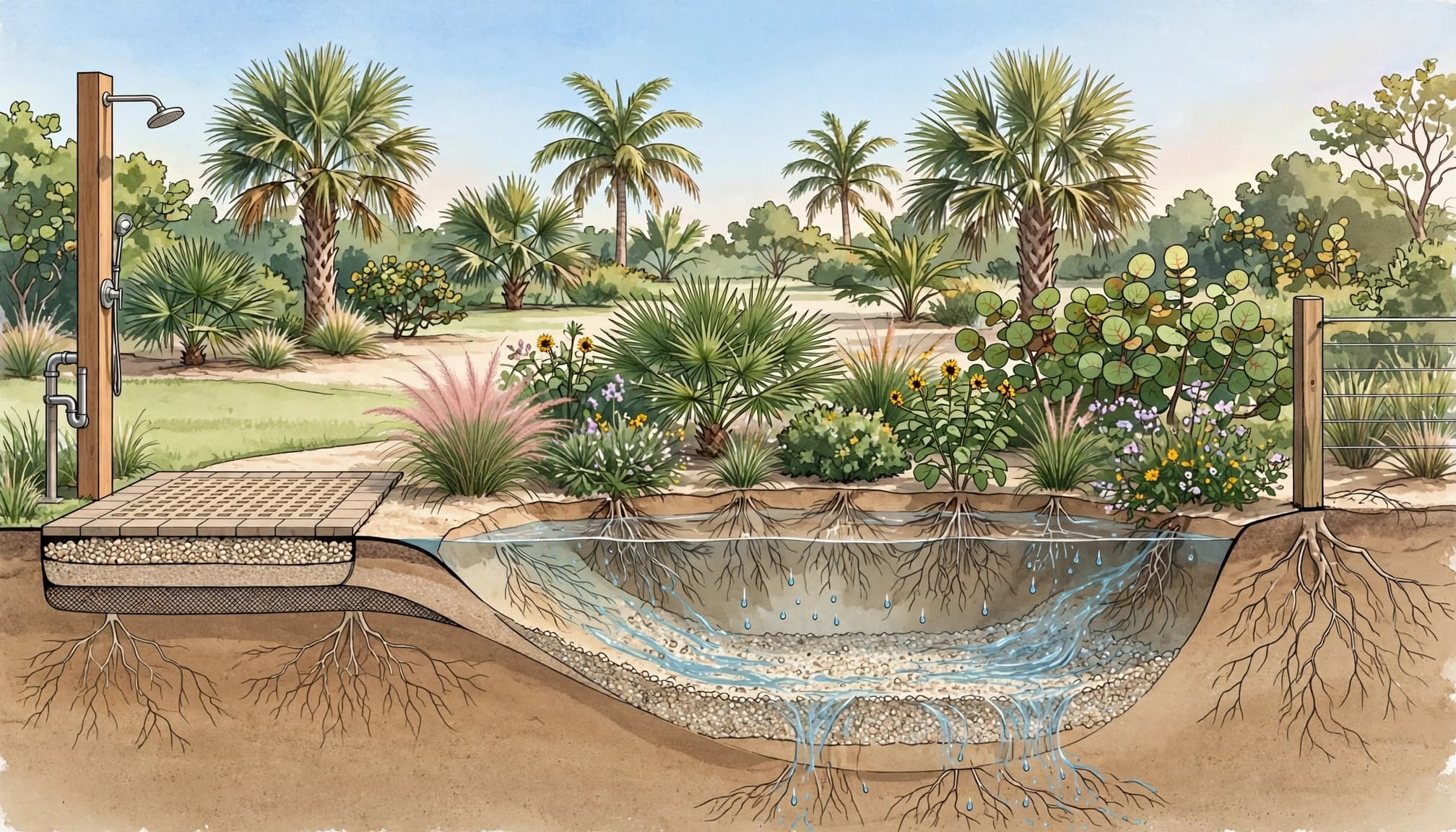
A shower floor needs enough slope to carry water toward its planned drain, without sending it toward a doorway or creating a slick puddle at the edge. The surrounding yard also needs a controlled path for rainwater. Cape Coral lots can be flat, and small changes in grade can affect where water collects.
Plan elevations at the house, shower entrance, nearby walkways, planting beds, and property edges before installation. Water should move away from structures and stay on the lot, rather than flowing under a slab or washing soil out around the pad.
Protect soil and neighboring properties
Fast-moving runoff can carve channels through mulch or loose soil, expose roots, and carry sediment into paver joints. Use stable edging where hard surfaces meet planting areas, and avoid concentrating water at a narrow strip along a fence.
Don't direct water toward a neighbor's lot, even if the slope makes that seem like the easiest route. When a project changes grading or affects an existing drainage feature, ask about current City requirements and consider a qualified drainage professional. Our Cape Coral landscape installation process accounts for grading and drainage as part of the broader yard plan.
Choose a surface that fits the drainage plan
Consider permeable pavers and gravel carefully
Open-joint permeable pavers can let rainwater pass through joints into a prepared base. They offer a firm, finished walking surface, but performance depends on the base and the way the whole area is graded. Sand, leaves, and debris can fill the joints over time, so the surface needs upkeep.
Gravel can drain rainfall and soften the transition from a shower pad to a planted area. However, loose stone may shift underfoot, and it can be uncomfortable around a frequently used shower. A compacted, stable border helps contain it.
Neither material automatically solves wastewater disposal. The shower's drain still needs a route that meets current local requirements.
Use concrete where a firm, defined pad helps
A concrete pad gives the shower a stable surface and clear edges. Its slope and drain location need careful coordination, because a flat or poorly pitched slab can hold water. Where pavers meet concrete, the transition should avoid a low seam that catches runoff.
A qualified concrete company can help plan the slab, base, and finish alongside the drainage route. If you're comparing materials and related outdoor work, see our Cape Coral landscape and paver services.
Select drainage components for the water involved
Use the right system for the right job
Surface water that gathers at a low spot may call for a collection point and a safe outlet. Water that keeps the soil soggy may require a different approach. A catch basin collects visible surface flow, while a French drain is typically used to collect subsurface water. The right choice depends on where water starts, how it moves, and where it can safely go.
A drain without a suitable outlet can leave water trapped. Likewise, adding a French drain beside the shower doesn't authorize shower wastewater to enter it. The comparison of catch basins and French drains in Cape Coral explains how these systems address different drainage conditions.
Keep access and maintenance in the design
Grates, cleanouts, and outlets need to remain accessible after plants and hardscape go in. Leaves, sand, mulch, and small debris can collect in drains, especially after heavy rain. Avoid hiding an access point beneath a fixed screen or dense planting.
If a drain connects to a wastewater system, follow the approved design for that system. Don't add a perforated pipe, dry well, or surface outlet based only on how well it seems to drain during a small rinse.
Balance privacy with airflow and drainage
Choose screening that suits the yard
A slatted panel can block direct sightlines while allowing air to move through the shower area. A solid screen offers more coverage, but a tight enclosure may stay damp longer. Position the entry and screen to shield views from the house or yard without creating a narrow, difficult-to-clean corner.
Plants can soften the enclosure and complement the rest of the landscaping . Select planting locations that won't block the drain, hide cleanouts, or crowd the shower floor as they grow. Roots and fallen leaves should not interfere with drainage access.
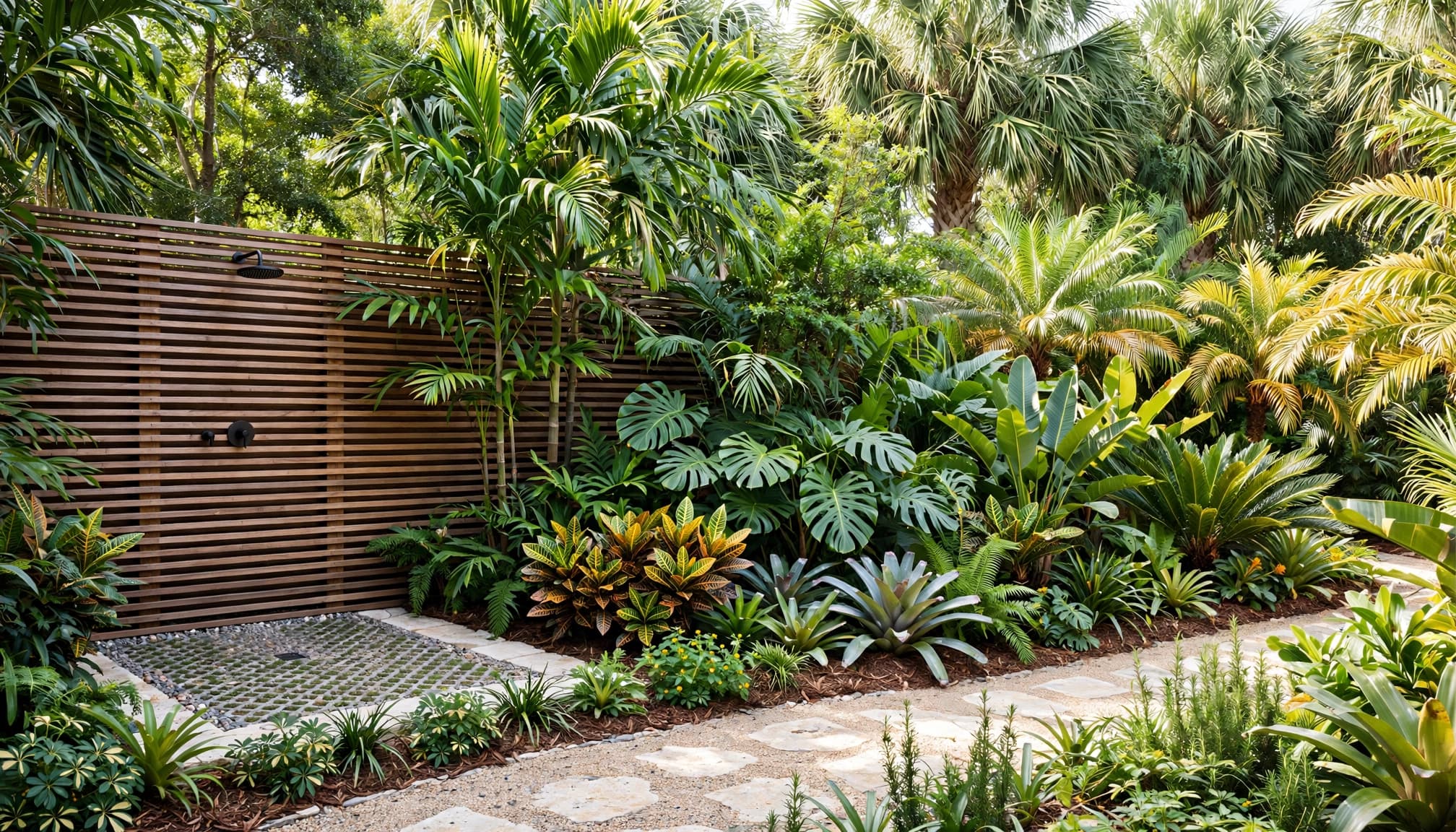
Keep privacy features off the water path
A privacy panel's posts and footings can affect grading and drainage. Place them where they won't dam water against the pad or redirect runoff toward a fence. Leave enough room to clean the surface and reach drain components.
Planting can also help screen a shower, but avoid relying on a dense hedge to conceal a drainage problem. Our landscape design and installation in Cape Coral can coordinate privacy planting with hardscape and yard drainage.
Coordinate installation before adding finishes
Drainage, the shower pad, and privacy elements should be planned as one project. Set the wastewater route and finished elevations before installing pavers, concrete, turf, or new planting beds. Otherwise, later excavation can disturb the base, damage roots, or leave a patched surface that drains poorly.
Artificial turf may suit a nearby area, but it needs a prepared, draining base and shouldn't be used to conceal a recurring wet spot. The same goes for sod: correct the cause of standing water before replacing the lawn. If construction affects pavers, plan for paver cleaning after the work, once dust and debris are cleared.
As a landscaping contractor serving Cape Coral, we plan hardscape and yard features alongside drainage so finished surfaces remain functional. For wastewater connections or code-sensitive work, involve the appropriate licensed professional.
Maintain the shower area through wet weather
Clear leaves, sand, and mulch from grates and drain openings so water can follow its intended path. After a heavy storm, look for new puddles, washed-out soil, displaced gravel, or water moving toward a neighbor's property. These signs can point to a blocked drain, a settling surface, or a grading issue.
Rinse and sweep pavers as needed, but avoid pushing debris into drain inlets. If joints collect dirt or algae, routine cleaning helps keep the surface usable. For an artificial turf edge, remove leaves and check that water still moves through the base rather than collecting beside the pad.
Prune plants before they hide cleanouts or grow across the walking area. A quick seasonal inspection helps catch small problems before they affect the shower surface or surrounding yard.
Frequently Asked Questions
Can an outdoor shower drain into a French drain?
Don't assume so. A French drain is generally used to manage subsurface water, while shower discharge is wastewater. Cape Coral's wastewater requirements and the approved system design determine where shower water can go.
Do permeable pavers eliminate the need for a drain?
No. They may help manage rainfall at the surface, but they don't establish an approved route for shower wastewater. The system needs to account for both the finished surface and the required wastewater destination.
How can I keep water from reaching a neighbor's yard?
Plan the elevations and outlet before construction. Direct water away from the home, avoid concentrating flow at the property line, and use grading and stable edges to reduce erosion. Check current Cape Coral requirements and site conditions when the project changes drainage.
Build privacy around a sound drainage plan
A comfortable outdoor shower starts with a clear, approved wastewater route. Then, grade the surrounding area to limit pooling, erosion, and runoff onto neighboring lots. Permeable surfaces and privacy screens can improve the space, but only when they support the drainage plan rather than replace it.