


9 Ornamental Grasses for Southwest Florida Yards
Choosing ornamental grasses Southwest Florida homeowners can trust takes more than picking a plant from a garden-center display. Heat, high humidity, summer rain, sandy soil, salt exposure, and hurricane-season weather all affect how a grass performs.
The best ornamental grasses Southwest Florida yards use are warm-season plants, including native grasses that thrive in full sun and recover well after dry spells to create a stunning, low maintenance landscape. The nine options below include native species, Florida-adapted choices, and one sterile cultivar that adds color without recommending invasive fountain grass.
Key Takeaways
- Pink muhly grass, seashore dropseed, and sea oats are drought tolerant choices for sunny Florida yards.
- Fakahatchee grass handles wetter areas than most ornamental grasses, and it offers low maintenance appeal for homeowners.
- Newly planted grasses need regular irrigation until their roots establish.
- Keep tall clumps away from windows, walkways, air-conditioning equipment, and rooflines.
- Avoid invasive Pennisetum setaceum , often sold as fountain grass, and choose sterile cultivars instead.
Choosing ornamental grasses Southwest Florida homeowners can grow
Start with the planting site rather than the plant tag when planning your landscape design. A grass beside a south-facing wall may receive reflected heat all afternoon. Another near a downspout may stay wet after each summer storm. Those two locations need different plants.
Most ornamental grasses prefer full sun and fast drainage. Sandy soil helps water move away from the roots, but it can also dry quickly and hold fewer nutrients. Adding compost to the planting area may improve soil structure while helping to regulate soil moisture, and a two-inch layer of mulch helps reduce evaporation. Keep mulch a few inches away from the crown, where the stems meet the roots.
New installations also need an irrigation plan. Water deeply and regularly during the first several weeks, then reduce frequency as roots grow into the surrounding soil. Once established, these ornamental plants require less water, proving quite drought tolerant as they form a tidy clumping grass. Summer rain can change the schedule, so check the soil before watering instead of following a fixed timer every day.
For new homes, the Cape Coral plants for new construction yards guide includes muhly grass and other durable choices for sunny, sandy sites. These ornamental plants offer reliable salt tolerance and add texture to any modern landscape design that features full sun and drought tolerant selections.
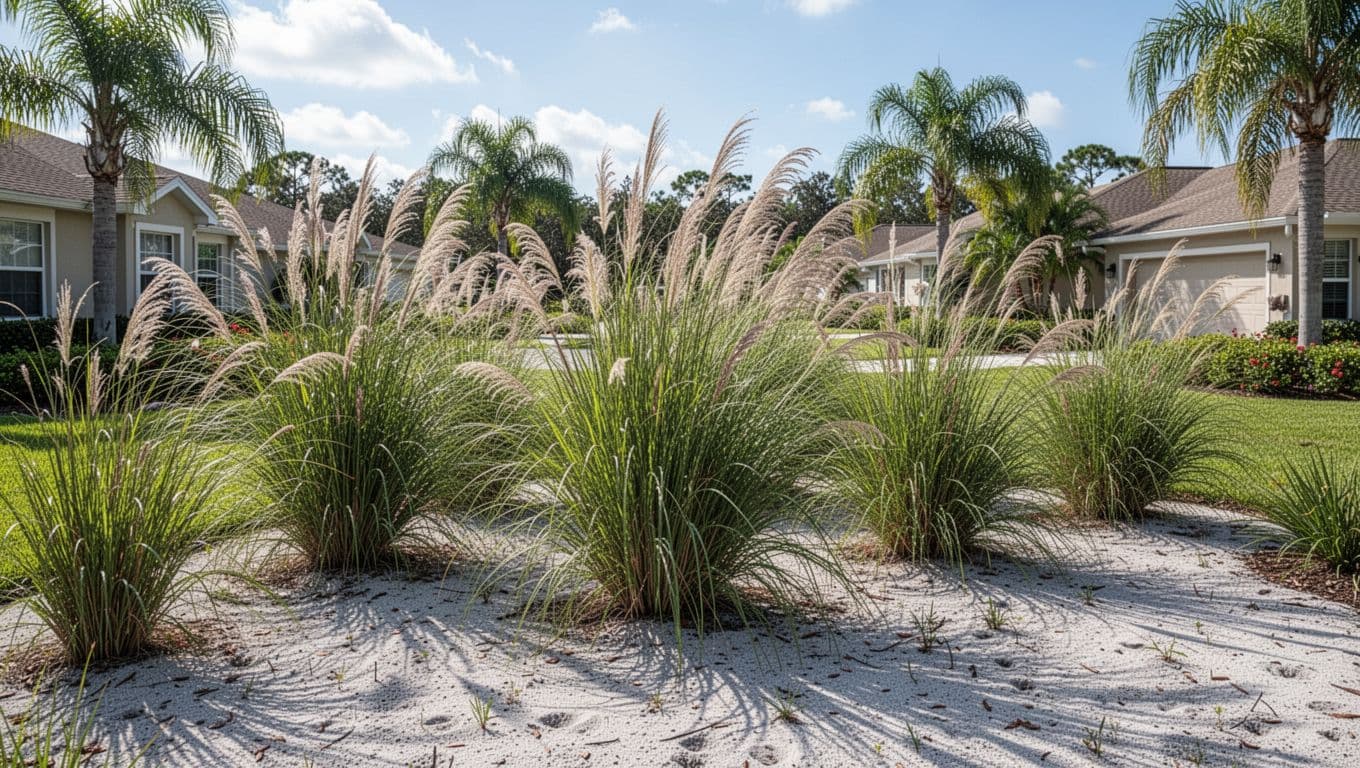
Nine ornamental grasses for Florida-friendly planting
1. Pink muhly grass, Muhlenbergia capillaris
Pink muhly grass is one of the easiest choices to use for curb appeal, and its fine-textured profile can be paired with bamboo muhly for a layered look. Its fine green foliage forms a compact clump, then produces airy pink plumes in fall. A mature plant commonly reaches about 2 to 4 feet tall, depending on conditions.
Plant muhly grass in full sun with well-drained soil. It is highly drought tolerant, making it ideal for planting beside driveways, along property borders, and in mass plantings where several clumps create a soft sweep. Once established, it needs less irrigation than thirsty bedding plants.
Cut the foliage back near the ground in late March or early April before new growth begins. Avoid planting it in a constantly wet location, where the crown may struggle.
2. Fakahatchee grass, Tripsacum dactyloides
Fakahatchee grass is a bold native choice for a larger yard, sharing similar moisture preferences with eastern gamma grass. Its broad leaves create a tropical appearance, and its tall flower stalks add height behind shorter shrubs and flowers.
Unlike many ornamental grasses, fakahatchee grass can tolerate more moisture. As with other native grasses, it still needs room, good airflow, and enough sun to stay full. Use it near a rain garden, drainage swale, or low section of the property where smaller grasses might decline.
Because mature clumps become large, keep them away from narrow walkways and windows. Remove damaged leaves after storms, but avoid frequent trimming that weakens the plant.
3. Sea oats, Uniola paniculata
Sea oats are strongly associated with Florida's coastal environment, providing exceptional erosion control along shorelines. Their upright leaves and oat-like seed heads help stabilize sandy areas and deliver high salt tolerance near the beach.
Use nursery-grown sea oats in appropriate coastal locations. Don't collect plants or seed heads from protected dunes. Inland homeowners may find other grasses better suited to ordinary residential beds, especially where irrigation and rich mulch create conditions unlike a beach.
Sea oats need full sun and sharp drainage. They can work in coastal gardens with sandy soil and salt exposure, but their tall form requires careful placement near fences, pools, and outdoor seating.
4. Seashore dropseed, Sporobolus virginicus
Seashore dropseed is a low-growing native grass for hot, exposed areas, functioning well as a durable ground cover. It tolerates sandy soil, salt, drought, and coastal conditions better than many ornamental plants.
Use it as a ground cover in a sunny bed, beside a seawall, or along a sandy edge where a taller grass would block views. Its low height also makes it useful near paths and driveways.
This grass spreads gradually, so give each plant enough space to fill in. It doesn't offer the tall plumes of pink muhly grass, but it provides dependable green coverage with modest maintenance once established.
5. Switchgrass, Panicum virgatum
Switchgrass is a versatile bunch grass with upright foliage and delicate flower sprays. It is cold hardy, handles full sun, and can serve nicely as a living privacy screen along a property line.
Choose switchgrass for the back of a native planting bed, a drainage area, or a property edge that needs vertical structure. It pairs well with flowering perennials and lower grasses without requiring a formal hedge.
Give it room for mature growth and avoid planting it against the foundation. In Southwest Florida, airflow matters because dense, crowded foliage stays damp longer after heavy rain.
6. Purple love grass, Eragrostis spectabilis
Purple love grass offers a lighter, more natural appearance than broad-leaved tropical plants. Its fine foliage stays relatively low, while purple-tinged flower clusters rise above the clump.
It works in sunny, well-drained beds and native plantings. Purple love grass is a good option for homeowners who want movement without adding a large plant near the front door.
Use several plants together rather than spacing single clumps far apart. The result looks more intentional and helps the grass hold its own beside shrubs and groundcovers.
7. Broom sedge, Andropogon virginicus
Broom sedge brings warm golden color as its foliage matures. As one of the reliable native grasses with a deep root system, it has a loose, upright habit that fits naturalistic gardens, large lots, and sunny areas where a formal appearance isn't necessary.
This grass tolerates heat and relatively lean soil. Its mature texture can look untidy if planted beside clipped hedges, so combine it with other informal plants or place it along a rear property line.
Remove old stems during the spring cleanup. Avoid planting broom sedge where falling foliage could clog a pool skimmer or collect against outdoor equipment.
8. Big bluestem, Andropogon gerardii
Big bluestem is a tall, upright native bunch grass suited to open spaces, often serving as a natural privacy screen on larger acreage. It prefers full sun and has moderate water needs while establishing.
Its height makes it useful for screening a fence, softening a broad lawn edge, or adding structure to a larger planting. Small front beds may not provide enough room for its mature form.
Big bluestem can bend during tropical weather, so place it away from gates and narrow paths. After a major storm, remove broken stems and clear leaves from the plant's center so new growth has room to emerge.
9. Sterile 'Fireworks' fountain grass, Pennisetum 'Fireworks'
Sterile purple fountain grass adds strong color with purple and pink foliage. It grows about 3 feet tall and 2 feet wide, making it useful near patios, entry beds, and other areas that need a clear focal point. Gardeners looking for variety often contrast it with variegated zebra grass, tall tropical tiger grass, or dwarf pampas grass in formal layouts.
This cultivar is listed for Zones 9 through 11 and can need only occasional watering once established. Full sun brings out the strongest color, although it can tolerate partial sun.
Plant labels matter here. Avoid invasive fountain grass or other high-risk invasive plants, which can spread and create ecological problems in Florida, and do not plant wild pampas grass where it can escape cultivation. Choose a clearly identified sterile fountain grass cultivar such as 'Fireworks' or 'Red Head', and confirm the plant's identity with a reputable nursery.
Planting and maintenance tips for Southwest Florida
Spacing is one of the biggest differences between a healthy grass bed and a crowded one. Follow the mature width on the plant tag, not the small size of the container, to ensure every clumping grass has adequate room to develop. Tall grasses need extra clearance from homes, walks, driveways, windows, and utility equipment, especially when used to form a natural privacy screen.
Keep grass crowns above poorly drained soil. If water remains in the bed after a storm, improve drainage before planting. Fakahatchee grass can handle wetter conditions, but many other choices perform better when excess water moves away quickly.
Water new clumps consistently during establishment. Once roots spread, check the soil before adding irrigation. Overwatering in hot, humid weather can weaken roots and encourage disease, while underwatering can burn foliage and delay growth, though these resilient selections remain largely drought tolerant once fully established.
Spring is the usual time for plant pruning to clear old foliage on muhly and fountain grasses. Wear gloves and long sleeves because dry blades can be sharp. Remove dead material, then inspect the crown before adding a light layer of fresh mulch. These practices contribute to a low maintenance landscape that easily stays cold hardy during occasional winter dips.
Grasses near hardscape need routine attention. Keep foliage from covering pavers, blocking drainage openings, or rubbing against concrete edges. Wet leaves and trapped debris can make paver cleaning more difficult, especially after summer storms. If you're adding a new patio or walkway, coordinate planting locations with a concrete company before construction begins. Regular plant pruning keeps these borders neat.
Ornamental grasses can also reduce the amount of lawn in a planting plan. For homeowners considering a mix of beds and artificial turf, use grasses to soften the edges and add seasonal movement rather than placing them where falling seed heads will collect on the surface.
Hurricane preparation starts with good placement. Don't install tall grasses directly beside windows or doors. After a storm, remove broken stems, rake away debris, and check that heavy mulch hasn't covered the crown. Most established clumps recover better when they have adequate space and aren't packed against structures.
How to match grasses with your yard
For a sunny front bed, pink muhly and sterile 'Fireworks' provide color without overwhelming the entrance. Seashore dropseed works better where you need a low border or coastal groundcover, especially when developing a cohesive landscape design.
Large properties can use switchgrass, big bluestem, broom sedge, or fakahatchee as background planting to create a natural privacy screen. Place shorter shrubs in front so these hardy ornamental plants add height without hiding the home.
Coastal lots should favor salt tolerance and salt-tolerant choices such as sea oats and seashore dropseed to thrive in harsh coastal conditions. Inland properties with sandy soil and ordinary irrigation can use pink muhly, purple lovegrass, and switchgrass in mixed beds alongside other ornamental plants.
For a broader native planting plan, review these native plants for Cape Coral front yards. Incorporating these native grasses into your landscape design ensures robust color and texture. Muhly grass fits especially well with other varieties that handle sun, salt tolerance requirements, and dry soil in coastal conditions.
Frequently Asked Questions
Can I plant ornamental grasses in sandy Southwest Florida soil?
Yes, many ornamental grasses thrive in sandy soil, provided they receive proper care during their initial establishment period. Species like pink muhly grass and seashore dropseed naturally adapt well to well-drained, sandy conditions.
When is the best time to prune ornamental grasses in Florida?
Spring, specifically late March or early April, is the ideal time to cut back your ornamental grasses before new growth begins. Always wear protective clothing like gloves and long sleeves since dry blades can be sharp.
Are all fountain grasses safe to plant in Southwest Florida?
No, you should avoid invasive fountain grass varieties that can escape cultivation and create ecological problems. Instead, always choose clearly identified sterile cultivars like 'Fireworks' or 'Red Head' from a reputable nursery.
Conclusion
Southwest Florida yards need grasses that match the site, not plants chosen for appearance alone. Pink muhly, seashore dropseed, sea oats, switchgrass, and carefully selected sterile cultivars offer reliable options for sunny residential beds.
Choosing the right ornamental grasses Southwest Florida landscapes require creates a truly low maintenance outdoor space. By pairing native grasses with drought tolerant companion plants, you can ensure year-round beauty without turning upkeep into a weekly chore.