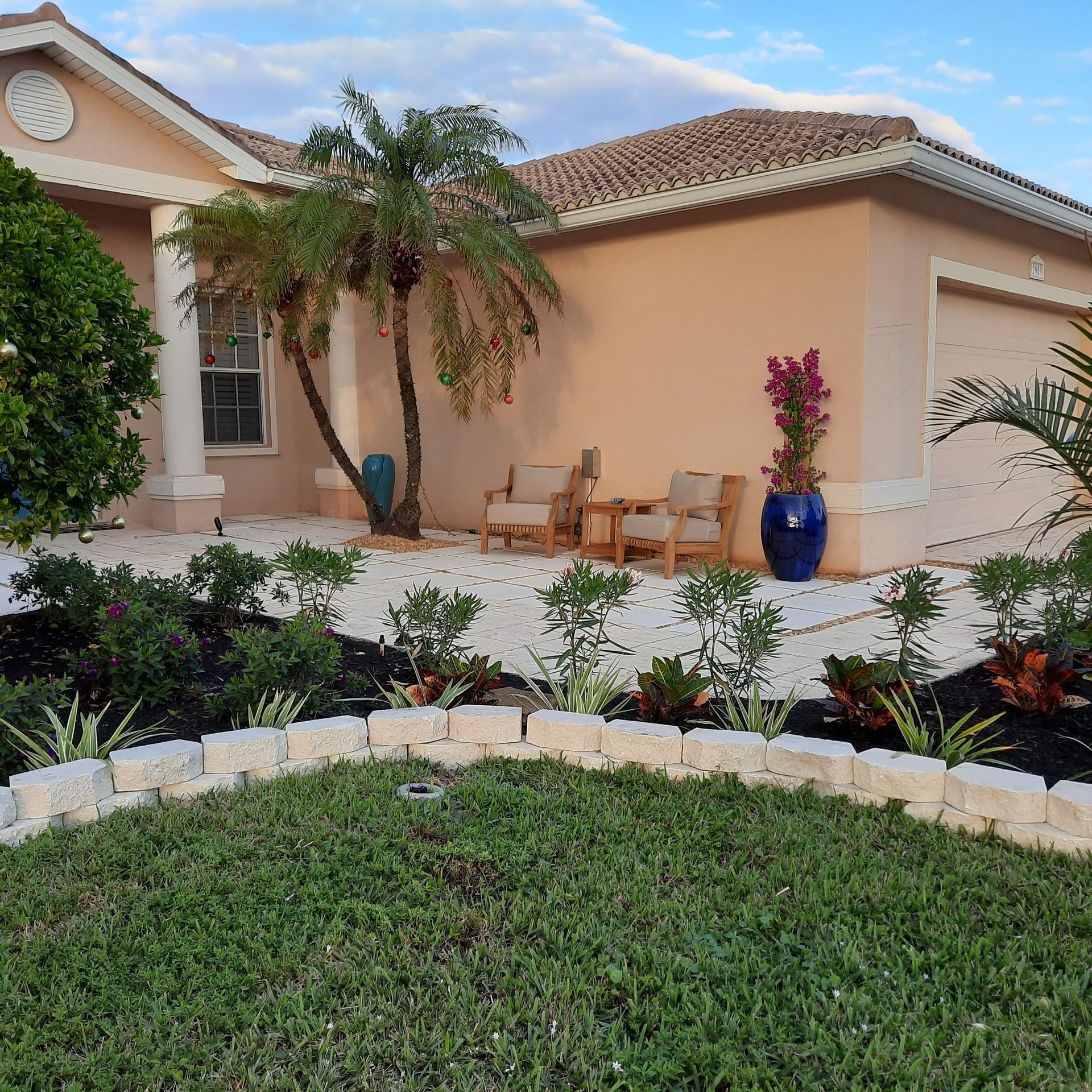



Cape Coral Plants for New Construction Yards
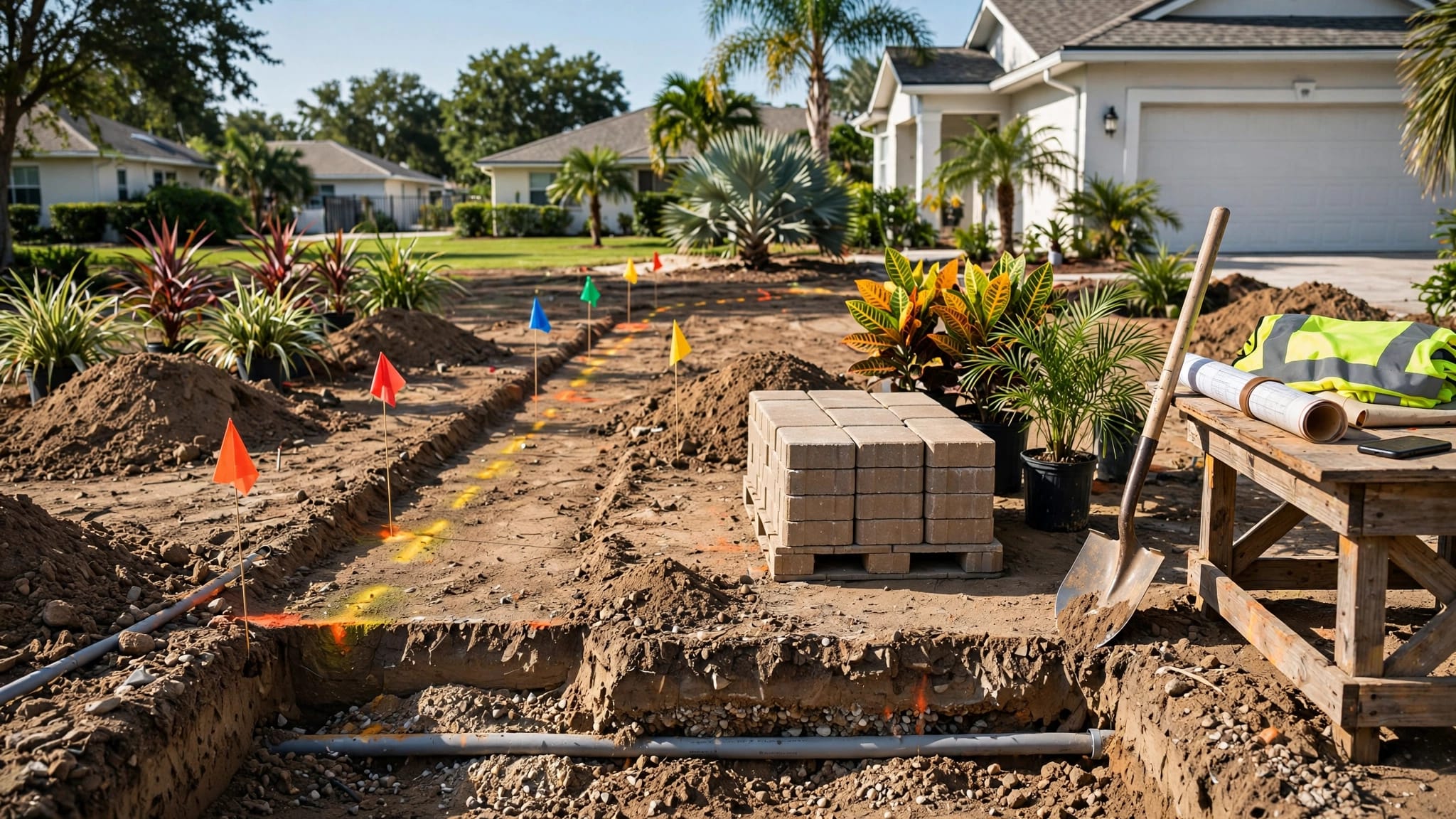
New construction yards in Cape Coral often start off rough. The soil may be compacted, the sun is strong, and water can move through the lot in odd ways.
The right Cape Coral plants can handle that stress and still make the yard look finished. If you want a front or back yard that looks good without constant watering and replanting, plant choice matters more than almost anything else.
What new construction yards in Cape Coral need first
Fresh lots rarely give you the easy start that older yards have. Builders grade the site, trucks compress the soil, and the first heavy rain can show you where water wants to pool.
That is why the best landscaping choices for a new build are tough, modest in size, and easy to live with. They should handle heat, accept sandy soil, and keep their shape without weekly attention.
If a concrete company is pouring a patio or sidewalk, mark the planting zones before the pour. If you want beds, drains, and hardscape planned together, full service landscape installation keeps the layout from fighting itself later.
Cape Coral plants that earn their keep
These plants show up often in Southwest Florida yards because they stay manageable and still give the property shape.
| Plant | Sun | Mature size | Water after establishment | Best spot |
|---|---|---|---|---|
| Simpson's stopper | Full sun to part shade | 8 to 12 feet tall and wide | Low | Front beds, corners, and property lines |
| Coontie | Sun to part shade | 2 to 3 feet tall, wider clump | Low | Under windows, under palms, shady edges |
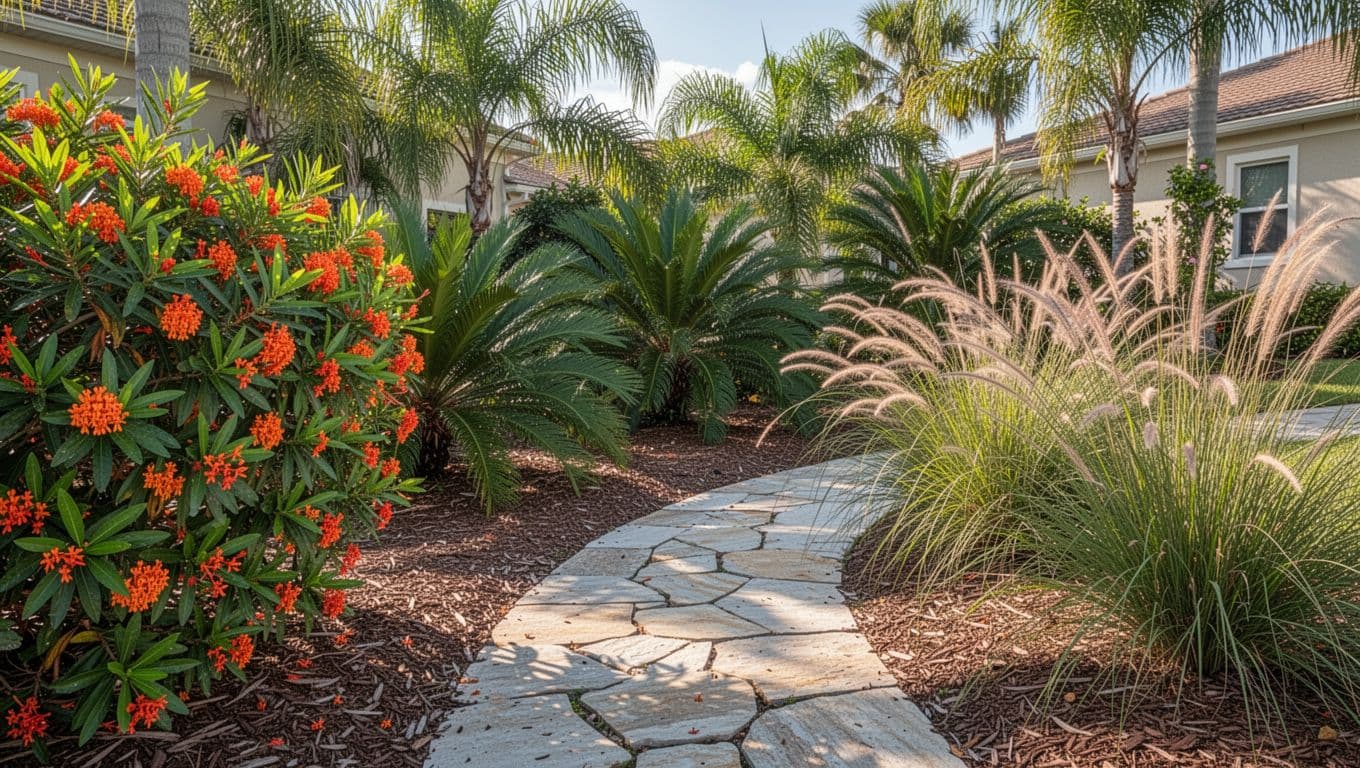
| Firebush | Full sun | 4 to 8 feet | Moderate at first, then low | Sunny accent beds and pollinator zones |
| Dwarf yaupon holly | Sun to part shade | 4 to 8 feet | Low | Foundation beds and low screens |
| Muhly grass | Full sun | 2 to 4 feet | Low | Mass plantings, driveways, and open edges |
| Silver buttonwood | Full sun | 10 to 15 feet as a small tree | Low once rooted | Front corners and open yard space |
The common thread is simple. These plants stay useful without turning the yard into a water-hungry project.
Simpson's stopper
Simpson's stopper is a strong choice for new construction because it gives structure without looking heavy. It handles full sun to part shade, grows into an 8 to 12 foot shrub or small tree, and accepts pruning well.
It works best in front beds, side yards, and corners where you want height without blocking windows. Water it deeply during establishment, then back off once the roots spread. Keep it out of tight, soggy spots.
Coontie
Coontie is a native cycad, not a palm, and that matters because it stays compact. It usually tops out around 2 to 3 feet, so it fits well under taller plants and near walkways.
It likes sun or part shade and needs very little care after it settles in. During the first season, give it regular water, then let it dry a bit between soakings. Coontie is a good pick under windows or in shaded entry beds where you still want a clean look.
Firebush
Firebush brings color fast. It likes full sun, grows to about 4 to 8 feet, and draws pollinators without asking for much in return.
That makes it a strong fit for sunny front beds or a mailbox planting. It does need water while it establishes, but after that it handles Cape Coral heat well. A light trim once or twice a year keeps it neat.
Dwarf yaupon holly
Dwarf yaupon holly is one of the easiest shrubs to live with in a new yard. It handles sun and part shade, keeps a moderate size, and tolerates pruning if you want a cleaner edge.
Use it in foundation beds, along driveways, or as a low hedge near a porch. It does not need rich soil, and it does not want constant watering once settled. That makes it a good match for low-maintenance landscaping.
Muhly grass
Muhly grass adds movement without adding work. It grows in full sun, usually reaches 2 to 4 feet, and looks good in drifts instead of single-file rows.
It is a smart fit for bed edges, open corners, and the space beside a driveway. Keep it a little away from pavers so paver cleaning and edging stay simple. Water it during establishment, then let it do its thing.
Silver buttonwood
Silver buttonwood is a better fit when you want one stronger focal plant. It loves full sun, handles coastal conditions, and can be trained as a small tree or large shrub.
Give it room. Mature size depends on pruning, but it can spread enough to crowd a tight foundation bed. It belongs in an open front yard, a corner planting, or anywhere you want height without a bulky canopy. Water it well during the first months, then reduce the schedule.
Measure the mature width, not the nursery pot.
How to place plants around pavers, patios, and drains
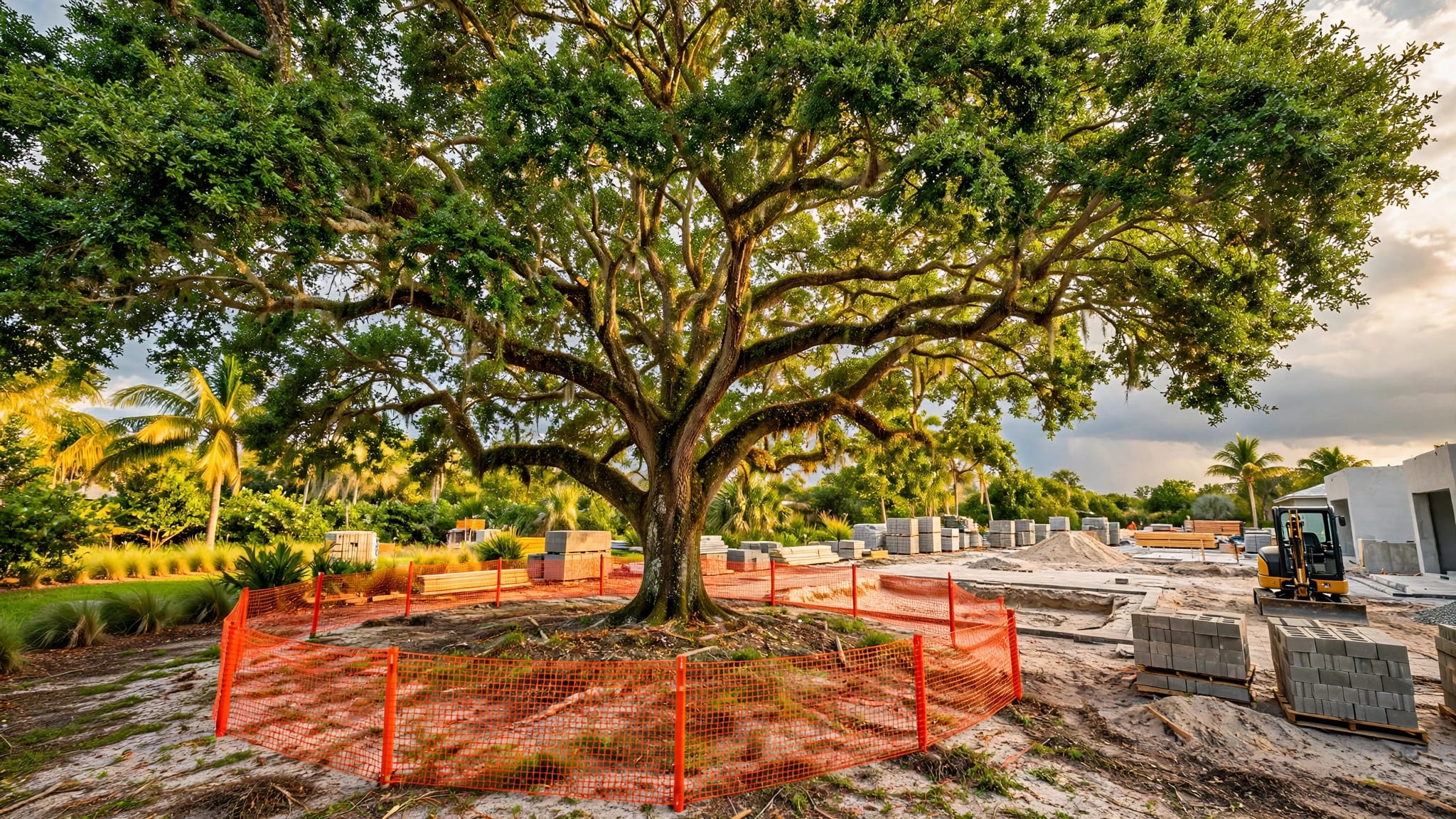
A new yard works better when plants and hardscape are planned together. That matters near patios, walkways, and driveways, where roots, runoff, and foot traffic all meet.
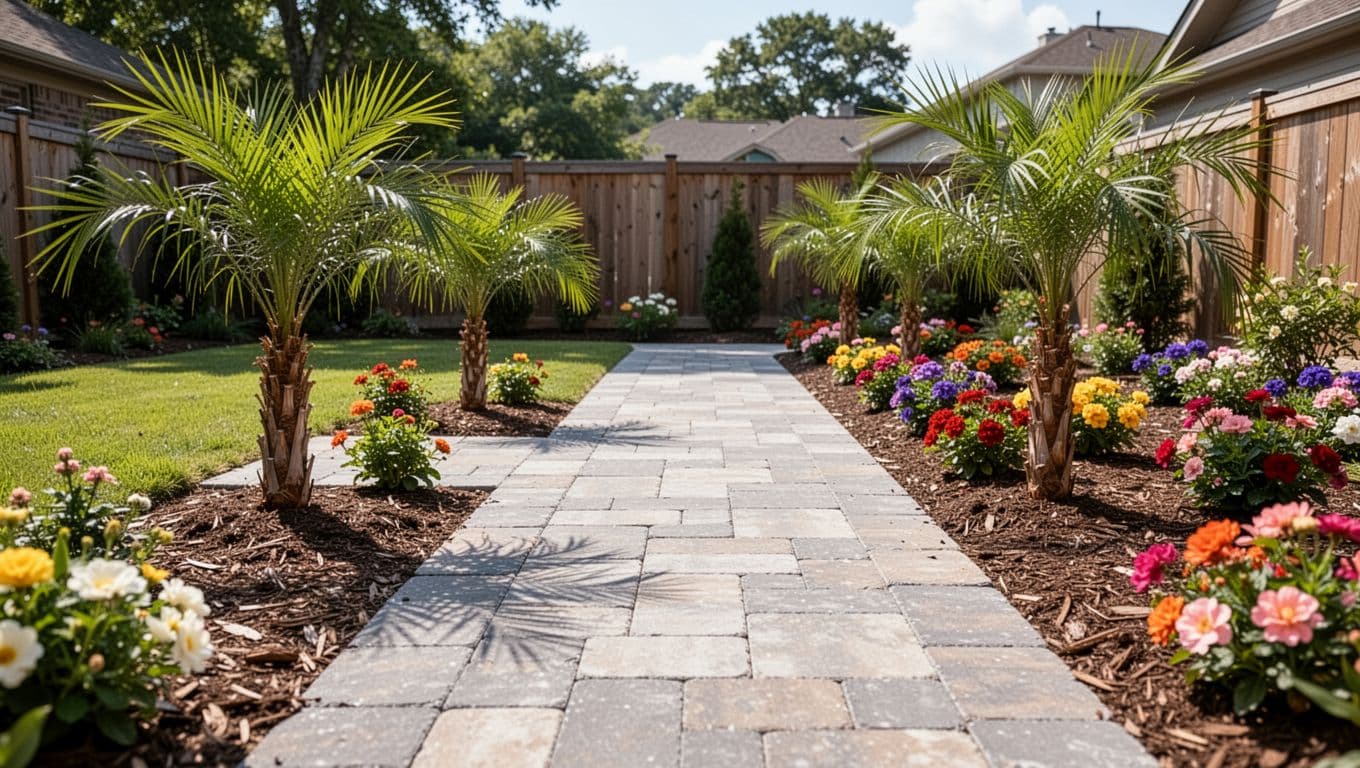
Leave clear space around any edge you want to keep easy to maintain. Shrubs that spill onto pavers make trimming harder, and they can trap debris during routine paver cleaning. Low grasses and compact shrubs work better beside hardscape than broad, fast-spreading plants.
Drainage deserves attention too. If a bed stays wet after rain, move the plant list around instead of hoping the roots will sort it out. Some spots need a drainage fix first, while others simply need a plant that tolerates wetter soil.
Side yards can also be tricky. In narrow strips with little room for roots, mulch, stepping stones, or artifical turf may make more sense than forcing in a shrub that will outgrow the space.
Mistakes that slow a new yard down
- Overplanting the bed : New homeowners often want instant fullness. The problem is that plants keep growing long after install day, so a crowded bed turns into constant trimming.
- Putting large plants too close to the house : Leave room for mature width, siding, gutters, and windows. A plant that looks tiny in a pot can become a wall of leaves in a year or two.
- Ignoring drainage : Water that sits after rain can stress roots and shorten plant life. Fix the grade or choose a better spot before you plant.
- Picking thirsty plants : A new yard already needs more water during establishment. Plants that demand heavy irrigation forever will fight the Cape Coral climate and raise your maintenance load.
The best habit is to plan for the plant at full size, not the plant on sale.
A better start for a Cape Coral yard
A new construction yard does not need a long plant list. It needs the right plants in the right spots, with enough space to grow and enough drainage to stay healthy.
Start with sturdy choices like Simpson's stopper, coontie, firebush, dwarf yaupon holly, muhly grass, and silver buttonwood. Then match each one to the sun, water, and space it actually needs.
That is how Cape Coral plants turn a blank lot into a yard that feels settled, not rushed.