


Why Does an Irrigation System Make a Banging Noise?
An irrigation system banging during a watering cycle often points to a sudden change in water flow or movement in the pipes. The sound may happen as a zone starts or stops, but its timing and location help narrow down the cause.
Common culprits include water hammer, a valve that closes quickly, high water pressure, air trapped in a line, or loose pipes. Start with safe observations, then call an irrigation professional or plumber if the noise continues or you see signs of a leak.
Common causes of irrigation pipe banging
Water hammer and fast-closing valves
Water hammer happens when moving water stops or changes direction abruptly. The resulting pressure wave can make pipes knock against nearby soil, walls, or supports. A valve that snaps shut quickly can trigger the noise, especially when it closes at the end of a zone cycle.
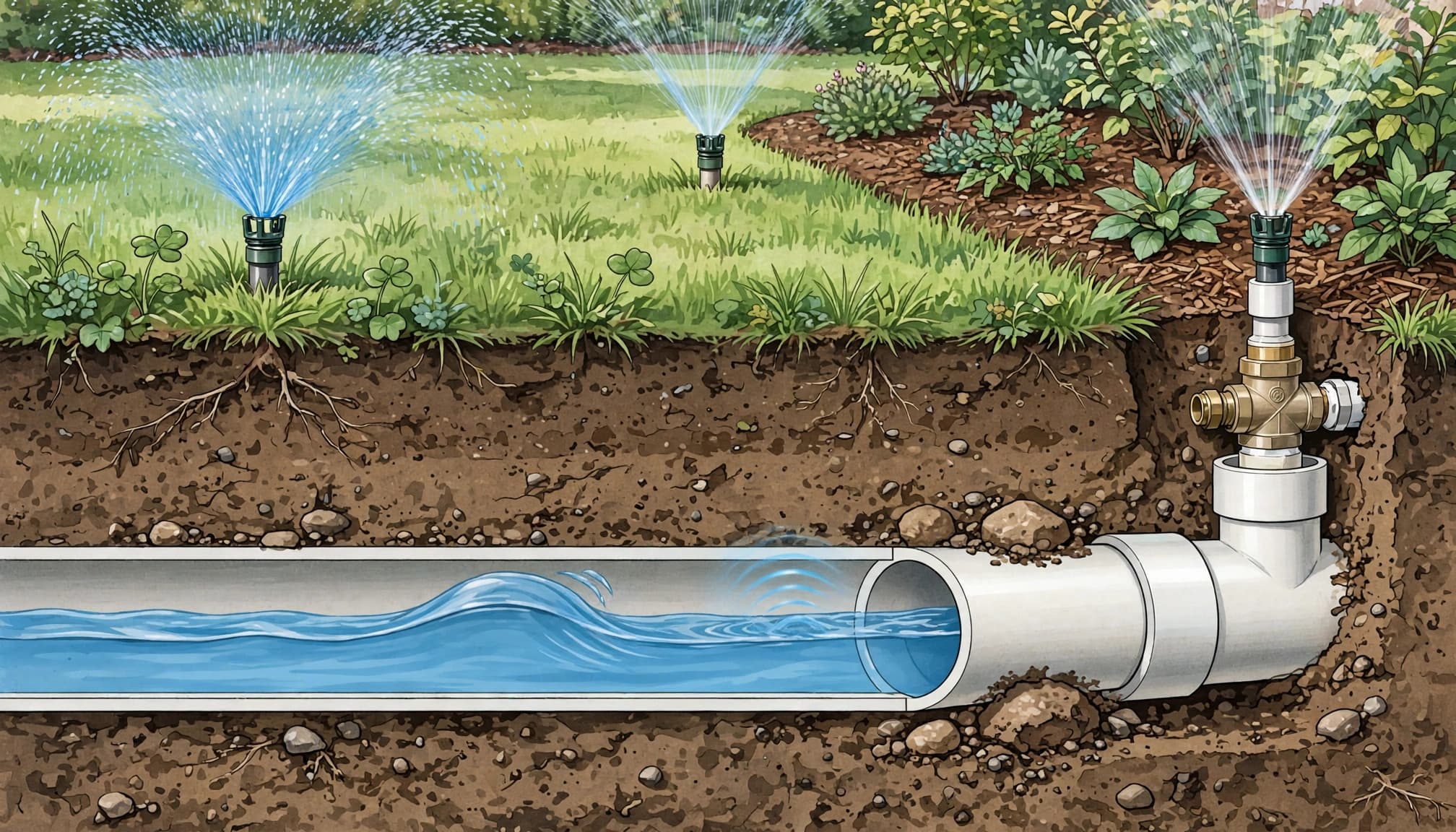
If the banging occurs right when a zone switches off, rapid closure is one possibility. A faulty valve may also make humming or repeated clicking sounds, but those symptoms alone don't confirm the cause. See our guide to signs of a faulty irrigation solenoid for related valve symptoms.
High pressure, trapped air, or loose pipes
Excessive water pressure can make a system noisier and may cause misting or uneven spray. Air trapped in a line can produce sputtering or knocking as water moves through it. Loose or poorly supported pipes can also bang when flow starts or stops, even if the pressure is otherwise normal.
Recent yard work is another clue. A new planting bed, landscaping project, paver border, or patio installation may disturb shallow irrigation lines. If a concrete company worked near the pipe route, excavation or grading could have shifted a line or its support.
Safe troubleshooting before calling for help
Notice when and where the sound happens
Run the system only if there are no obvious leaks or electrical hazards. Note whether the sound occurs when a zone starts, while it runs, or as it shuts off. Record which zones are affected and whether the noise seems to come from a valve box, a sprinkler head, or a pipe near the house.
Check the visible area for bubbling soil, pooling water, unusually wet patches, or heads that spray weakly. If several heads in one zone lose pressure, the issue may involve a valve, supply line, or underground leak rather than one sprinkler head. Our guide to troubleshooting low pressure in one irrigation zone covers those related symptoms.
Check visible parts without opening pressurized fittings
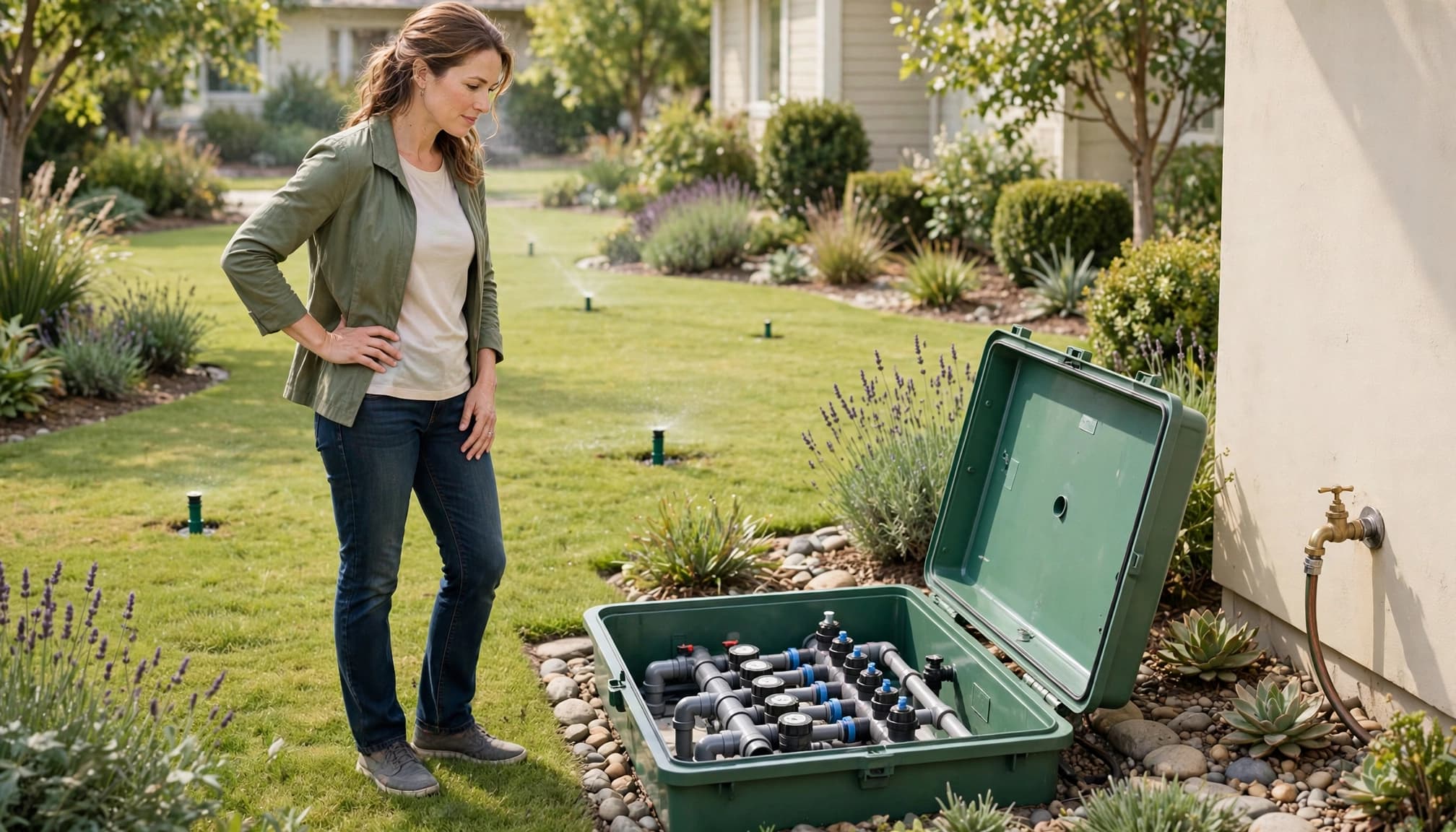
Look for an exposed pipe or valve that appears loose or has shifted. Don't tighten fittings or remove a sprinkler head while the line is pressurized. If an adjustment is needed, turn off the affected zone at the controller and close the irrigation shutoff before handling parts. Controller settings alone may not stop water from reaching the line.
You can also listen during a short, supervised cycle, one zone at a time. Stop the test if water keeps running after the zone shuts off, pressure drops sharply, or water starts pooling. Avoid digging to find a buried pipe unless you know where utility lines are located.
When to call an irrigation professional or plumber
Get irrigation help for valve or yard-system problems
Call an irrigation professional if banging continues after basic observations, several zones make the same noise, a valve won't shut off, or you can't locate the irrigation shutoff. A professional can test pressure, isolate zones, and inspect valves and pipes without unnecessary digging. In Southwest Florida, recurring sand, a pump that runs continuously, or persistently low pressure are also reasons to arrange an inspection.
A leak can hide in sandy soil, where water drains before a large puddle forms. For more symptoms to watch for, see our guide to warning signs of an irrigation leak.
Call a plumber if the noise isn't limited to irrigation
If pipes bang when the irrigation system is off, or you hear the same noise when using indoor fixtures, the cause may be in the home's plumbing. A plumber can assess household pressure and pipe supports. Avoid adjusting a pressure regulator or opening plumbing connections unless you know how to do so safely.
Repair irrigation issues before restoring nearby surfaces. If the line runs beneath a patio or walkway, fix the water source before arranging concrete work or paver cleaning. Likewise, repair buried lines before installing artificial turf, sometimes misspelled as "artifical turf," so the new base doesn't cover a problem.
Key takeaways
- Banging often relates to an abrupt flow change, but the sound alone doesn't identify the faulty part.
- Note when it happens and which zones are affected.
- Shut off water before touching irrigation parts, and don't dig blindly.
- Persistent noise, leaks, stuck valves, or pressure problems call for professional help.
FAQ
Is water hammer harmful to an irrigation system?
Repeated pressure shocks can stress pipes, fittings, and valves. A single bang doesn't prove damage, but recurring noise deserves attention, especially if it comes with leaks or changes in sprinkler performance.
Can I fix a banging irrigation pipe myself?
You can safely note when the sound occurs and inspect visible areas for leaks or shifted parts. Avoid opening pressurized fittings or digging near unknown lines. If the source isn't obvious, or the noise continues, have an irrigation professional inspect it.
Stop the noise before it damages the yard
The timing of the bang can help narrow down whether a valve, pressure change, trapped air, or loose pipe is involved. Start with a careful visual check, then get professional help if the noise persists or you notice leaks. Addressing the cause early can protect your irrigation system and nearby landscaping.