


Why Paver Joint Washout Happens in Cape Coral Storms
Cape Coral rain can hit hard, move fast, and leave a mess behind. When water starts running through paver joints, the sand inside those joints can disappear before you even notice.
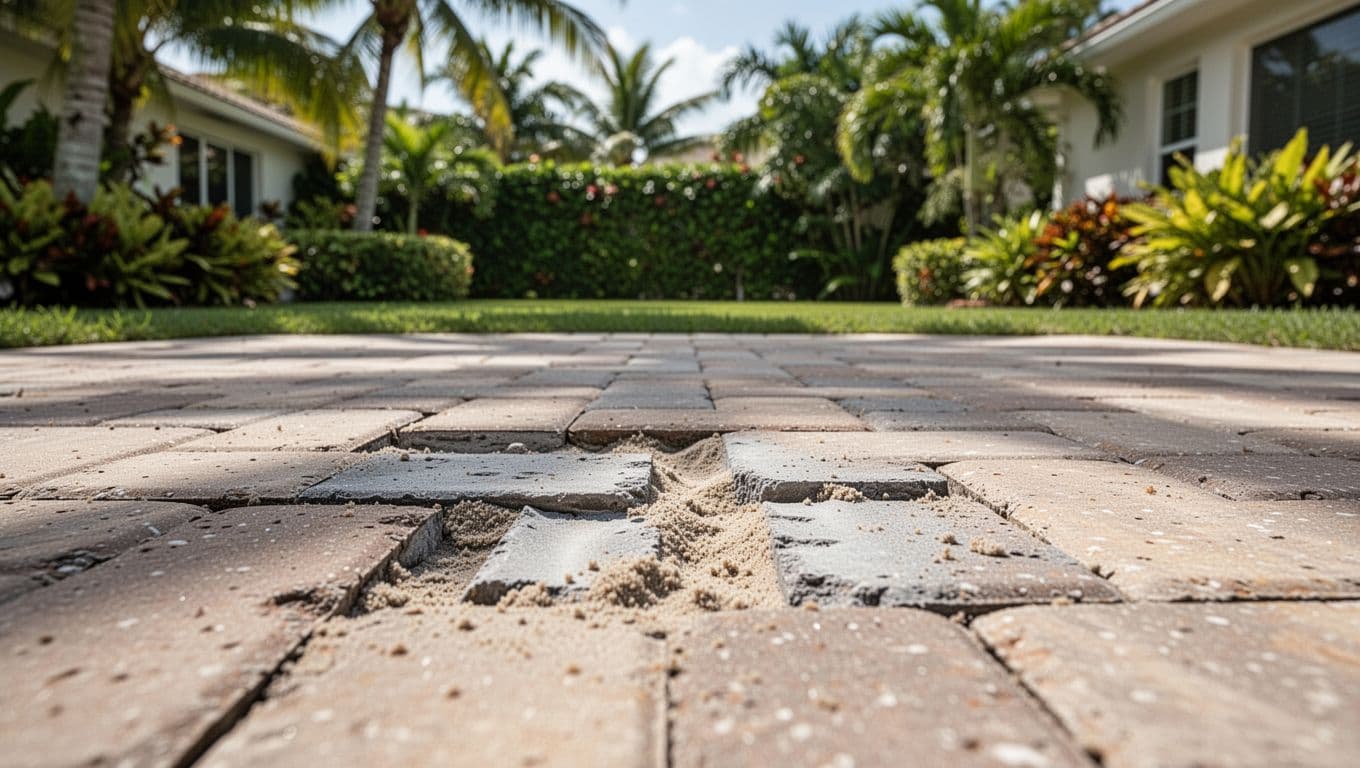
That is where paver joint washout begins. It often shows up after summer downpours, tropical storms, and days when the ground never has time to dry. If your patio, driveway, pool deck, or walkway keeps losing sand, the problem usually comes down to water flow, weak drainage, or both.
The good news is that the surface usually gives clear warning signs. Once you know what to look for, you can stop the damage from getting worse.
How Cape Coral storm water pulls sand out of paver joints
Paver joints look solid from above, but they depend on tight, dry sand to stay locked in place. Stormwater changes that fast. Once water gets into the joints, it loosens the sand and carries it away bit by bit.
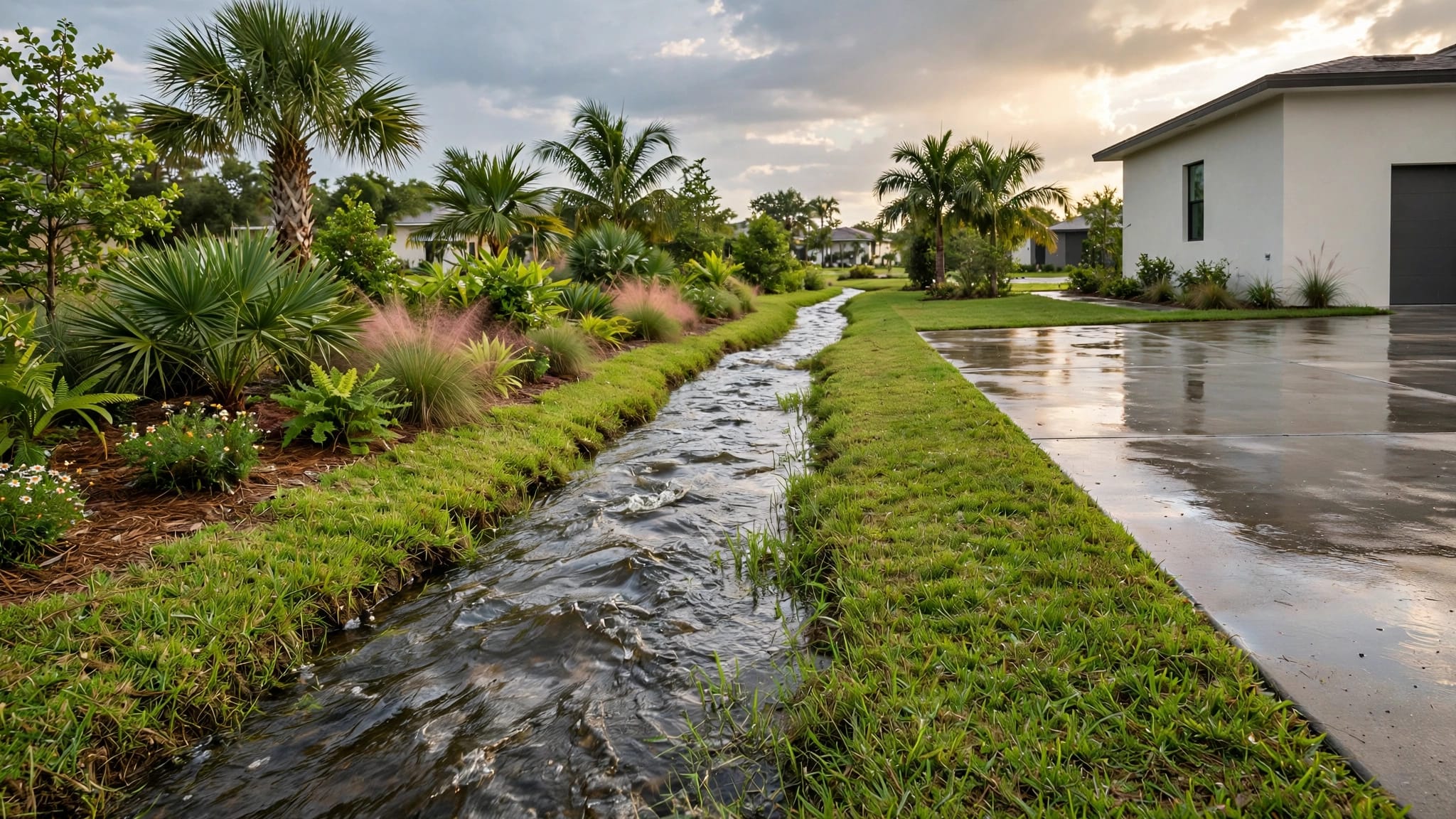
In Cape Coral, that process gets worse because storms do more than soak the surface. They create runoff. Water races across a driveway, gathers on a low patio corner, or pours off a roof edge and into the pavers below. As it moves, it acts like a rinse cycle for the joint sand.
Wind-driven rain makes the problem harder to control. It pushes water into places that usually stay dry, especially along pool decks, walkways, and edges near planting beds. If the pavers sit next to a slope, a gutter dump, or a downspout outlet, the joints near that spot usually wear out first.
The base below the pavers matters too. When the base is already soft or saturated, the joints lose support. That allows more movement, which opens the gaps a little wider after every storm.
Why Cape Coral conditions make washout worse
Cape Coral has weather that keeps pressure on hardscapes all year. Summer storms come often. Rain can fall hard in a short time, then return again before the area dries out. That repeated soaking is rough on paver joints.
The soil plays a part too. Much of Southwest Florida has sandy ground that drains fast on one level, but it still shifts and settles when water keeps coming. Once the soil under the edge of a patio or walkway stays wet, the pavers can move slightly. Even a small shift opens the joints enough for more sand to escape.
Salt air and coastal weather exposure add another layer. Open areas near canals, pools, and wind channels take more punishment than sheltered spots. The surface gets blasted by rain, then dried by sun, then soaked again.
Pool decks face their own problems. Splash-out, overspray, and deck wash water keep joints damp. Driveways get runoff from the house and the street. Walkways often collect water from sprinklers or nearby planting beds.
A weak slope can turn all of that into a bigger problem. If water does not move away from the pavers, it keeps working on the same seams.
Signs your paver joints are washing out
Loose sand after one storm is common. Repeated loss after every storm is a warning that water is moving through the surface, not just across it.
Watch for these signs:
- Gaps that keep opening between pavers
- Sand collecting on the surface after heavy rain
- Weeds, ants, or small debris filling the empty joints
- Edges that feel loose or rock when you step on them
- Low spots where water hangs around longer than it should
A paver area does not need to look badly damaged before the washout starts. Sometimes the first clue is a single joint line near a drain or a roof edge. Other times, the corners near a pool or walkway begin to sink a little and the sand disappears there first.
If the same joints keep emptying after every storm, the water path is the real problem.
How to prevent joint washout before the next storm
Prevention starts with water control. If rain has nowhere to pool or rush, your joints have a much better chance of staying full.
Check where roof water goes first. Downspouts should move water away from paved areas, not dump it beside them. If the runoff crosses a patio or driveway, add extensions, drains, or grading changes that send it elsewhere. French drains can help in the right spots, especially where the yard holds water after a storm.
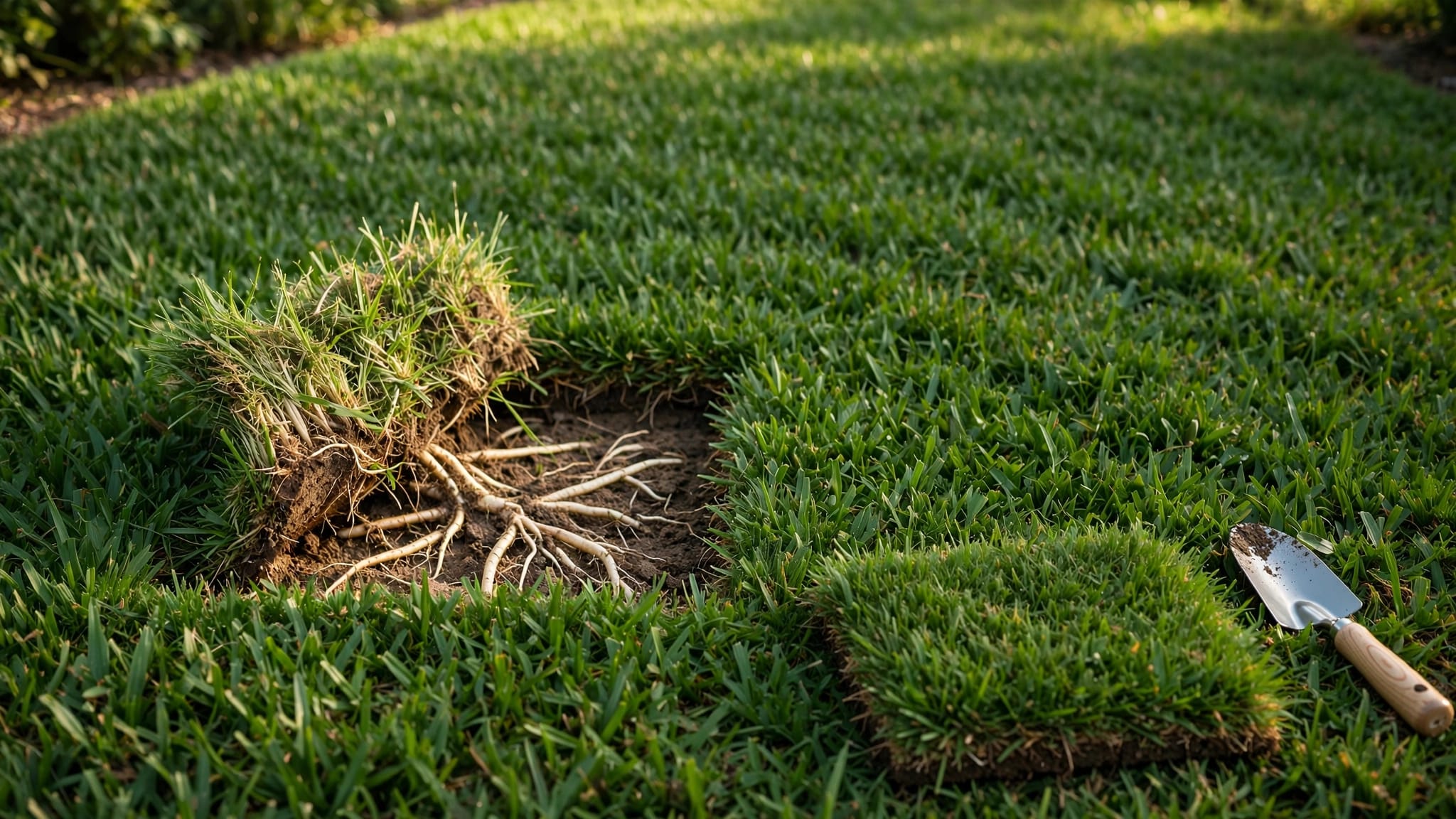
Good landscaping also helps. Mulch beds that stay too high can wash onto the pavers. Bare soil can turn to mud and creep into the joints. In some yards, artifical turf around the edges cuts down on splashback and erosion near the hardscape.
If a concrete apron or slab border is sending water toward the pavers, bring in a concrete company that understands drainage transitions. A small slope problem at the edge can undo the best paver work.
Regular maintenance matters too. A careful paver cleaning helps you spot gaps, soft spots, and edge loss early. Just avoid blasting the joints with a strong pressure washer. Too much pressure can strip out fresh sand and make the problem worse.
If your pavers are already settling, understanding paver base failure and repair can help you see why surface-level fixes often fail. The base and the joints work together, so both need attention.
What to do when the joints are already gone
If the sand is already washing out, the repair needs more than a quick refill. New sand poured on top of a weak base will not hold up through the next storm.
Start by cleaning the area well. Remove loose debris, old sand, weeds, and any buildup in the joints. Then inspect the pavers for movement. If they rock, sink, or sit unevenly, the base underneath needs work before the joints get refilled.
For stable areas, polymeric sand can be a good choice because it locks better than plain joint sand when installed the right way. It still needs a clean, dry surface and proper compaction. If the area stays damp or the joints are too wide, even polymeric sand can fail early.
In larger washout areas, the repair may need lifted pavers, fresh base material, re-compaction, and edge restraint work. That is common on driveways and pool decks where stormwater keeps hitting the same line again and again. A repair that only addresses the top layer will usually break down the next season.
When the damage keeps returning, professional help saves time and frustration. Professional paver installation and repair services can reset the base, rebuild the joints, and fix the drainage issue at the same time. That matters on patios, driveways, walkways, and pool decks where water follows the same path every storm.
The right repair also protects the rest of the surface. Once one section starts moving, nearby joints can loosen too. Fixing the weak point early keeps the problem from spreading.
Conclusion
Cape Coral storms wash out paver joints because water finds the weak spots first. Once runoff, saturated soil, and poor edge control line up, the sand has a short life.
The surface usually gives warning signs before the damage gets serious. Gaps, loose sand, and standing water all point to a drainage issue that needs attention.
If your pavers keep losing joint sand after every storm, focus on the water path first. Drainage is what keeps the joints in place when the rain starts pounding.